
Table of Contents
In the competitive landscape of professional textile management, the debate between an industrial washer-extractor vs traditional washing machine often surfaces when a business reaches a critical growth phase. For many small-to-medium enterprises—ranging from boutique hotels to fitness centers—the temptation to utilize high-end residential “heavy-duty” washers is a common fiscal trap. While these domestic machines are marvels of consumer engineering, they are fundamentally ill-equipped for the relentless demands of a commercial environment. As we move through 2026, the gap in performance, durability, and energy efficiency between these two categories has only widened, making the choice a defining factor in a facility’s long-term profitability.
Understanding the difference requires more than a glance at the price tag. It requires a deep dive into the mechanical philosophy behind each unit. A traditional washing machine is designed for “convenience” and “variety,” meant to handle five to seven loads per week. In contrast, an industrial washer-extractor is a specialized piece of infrastructure designed for “throughput” and “extraction,” capable of running twenty hours a day for two decades. To grasp the engineering scale required for such tasks, it is helpful to consult the Industrial Washer-Extractor Guide 2026, which outlines the benchmarks for professional-grade machinery.
Structural Integrity: Engineering for 20,000 Cycles
The most immediate difference in the industrial washer-extractor vs traditional washing machine comparison is the choice of materials. A domestic machine relies heavily on plastic tubs, thin-gauge outer cabinets, and light-duty suspension systems to keep costs low and weight manageable for home installation. These components are perfectly adequate for washing family clothing, but they rapidly degrade when exposed to the high-pH chemicals and constant vibrations of a commercial laundry room.
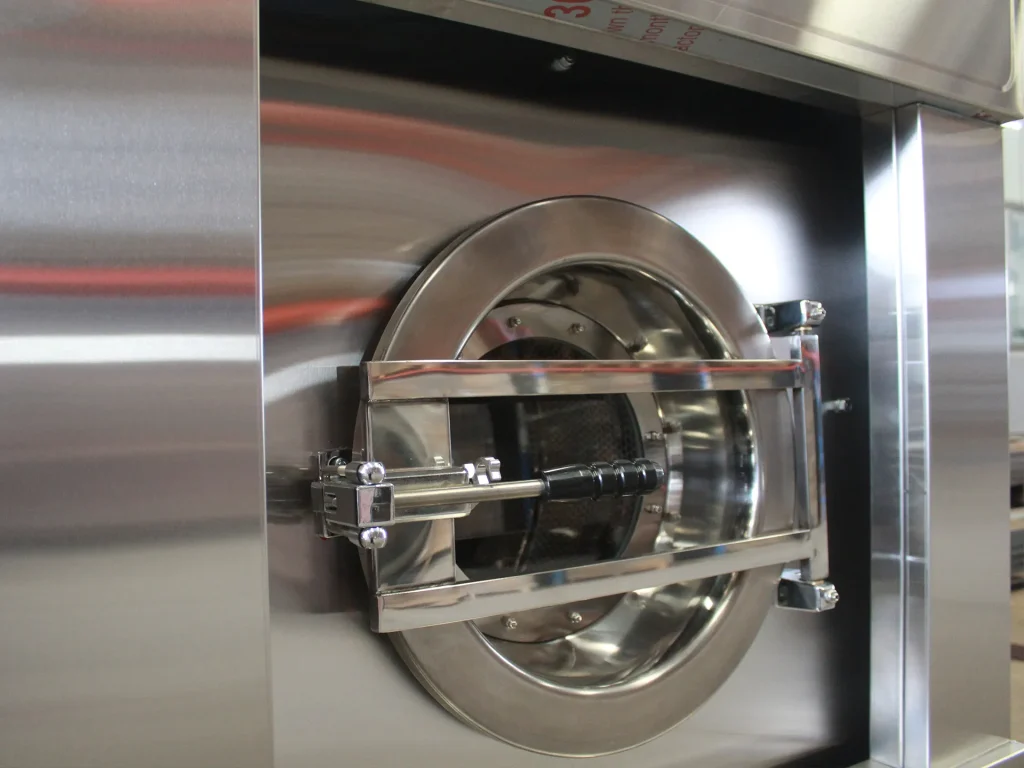
An industrial washer-extractor is built with “Industrial Metallurgy.” Every component that touches the water is typically crafted from 304 or 316-grade stainless steel. The main bearing housing—the heart of the machine—is often five times the size of its domestic counterpart. This robust construction allows the machine to achieve a lifecycle of 20,000 to 30,000 cycles. For comparison, a high-end traditional machine is usually rated for only 3,000 to 5,000 cycles. When you calculate the “Cost per Cycle,” the industrial unit often proves to be the cheaper investment, even with a higher initial purchase price.
The Extraction Equation: G-Force and Moisture Retention
The word “extractor” in the industrial world is not just marketing—it refers to a specific mechanical capability that traditional machines lack. This is arguably the most significant factor in the industrial washer-extractor vs traditional washing machine debate for business owners focused on utility costs. Moisture removal is driven by G-force, the centrifugal power generated during the final spin. A traditional washing machine typically generates between 80G and 120G.
A high-performance Industrial Washer-Extractor in 2026 can generate 350G to 450G. The impact of this physics is profound: every extra “G” of force pulls more water out of the fabric pores. In a professional setting, a traditional machine might leave linens with a residual moisture content (RMC) of 75%. An industrial extractor can reduce that to 50% or less. This means your dryers have to work 30% less, significantly reducing your natural gas or electricity consumption and doubling the life of your linens by reducing their time spent in high-heat tumblers.
Throughput and Efficiency: Managing the “Pounds Per Hour”
Time is the most expensive currency in any commercial operation. When comparing an industrial washer-extractor vs traditional washing machine, throughput is the metric that matters most. A traditional machine has a fixed cycle time that is often dictated by consumer-facing “eco-modes,” which can take 60 to 90 minutes to complete. These machines use small-diameter water inlets and drain pumps that move water slowly.
Industrial units are designed for speed. They feature 2-to-3-inch water inlets and gravity-fed drains that can fill or empty the tub in less than 60 seconds. Combined with high-speed steam injection for instant heating, a complete industrial wash-and-extract cycle can be finished in 35 to 45 minutes. This allows a single industrial machine to do the work of three traditional machines in the same timeframe. This efficiency is a core component of the Industrial Washer-Extractor Working Principle, which focuses on maximizing chemical and mechanical action within the shortest possible window.
Chemical Precision and Fabric Safety
Professional laundry requires the use of concentrated alkalis, bleaches, and sours that would melt the seals of a traditional washing machine. In an industrial washer-extractor vs traditional washing machine scenario, the industrial unit is designed as a “Chemical Reactor.” It features multi-port injection systems that deliver chemicals directly from bulk tanks at the exact millisecond they are needed. This ensures a 99.9% disinfection rate—a non-negotiable requirement for healthcare and food service sectors.
Traditional machines rely on manual pouring or small detergent drawers that often result in chemical “slugging,” where a high concentration of bleach hits the fabric at once. This leads to premature fiber degradation and “yellowing” of white linens. The industrial unit’s ability to precisely dose and dilute chemicals protects your linen investment, which is often a larger capital asset than the machines themselves. Understanding this balance is vital for any facility manager, as explored in the Wash-Extractor vs Centrifugal Washer comparison, which looks at how different extraction methods affect fabric longevity.
Maintenance and Lifecycle: The True Cost of Ownership (TCO)
When evaluating the industrial washer-extractor vs traditional washing machine, many business owners make the mistake of focusing on the “Sticker Price.” A high-end traditional machine might cost $1,500, while a professional 60 lb industrial washer-extractor can cost $12,000 or more. However, the “Price per Load” over a five-year horizon tells a different story. Traditional machines are built with “Snap-Fit” plastic components and sealed bearings that are often impossible to repair. When a main bearing fails in a domestic unit, the repair cost often exceeds the value of the machine, leading to “Planned Obsolescence.”
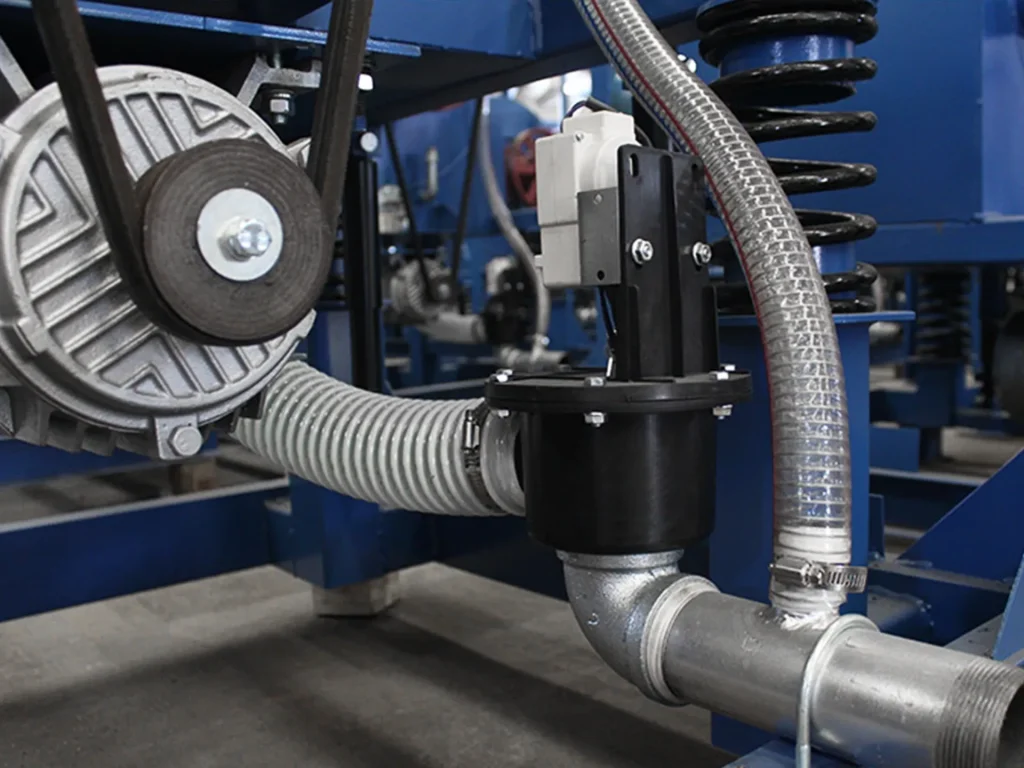
In contrast, an industrial washer-extractor is designed for “Field Serviceability.” Every major component—from the heavy-duty motor to the oversized drain valves—is accessible and replaceable. Industrial bearings are housed in massive cast-iron blocks that can be greased and maintained for decades. Furthermore, industrial manufacturers guarantee parts availability for 15 to 20 years. In a busy commercial setting, a traditional machine may need to be replaced every 18 months. Over a ten-year period, you might buy six traditional machines to do the work of one industrial unit, resulting in a much higher TCO for the “cheaper” option.
Sector-Specific Advice: Where Does Each Machine Belong?
The industrial washer-extractor vs traditional washing machine choice often depends on your specific business vertical. While industrial machines are the gold standard, there are niche scenarios where a “Commercial-Grade” traditional machine might suffice. Understanding these boundaries is essential for optimizing your facility’s capital allocation.
Hospitality and Boutique Hotels
For a hotel with more than 15 rooms, a traditional machine is a liability. The sheer volume of “Terry” (towels) and bedsheets requires a high-G extraction that only an industrial unit can provide. Using a domestic machine for hotel linens results in “Graying” and a stiff texture because domestic pumps cannot flush away the heavy soil and detergent residue effectively. If your brand depends on the “Guest Touch” experience, the Industrial Washer-Extractor Working Principle of high-volume water exchange is non-negotiable.
Salons, Spas, and Fitness Centers
These businesses deal with a high volume of small items (towels) that are often saturated with oils, hair dyes, or sweat. Traditional machines often fail here because their “Self-Cleaning” filters become clogged with hair and lint, leading to pump failure. An industrial washer-extractor features a large “Lint Trap” and a gravity drain that can handle these solids without backing up. If your spa processes more than five loads of towels a day, the labor savings of a faster industrial cycle will pay for the machine in less than two years.
Heavy Industrial and Healthcare
In environments where “Bio-Contamination” or “Heavy Grease” is a factor, traditional machines are strictly prohibited by most health codes. Healthcare textiles require a “Thermal Disinfection” cycle that maintains 160°F for a specific duration—a feat most domestic heaters cannot achieve. Similarly, industrial rags soaked in hydraulic oil require a “High-Alkaline Break” that would destroy the rubber gaskets of a traditional washer. In these sectors, the Wash-Extractor vs Centrifugal Washer debate is more relevant than considering a domestic alternative.
Installation and Utility Requirements: The Infrastructure Gap
A significant hurdle in the industrial washer-extractor vs traditional washing machine transition is the physical infrastructure of the building. You cannot simply “plug in” an industrial machine where a domestic one once sat. Industrial units often require 3-phase electrical power to handle the high-torque demands of the motor. They also require 1-inch or larger water lines to meet the fill-speed requirements that drive their high throughput.
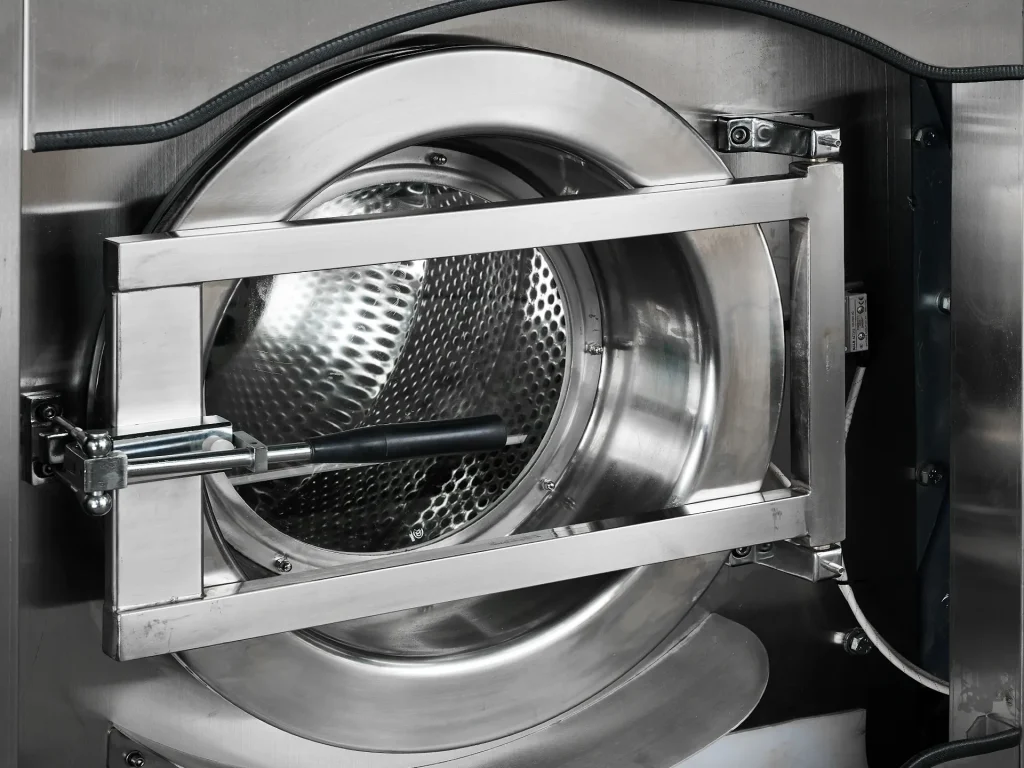
Furthermore, the “Mounting” requirements are vastly different. A traditional machine is “Freestanding” and uses internal weights to dampen vibration. A “Hard-Mount” industrial washer-extractor must be bolted to a reinforced concrete pad, often 12 to 18 inches thick, to prevent the machine from “walking” during a 400G extraction. If your facility is on an upper floor, you must invest in a “Soft-Mount” industrial unit with an internal suspension system. While these requirements add to the initial setup cost, they are the foundation of a machine that will reliably process millions of pounds of linen over its lifetime.
Comparison Table: Technical Specifications at a Glance
To simplify the industrial washer-extractor vs traditional washing machine decision for 2026 stakeholders, the following table breaks down the raw performance data.
| Feature | Traditional (Domestic) Machine | Industrial Washer-Extractor |
| Expected Lifespan | 3,000 – 5,000 Cycles | 25,000 – 35,000 Cycles |
| Extraction Force | 80G – 120G | 350G – 450G |
| Cycle Time | 60 – 90 Minutes | 35 – 45 Minutes |
| Water Inlet Size | 0.75 Inch (Standard Hose) | 1.0 – 3.0 Inches |
| Heating Method | Internal Electric (Slow) | Direct Steam Injection (Instant) |
| Chemical Feed | Manual Drawer | Automated Multi-Pump System |
| Repairability | Low (Component Swapping) | High (Individual Part Service) |
Operational Ergonomics and Safety: Protecting the Workforce
When choosing between an industrial washer-extractor vs traditional washing machine, the physical impact on the laundry staff is frequently overlooked. Traditional machines are designed with a low-profile aesthetic, forcing operators to bend over repeatedly to load and unload a front-facing drum. In a commercial setting where an employee might process thirty loads in a shift, this creates a significant risk of repetitive strain injuries and chronic back pain.
Industrial washer-extractors are engineered with “Industrial Ergonomics.” Many models are built on high-profile pedestals or feature a “Tilting” mechanism that allows gravity to assist in the unloading process. The doors are significantly larger—often 20 inches in diameter—allowing a worker to move a 60 lb batch of wet linen in seconds rather than several minutes of manual tugging. This efficiency is a core reason why high-volume facilities prioritize these units, as explained in the 2026 Strategy Guide for On-Premise vs. Outsourcing. A healthy, efficient workforce is the backbone of any laundry operation, and the right machinery is their primary tool.
The Energy Delta: Calculating the 2026 Utility Savings
The most compelling argument in the industrial washer-extractor vs traditional washing machine debate is the “Energy Delta”—the difference in total utility consumption over a five-year window. In 2026, natural gas and electricity prices have become a dominant line item on the balance sheet. While a traditional machine might use less power per cycle, it creates a massive “Downstream Deficit” because its weak extraction force (100G) leaves the linens saturated with water.
If your dryer has to run for sixty minutes to dry a load from a traditional washer, but only thirty-five minutes for a load from a high-G industrial extractor, you are essentially wasting twenty-five minutes of gas and electricity on every single batch. Over a 300-day working year with eight cycles per day, that equates to 600 hours of wasted dryer operation. This staggering inefficiency is why professional auditors always recommend a High-Performance Industrial Washer-Extractor for any business processing more than 100 lbs of laundry daily. The “Hidden Tax” of domestic machinery is paid every time the dryer turns.
Conclusion: Bridging the Gap to Professionalism
The transition from an industrial washer-extractor vs traditional washing machine represents the moment a business shifts from “surviving” to “scaling.” While the residential washer is a masterpiece of home appliance design, it is a passenger vehicle in a world that requires heavy-duty trucks. The industrial unit offers a level of structural integrity, chemical precision, and extraction power that is simply unreachable for consumer-grade technology.
By investing in an industrial-grade infrastructure today, you are not just buying a machine; you are securing the future of your linen inventory and the efficiency of your staff. As the laundry market of 2026 continues to prioritize sustainability and ROI, the “Industrial Advantage” has never been clearer. For those looking to dive deeper into the mechanical specifics of these machines, our Encyclopedia for Commercial & Large-Scale Laundries 2026 provides the final layer of technical clarity needed for a confident procurement decision.
FAQs: Industrial Washer-Extractor vs Traditional Washing Machine
Is an industrial washer-extractor louder than a traditional machine?
Yes, during the high-speed extraction phase, an industrial unit generates more decibels due to the massive centrifugal force. However, because they are built with thicker stainless steel and heavy-duty suspension, the vibration is often “lower frequency” and less disruptive to the building’s structure than a residential machine that is struggling to balance a heavy load.
Can I use regular supermarket detergent in an industrial machine?
You can, but it is not recommended. Industrial machines are designed to work with concentrated, low-sudsing chemicals. Household detergents often create too many suds, which can “cushion” the linen and reduce the Industrial Washer-Extractor Working Principle of mechanical agitation. Over-sudsing can also leak into the bearing housing, causing premature failure.
How much more water does an industrial machine use?
On a “Per Pound” basis, an industrial washer-extractor is actually more water-efficient than a traditional machine. Because the PLC allows for precise “Low-Level” rinses and water reclamation cycles, a modern industrial unit can use as little as 1.5 to 2.0 gallons of water per pound of linen, whereas many domestic machines exceed 3.0 gallons.
Is it difficult for staff to learn the industrial controls?
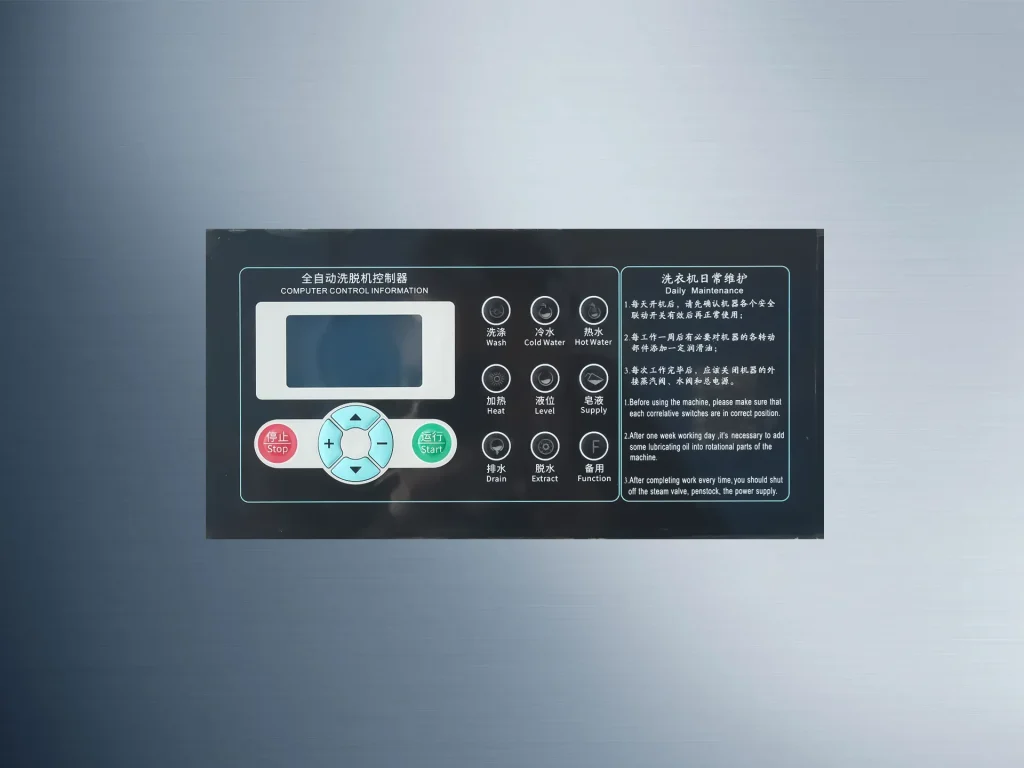
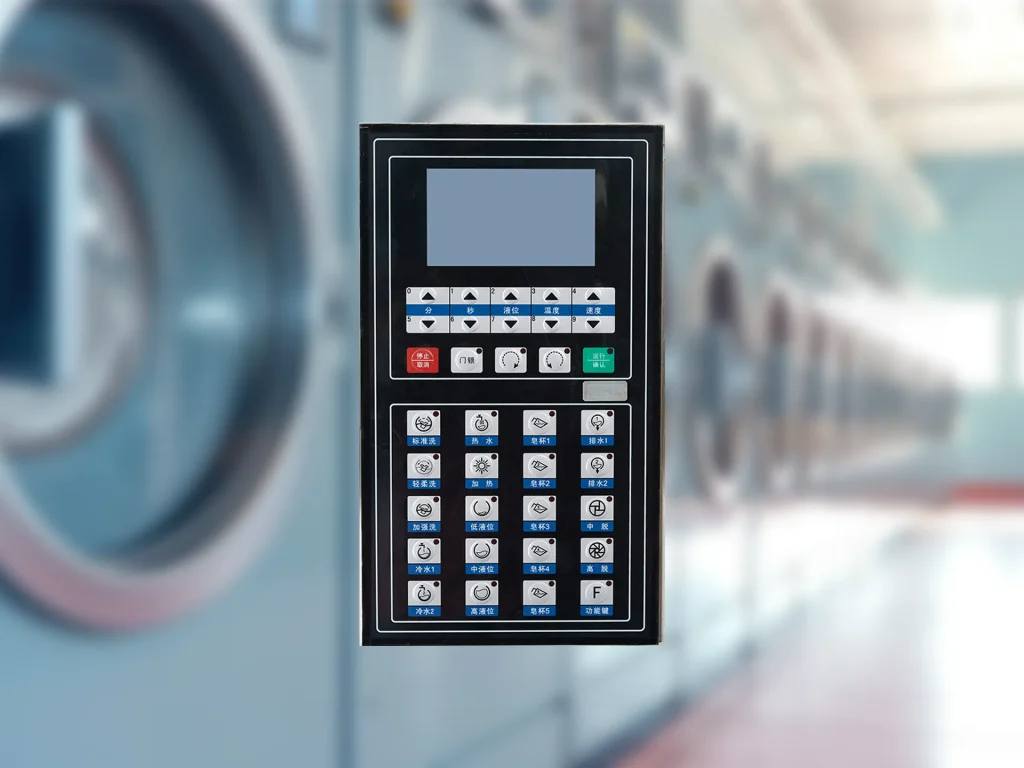
While the PLCs look complex, most manufacturers use “One-Touch” icons for daily operation. An operator simply selects a picture (e.g., a “Towel” icon) and presses start. The complexity is reserved for the manager or the chemical technician who programs the formulas, ensuring that the staff cannot accidentally change the water temperature or chemical dosage.
What is the minimum volume to justify an industrial machine?
Generally, if your business processes more than 150 lbs (approx. 68 kg) of laundry per day, the ROI for an industrial washer-extractor becomes undeniable. Below this volume, a high-end “Prosumer” or light-commercial traditional machine may suffice, provided you accept a shorter equipment lifespan.
 English
  Spanish