
Table of Contents
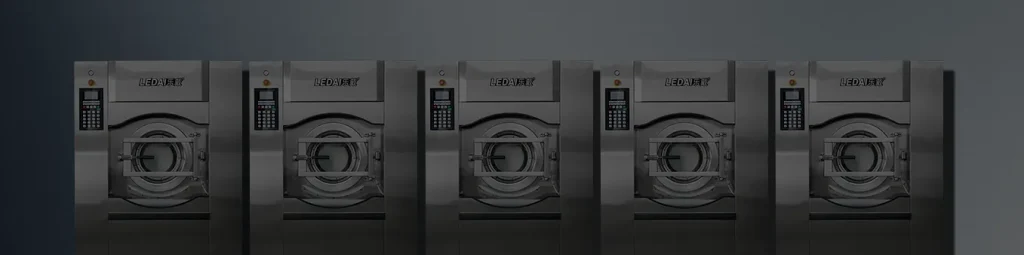
In the highly competitive commercial sectors of 2026, from high-end hospitality to centralized healthcare facilities, the “back-of-house” operations are undergoing a radical financial shift. For decades, the laundry room was viewed as a necessary overhead—a black hole for water, gas, and labor. However, with the surge in global utility prices and the increasing scarcity of skilled labor, the focus has pivoted toward industrial washer-extractor ROI. Business owners are no longer asking how much a machine costs; they are asking how quickly that machine will pay for itself through mechanical efficiency and resource conservation.
A modern industrial washer-extractor is essentially a high-performance financial instrument disguised as a piece of laundry equipment. It is designed to minimize the three largest expenses in any textile-care operation: energy, labor, and linen replacement. To truly understand the return on investment, one must look past the initial capital outlay and analyze the “Total Cost of Ownership” (TCO) over a ten-to-fifteen-year horizon. This journey begins with a solid foundation of equipment standards, which can be found in the Technical & Purchasing Guide for Industrial Washer-Extractors 2026, providing the necessary benchmarks for what constitutes an efficient investment in today’s market.
The Anatomy of the ROI Equation: CapEx vs. OpEx
The financial calculation for an industrial washer-extractor ROI is divided into two distinct categories: Capital Expenditure (CapEx) and Operating Expenditure (OpEx). CapEx includes the purchase price, freight, and installation. In 2026, while the upfront cost of a professional-grade machine may be three to four times that of a light-commercial unit, its OpEx profile is significantly lower. The goal of a high-yield investment is to ensure that the cumulative OpEx savings “break even” with the CapEx within the first 24 to 36 months of operation.
The “Hidden Tax” that most businesses pay is the cost of moisture retention. When a machine fails to extract water efficiently during the spin cycle, that water must be removed by the dryer. Heating air to evaporate water is exponentially more expensive than using centrifugal force to squeeze it out. Therefore, a machine with a high G-force rating—often 350G to 450G—is not just a technical specification; it is a direct reduction in your monthly gas or electric bill. Understanding the Industrial Washer-Extractor Working Principle of high-speed extraction is the first step in identifying where your current system is “leaking” money.
The Energy Delta: Extraction Force vs. Gas Bills
To quantify industrial washer-extractor ROI, we must apply the physics of water removal to your utility bill. In 2026, the average cost of evaporating a single gallon of water in a commercial gas dryer has risen by nearly 15% due to global energy volatility. A low-performance washer might leave 70% residual moisture content (RMC) in a load of towels. A high-performance industrial washer-extractor can reduce that RMC to 50% or even 45%. For a facility processing 2,000 lbs of laundry a day, that 20% difference represents hundreds of gallons of water that do not need to be heated and evaporated every single week.
The math is simple but the impact is profound. By reducing the drying time by just 10 to 15 minutes per load, a facility can save thousands of dollars annually in natural gas. Furthermore, shorter drying times mean fewer “Dryer Bottlenecks,” allowing the entire production floor to move faster. This synergy between extraction and drying is often a point of debate when comparing a Wash-Extractor vs Centrifugal Washer, as standalone centrifuges can reach even higher G-forces, albeit at a different labor cost. For most on-premise laundries, the integrated extractor provides the best ROI balance between utility savings and ease of operation.
Labor Productivity: Time is Currency
Labor remains the most volatile variable in the industrial washer-extractor ROI equation. In 2026, recruiting and retaining laundry staff requires not just higher wages, but better working conditions and more efficient tools. A professional industrial washer-extractor is designed to maximize “Pounds Per Operator Hour” (PPOH).
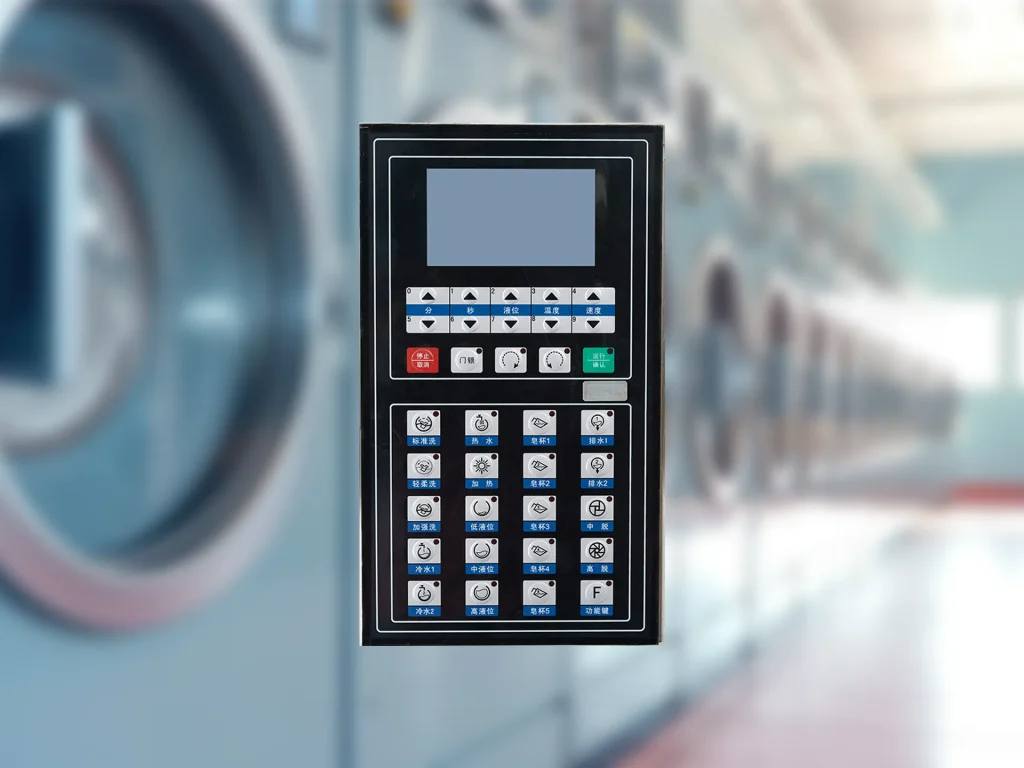
Through the use of advanced PLC (Programmable Logic Controller) systems, the machine automates every stage of the wash, allowing a single operator to manage a battery of four or five machines simultaneously.
This automation extends to chemical dosing and water temperature management. In an environment where every second counts, a machine that fills and drains 30% faster than a domestic alternative directly increases the facility’s daily throughput. If your staff is spending twenty minutes a day manually pouring detergents or waiting for a slow-filling machine, that is “dead time” that subtracts from your ROI.
By transitioning to a professional-grade system, you are essentially buying back labor hours, which can then be redirected toward finishing, folding, and quality control. This labor efficiency is a primary reason why the ROI comparison of Industrial vs Traditional washers consistently favors the former for any business processing more than five loads a day.
Chemical and Water Efficiency: The Invisible Savings
A major pillar of industrial washer-extractor ROI that is frequently overlooked is the radical reduction in “Consumable Waste.” In a traditional or low-end commercial setup, chemical dosing is often imprecise—either manual pouring or via basic timed pumps that do not account for water pressure fluctuations. This lead to “Chemical Over-Dosing,” which not only wastes expensive detergents and bleaches but also causes premature fiber degradation in your linens. In 2026, the cost of high-alkaline laundry chemicals has risen significantly, making precision a financial necessity.
A professional industrial washer-extractor utilizes a multi-port manifold system integrated with the Industrial Washer-Extractor Working Principle of soil suspension. These machines communicate directly with peristaltic pump arrays to deliver chemicals in milliliters rather than ounces, and only when the water temperature and pH levels are optimal for activation. For a mid-sized facility, switching from manual dosing to an automated industrial system can reduce chemical spend by 25% to 30% annually. Furthermore, modern water-reclamation valves allow the machine to “recycle” the final rinse water for the initial “break” of the next load, slashing water and sewer surcharges—a critical ROI factor in drought-prone or high-utility regions.
Maintenance, Depreciation, and Asset Longevity
The financial trajectory of industrial washer-extractor ROI is a marathon, not a sprint. To calculate true profitability, one must account for the “Depreciation Schedule” of the asset. A residential or light-duty machine is typically a 3-year asset in a commercial environment; it is run until it fails, and then it is scrapped because the repair costs (labor + parts) often exceed 50% of the replacement value. This creates a “Replacement Cycle” that drains capital every 36 months.
An industrial washer-extractor is a 15-to-20-year asset. It is engineered with “Serviceable Metallurgy”—meaning the bearings can be greased, the seals can be replaced, and the PLC can be upgraded. In 2026, the secondary market for refurbished industrial equipment is incredibly strong, meaning the machine retains a “Residual Value” even after a decade of use. When you divide the initial $15,000 investment over 20 years ($750/year) versus buying five $2,500 machines over the same period ($625/year + five installation fees + disposal costs), the industrial unit emerges as the superior long-term financial choice. This longevity is why selecting the right wash-extractor capacity is so vital; you are choosing a partner for the next two decades of your business.
Case Study: A 100-Room Hotel’s ROI Journey
To illustrate the concrete math of industrial washer-extractor ROI, let’s examine a 100-room hotel processing approximately 1,500 lbs of laundry daily. Before upgrading, this facility used three light-commercial washers with a 150G extraction force. The drying cycles averaged 55 minutes, and the facility required two full-time shifts (16 hours total) to complete the workload.
The “Before” Scenario (Annual Costs):
- Gas Consumption: $18,200 (Long drying cycles due to 150G spin).
- Labor (2 Shifts): $110,000 (Low throughput per hour).
- Linen Replacement: $14,000 (High heat damage in dryers).
- Total Operating Cost: $142,200.
The “After” Scenario (With Two 100lb High-G Washers):
By upgrading to 450G industrial washer-extractors, the drying time dropped from 55 minutes to 32 minutes. The higher capacity and faster cycle times (35-minute wash cycles) allowed the facility to collapse their laundry operation into a single 10-hour “Extended Shift,” eliminating the need for a full second crew.
- Gas Consumption: $11,400 (37% reduction in dryer run-time).
- Labor (1 Ext. Shift): $74,000 (32% reduction in labor hours).
- Linen Replacement: $9,500 (Less tumbling, less “Linting”).
- Total Operating Cost: $94,900.
Annual Savings: $47,300. Initial Investment: $38,000 (including installation). Break-Even Point: ~9.6 Months.
In this real-world 2026 scenario, the hotel achieved a full return on its capital investment in less than a year. Beyond the first year, that $47,300 in savings drops straight to the bottom line as pure profit. This demonstrates why the Industrial Washer-Extractor vs Traditional ROI comparison is so lopsided; for any business with significant volume, the “cheap” option is the most expensive mistake they can make.
Scaling the Investment: Capacity vs. Profitability
Finalizing your industrial washer-extractor ROI requires a delicate balance between “Machine Size” and “Batch Frequency.” A common pitfall is over-purchasing capacity, leading to half-empty loads that waste water and chemicals. Conversely, under-sizing your machines creates a bottleneck that forces employees to wait for equipment, effectively wasting the labor hours you are trying to save.
In 2026, the most successful ROI models involve “Right-Sizing” the equipment to handle 85% of peak volume within a standard shift, leaving the remaining 15% as a buffer for busy seasons. This ensures that the machines are running at their “Efficiency Sweet Spot” most of the time. By following a Professional Capacity Selection Guide, business owners can avoid the “Over-Capitalization” trap and ensure that every pound of machine they buy is actively contributing to the facility’s throughput.
The Safety ROI: Reducing Liability and Insurance Costs
An often-ignored component of industrial washer-extractor ROI is the reduction in “Workplace Risk.” Traditional or light-commercial machines are not built for the ergonomic demands of a professional laundry attendant. Constant bending to reach into low-set drums and the manual effort required to “yank” heavy, wet linens out of a horizontal cylinder lead to high rates of musculoskeletal injuries. In 2026, the cost of a single worker’s compensation claim can exceed the price of a new machine.
Industrial washer-extractors mitigate this risk through superior ergonomics and safety engineering. High-base pedestals bring the drum to waist height, and larger door openings facilitate faster, safer unloading. Some high-capacity models even offer a “Tilting” function, which uses gravity to slide the heavy laundry “cake” directly into a cart. By reducing employee fatigue and injury rates, the machine provides a “Soft ROI” in the form of lower insurance premiums and higher staff retention—two critical factors in a high-inflation labor market.
Depreciation and Asset Liquidity
In the accounting world of 2026, an industrial washer-extractor is a “Hard Asset” with a surprisingly high residual value. Unlike consumer electronics or domestic appliances that depreciate to zero within 36 months, a well-maintained industrial washer can be sold on the secondary market for 30% to 40% of its original value even after 7 or 8 years of service. This “Asset Liquidity” provides a safety net for business owners who may need to upgrade their capacity or pivot their business model.
When calculating your ROI, you must factor in this “End-of-Life” value. If you buy a $15,000 machine and sell it for $5,000 after a decade, your net capital cost was only $1,000 per year. When contrasted with the Industrial Washer-Extractor vs Traditional Machine ROI, where the domestic unit has zero resale value and must be paid for disposal, the industrial machine’s financial profile is vastly superior. This long-term equity makes industrial equipment a favorite for bank financing and equipment leasing programs, which further lowers the “Entry Barrier” for small businesses.
Strategic Procurement: Timing the Investment
The final piece of the industrial washer-extractor ROI puzzle is “Timing.” In 2026, the cost of raw materials (stainless steel and semiconductors) continues to fluctuate. Waiting for a “budget surplus” to upgrade an old, inefficient machine often costs more in wasted utilities than the cost of financing a new unit immediately. Every month you delay the upgrade, you are paying the “Inefficiency Tax” to your gas and water company.
Smart operators utilize “Energy Rebates” and tax incentives for “Green Infrastructure” to accelerate their ROI. Many regional governments now offer 10% to 20% tax credits for installing high-G extraction technology because it reduces the load on the electrical grid and water treatment plants. By layering these incentives on top of the operational savings, many facilities find that their Industrial Washer-Extractor Capacity Selection pays for itself even faster than the standard 10-month break-even period.
FAQs: Industrial Washer-Extractor ROI
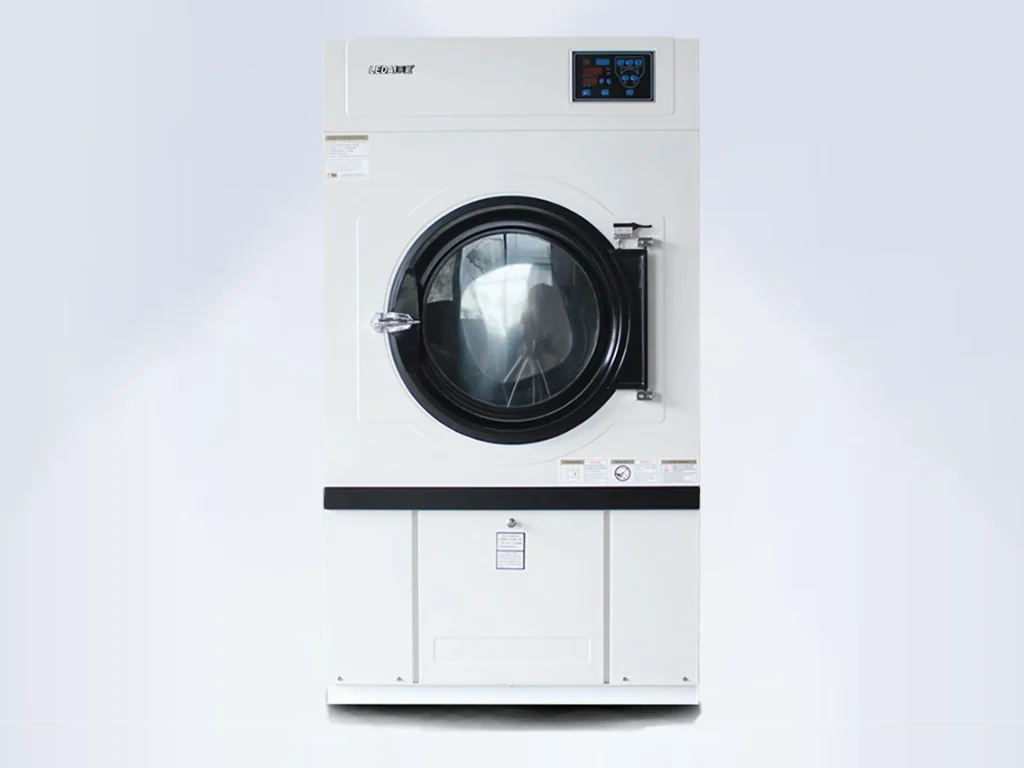
Is the ROI still there for a small business with low volume? Yes, but the “Break-Even” period is longer. If you process fewer than 5 loads a day, the labor and gas savings might take 3 years to cover the initial cost. However, the “Durability ROI” remains high, as you won’t need to replace the machine for 20 years, whereas a domestic unit would still fail within 3 to 4 years.
How much does high-G extraction actually save on gas? On average, moving from a 150G spin to a 350G spin reduces the “Residual Moisture Content” by about 15% to 20%. In a 2026 utility environment, this typically results in a 25% reduction in dryer gas consumption, as the dryer doesn’t have to fight against “latent heat of evaporation” for as long.
Does an industrial machine require more expensive maintenance? The parts are more expensive than domestic parts, but they are replaced less frequently. An industrial bearing is designed to last 10,000+ hours. When you calculate “Maintenance Cost per Pound of Linen,” the industrial machine is significantly cheaper over its lifetime because it avoids the “catastrophic failures” common in light-duty equipment.
Will an industrial washer-extractor ruin my linens faster? Actually, it is the opposite. While the spin is faster, the Industrial Washer-Extractor Working Principle of precision chemical dosing and shorter drying times protects the fibers. High heat in the dryer is the #1 killer of linens; by spending 20 minutes less in the dryer, your towels and sheets will stay “soft” and durable for 30% more wash cycles.
How do I calculate the ROI if I lease the equipment? Leasing often provides the fastest “Cash-Flow ROI.” If your monthly lease payment is $400, but your utility and labor savings are $800, you are “Cash-Flow Positive” from Day 1. This is a common strategy for 2026 startups that want to preserve their initial capital for marketing and inventory.
Conclusion: The Path to a 2026 Profit Center
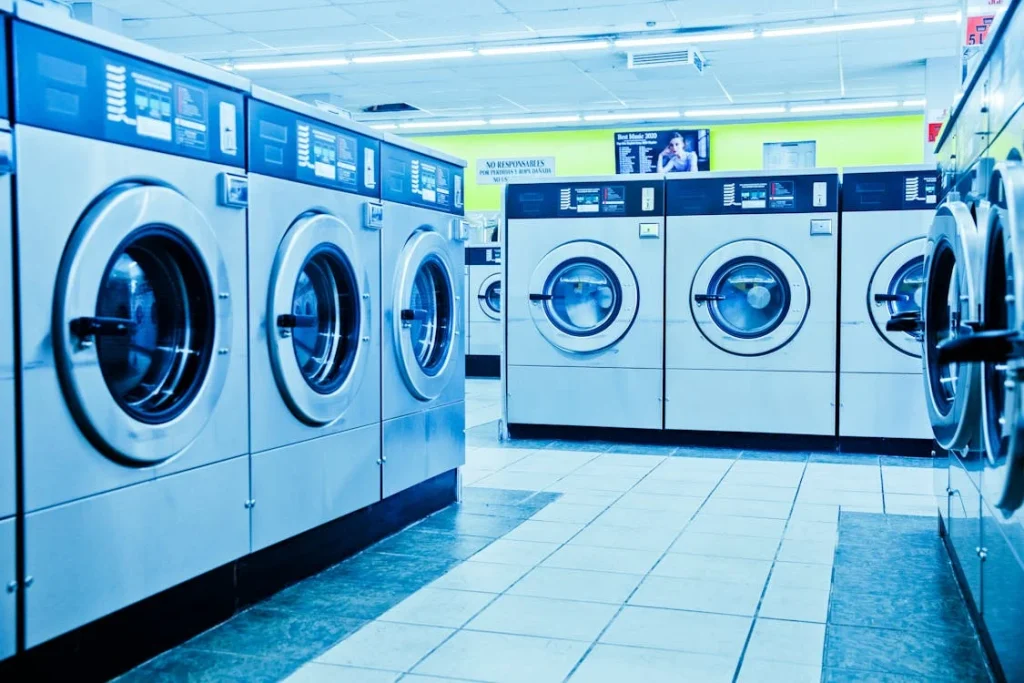
An industrial washer-extractor ROI is not a theoretical concept; it is a measurable, repeatable financial outcome. By shifting your perspective from “Buying a Washer” to “Investing in an Extraction System,” you unlock a cascade of savings that touches every part of your balance sheet. From the 30% reduction in gas bills to the elimination of second-shift labor costs, the industrial machine is the most powerful tool for stabilizing your operational margins in an era of rising costs.
Whether you are comparing the Wash-Extractor vs Centrifugal Washer for a high-volume plant or choosing your first professional unit for a boutique hotel, the data is clear: high-G force, precision chemistry, and mechanical durability are the three pillars of a profitable washroom. Stop paying the “Inefficiency Tax” and start building a laundry operation that contributes to your bottom line.
 English
  Spanish