
Table of Contents
In the professional textile care industry of 2026, the industrial washer-extractor working principle is often viewed as a masterclass in applied physics and chemical engineering. Far more than a simple oversized domestic washing machine, an industrial washer-extractor is a high-performance batch processor designed to handle hundreds of pounds of fabric with surgical precision. For facility managers and business owners, understanding exactly how these machines operate—from the torque generated by their inverter drives to the G-force exerted during extraction—is the first step toward optimizing operational costs and ensuring fabric longevity.
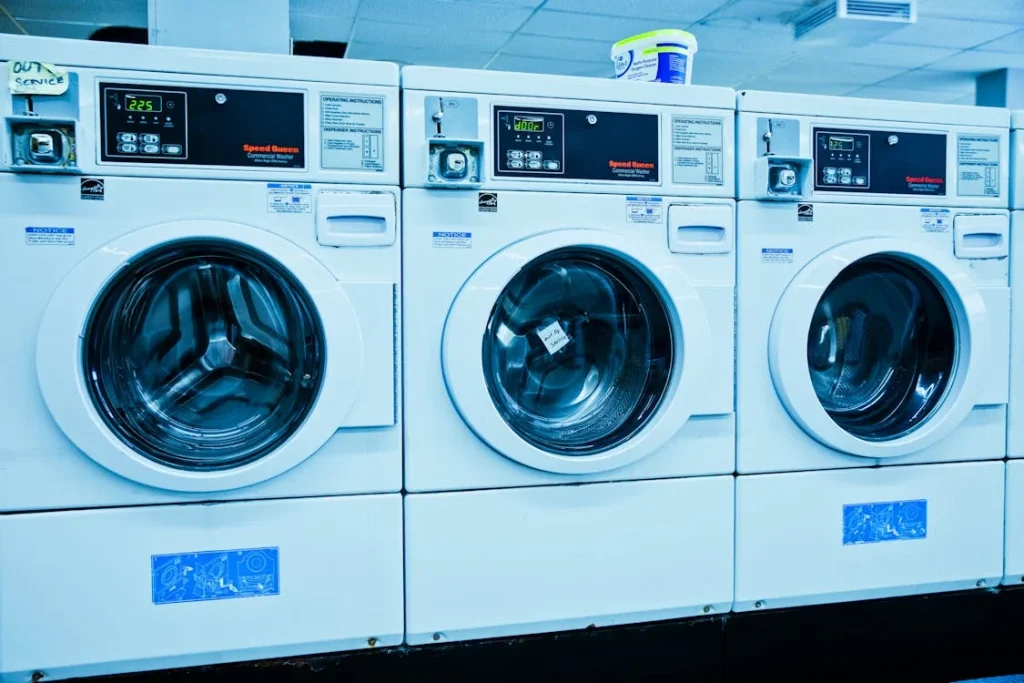
The primary function of this machine is to automate a complex sequence of chemical reactions and mechanical movements. This dual-purpose design is why it is called a “washer-extractor.” It combines the high-alkaline cleaning phase with a high-speed centrifugal extraction phase in a single, robust housing. To grasp the full scope of this technology, it is essential to first consult the Technical & Purchasing Guide for Industrial Washer-Extractors, which provides the context for how these machines are selected for various commercial applications. In this guide, we will dismantle the machine conceptually, piece by piece, to reveal the engineering that powers modern cleanrooms, hospitals, and luxury resorts.
Core Components: The Anatomy of an Industrial Giant
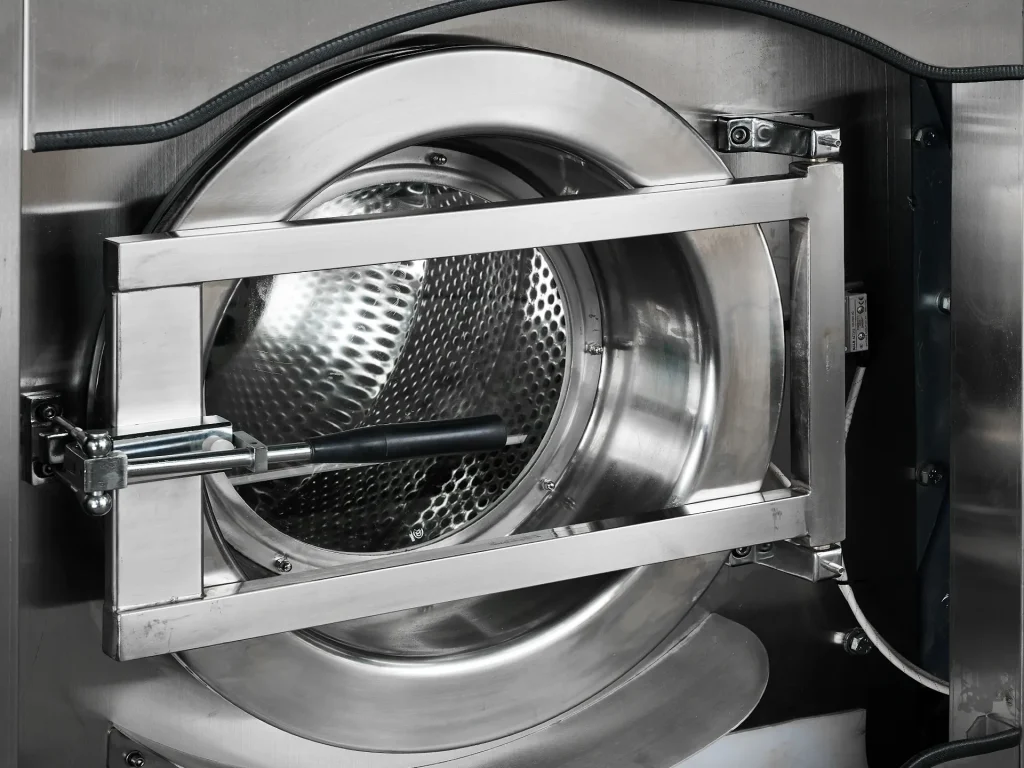
The structural integrity of an industrial washer-extractor begins with its material science. Unlike consumer-grade appliances that utilize plastic tubs, an industrial unit is constructed almost entirely from high-grade stainless steel (typically 304 or 316 grade). The “Inner Drum” is where the linens reside; it is perforated to allow water and chemicals to flow through freely. The “Outer Tub” remains stationary, holding the wash liquor while the inner drum rotates. This “tub-within-a-tub” design must withstand immense hydraulic pressure and the vibration of a 400-pound load spinning at 1,000 RPM.
Beyond the drum, the drive system is the machine’s primary muscle. Modern units in 2026 utilize Variable Frequency Drives (VFDs) paired with heavy-duty induction motors. This setup allows the machine’s computer to control the drum’s speed with incredible granularity. During the wash phase, the motor provides high torque at low speeds to tumble heavy, wet linens. During the extraction phase, the VFD smoothly ramps up the motor to its maximum velocity, managing the “Critical Speed” transition to prevent excessive vibration. This sophisticated drive logic is a significant point of comparison in the Wash-Extractor vs Centrifugal Washer debate, as integrated drives must be far more versatile than those found in standalone extractors.
The Working Principle Phase 1: Loading and Pre-Wash Logic
The industrial washer-extractor working principle begins long before the water starts flowing. It starts with the physics of the load. To achieve optimal cleaning, the machine must be loaded to approximately 80% to 90% of its rated capacity. This is not just about efficiency; it is about “Mechanical Action.” If the drum is too full, the linens cannot move; if it is too empty, they simply slide along the bottom. The ideal load allows for “Lofted Agitation,” where the fabric is carried to the top of the drum by internal lifter ribs and dropped back into the wash water with significant force.
Once the door is sealed and the cycle begins, the machine enters the “Pre-Wash” or “Break” phase. High-capacity water inlet valves, often 2 to 3 inches in diameter, fill the outer tub rapidly. During this phase, the PLC (Programmable Logic Controller) signals the chemical injection system to deliver the first dose of alkali. This chemical increases the pH level of the water, causing the fibers of the fabric to “swell.” This swelling releases the grip that soil and grease have on the textile, suspending the contaminants in the water so they can be flushed away in the first drain cycle.
The Working Principle Phase 2: Thermal and Chemical Interaction
The second phase of the industrial washer-extractor working principle is defined by the “Sinner’s Circle”—a fundamental laundry theory that balances Time, Temperature, Mechanical Action, and Chemistry. If one of these factors is reduced, the others must be increased to achieve the same level of clean. Industrial machines excel at managing the “Temperature” variable through direct steam injection. A steam solenoid valve opens, allowing high-pressure steam to enter the wash liquor directly, heating the load to 160°F or higher in a matter of minutes.
Simultaneously, the “Chemistry” is managed through a multi-port manifold. Each machine is connected to a bank of peristaltic pumps that deliver precise milliliters of detergent, bleach, and neutralizers at specific intervals. In 2026, this process is entirely automated. The machine’s computer monitors the water temperature and only triggers the bleach injection once the water is hot enough to activate the oxidizing agents but not so hot that it damages the fibers. This level of precision ensures that a facility can guarantee a 99.9% disinfection rate, which is a requirement for healthcare-grade laundry standards.
The Extraction Phase: Centrifugal Force and G-Force Engineering
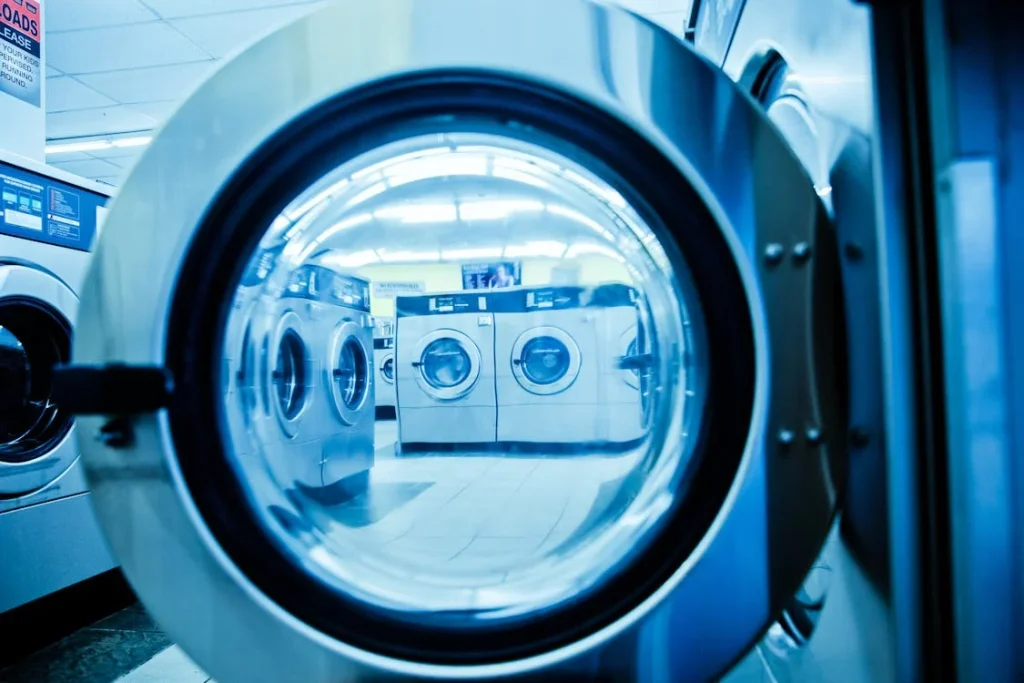
The defining moment of the industrial washer-extractor working principle occurs during the transition from the final rinse to the high-speed extract. This is where the machine transforms from a gentle tumbler into a high-powered centrifuge. As the water drains from the outer tub, the VFD (Variable Frequency Drive) begins to ramp up the drum’s RPM. The physics at play here is “Centrifugal Force,” which pulls the wet linen against the perforated walls of the inner drum, squeezing water out of the fabric pores and into the stationary outer tub.
In the 2026 industrial landscape, the efficiency of this phase is measured by “G-Force.” A machine with a high G-force rating (typically 350G to 450G) can remove significantly more moisture than a low-spin unit. This is critical because every drop of water removed mechanically by the washer is a drop that does not need to be evaporated by the dryer using expensive natural gas or electricity. The mechanical stress during this phase is immense; if the load is not perfectly balanced, the machine’s sensors will detect a “harmonic imbalance” and automatically slow down the drum to redistributing the weight before attempting the high-spin again.
The Physics of the “Wash Formula”: The Digital Brain
At the heart of every modern industrial washer-extractor working principle is the Programmable Logic Controller, or PLC. This is the “brain” of the machine that manages the “Wash Formula.” A formula is a pre-programmed sequence of steps—Fill, Chemical Inject, Agitate, Drain, and Spin—that are customized for specific textile types. For example, a formula for surgical linens will include a high-temperature “Thermal Disinfection” step, whereas a formula for delicate hotel bedsheets will prioritize “Cool-Down” rinses to prevent fabric wrinkling.
The PLC does more than just follow a timer; it monitors real-time data from a network of sensors. These include pressure transducers that measure water levels to within a millimeter, thermistors that track water temperature, and flow meters that ensure the chemical pumps have delivered the correct dosage. In 2026, these PLCs are often connected to a facility’s “Laundry Management Software,” allowing managers to track water and chemical consumption for every single load. This data-driven approach is a key differentiator when comparing a Wash-Extractor vs Centrifugal Washer, as integrated systems offer much more granular control over the initial cleaning chemistry.
Water Management: Drainage, Inlets, and Reclamation
The industrial washer-extractor working principle requires massive amounts of water to be moved quickly. To minimize “dead time” between cycles, industrial machines are equipped with high-capacity inlet valves and oversized gravity drains (often 3 to 4 inches in diameter). A 100 lb washer-extractor can fill or drain its entire water volume in less than 60 seconds. This speed is essential for maintaining high “Pounds Per Operator Hour” (PPOH) across a 24-hour shift.
In response to global water scarcity, many 2026 models feature a “Dual-Drain” system for water reclamation. During the final rinse cycles—where the water is relatively clean—the PLC redirects the discharge into a specialized recovery tank instead of the sewer. This recycled water is then filtered and treated to be used as the “Initial Break” water for the next load. This “Closed-Loop” logic can reduce a facility’s total water consumption by up to 40%, significantly lowering the total costs of industrial laundry operations over the machine’s lifespan.
Safety Systems and Operational Sensors
Because of the high speeds and heavy loads involved, the industrial washer-extractor working principle must be supported by redundant safety systems. The most critical of these is the “Door Interlock” mechanism. This system uses a combination of mechanical locks and electromagnetic sensors to ensure that the door cannot be opened while the drum is in motion or if there is water still in the tub. If the power fails, the machine is designed to remain locked until a manual override is safely engaged by a technician.
Vibration monitoring is another advanced feature of 2026 technology. High-end washer-extractors are outfitted with 3-axis accelerometers that monitor the “harmonic signature” of the machine. If the sensors detect a vibration frequency that suggests a bearing is beginning to wear or that the suspension springs are weakening, the machine will send an automated alert to the maintenance team. This “Predictive Maintenance” prevents catastrophic failures and ensures that the machine remains the most reliable technical component of the industrial laundry guide 2026 infrastructure.
Post-Wash Dynamics: Balancing and Distribution Logic
The final stage of the industrial washer-extractor working principle is the “Distribution” phase, which occurs immediately before the high-speed extract. After the final rinse water has drained, the drum does not immediately jump to 800 RPM. Instead, it performs a series of “Lacing” rotations—low-speed oscillations designed to spread the wet linen evenly across the inner circumference of the drum.
If the linens are clumped on one side, the centrifugal force would create a “Dynamic Imbalance,” potentially damaging the main bearings or the suspension springs. In 2026, advanced machines use “Inertia Sensing” to calculate the exact weight distribution of the load. If the balance is not within a 5% tolerance, the PLC will reverse the drum direction and try the distribution again. This intelligent handling is a primary reason why modern units have a much longer lifespan than the mechanical models of the past, as explored in the Industrial Washer-Extractor: The 2026 Ultimate Technical & Purchasing Guide.
Integration: From Extraction to the Drying Tumbler
A common misunderstanding of the industrial washer-extractor working principle is that it operates in isolation. In reality, the efficiency of the washer dictates the productivity of the entire plant. The goal of the extraction phase is to achieve a “Residual Moisture Content” (RMC) of approximately 50%. This means that for every 100 lbs of dry linen, only 50 lbs of water remain in the fabric after the spin.
If the extraction is inefficient, the drying tumblers must work twice as hard, consuming significantly more natural gas. High-performance facilities utilize a “Linked Logic” system where the washer communicates its final extraction data to the dryer. If a load of heavy towels has an RMC of 55%, the dryer automatically adjusts its heat profile to compensate. This seamless transition is the core of a profitable Wash-Extractor vs Centrifugal Washer production line, where every second saved in the wash room is a cent saved in the utility budget.
Maintenance of Critical Parts: Preventing Mechanical Fatigue
To maintain the industrial washer-extractor working principle over a twenty-year lifecycle, a facility must treat the machine’s parts with the same care as an aircraft engine. The “Bearing Housing” is the most vulnerable component. Because it is constantly exposed to high-pH chemicals and high-temperature water, the seals must be inspected every 1,000 hours of operation. If a seal leaks, water can enter the grease-packed bearings, leading to a “Seizure” that can halt production for days.
Furthermore, the “V-belts” or “Direct Drive Couplings” that connect the motor to the drum must be checked for tension and alignment. A slipping belt reduces the G-force of the extraction phase, silently increasing your drying costs. In 2026, many technicians use ultrasonic sensors to “listen” to the belt’s frequency, ensuring it is tuned to the exact tension required for peak torque. This level of preventative maintenance is the only way to ensure that the machine remains a reliable asset rather than a liability on the balance sheet.
FAQs: Industrial Washer-Extractor Working Principle
How does a washer-extractor differ from a standard washing machine? The primary difference is the “Extraction” force. A standard machine might reach 100G, but an industrial washer-extractor working principle relies on 350G to 450G. Additionally, industrial units use “Direct Steam Injection” for heating, whereas domestic machines use slower electric elements.
Why does the machine tilt forward at the end of the cycle? This is a feature of large-capacity machines (250 lbs+). To assist with unloading heavy, wet “cakes” of linen, the entire machine frame tilts 15 to 20 degrees. This allows the linen to slide out onto a conveyor, significantly reducing manual labor and worker injury risks.
Can the PLC detect if I use too much detergent? Yes. Modern sensors can measure the “Conductivity” of the wash water. If the detergent levels are too high, the water becomes more conductive. The PLC will then trigger an additional rinse cycle to ensure all chemical residue is removed, protecting the skin of the end-user and the integrity of the fabric.
What is the role of the “Inverter” in the motor? The inverter (or VFD) is the component that allows the motor to change speeds smoothly. It converts the incoming electrical frequency into a variable signal, allowing the drum to move from 30 RPM (Wash) to 1,000 RPM (Extract) without a massive “Power Spike” that could trip the building’s circuit breakers.
Is ozone cleaning part of the working principle? In 2026, many machines are retrofitted with ozone generators. Ozone is injected into the cold water inlet, acting as a powerful disinfectant. This changes the industrial washer-extractor working principle by allowing for high-level sanitation without the need for high-temperature steam, saving significant energy.
Conclusion: The Engineering Excellence of 2026
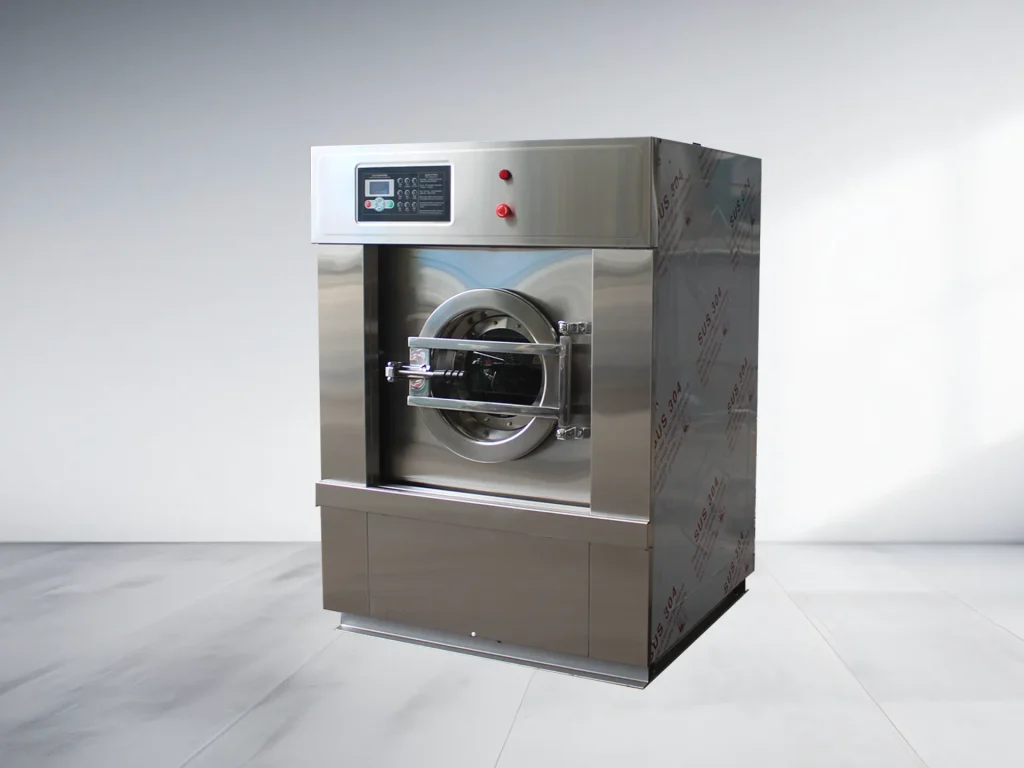
The industrial washer-extractor working principle is a testament to how far laundry technology has come. By balancing the “Sinner’s Circle” through automated PLCs, high-G extraction, and precision chemical dosing, these machines have become the ultimate tool for commercial hygiene. For any business owner, the machine is not just a box that cleans clothes; it is a meticulously engineered batch processor that turns raw utilities into a high-quality finished product. Understanding the parts and the physics behind the spin is the best way to ensure your facility remains competitive, efficient, and profitable for years to come.
 English
  Spanish