
Table of Contents
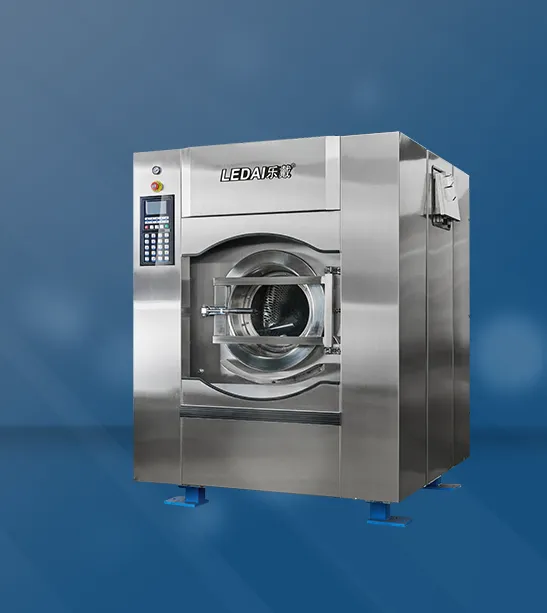
In the high-pressure world of industrial laundry, the decision between a wash-extractor vs centrifugal washer is not merely a choice of hardware; it is a fundamental strategic decision that will define your facility’s operational rhythm for decades.
As we move through 2026, the demand for higher throughput and lower energy consumption has pushed both technologies to their engineering limits. While both machines aim for the same objective—delivering clean, relatively dry textiles—they achieve this through vastly different mechanical pathways. Understanding the nuances between these two systems is critical for facility managers who need to balance capital expenditure with long-term utility efficiency.
The modern laundry ecosystem has evolved past the era of simple agitation. Today, we view these machines as sophisticated processors of chemistry and physics. The choice often boils down to a debate between “Integration” and “Specialization.”
The wash-extractor offers an all-in-one solution that simplifies labor, whereas the centrifugal washer—often paired with a separate wash unit—represents a high-speed, high-volume approach to moisture removal. To properly evaluate these options, one must first consult a Technical Guide for Industrial Washer-Extractors to understand the baseline capabilities of integrated systems before comparing them to the specialized power of standalone centrifugal extractors.
Defining the Wash-Extractor: The All-in-One Solution
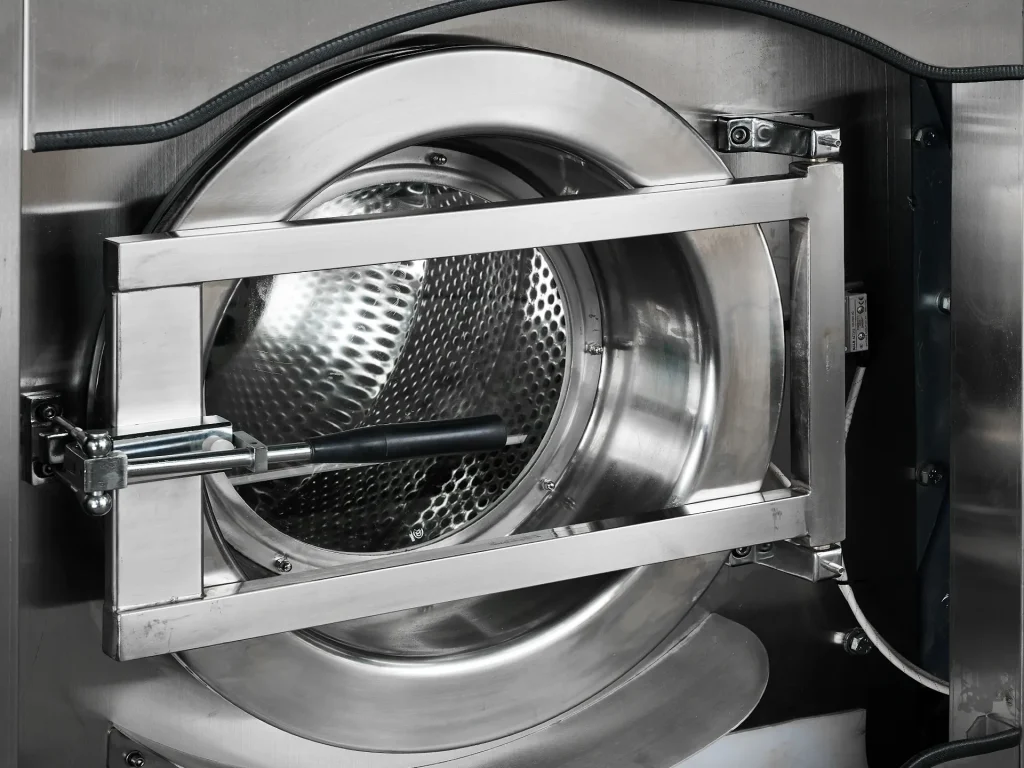
The wash-extractor is the versatile heart of the majority of mid-to-large-scale laundries. Its primary appeal lies in its “one-step” philosophy. In this machine, the entire wash formula—including the pre-wash, suds, multiple rinses, and final high-speed extraction—occurs within a single drum. This eliminates the need for manual transfer between different machines while the linens are at their heaviest (wet) state. For many business owners, this reduction in manual labor is the single most important factor in their ROI calculation.
From a mechanical standpoint, the wash-extractor is a masterpiece of balance. It must be rugged enough to handle heavy, slow-speed agitation during the wash cycle, yet precise enough to accelerate to over 1,000 RPM for the final spin.
In 2026, these machines are equipped with advanced inverter drives that manage the transition between these two extremes with minimal vibration. Because the wash and extraction happen in the same space, the machine can also utilize the heat from the final rinse to “soften” the water extraction process, making it highly effective for hospitality linens that require a specific tactile feel.
Defining the Centrifugal Washer: The Specialized Giant
When we discuss the centrifugal washer (often referred to simply as a centrifugal hydro extractor or a centrifuge), we are talking about a machine built for one purpose: speed. In many heavy-industrial or high-volume healthcare plants, the washing occurs in a separate unit—either a dedicated washer or a tunnel module—and the wet textiles are then transferred to a massive, vertical centrifuge for moisture removal.
This specialization allows the centrifuge to be engineered with an incredibly high G-force that often exceeds what an integrated wash-extractor can achieve.
The logic behind the centrifugal washer is throughput. While a wash-extractor is “occupied” for the entire 45-minute wash cycle, a standalone centrifuge can be processing a new batch every 10 to 15 minutes. This “de-coupled” workflow means that the extraction phase is never the bottleneck in your production line.
In 2026, many centrifugal units feature a “top-loading” or “sling-loading” design, where an overhead rail system drops several hundred pounds of wet linen into the basket instantly. This high-speed logic is the hallmark of massive regional laundry hubs that prioritize volume over all else.
The Engineering of Water Removal: G-Force Analysis
To settle the wash-extractor vs centrifugal washer debate, one must look at the physics of moisture retention. Moisture retention is the amount of water left in the fabric after the final spin, and it is directly controlled by G-force. In a standard wash-extractor, the G-force is typically capped around 350G to 400G because the suspension must also accommodate the mechanical agitation of the wash cycle. While this is sufficient for most applications, it still leaves a significant amount of moisture for the dryers to handle.
A standalone centrifugal washer, however, can often push the boundaries toward 500G or higher. Because the machine does not need to “tumble” the laundry for washing, its entire structural design—from the oversized bearings to the vertical shaft—is optimized for extreme rotational velocity. In the context of 2026 energy prices, the difference between 350G and 500G can result in a 15% reduction in natural gas consumption in the drying phase. This makes the centrifuge an incredibly attractive option for facilities processing heavy towels or industrial mats, where water retention is naturally high.
Workflow Efficiency: Single Batch vs. Continuous Processing
The operational choice between a wash-extractor vs centrifugal washer often comes down to the floor plan and the labor budget. A wash-extractor is a “horizontal” solution; it takes up a specific amount of square footage but requires very little overhead height.
It is a “load-it-and-leave-it” machine. An operator loads the soiled linen, starts the program, and returns 50 minutes later to find the linen ready for the dryer. This simplicity makes it ideal for OPL (On-Premise Laundry) environments where the staff may have multiple responsibilities beyond just laundry.
Conversely, the centrifugal washer system requires a more active “horizontal-to-vertical” workflow. Since the centrifuge is often top-loaded, the facility must have the ceiling height for overhead slings or conveyors.
This system is designed for a continuous “relay race.” As one batch is being washed, the previous batch is in the centrifuge, and the one before that is already in the dryer. This creates a relentless production rhythm that can process thousands of pounds of linen per hour with fewer machines, provided the logistics of the “transfer” are fully automated.
Textile Longevity: Which Method is Gentler?
A critical factor in the wash-extractor vs centrifugal washer debate is the long-term effect on “Linen Replacement Rates.” In the hospitality sector, where 600-thread-count cotton is a standard investment, the mechanical stress applied during moisture removal can significantly shorten the fabric’s lifespan. In a standard wash-extractor, the fabric is subjected to “Centrifugal Pinning” against a horizontal drum.
Because the drum is perforated with thousands of small holes, the high-speed spin forces the fibers into these micro-cavities. If the G-force is too high or the drum pattern is poorly engineered, this results in “Dimpling” or fiber-shedding over time.
However, the standalone centrifugal washer (or hydro extractor) typically utilizes a vertical basket. The loading process for these machines often involves a “Sling” or “Bag” that contains the wet linen. During the spin, the fabric is pressed against the solid or perforated vertical walls of the basket. Because the centrifugal force is applied more uniformly across the vertical axis, there is often less “tumble-stress” during the transition from wash to extract.
For heavy-duty items like floor mops or industrial rugs, the centrifuge is undeniably superior because it can handle the intense weight shifts that would cause a horizontal wash-extractor to “trip” or shut down due to an out-of-balance error.
Maintenance and Mechanical Reliability
From a maintenance perspective, the two systems offer vastly different challenges. The wash-extractor is an “All-in-One” mechanical assembly, which means its components must be multi-functional. The main bearings, for instance, must handle the low-speed, high-torque agitation of the wash cycle and the high-speed, low-torque velocity of the extraction phase.
This dual-requirement puts immense stress on the lubricant seals and the inverter drive. If the main bearing fails on a wash-extractor, the entire machine—both the washing and the extracting capabilities—is offline. This creates a “Single Point of Failure” that can paralyze a smaller facility.
The centrifugal washer system, by contrast, is a study in “Mechanical Decoupling.” Because the washing and extracting happen in separate housings, the motors and bearings are optimized for a single type of motion. A centrifuge motor only needs to spin in one direction at high speeds; it doesn’t need the complex gearing or multi-directional logic of a washer. This specialization typically results in a longer “Mean Time Between Failures” (MTBF) for the centrifuge itself.
Furthermore, if the centrifuge requires maintenance, a facility with multiple wash units can often “bypass” the extractor and move wet linen directly to a backup press or a low-speed tumbler, maintaining at least partial productivity. This reliability is a key focus of the Industrial Washer-Extractor: The 2026 Ultimate Technical & Purchasing Guide, which advises on building redundancy into your wash floor.
The Economic Decision: ROI and Total Cost of Ownership
When calculating the return on investment for a wash-extractor vs centrifugal washer, one must look beyond the initial purchase price. The wash-extractor is almost always cheaper to install because it requires less overhead infrastructure. You don’t need sling rails, hoist motors, or complex mezzanine floors. For an OPL (On-Premise Laundry) in a hotel basement, the wash-extractor is the clear financial winner in terms of “Capital Expenditure” (CapEx).
However, for a high-volume commercial plant processing over 20,000 pounds a day, the “Operating Expenditure” (OpEx) of the centrifugal washer becomes the dominant factor. Because a centrifuge can achieve a lower “Residual Moisture Content” (RMC)—often 5% to 8% lower than a standard extractor—the downstream savings in natural gas for the dryers are astronomical.
Over a five-year period, a centrifuge that reduces drying time by just four minutes per load can save a facility tens of thousands of dollars in utility bills. This makes the “Total Cost of Ownership” for a centrifuge system lower in high-volume scenarios, despite the higher upfront costs for rigging and automation.
The “Batch Integrity” Factor
In 2026, many industrial clients—particularly in the healthcare and high-tech cleanroom sectors—require strict “Batch Integrity.” This means that Load A must never be contaminated by the residual water or lint from Load B. The wash-extractor is naturally suited for this, as the entire process happens in a self-contained, sealed drum that can be chemically sanitized between cycles.
The centrifugal washer system, especially those using “Sling Loading,” requires more careful management to ensure hygiene. Because the linen is moved from a washer to a centrifuge, there is a “transfer window” where the wet textiles are exposed to the facility’s air. For most hospitality uses, this is irrelevant.
However, for medical-grade laundry, this transfer must occur within a “Clean Room” environment or via a “Barrier System.” Understanding these sector-specific requirements is essential for facility managers, as outlined in our 2026 Strategy Guide for On-Premise vs. Outsourcing.
Comparative Analysis: Technical Performance Metrics
To truly settle the wash-extractor vs centrifugal washer debate, one must look at the data. While both machines serve the same industry, their performance envelopes are designed for different operational scales. The following table highlights the critical engineering differences that dictate their use in a 2026 facility.
Service Model Comparison: Washer-Extractor vs. Centrifugal Hydro Extractor
| Feature | Industrial Washer-Extractor | Centrifugal Hydro Extractor |
| Primary Motion | Horizontal Agitation & Spin | Vertical High-Speed Rotation |
| G-Force Range | 300G – 400G (Integrated) | 450G – 750G+ (Specialized) |
| Batch Loading | Manual or Front-Load Tilting | Top-Load / Sling / Conveyor |
| Chemical Precision | High (Integrated PLC dosing) | N/A (Extraction only) |
| Labor Intensity | Low (Single-touch processing) | Medium (Transfer required) |
| Best For | Hotels, Spas, Small Hospitals | Regional Hubs, Industrial Uniforms |
| Floor Space | Compact / Horizontal | Significant (Requires height/rigging) |
As evidenced by the data, the wash-extractor is the king of “Versatility,” whereas the centrifugal washer (hydro extractor) is the king of “Moisture Removal.” For a facility manager, the “Break-Even Point” usually occurs when the cost of the extra labor needed to transfer wet linen to a centrifuge is offset by the massive reduction in natural gas consumption in the dryers. For a deeper look at these utility calculations, refer to our Complete Breakdown of Industrial Laundry Costs 2026.
Decision Matrix: Which is Better for Your Sector?
Selecting between a wash-extractor vs centrifugal washer requires a vertical-specific approach. Not all linens respond to centrifugal force in the same way, and the hygiene requirements of different industries can dictate the mechanical choice.
Hospitality and Fine Dining
For luxury hotels and high-end restaurants, the wash-extractor is almost always the superior choice. The horizontal mechanical action is gentler on delicate fibers, and the integrated “Cool-Down” cycles prevent thermal shock to cotton linens. Furthermore, because these facilities often process smaller batches of varied items (terry towels, bedsheets, table linens), the flexibility of a programmable wash-extractor outweighs the raw speed of a centrifuge.
Heavy Industrial and Mats
In the “Heavy Soil” sector—processing floor mats, oil-saturated rags, and heavy canvas coveralls—the centrifugal washer is the undisputed champion. These items hold an immense amount of water, often doubling or tripling their dry weight. A horizontal wash-extractor would struggle to balance such a heavy, non-uniform load during extraction. A vertical centrifuge, however, can distribute that weight more effectively, removing the bulk of the water and saving the facility hours of drying time.
Healthcare and High-Volume Institutional
Large-scale hospitals often use a hybrid approach. They utilize a Tunnel Washer System for high-volume bedsheets, but they keep a battery of wash-extractors for specialty surgical linens and patient gowns that require specific chemical protocols. In these high-volume settings, a centrifuge is often used as a “backup” or “overflow” extractor to ensure that the production line never stops if an integrated machine fails.
Conclusion: The Strategic Choice for 2026
In the final analysis, the wash-extractor vs centrifugal washer comparison is a choice between “Process Integration” and “Extraction Performance.” For most on-premise laundries and boutique commercial plants, the wash-extractor remains the most logical investment. It minimizes labor, reduces the footprint of the washroom, and provides a level of chemical control that is unmatched by two-stage systems.
However, for the industrial giants of 2026—those facilities processing tens of thousands of pounds per day—the centrifugal hydro extractor is the secret to high-margin profitability. By stripping moisture away with 700G of force, these machines drastically reduce the facility’s carbon footprint and energy expenditure. Ultimately, the best choice is the one that aligns with your volume, your fabric types, and your long-term energy goals. By consulting our Industrial Washer-Extractor Guide, you can ensure that your next equipment purchase is backed by the latest in laundry science and engineering.
FAQs: Wash-Extractor vs Centrifugal Washer
Which machine is better for reducing drying time?
The centrifugal washer is significantly more effective at reducing drying time. Because it can reach higher G-forces (often 500G+), it removes more residual moisture than a standard wash-extractor, which usually tops out at 400G.
Is it true that centrifuges are harder on linens?
Yes, in some cases. The extreme pressure of 600G+ can force delicate fibers against the basket walls, leading to “pitting” or dimpling. For high-end hospitality linens, the moderate extraction of a wash-extractor is generally preferred to maintain fabric “hand” and longevity.
Can a centrifugal washer perform the actual wash?
No. Despite the name “centrifugal washer” being used colloquially in some regions, a centrifuge (hydro extractor) is a dedicated moisture removal machine. It does not have the plumbing or the mechanical agitation required to perform a chemical wash. It must be paired with a separate washer or a tunnel system.
Which machine is more prone to vibration issues?
The wash-extractor is more prone to “out-of-balance” errors. Because the drum is horizontal, an uneven distribution of heavy towels can cause the machine to shake violently. A vertical centrifuge is naturally more stable because the weight is distributed around a vertical axis of rotation.
How much space do I need for a centrifugal system?
A centrifugal system requires more “Vertical Space” than a wash-extractor. Because they are often top-loaded via overhead slings or hoists, you generally need a ceiling height of at least 15 to 20 feet to operate the loading and unloading equipment safely.
 English
  Spanish