
Table of Contents
In the modern industrial laundry environment of 2026, where profit margins are tightly coupled with utility efficiency and equipment uptime, a robust industrial washer-extractor maintenance checklist is not merely a suggestion—it is a financial necessity. These machines are the workhorses of the facility, often operating for eighteen to twenty-four hours a day under extreme mechanical stress. Without a disciplined approach to preventative maintenance, a minor $50 seal leak can quickly escalate into a $5,000 bearing failure, leading to catastrophic downtime that ripples through your entire production schedule.
The transition from “Reactive Maintenance” (fixing things when they break) to “Preventative Maintenance” (ensuring they don’t break) is the hallmark of a world-class laundry operation. To master this, one must first have a deep technical understanding of the equipment, as outlined in the Industrial Washer-Extractor: The 2026 Ultimate Technical & Purchasing Guide. By treating your machinery as a high-precision asset rather than a simple utility box, you can extend the operational life of your washer-extractor from a standard ten years to a remarkable twenty years or more.
The Engineering of Durability: Why Parts Fail
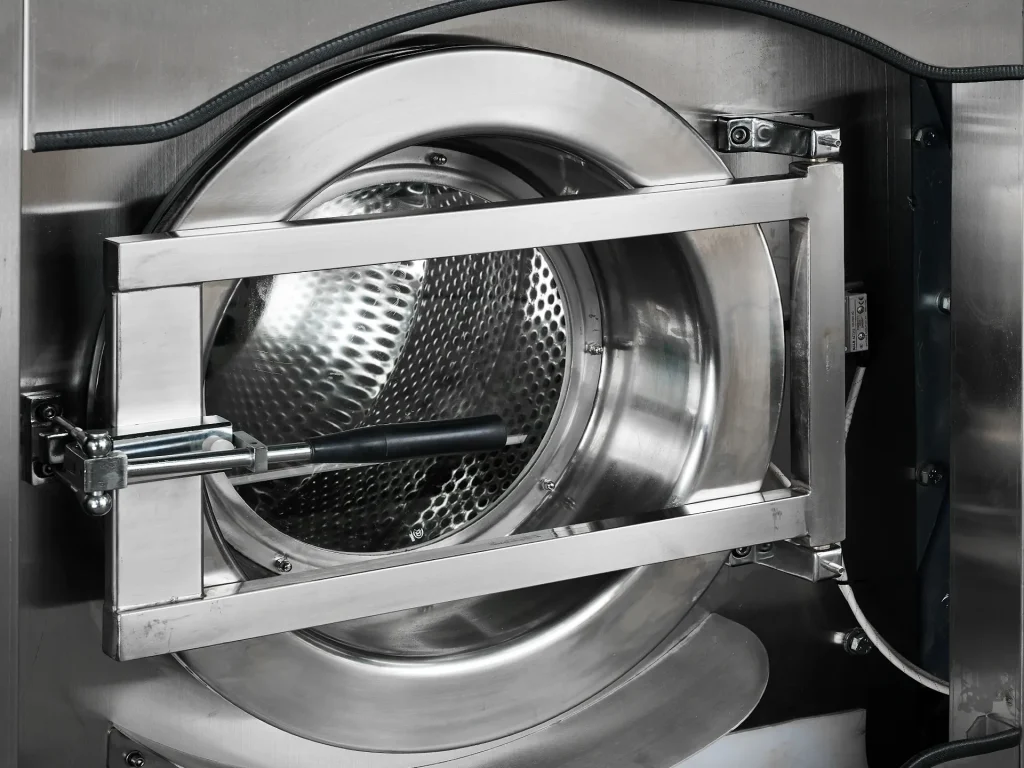
To effectively use an industrial washer-extractor maintenance checklist, it is vital to understand the “Silent Killers” of industrial machinery. The first is vibration. During the high-speed extraction phase, where G-forces can reach 400G or higher, even a slight imbalance creates immense stress on the main shaft and bearings. Over time, this harmonic vibration can loosen bolts, crack welds, and cause electrical components to fail prematurely. This is why the Industrial Washer-Extractor Working Principle emphasizes the importance of a perfectly balanced drum and a robust suspension system.
The second killer is chemical corrosion. The highly alkaline detergents, acidic sours, and oxidizing bleaches used in commercial laundry are inherently aggressive. If seals are not checked and chemical dispensers are not flushed daily, these chemicals will eventually find their way into sensitive mechanical areas. Finally, heat plays a role. The constant cycling of steam for water heating and the friction generated by high-speed motors create a thermal expansion and contraction cycle that can fatigue metal parts over time. A professional maintenance plan acts as a strategic defense against these three forces.
Tier 1: The Daily Inspection Protocol
The first section of any industrial washer-extractor maintenance checklist must focus on daily tasks that can be performed by the machine operator. These tasks are designed to catch small problems before they become operational emergencies. The most critical daily check is the “Safety Interlock” system. In 2026, industrial safety standards are non-negotiable; ensuring the door lock mechanism and the emergency stop buttons are functional is the primary responsibility of every shift manager.
Beyond safety, the daily routine should include a thorough cleaning of the chemical dispenser drawer. Residual soap and bleach can dry into a hard crust, blocking the flow of chemicals and leading to uneven wash results. Operators should also inspect the water inlet hoses and drain valves for any visible leaks. A small drip in the morning can lead to a flooded washroom by the evening, potentially damaging the facility’s flooring and creating a slip hazard. Finally, the debris filter—often called the “button trap”—must be cleared at the end of every shift. Foreign objects like coins, nails, or pens can cause significant damage to the drain pump if allowed to bypass the filter.
The Importance of Operational Cleanliness
Maintaining the “Exterior” of the machine is just as important as the interior. Dust and lint are the primary causes of electrical fires in laundry facilities. Daily wiping of the control panel and the motor housing prevents lint accumulation from clogging the cooling fans of the Variable Frequency Drive (VFD). In 2026, most high-efficiency machines rely on sophisticated electronics to manage the Industrial Washer-Extractor vs Traditional ROI metrics, and these electronics are highly sensitive to overheating caused by dust buildup.
Furthermore, a clean machine makes it much easier to spot a new leak or a loose belt. When the exterior is covered in grime and old chemical spills, a technician might miss the early warning signs of a failing seal. By instilling a “Culture of Cleanliness” on the wash floor, you empower your staff to take pride in the equipment, which naturally leads to better long-term maintenance outcomes. This daily discipline is the foundation upon which all other preventative measures are built.
Tier 2: The Weekly Performance Audit
Moving beyond daily visual checks, the second stage of a professional industrial washer-extractor maintenance checklist involves a weekly mechanical audit usually performed by a lead operator or an on-site maintenance technician. The primary focus during this audit is the drive system. Industrial machines utilize heavy-duty V-belts or direct-drive couplings to transfer torque from the motor to the drum. Over a week of continuous operation, these belts can stretch slightly due to the heat generated by friction.
A technician should check the belt tension to ensure it remains within the manufacturer’s specified deflection range. A loose belt leads to “Slippage,” which generates excessive heat and reduces the G-force efficiency of the extraction cycle. Conversely, a belt that is too tight puts undue lateral stress on the motor bearings and the drum shaft. This balance is a critical technical nuance discussed in the Industrial Washer-Extractor: The 2026 Ultimate Technical & Purchasing Guide, where drive efficiency is linked directly to utility savings. During this weekly check, it is also essential to inspect the belts for “glazing” or fraying, which are early indicators of imminent failure.
Tier 3: The Monthly Deep-Dive Checklist
The monthly segment of your industrial washer-extractor maintenance checklist is where the most significant preservation work occurs. This is the “Technical Deep-Dive” that prevents major component overhauls. The cornerstone of monthly maintenance is lubrication. High-speed industrial bearings are housed in massive cast-iron blocks and require specialized high-temperature grease. A technician must purge the old grease and apply a fresh, measured amount to ensure the bearings run cool during the 400G extraction phases.
Over-greasing is just as dangerous as under-greasing; excessive lubricant can blow out the bearing seals, allowing wash water and caustic chemicals to enter the bearing race. This chemical intrusion is the leading cause of bearing “Pitting,” which results in a loud, grinding noise and eventual seizure of the drum. Beyond lubrication, the monthly audit must include an inspection of the “Water Inlets and Steam Valves.” In regions with hard water, calcium and mineral scale can build up inside the solenoid valves, preventing them from closing fully. A leaking water valve not only wastes resources but also alters the chemical concentration of the wash, negatively impacting the Industrial Washer-Extractor Working Principle of precision cleaning.
Inspecting the Suspension and Balancing System
Modern 2026 washer-extractors often feature “Soft-Mount” technology, utilizing a sophisticated array of heavy-duty springs and hydraulic shock absorbers to dampen vibration. As part of the monthly industrial washer-extractor maintenance checklist, these suspension components must be inspected for signs of “Fatigue.” A leaking shock absorber or a sagging spring will cause the machine to vibrate excessively during high-spin cycles, potentially triggering the “Out-of-Balance” sensor and halting production.
Technicians should also verify the calibration of these vibration sensors. If a sensor is too sensitive, it will trip unnecessarily; if it is not sensitive enough, it could allow the machine to “walk” across the floor, causing structural damage to the frame or the plumbing connections. This mechanical stability is what separates a professional Industrial Washer-Extractor vs Traditional Machine in terms of longevity. While a domestic machine would simply shake itself to pieces, an industrial unit relies on this monthly suspension check to maintain its twenty-year service life.
Electrical and PLC System Integrity
The final component of the monthly audit is the electrical cabinet. High-voltage connections can loosen over time due to the machine’s inherent vibrations. A technician should use an infrared thermal camera to scan the electrical contactors and the Variable Frequency Drive (VFD) while the machine is under load. “Hot Spots” on the thermal scan indicate loose wires or failing components that could lead to an electrical fire or a sudden PLC (Programmable Logic Controller) failure.
In 2026, the digital health of the machine is just as important as the mechanical health. The monthly checklist should include a “Software Diagnostic” check to ensure the PLC is recording cycle data correctly. This data is vital for tracking Wash-Extractor Capacity Selection efficiency and ensuring that the machine is not being consistently overloaded or short-loaded by the staff. By keeping the electrical and digital systems in peak condition, you ensure that the machine’s “Brain” is just as durable as its “Bones.”
Tier 4: The Quarterly and Annual Mechanical Overhaul
The pinnacle of any industrial washer-extractor maintenance checklist is the long-term structural audit. While daily and monthly tasks focus on moving parts, the quarterly and annual inspections focus on the “Structural Integrity” of the machine’s frame and outer tub. In high-volume 2026 laundry facilities, the chemical environment is inherently corrosive. Over a year of operation, microscopic leaks or chemical “mists” can settle on the carbon steel frame that supports the stainless steel tub, leading to “Oxygen Pitting” or oxidation.
During the quarterly audit, a senior technician should perform a “Frame Stress Test,” checking for hairline cracks in the suspension mounts and the base bolts. If the machine is “Hard-Mounted” to a concrete pad, the anchor bolts must be torqued to the original manufacturer’s specifications. A loose anchor bolt allows the machine to vibrate at a “Harmonic Frequency” that can eventually shatter the bearing housing. Furthermore, an annual “Chemical Manifold Flush” is required. This involves descaling the entire internal plumbing system to remove calcium deposits that restrict water flow, ensuring the machine continues to meet the Wash-Extractor Capacity Selection throughput targets.
The Technician’s Matrix: Troubleshooting Common Failures
Even with a perfect industrial washer-extractor maintenance checklist, mechanical anomalies can occur. The key to maintaining a high ROI is “Rapid Diagnosis.” In 2026, most machines are equipped with onboard diagnostics that provide error codes, but a seasoned technician relies on physical symptoms to identify the root cause of an issue.
- Excessive Vibration during High-Spin: This is rarely a sensor failure. It is almost always caused by a “Linen Clump” due to an uneven distribution of weight. If the vibration persists with an empty drum, the shock absorbers or springs have likely lost their dampening capacity and must be replaced as a complete set.
- Water Leaking from the Rear of the Drum: This is a definitive sign of a “Main Shaft Seal” failure. This is a critical emergency; if water continues to bypass the seal, it will wash the grease out of the main bearings, leading to a total mechanical seizure within days.
- Slow Fill or No Fill Errors: Before replacing the expensive solenoid valves, check the “Inlet Screens.” These fine mesh filters catch pipe scale and sand from the city water line. A clogged screen reduces water pressure, tricking the PLC into thinking the valve has failed.
By following this troubleshooting logic, a facility can avoid unnecessary part replacements and keep their equipment running according to the Industrial Washer-Extractor vs Traditional ROI projections. Maintaining the machine is an investment in “Operational Certainty.”
FAQs: Industrial Washer-Extractor Maintenance
How often should I grease the main bearings? For a machine running 16 to 24 hours a day, a monthly lubrication schedule is standard. However, you must use a high-temperature, lithium-based grease. Always check the manufacturer’s manual for the exact “Gram Count” per bearing to avoid “Seal Blowout” caused by over-pressurization.
Why is my machine taking longer to fill than usual? This is typically caused by mineral buildup in the inlet valves or a clogged external water filter. If your facility has hard water, you should include a “Descaling” step in your industrial washer-extractor maintenance checklist every six months to keep the internal diameter of the valves clear.
Can I perform maintenance while the machine is running? Absolutely not. “Lock-Out, Tag-Out” (LOTO) procedures are mandatory for all industrial maintenance. The high-voltage electrical panels and the high-torque drive belts pose a significant risk of injury. Never bypass the door interlock sensors during a maintenance check.
Does the chemical brand affect my maintenance needs? Yes. Some low-cost detergents contain high levels of “Inert Fillers” that do not dissolve completely. These solids can settle in the drain valves, causing them to leak or fail to close. Using high-quality, liquid-concentrated chemicals protects the internal plumbing and reduces your long-term maintenance costs.
What is the most common cause of PLC failure? Heat and dust. If the cooling fans on the electrical cabinet are clogged with lint, the Variable Frequency Drive (VFD) and the PLC will overheat. This “Thermal Stress” causes the delicate capacitors on the circuit boards to fail prematurely. Keep the electrical cabinet clean and the fans unobstructed.
Conclusion: The Maintenance Culture of 2026

An industrial washer-extractor maintenance checklist is only as effective as the culture that supports it. In the high-speed industrial laundry market of 2026, the facilities that thrive are those that view maintenance as a “Profit Protector” rather than a “Maintenance Cost.” By implementing the daily, weekly, and monthly tiers of care outlined in this guide, you are essentially buying insurance against downtime and equipment failure.
Whether you are managing a fleet of Centrifugal Washers or a single high-performance washer-extractor, the mechanical laws remain the same: clean, lubricate, and inspect. A machine that is treated with respect will reward its owner with twenty years of reliable, high-G performance, ensuring that your linen assets are protected and your utility bills remain low. Start your preventative maintenance journey today, and turn your washroom into a model of industrial efficiency.
 English
  Spanish