
Table of Contents
1. Introduction – Why the Best Commercial Dryer Matters for Small Laundromats
For small laundromats, choosing the best commercial dryer is a critical business decision. Unlike large-scale industrial facilities, small laundries operate within tight budgets, limited space, and variable daily loads, making every cycle count. Selecting the wrong machine can increase energy bills, reduce throughput, and lead to frequent maintenance issues, ultimately impacting profitability.
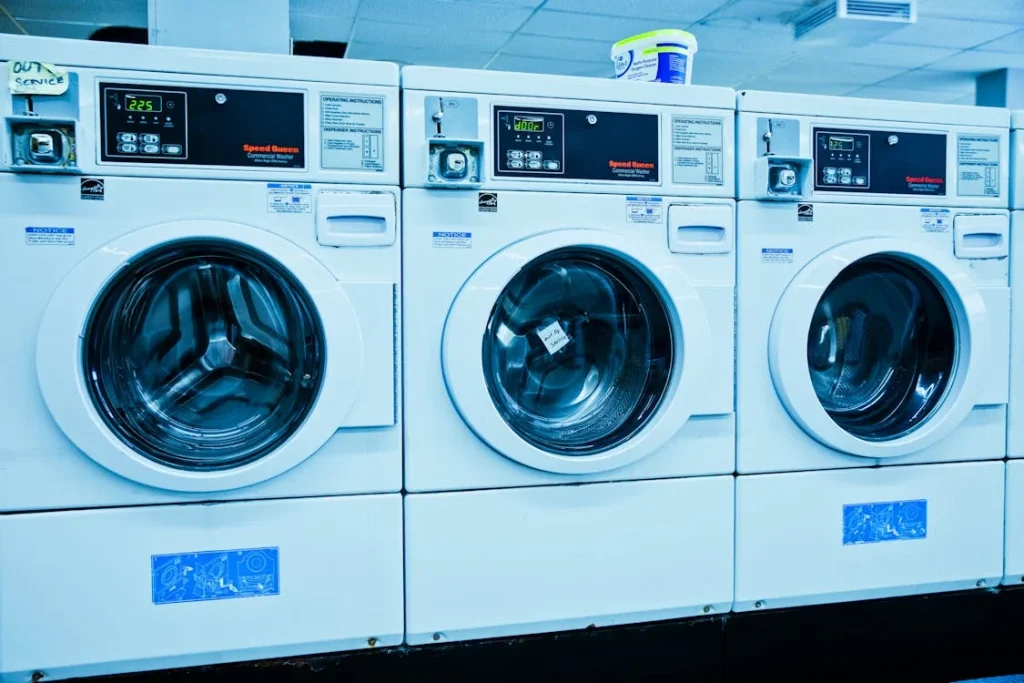
In 2026, small laundromats face additional pressures: rising energy costs, stricter utility regulations, and customer expectations for faster turnaround and consistent linen quality. A dryer that works perfectly on paper may underperform if its capacity, energy efficiency, or installation requirements don’t match the facility’s realities.
Small laundry operators are increasingly shifting from price-driven purchases to data-driven decisions. Choosing the best commercial dryer now involves considering not only upfront cost but also lifecycle cost, throughput efficiency, and maintenance predictability.
2. Core Selection Factors for Small-Scale Operations
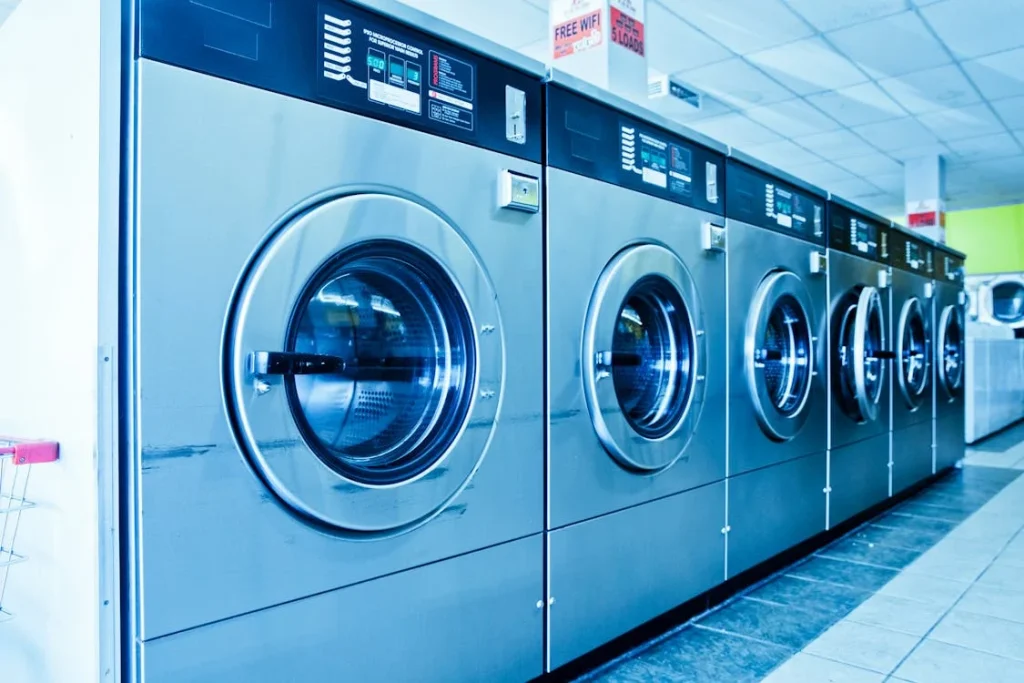
When evaluating the best commercial dryer, small laundromats should weigh five major factors:
- Capacity & Throughput Efficiency – How much laundry can be processed per cycle and per day, and how it matches peak-hour demand.
- Energy Efficiency & Long-Term Operating Cost – How intelligent design reduces electricity or gas consumption.
- Durability & Maintenance Requirements – How robust the machine is and how easy it is to service.
- Automation & Smart Controls – How technology reduces human error and labor costs.
- Installation Feasibility – How well the machine fits existing electrical, ventilation, and space constraints.
Each of these factors interacts with the others. For example, a dryer with very high capacity may require upgraded electrical supply, increasing installation cost. Conversely, a highly efficient machine may reduce energy bills but have a higher upfront price. Evaluating these factors together ensures the dryer meets both operational and financial goals.
Tip: The best commercial dryer is rarely the largest machine; it’s the one that matches your daily load profile and space limitations.
2.1 Capacity vs Throughput Efficiency
Small laundromats usually process 30–75 lbs of laundry per cycle, depending on customer volume and peak hours. Understanding throughput per day is essential: a 50-lb dryer running 12 cycles per day processes 600 lbs, while a 75-lb dryer can handle 900 lbs under the same schedule.
Oversized machines operating below optimal load waste energy, while undersized machines create queues and reduce customer satisfaction.
| Load Range | Recommended Use | Key Considerations |
|---|---|---|
| 30–50 lbs | Boutique laundries | Energy-efficient for small load volume; shorter cycles |
| 50–75 lbs | Mid-size laundromats | Balances throughput and space efficiency; peak-hour handling |
| 75+ lbs | Larger small laundromats | Only if space and infrastructure allow |
A real-world example: A 60-lb dryer in a 400-sq-ft laundromat running 10 cycles daily saves roughly 15–20% energy compared with a 75-lb machine operating at 60% load. Over a year, this can amount to hundreds of dollars in utility savings, demonstrating that the best commercial dryer isn’t always the biggest.
Top Commercial Dryer Comparison & Buying Guide for Laundromats
2.2 Energy Efficiency & Operating Cost
Energy consumption is one of the largest ongoing expenses in a small laundromat. Even a seemingly minor 5–10% efficiency difference compounds over thousands of cycles per year.
Features to prioritize in the best commercial dryer:
- Moisture sensors to prevent over-drying and reduce wasted energy.
- Insulated drum and air circulation optimization for consistent heat distribution.
- Adaptive airflow and heat modulation to shorten cycles without compromising fabric quality.
| Heating Type | Installation Requirement | Operating Cost | Best Use Case |
|---|---|---|---|
| Gas | Requires supply line & pressure check | Lower long-term cost | High-cycle laundromats where gas is affordable |
| Electric | Standard 208–240V | Slightly higher | Budget-conscious small laundries |
| Heat Pump | Requires ventilation planning | Lowest energy cost over lifecycle | Energy-conscious small laundries |
Scenario analysis: A small laundromat pays $300/month for energy using a standard electric dryer. Replacing it with a best commercial dryer with moisture-sensing and adaptive heating can reduce consumption by 15–20%, saving $45–$60/month, or roughly $540–$720 per year.
Best Commercial Clothes Dryers for Small Laundromats (2026 Budget Guide)
2.3 Facility & Installation Considerations
Even the best commercial dryer can underperform if installation feasibility isn’t evaluated:
- Electrical Compatibility – Insufficient panel capacity may require costly upgrades.
- Gas Supply Readiness – Gas dryers require consistent pressure and supply; electric may be safer for limited infrastructure.
- Ventilation Planning – Proper exhaust ducts and airflow reduce drying times and fire risk.
- Space & Layout – Dryer footprint affects workflow, staff movement, and customer experience.
Hidden capital impact: Retrofit, ventilation, and regulatory compliance costs can add 10–20% of total project budget, which is critical for small operators. A comprehensive feasibility assessment ensures the dryer is both operationally effective and financially viable.
5 Best Commercial Dryers for Large-Scale Laundry(2026 Guide)
2.4 Practical Tips for Small Laundromats
- Prioritize throughput per day, not cycle size alone.
- Check energy efficiency certifications (e.g., ENERGY STAR) for long-term savings.
- Assess ease of maintenance, as downtime directly reduces revenue.
- Consider automation features to reduce staff intervention and standardize output.
- Validate installation feasibility—space, electrical, and ventilation constraints before purchase.
Tip: The best commercial dryer balances performance, efficiency, and operational simplicity, rather than having every advanced feature of industrial machines.
3. Extraction Performance & Drying Technology
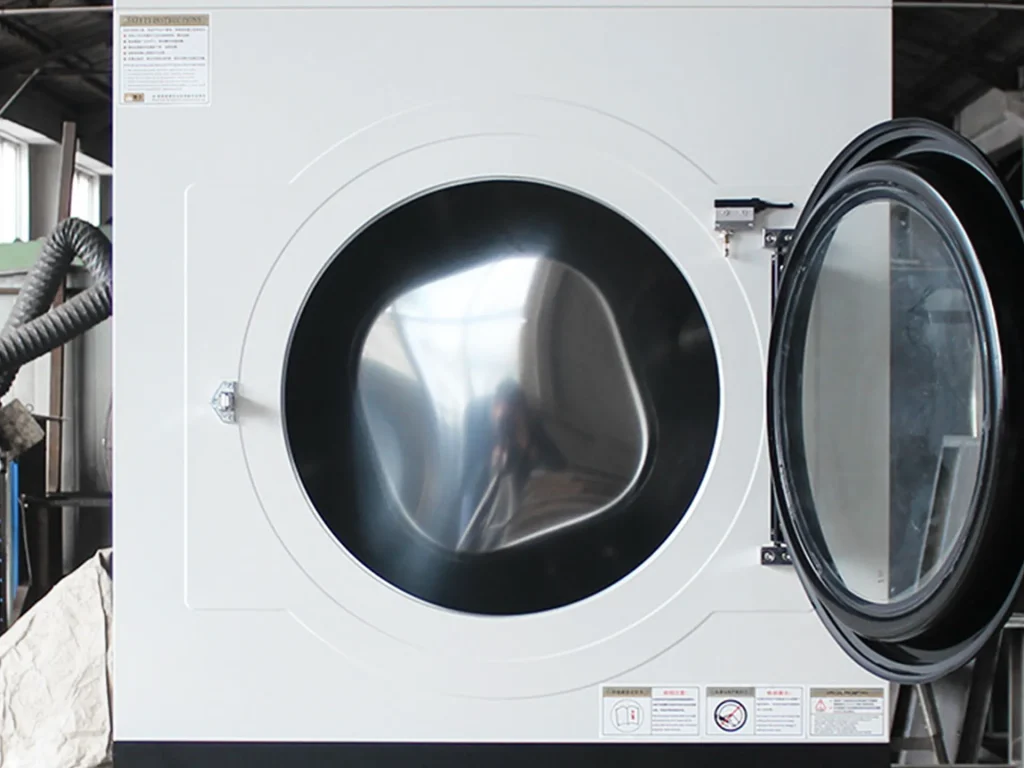
In small laundromats, drying speed directly affects throughput and customer satisfaction. The best commercial dryer balances rapid moisture extraction with fabric care, ensuring every load is dry without overprocessing.
Key technical features to prioritize:
- Optimized airflow design – Ensures even heat distribution, reducing hot and cold spots that extend cycle times.
- Responsive moisture sensors – Automatically terminate cycles when fabrics reach target dryness, preventing energy waste.
- Balanced drum perforation and rotation – Improves extraction efficiency without damaging garments.
Operational example: A 60-lb dryer with advanced moisture sensors may reduce cycle time by 10 minutes per load. For a small laundromat processing 12 loads per day, this equates to 2 extra loads per day or approximately $10–$15 additional revenue at average per-load pricing.
Commercial Dryers: The Ultimate Guide to Types, Costs, Capacity & Energy Efficiency
3.1 Energy-Smart Heat Management
The best commercial dryer for small laundries incorporates intelligent heat management:
- Adaptive heating adjusts temperature based on load weight and moisture.
- Heat retention systems minimize energy loss through insulated drums.
- Variable fan speed control optimizes drying speed without overworking the motor.
Financial implication: Operators report 10–15% reduction in monthly energy bills compared with standard electric dryers, an important consideration for small-scale operations where margins are thin.
4. Structural Durability & Maintenance Accessibility
Even small laundromats require high uptime and reliability. Machines designed for heavy-duty use in a compact form factor ensure longevity without frequent service interruptions.
Durability factors to check:
| Feature | Importance | Notes |
|---|---|---|
| Drum Material | High | Stainless steel reduces wear and corrosion |
| Bearings & Belts | High | Heavy-duty components withstand repeated cycles |
| Frame & Panels | Medium | Reinforced steel minimizes vibration |
Maintenance insight: Easy-access components reduce technician time and cost. A machine that allows belt or bearing replacement within 30–45 minutes versus 2+ hours drastically reduces downtime.
Best Commercial Clothes Dryers for Small Laundromats (2026 Budget Guide)
4.1 Automation & Smart Controls
Automation plays a pivotal role in small laundromats by:
- Reducing human error in cycle selection
- Optimizing energy use per load
- Standardizing drying results across all operators
Smart features to consider:
- Programmable cycle presets for common load types
- Digital diagnostics to alert maintenance needs
- Remote monitoring options for multi-location operators
Impact: Even without full industrial automation, these features reduce labor intervention and prevent overdrying, prolonging fabric lifespan and minimizing energy waste. Over a year, this can translate to hundreds of dollars in cost avoidance.
Tip: Automation is not a luxury; in small laundries, it stabilizes performance, reduces errors, and supports consistent revenue generation.
5. Top Small Commercial Dryer Models (2026 Update)
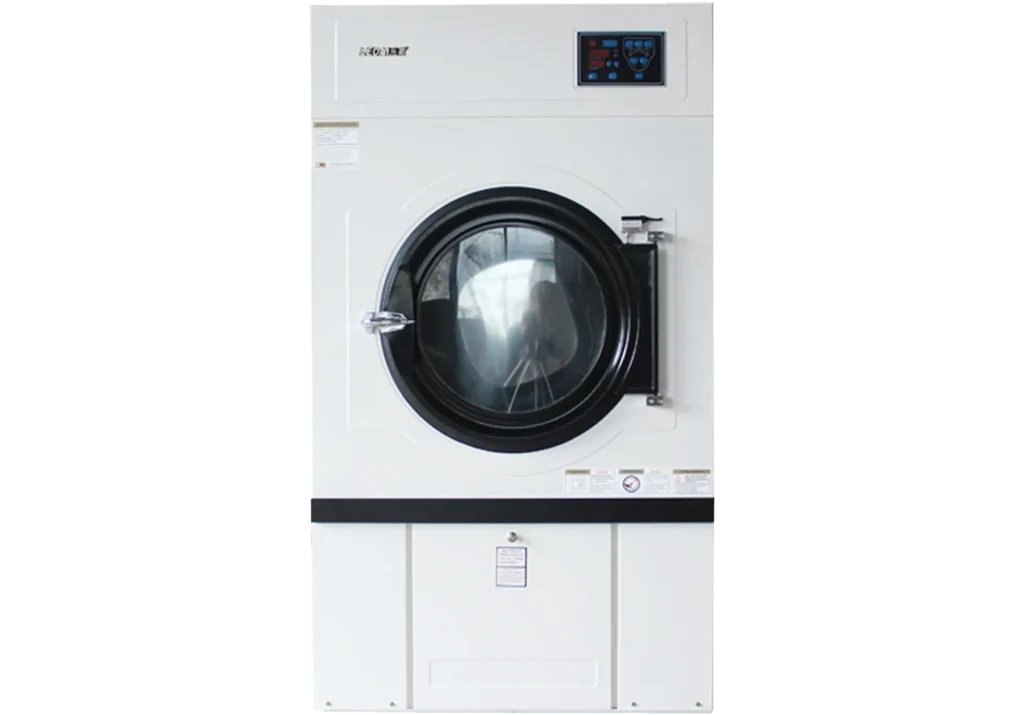
Selecting the best commercial dryer involves balancing capacity, efficiency, durability, and operational simplicity. Here’s a curated list tailored for small laundromats:
| Brand & Model | Heating Type | Load Capacity | Energy Efficiency | Automation | Durability | Recommended Use |
|---|---|---|---|---|---|---|
| Speed Queen SC25 | Electric | 25–30 lbs | High | Basic digital | High | Boutique laundries |
| Maytag Multi-Load 50 | Electric | 50 lbs | Moderate-High | Programmable | High | Mid-size laundromats |
| Electrolux Line 500 H-Pump | Heat Pump | 40 lbs | Very High | Smart integrated | High | Energy-conscious small laundries |
| LG Commercial 45 | Electric | 45 lbs | High | AI Sensor Control | Medium | Small laundries with varied load |
| Huebsch 50 | Electric | 50 lbs | High | Programmable | Strong | Budget-conscious laundries |
Usage scenarios:
- Speed Queen SC25 – Best for small boutique laundries with low daily loads; minimal installation complexity.
- Maytag Multi-Load 50 – Balances throughput and energy efficiency; ideal for medium-volume operations.
- Electrolux H-Pump 40 – Prioritizes energy savings; slightly higher upfront cost but lower long-term energy expense.
- LG Commercial 45 – Smart sensor control enhances drying consistency; good for diverse load types.
- Huebsch 50 – Affordable, durable, and simple; a reliable choice for budget-limited laundries.
Top Commercial Dryer Comparison & Buying Guide for Laundromats
5.1 Comparison Table – Small vs Large Scale Focus
| Feature | Small Laundromat | Large Facility |
|---|---|---|
| Load Capacity | 25–50 lbs | 75–100+ lbs |
| Energy Efficiency | High priority | Important but balanced with throughput |
| Automation | Optional, workflow-focused | Critical for multi-unit operation |
| Maintenance Ease | Must minimize downtime | Extensive service network |
| Installation | Compact footprint | Larger infrastructure & ventilation required |
5 Best Commercial Dryers for Large-Scale Laundry(2026 Guide)
6. Financial Considerations for Small Operators
Selecting the best commercial dryer also requires lifecycle cost analysis:
- Upfront cost vs operating cost – A higher initial investment can reduce monthly energy and maintenance expenses.
- Maintenance predictability – Machines with easily accessible components and common parts reduce unplanned downtime.
- Throughput optimization – Faster cycle times increase daily revenue potential, offsetting slightly higher purchase cost.
Example: A $3,500 electric dryer with 50-lb capacity and smart controls:
- Monthly energy cost: $120
- Annual maintenance: $350
- Daily revenue gain from shorter cycles: $10/day × 300 days = $3,000/year
Over three years, ROI exceeds 100%, illustrating why the best commercial dryer isn’t always the cheapest unit upfront.
Commercial Dryers: The Ultimate Guide to Types, Costs, Capacity & Energy Efficiency
7. Operational Risks & Common Investment Mistakes
Even in small laundromats, selecting the best commercial dryer requires careful attention to operational risks. Mistakes can increase costs or reduce throughput over time.
Mistake 1 – Prioritizing Purchase Price Over Lifecycle Cost
Focusing only on low upfront cost often results in higher operating expense:
- Less efficient energy use → higher monthly bills
- Frequent breakdowns → lost revenue
- Shorter lifespan → premature replacement
Financial implication: A dryer 15% cheaper upfront may lead to 30% higher total operating cost over 5 years.
Mistake 2 – Improper Load Capacity
Oversizing or undersizing reduces efficiency:
- Oversized: runs below optimal load → energy waste
- Undersized: creates bottlenecks during peak hours → lost revenue
Impact: Daily throughput imbalance can reduce revenue potential by 10–15%, especially in high-turnover small laundries.
Mistake 3 – Ignoring Infrastructure Compatibility
Electrical, gas, and ventilation mismatches can escalate installation costs:
- Electrical upgrades or gas line adjustments may increase total investment by 15–25%
- Ventilation reconstruction can delay operations and ROI
Commercial Dryers: The Ultimate Guide to Types, Costs, Capacity & Energy Efficiency
8. Maintenance & Operational Management
Proper maintenance transforms theoretical durability into measurable long-term performance. Even the best commercial dryer underperforms if neglected.
8.1 Preventive Maintenance Checklist (Small Laundromats)
| Task | Frequency | Purpose |
|---|---|---|
| Lint filter cleaning | Daily | Maintains airflow, prevents overheating |
| Drum & vent inspection | Monthly | Avoids blockages, ensures safe operation |
| Belt & bearing check | Quarterly | Reduces risk of sudden breakdown |
Key tip: Limit list items to 3–4 main actions to maintain clarity while ensuring core operational protection.
8.2 Downtime Cost Awareness
Unexpected downtime leads to:
- Lost revenue per load
- Customer dissatisfaction
- Labor inefficiency
Example: A 45-lb dryer generating $80/day, offline 5 days → $400 lost. Prioritize units with accessible parts and responsive service networks.
Top Commercial Dryer Comparison & Buying Guide for Laundromats
9. Application-Based Dryer Selection Strategy
Small laundromats require different focus than large-scale operations. Key priorities:
9.1 Boutique Laundromats
- Priority: quick cycles, low noise, energy efficiency
- Recommended: 25–35 lb electric dryers, simple automation
9.2 Mid-Size Laundromats
- Priority: throughput and cost efficiency
- Recommended: 40–50 lb dryers, smart moisture sensors, modular components
9.3 Specialty Service Providers (e.g., linens, uniforms)
- Priority: fabric care and repeatability
- Recommended: Heat-pump dryers with gentle cycles
Best Commercial Clothes Dryers for Small Laundromats (2026 Budget Guide)
10. FAQ – Best Commercial Dryer (Small Laundromats Focus)
Q1: What is the best commercial dryer for a small laundromat?
A: Models with 25–50 lb capacity, energy-efficient electric or heat-pump options, and simple smart controls provide the best balance of throughput, durability, and cost-effectiveness.
Q2: How often should I perform preventive maintenance?
A: Daily lint cleaning, monthly drum/vent checks, and quarterly belt/bearing inspection ensure consistent performance.
Q3: Are heat pump dryers worth the higher upfront cost?
A: Yes, for small laundromats with high energy costs, they offer up to 65% energy savings, reducing total lifecycle cost.
Q4: Can I install a commercial dryer in an older building?
A: Only after assessing electrical capacity, ventilation, and structural limits. Ignoring these may increase total investment by 15–25%.
11. Conclusion – Small Laundromat Dryer Selection
Choosing the best commercial dryer for a small laundromat involves balancing throughput, energy efficiency, durability, and automation. Key takeaways:
- Prioritize lifecycle cost over initial purchase price
- Match capacity to daily load to avoid energy waste or bottlenecks
- Evaluate installation feasibility and maintenance accessibility
- Consider automation features that stabilize drying results and reduce labor
Commercial Dryers: The Ultimate Guide to Types, Costs, Capacity & Energy Efficiency
Integrating these principles ensures maximized ROI, consistent operational performance, and satisfied customers — hallmarks of a profitable small-scale laundry operation.
 English
  Spanish