
Table of Contents
Material Engineering, Durability Comparison & Industrial Performance Guide
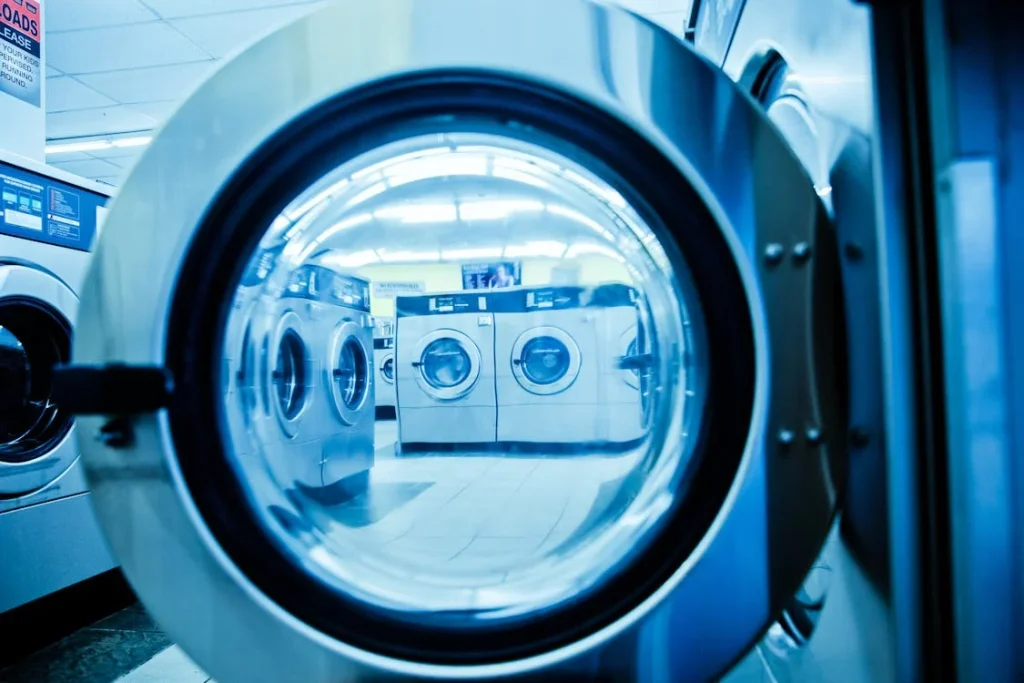
In industrial laundry environments, material choice is not cosmetic.
It determines corrosion resistance, hygiene compliance, maintenance frequency, and total lifecycle cost.
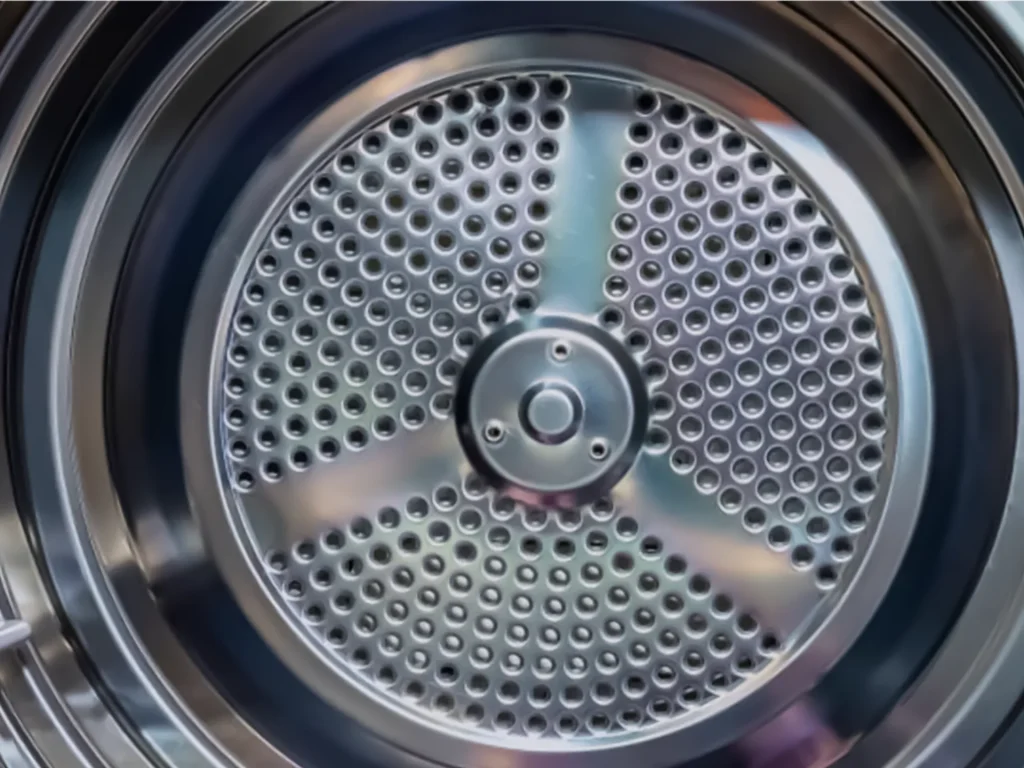
Stainless steel is widely used in commercial and industrial washing machines because it offers structural strength, chemical resistance, and long-term stability under thermal and mechanical stress.
However, not all stainless steel is the same.
Understanding the difference between 304 and 316 stainless steel is critical before selecting equipment.
If you are new to industrial machine structure, first review:
👉 Industrial Washing Machine Guide
This article focuses specifically on material science and performance comparison.
What Makes Stainless Steel Ideal for Industrial Washing Machines
Industrial washers operate under harsh conditions:
- High moisture exposure
- Repeated heating cycles
- Chemical detergents and disinfectants
- Mechanical vibration during extraction
Carbon steel rusts quickly in these environments.
Painted surfaces eventually chip and expose metal underneath.
Stainless steel, by contrast, contains chromium.
When exposed to oxygen, chromium forms a passive oxide layer that protects the surface from corrosion.
This self-healing protective layer is the core reason stainless steel dominates industrial stainless steel washing machine construction.
Structural Areas Where Stainless Steel Matters Most
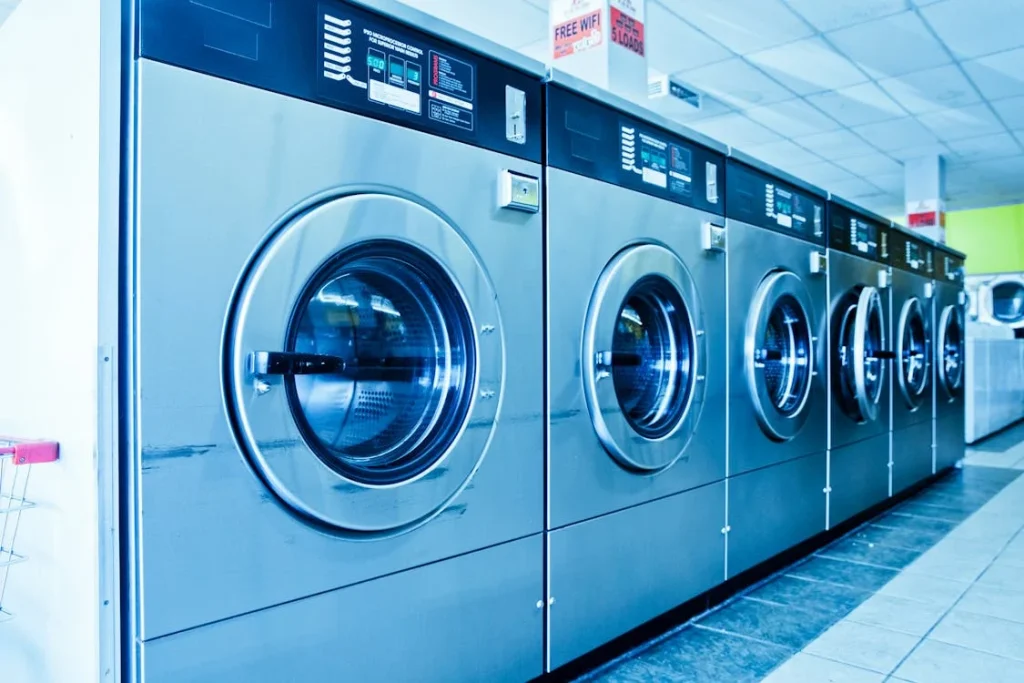
Not all parts require identical material grades.
The most critical stainless steel components include:
- Inner drum
- Outer drum
- Water contact panels
- Frame reinforcement near wet zones
- Chemical dosing contact areas
For mechanical understanding of these parts, see:
👉 Industrial Washing Machine Parts and Functions
Material selection must align with component exposure level.
304 vs 316 Stainless Steel: Core Differences
The primary difference lies in chemical composition.
316 stainless steel contains molybdenum, which significantly improves corrosion resistance in chloride-rich environments.
Below is a technical comparison:
| Property | 304 Stainless Steel | 316 Stainless Steel |
|---|---|---|
| Chromium Content | 18–20% | 16–18% |
| Nickel Content | 8–10.5% | 10–14% |
| Molybdenum | None | 2–3% |
| Chloride Resistance | Moderate | High |
| Cost | Lower | 20–30% Higher |
| Typical Use | Standard commercial laundry | Healthcare, marine, chemical environments |
The addition of molybdenum makes 316 significantly more resistant to pitting corrosion caused by chlorides found in bleach and disinfectants.
When 304 Stainless Steel Is Sufficient
For most hotel and standard commercial laundry operations, 304 stainless steel performs well.
These environments typically use:
- Mild detergents
- Limited chlorine concentration
- Controlled humidity
If properly maintained, 304 stainless steel can last 10–15 years without structural corrosion.
From a cost-performance perspective, 304 is often the most efficient choice.
However, it may show pitting over time if exposed to high chlorine levels or coastal humidity.
When 316 Stainless Steel Becomes Necessary
316 stainless steel is recommended for:
- Hospitals
- Healthcare facilities
- Laboratories
- Coastal regions
- Industrial laundries using aggressive disinfectants
Chloride ions accelerate corrosion in standard stainless alloys.
Molybdenum in 316 significantly reduces this risk.
Although initial investment is higher, lifecycle maintenance costs are lower in corrosive environments.
For healthcare-specific equipment considerations, review:
👉 Top 6 Industrial Washing Machines Brands
Material grade often correlates with manufacturer positioning.
Corrosion Mechanisms in Industrial Washing Machines
Understanding how corrosion forms helps justify material selection.
The most common forms include:
Pitting Corrosion
Small localized holes caused by chloride concentration.
Crevice Corrosion
Occurs in joints or poorly ventilated seams.
Stress Corrosion Cracking
Triggered by tensile stress combined with corrosive chemicals.
316 performs significantly better under chloride-induced pitting conditions.
Lifecycle Cost Consideration
Material decisions should not be based only on purchase price.
Lifecycle cost includes:
- Replacement panels
- Welding repairs
- Downtime
- Structural degradation
- Resale value
A machine built with inferior stainless grade may cost less initially but incur higher long-term repair expenses.
Capacity planning and material selection should always be evaluated together.
For deeper capacity modeling, see:
👉 Industrial Washing Machine Capacity Guide
Overloading accelerates stress corrosion in lower-grade materials.
Corrosion Behavior in Real Industrial Laundry Environments
Stainless steel does not “rust-proof” a machine.
It resists corrosion within certain environmental thresholds.
In stainless steel washing machine systems, corrosion is driven by four main variables:
- Chloride concentration
- Temperature
- Moisture retention time
- Mechanical stress
When high temperature combines with chloride-based disinfectants, corrosion risk increases exponentially rather than linearly.
For example, bleach concentration at 60°C causes more aggressive pitting than the same concentration at 25°C.
This is why healthcare laundries experience faster material degradation than hospitality facilities.
Environmental Exposure Matrix
Different industries require different stainless steel grades.
Below is a decision-oriented comparison:
| Environment | Chloride Level | Humidity | Recommended Grade | Risk Level if Using 304 |
|---|---|---|---|---|
| Standard Hotel | Low | Moderate | 304 | Low |
| Commercial Laundry | Medium | High | 304 / 316 | Moderate |
| Hospital | High | High | 316 | High |
| Coastal Facility | Medium | Very High (Salt Air) | 316 | High |
| Industrial Uniform Laundry | High | High | 316 | High |
Chloride-rich air near coastal regions can cause corrosion even without heavy bleach usage.
Salt particles deposit on machine surfaces and accelerate oxidation cycles.
Material selection must therefore consider geographic location, not only detergent type.
Structural Thickness and Steel Gauge Consideration
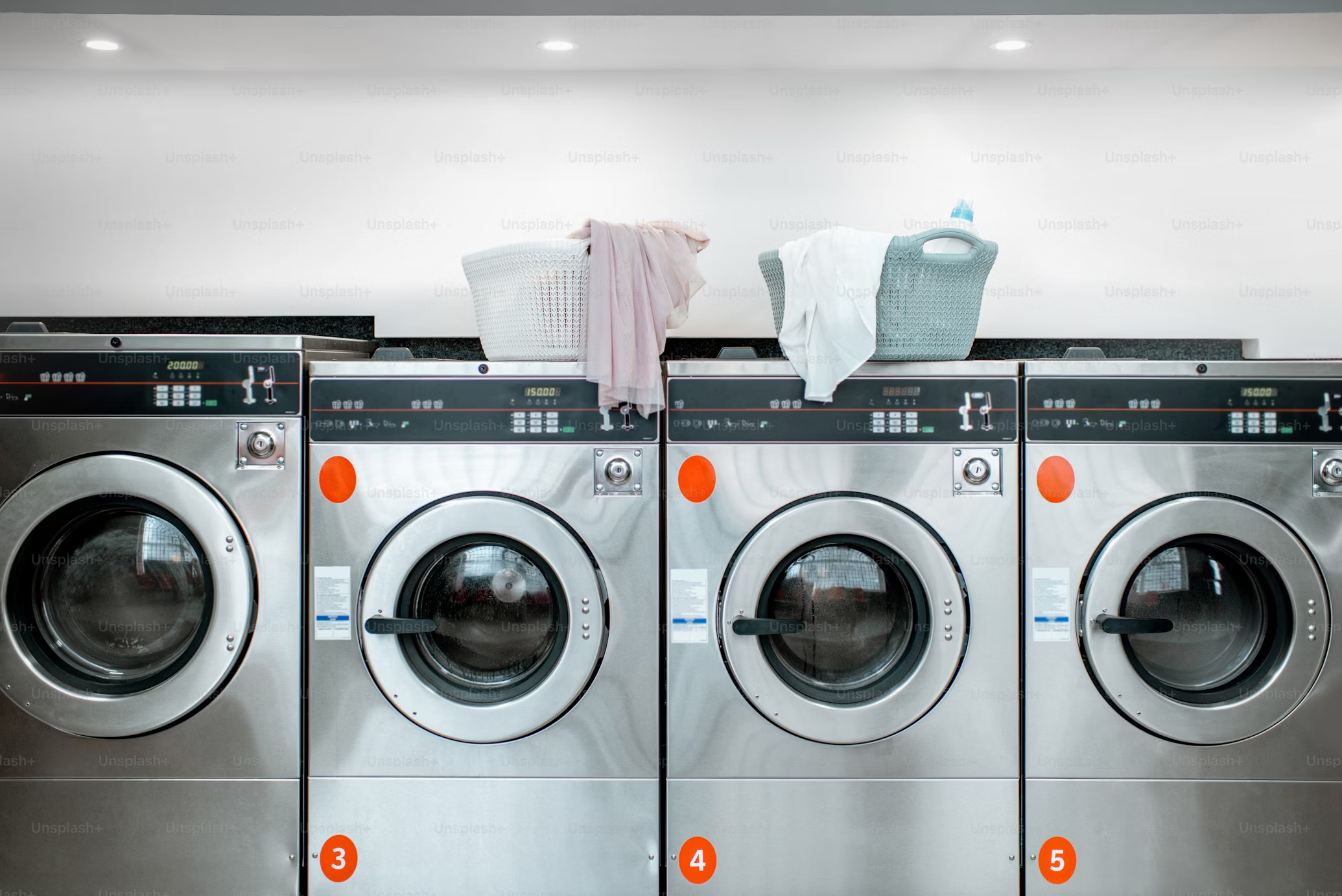
Material grade is only one part of durability.
Thickness (gauge) also determines structural lifespan.
Industrial stainless steel washing machines typically use:
- 1.5–2.0 mm stainless panels for outer body
- 2.5–4.0 mm stainless drum thickness
- Reinforced frames for high-capacity extraction
Thinner stainless steel, even if 316 grade, may deform under repeated high G-force extraction cycles.
For a deeper understanding of how extraction force stresses machine components, see:
👉 Industrial Washing Machine Parts and Functions
Material grade and structural engineering must be evaluated together under the stainless steel washing machine system.
Stainless Steel vs Coated Carbon Steel
Some lower-cost machines advertise “stainless drum” but use coated carbon steel for outer panels.
At first glance, coated steel appears sufficient.
However, coating systems have two structural weaknesses:
- Micro-cracks under vibration
- Edge corrosion where coating thins
Once coating integrity fails, corrosion spreads rapidly underneath the paint layer.
Stainless steel does not rely on surface coating; its corrosion resistance is inherent to the alloy composition.
Over a 10-year period, stainless construction significantly reduces body panel replacement risk.
Mechanical Stress and Micro-Fracture Acceleration
Industrial stainless steel washing machines experience repeated high-speed extraction.
When machines are overloaded, vibration amplitude increases.
This accelerates:
- Weld seam fatigue
- Micro-fractures at panel joints
- Crevice corrosion initiation
Capacity planning and material durability are interconnected decisions.
For advanced load calculation principles, review:
👉 Industrial Washing Machine Capacity: Complete Calculation & Sizing Guide
Running a machine consistently above 90% rated capacity increases material fatigue risk.
Heat Cycling and Metal Fatigue
Industrial stainless steel washing machines operate in repeated thermal cycles:
Cold fill → Heated wash → Rinse → Spin → Cool-down
Expansion and contraction cycles stress metal bonds.
Over thousands of cycles:
- Lower-grade alloys lose surface stability
- Weld seams weaken
- Structural panels warp slightly
316 stainless steel performs better under combined heat and chloride stress conditions.
This difference becomes visible after 5–8 years in high-intensity facilities.
Cost vs Longevity Modeling
Initial purchase difference between 304 and 316 machines is typically 15–30%.
However, replacement outer panel repair or drum corrosion repair can cost 8–20% of machine value.
If corrosion occurs twice during machine lifespan, total ownership cost surpasses initial savings.
Material decision should therefore consider:
- 10-year operational horizon
- Maintenance frequency
- Downtime cost
- Resale value
In high-risk environments, 316 often provides superior lifecycle economics despite higher upfront cost.
Brand Positioning and Material Transparency
Not all manufacturers clearly specify stainless grade.
Some may label “stainless steel” without indicating 304 or 316.
When evaluating equipment brands, verify:
- Drum material grade
- Outer shell material
- Frame material
- Weld protection treatment
For brand-level comparison insights, review:
👉 Top 6 Industrial Washing Machines Brands
Material transparency often correlates with premium engineering standards.
Stainless Steel Selection Decision Framework
Choosing between 304 and 316 should not be based on price alone.
A structured evaluation model reduces long-term risk.
Step 1: Evaluate Chemical Exposure
- Do you use chlorine-based disinfectants daily?
- Is bleach concentration above standard hospitality levels?
- Are machines exposed to high-salt coastal air?
If yes to any of these, corrosion risk increases significantly.
Step 2: Evaluate Operational Intensity
- Daily operating hours
- Average load utilization rate
- Extraction G-force level
- Frequency of heavy soil processing
High-intensity environments accelerate metal fatigue and surface breakdown.
If machines operate near maximum capacity daily, consider reviewing load optimization strategies in:
👉 Industrial Washing Machine Capacity Guide
Material durability and capacity planning must be aligned.
Step 3: Evaluate Lifecycle Strategy
Are you planning:
- 5-year usage with resale?
- 10–15-year long-term asset?
- High resale value retention?
Higher-grade stainless often improves residual value.
Investment Tier Recommendations
Below is a simplified investment matrix:
| Facility Type | Recommended Material | Reasoning |
|---|---|---|
| Small Hotel | 304 | Balanced cost-performance |
| Mid-size Hotel | 304 (high thickness) | Stable environment |
| Hospital | 316 | High disinfectant exposure |
| Coastal Laundry | 316 | Salt-induced corrosion risk |
| Industrial Workwear Laundry | 316 | Heavy chemical usage |
The correct choice depends more on environment than budget for your better stainless steel washing machine choice.
Hygiene Compliance and Material Standards
Healthcare and pharmaceutical environments often require:
- Smooth, non-porous surfaces
- Minimal crevice areas
- Resistance to aggressive disinfectants
316 stainless steel washing machine is more commonly aligned with stringent hygiene protocols.
Surface finish also matters.
Electropolished surfaces reduce micro-roughness, limiting bacterial retention and corrosion initiation.
If hygiene compliance is a key concern, machine design must be evaluated holistically, not only by alloy grade.
Hidden Cost Factors Often Overlooked
Material downgrade decisions often ignore:
- Welding seam corrosion
- Panel replacement labor cost
- Downtime revenue loss
- Repainting or refinishing expenses
- Insurance implications in healthcare facilities
These hidden costs compound over years.
What appears as 20% savings upfront may translate into 40% higher total lifecycle expense.
Material Choice and Brand Engineering
Premium brands often integrate:
- Fully stainless outer shells
- Reinforced drum assemblies
- Higher-grade internal fasteners
- Corrosion-protected weld seams
Entry-level brands may combine stainless drum with coated steel housing.
Final Summary: 304 vs 316 — Strategic Perspective
304 stainless steel washing machine is sufficient for most standard commercial laundry environments.
316 stainless steel washing machine is a strategic investment for high-chemical, high-humidity, or coastal conditions.
The correct decision depends on:
- Chloride exposure
- Operational intensity
- Structural thickness
- Long-term ownership strategy
Material selection should be integrated with:
- Capacity planning
- Installation design
- Maintenance budgeting
- Brand evaluation
When aligned correctly, stainless steel washing machine construction ensures:
- Longer machine lifespan
- Lower maintenance frequency
- Higher hygiene stability
- Stronger resale value
FAQ of stainless steel washing machine
Is 316 stainless steel washing machine always better than 304?
Not always. In low-chloride environments, 304 stainless steel washing machine offers excellent durability at lower cost. 316 stainless steel washing machine becomes advantageous in high-disinfectant or coastal environments.
Does stainless steel eliminate maintenance?
No. Stainless steel resists corrosion but still requires proper cleaning, chemical balance control, and load management.
Can coated steel perform similarly?
In short-term applications, coated steel may perform adequately. However, coating degradation over time increases corrosion risk.
How long can a stainless steel washing machine last?
With proper load management and maintenance, 304 machines may last 10–15 years.
316 machines in corrosive environments may exceed this range due to enhanced resistance.
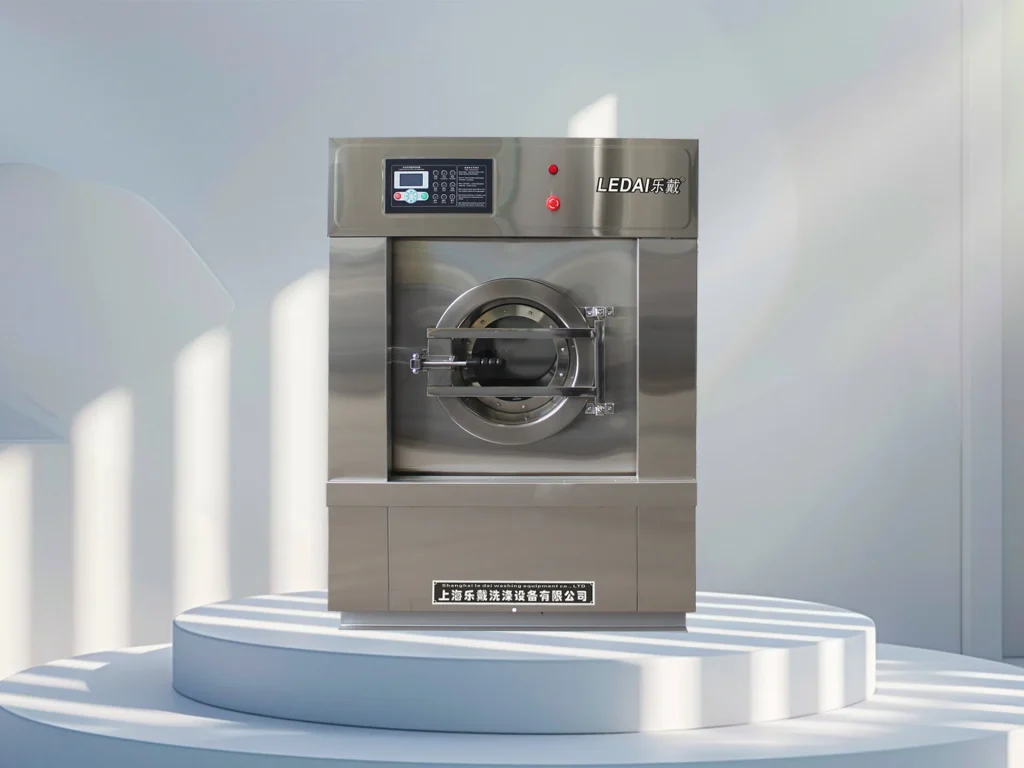
 Spanish
  English