
Table of Contents
Industrial washing machine capacity is not simply a number printed on a specification sheet. It defines throughput limits, water usage efficiency, extraction stress tolerance, and total operational cost.
In commercial environments, incorrect capacity planning leads to mechanical overload, underutilized energy, or workflow bottlenecks. Understanding how to calculate and apply capacity properly is essential for long-term operational stability.
If you are new to industrial systems, we recommend first reviewing the complete overview of machine types and configurations in our
👉 Industrial Washing Machine Guide
This article focuses specifically on capacity modeling, calculation methods, and real-world optimization strategies.
What Industrial Washing Machine Capacity Actually Represents
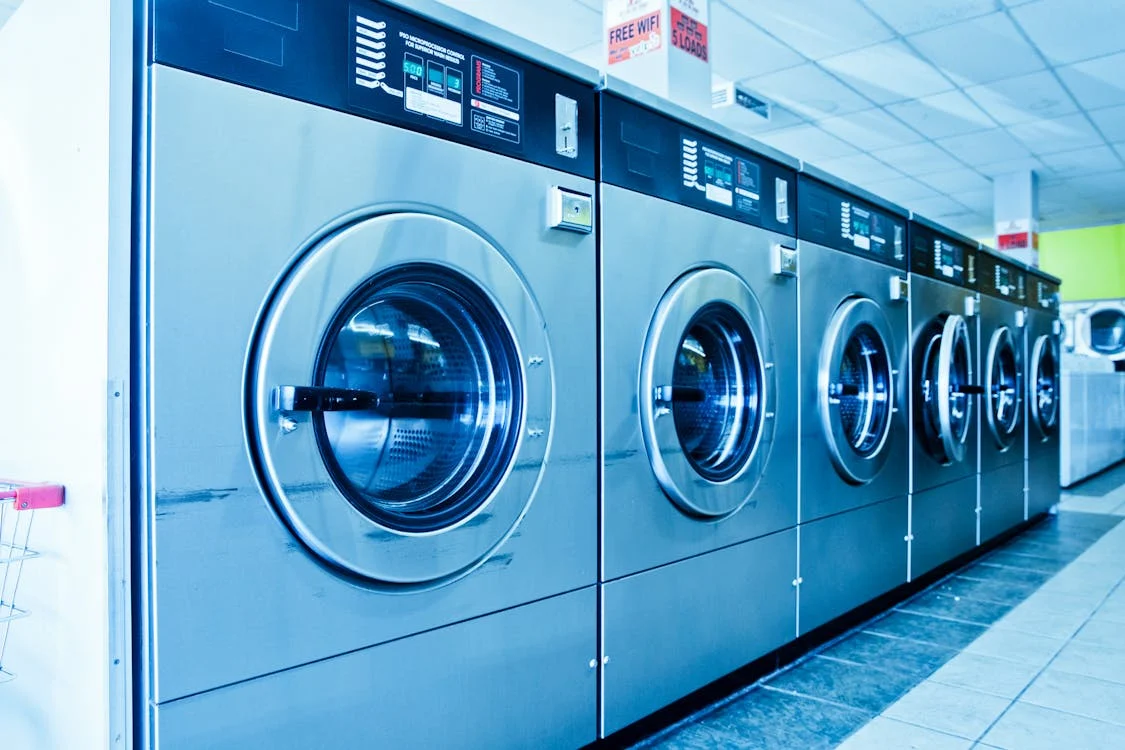
Capacity refers to the maximum dry textile weight per cycle under standardized load conditions. It does not represent wet weight and does not account for fabric-specific absorption.
This distinction is critical. When textiles absorb water, their mass can increase by 50–120%. The extraction system must handle this additional rotational load.
For example:
- 20 kg dry cotton towels may reach 38–42 kg when saturated.
- 20 kg polyester sheets may increase to only 26–28 kg.
The effective mechanical stress during spin is based on wet mass, not dry mass.
Rated Capacity vs Usable Capacity
Manufacturers advertise rated capacity based on ideal density testing. However, real-world operations rarely mirror test conditions.
Usable capacity depends on:
- Fabric density
- Load distribution
- Drum volume utilization
- Water-to-fabric ratio
- Required hygiene standards
Facilities that consistently run at 100% rated capacity often experience premature bearing wear and suspension fatigue.
In high-throughput environments, operating at 80–85% rated capacity usually delivers better long-term reliability.
Capacity Units and Global Conversion (kg ↔ lbs)
Industrial washers are sold globally, and unit inconsistency can create planning errors.
| kg | lbs |
|---|---|
| 15 kg | 33 lbs |
| 20 kg | 44 lbs |
| 30 kg | 66 lbs |
| 40 kg | 88 lbs |
| 60 kg | 132 lbs |
| 80 kg | 176 lbs |
| 100 kg | 220 lbs |
Conversion formula:
lbs = kg × 2.2046
kg = lbs ÷ 2.2046
Always standardize to one unit when comparing models or calculating throughput.
Drum Volume and Density Modeling

Capacity is fundamentally determined by drum volume.
Drum Volume Formula
Volume = π × radius² × depth
Example:
Diameter = 1.1 m
Radius = 0.55 m
Depth = 0.7 m
Volume = 3.14 × 0.55² × 0.7
Volume ≈ 0.66 cubic meters
However, drum volume does not equal textile capacity directly.
Industrial textile density typically ranges:
- Sheets: 40–50 kg/m³
- Mixed linen: 45–55 kg/m³
- Towels: 50–60 kg/m³
Effective capacity is:
Drum Volume × Textile Density × Utilization Ratio
Practical Density-Based Calculation Example
Assume:
Drum Volume = 0.66 m³
Density = 50 kg/m³
Utilization = 0.85
Capacity = 0.66 × 50 × 0.85
Capacity ≈ 28 kg
Even if marketed as 30 kg, practical optimal load may be closer to 27–28 kg.
This modeling approach is far more accurate than relying solely on manufacturer labels.
Water-to-Fabric Ratio and Its Impact
Industrial machines often operate within a 1:8 to 1:12 ratio.
Example:
1 kg dry linen may require 10 liters of water.
For a 30 kg load:
30 × 10 = 300 liters per wash cycle
Higher water ratios improve soil removal but increase heating energy requirements. Lower ratios conserve resources but may reduce wash effectiveness for heavy contamination.
Balancing this ratio is a cost-efficiency decision, not just a cleaning decision.
Extraction Force and Wet Mass Load
During high-speed spin, centrifugal force increases exponentially with RPM.
Extraction G-force formula approximation:
G = (RPM² × radius) / 118,000
Higher G-force removes more water but increases stress on:
- Bearings
- Suspension
- Frame structure
If wet load weight exceeds design tolerance, extraction stability declines and vibration increases.
For a deeper understanding of mechanical components under stress, see:
👉 Industrial Washing Machine Parts and Functions
Industrial washing machine capacity planning must align with mechanical durability.
Why Industrial Washing Machine Capacity Planning Matters for Brand Selection
Different manufacturers design machines with different:
- Frame reinforcement levels
- Bearing sizes
- Extraction speeds
- Control systems
Some brands prioritize energy efficiency. Others prioritize durability under high-load environments.
If you’re evaluating equipment options, review our detailed breakdown:
👉 Top 6 Industrial Washing Machines Brands (Buyer’s Guide)
Capacity alone does not determine performance; structural engineering matters equally.
Throughput Modeling: Capacity × Cycles × Time
Industrial washing machine capacity is meaningless without cycle frequency.
A 30 kg washer running 3 cycles per hour produces far less daily throughput than a 20 kg washer running 6 cycles per hour.
Daily Throughput Formula:
Daily Capacity = Machine Capacity × Cycles per Hour × Operating Hours
Example:
30 kg machine
4 cycles/hour
10 operating hours
30 × 4 × 10 = 1,200 kg per day
Throughput depends more on cycle efficiency than drum size.
If your wash formula is too long, increasing drum size will not solve bottlenecks.
Instead, cycle optimization may yield better ROI.
Cycle Time Components Breakdown
A full wash program includes:
- Fill time
- Heating time
- Main wash
- Rinse cycles
- Extraction
Heating time is usually the largest variable. If water enters at 15°C and must reach 60°C, heating delays production significantly.
Facilities using steam injection instead of electric heating often reduce total cycle time by 10–20%.
If you are unsure how heating systems affect mechanical configuration, review:
👉 Industrial Washing Machine Guide: Types, How They Work, Capacity, Costs & Buying Checklist
Energy source selection directly impacts throughput modeling.
Real Case Study: 100-Room Hotel
Let’s model a mid-size hotel.
Assumptions:
100 rooms
Average 12 kg linen per room per day
Total daily load = 1,200 kg
If using 30 kg machines:
1,200 ÷ 30 = 40 cycles required daily
If cycle time = 60 minutes:
40 hours of runtime required.
With two machines:
20 cycles per machine
10-hour shift → 2 cycles/hour needed
Feasible, but near operational limit.
If cycle time increases to 75 minutes, production bottlenecks appear.
Industrial washing machine capacity planning must consider time variability, not ideal laboratory cycle durations.
Hospital Scenario: Load Adjustment for Infection Control
Healthcare environments require lower load density to guarantee disinfection penetration.
Effective utilization may drop to 75–80% of rated industrial washing machine capacity.
If a machine is labeled 40 kg:
Operational load may be limited to 30–32 kg.
This reduces theoretical throughput by 20–25%.
Hospitals must therefore oversize machines relative to textile volume.
Healthcare industrial washing machine capacity planning is safety-driven, not efficiency-driven.
Multi-Machine Workflow Optimization
Industrial washing machine capacity imbalance causes bottlenecks.
Common error:
Two 40 kg washers + one 40 kg dryer.
Problem: drying time usually exceeds wash time.
If washing takes 60 minutes and drying takes 75 minutes, dryer becomes the limiting factor.
Workflow Balance Rule:
Washer Throughput ≈ Dryer Throughput
Capacity alignment must consider:
- Drying cycle duration
- Moisture extraction efficiency
- Textile type
You may compare dryer configurations here:
👉 Top 10 Commercial Dryers: Best Features, Prices & Reviews
System balance is more important than single-unit size.
Cost per Kilogram Processing Model
Industrial washing machine capacity decisions ultimately affect cost.
Basic Cost Model:
Total Operating Cost ÷ Total Processed Weight = Cost per kg
Operating Cost Includes:
- Water
- Energy
- Labor
- Detergent
- Maintenance
Example:
Daily cost = $480
Daily processed weight = 1,200 kg
Cost per kg = $0.40
If cycle optimization increases throughput to 1,400 kg without increasing fixed costs:
New cost per kg = $0.34
That 15% efficiency gain dramatically improves long-term profitability.
Industrial washing machine capacity optimization is therefore a financial strategy, not just mechanical planning.
When Bigger Is Not Better
Oversizing machines can create hidden inefficiencies.
Large machines running partial loads:
- Waste water
- Waste energy
- Increase cycle imbalance
- Reduce extraction efficiency
A properly sized 30 kg machine operating at 85% load often outperforms a 60 kg machine running at 40% load.
Industrial washing machine capacity must align with realistic daily textile volume, not peak theoretical demand.
Strategic industrial washing machine capacity Tiering
For facilities with variable loads (seasonal hotels, commercial laundries), tiered systems work best:
Example configuration:
2 × 30 kg machines
1 × 60 kg machine
Small loads handled efficiently
Peak demand handled by large unit
This reduces energy waste while maintaining surge industrial washing machine capacity.
Installation Constraints and Structural Floor Load
Industrial washing machines are dynamic load equipment.
During high-speed extraction, vibration force can exceed static weight multiple times.
Static Weight vs Dynamic Force
A 60 kg washer may weigh 900–1,200 kg empty.
When fully loaded and spinning at high G-force, floor stress increases significantly.
Structural engineers typically evaluate:
- Static machine weight
- Maximum wet load weight
- Vibration amplification factor
- Concrete slab thickness
For facilities installing machines above ground level, structural assessment is mandatory.
If you are planning installation, review our detailed installation guide:
👉 A Step-by-Step Guide for Industrial Laundry Installation
Improper floor support reduces machine lifespan and increases maintenance frequency.
Electrical and Utility Planning
Capacity affects power demand.
Higher industrial washing machine capacity machines typically require:
- Larger heating elements
- Higher amperage
- Greater water inlet diameter
- Larger drainage systems
Example comparison:
| Capacity | Typical Power | Water Consumption per Cycle |
|---|---|---|
| 20 kg | 12–18 kW | 150–220 L |
| 40 kg | 20–30 kW | 300–400 L |
| 60 kg | 35–45 kW | 450–600 L |
Electrical panels must support peak simultaneous demand if multiple machines operate concurrently.
Undersized infrastructure leads to:
- Voltage drops
- Heating inefficiency
- Control board faults
Industrial washing machine capacity planning must align with utility design, not just textile volume.
Planning for Future Expansion
Most facilities underestimate future load growth.
Textile demand often increases due to:
- Business expansion
- Higher hygiene standards
- Increased linen replacement frequency
- Contract laundry additions
If space allows, leaving room for one additional machine position can reduce future renovation costs dramatically.
Future-proofing strategies include:
- Installing larger drainage piping initially
- Oversizing water supply lines
- Allowing electrical panel expansion slots
Capacity strategy should always include a 3–5 year growth forecast.
Capacity vs Maintenance Intensity
Machines operating near 100% rated load daily experience:
- Faster bearing fatigue
- Increased seal wear
- Higher vibration stress
Operating at 80–85% rated capacity typically extends maintenance intervals.
If you want a deeper understanding of mechanical components under stress, review:
👉 Industrial Washing Machine Parts and Functions
Capacity planning is directly connected to maintenance economics.
Strategic Comparison: Capacity Decision Matrix
Below is a simplified decision matrix to guide equipment sizing.
| Facility Type | Recommended Load Utilization | Oversizing Strategy | Key Priority |
|---|---|---|---|
| Hotel | 85% | Moderate | Throughput balance |
| Hospital | 75–80% | High | Hygiene compliance |
| Commercial Laundry | 85–90% | Low | Energy efficiency |
| Small Business | 80–85% | Moderate | Cost control |
Each environment requires different safety margins.
There is no universally optimal capacity.
Frequently Asked Questions (SEO-Optimized Section)
How do I calculate the correct industrial washing machine capacity?
Start by estimating total daily dry textile weight.
Divide by operational hours and expected cycles per hour.
Then adjust by utilization ratio (typically 0.8–0.85).
Is it better to buy one large machine or multiple smaller machines?
Multiple mid-size machines provide operational flexibility and redundancy.
One large machine may reduce labor cost but increases downtime risk if failure occurs.
What happens if I overload an industrial washer?
Overloading reduces wash quality, increases vibration, and accelerates bearing wear.
Repeated overloading significantly shortens equipment lifespan.
How much reserve capacity should I plan?
A 10–20% buffer above average daily volume is recommended to handle peak demand without stressing equipment.
 Spanish
  English