
Industrial laundromat machines for high volume operations are built to handle continuous loads, heavy fabrics, and long daily operating hours. Unlike small commercial washers, these machines are designed for durability, faster extraction, and lower long-term operating costs.
If you’re planning to open a laundromat or upgrade an existing one, choosing the right industrial laundromat machines directly affects your revenue, utility costs, and customer satisfaction.
This guide explains everything you need to know before investing.
If you are unsure how to calculate the required washer capacity, refer to our detailed guide on Industrial Washing Machine Capacity: Complete Calculation & Sizing Guide
Tabla de contenidos
- Why High Volume Laundromats Require Specialized Industrial Laundromat Machines
- How Many Washers Does a High-Volume Laundromat Need?
- What Size Washer Is Best for a Busy Laundromat?
- Why Extraction Speed Matters More Than You Think
- How Long Do Industrial Laundromat Machines Last?
- How Much Water and Electricity Do High-Volume Machines Use?
- Installation Requirements for High-Capacity Washers
- What Causes Downtime in Busy Laundromats?
- Soft-Mount vs Hard-Mount Washers: Which Is Better?
- How Much Do Industrial Laundromat Machines Cost?
- Step 1 – Determine Required Daily Load Capacity
- Step 2 – Duty Cycle & Machine Durability
- Step 3 – Extraction Performance as a Revenue Multiplier
- Step 4 – Utility Efficiency & Lifecycle Cost Modeling
- Step 5 – Structural Engineering & Installation Risk Control
- Step 6 – Downtime Risk, Maintenance Strategy & Revenue Protection
- High Volume Industrial Laundromat Machines Selection Checklist
- Frequently Asked Questions (FAQs)
- Final Thoughts
Why High Volume Laundromats Require Specialized Industrial Laundromat Machines
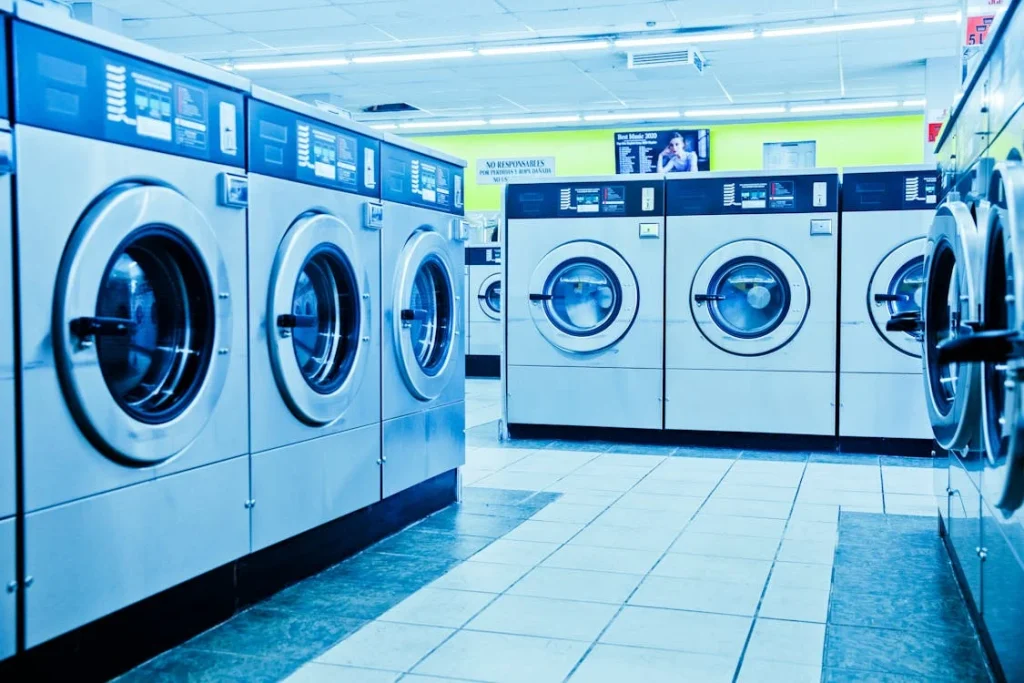
High volume industrial laundromat machines operate in a fundamentally different business model compared to hotels, hospitals, or institutional laundry facilities. Instead of processing centralized bulk linen, laundromats handle decentralized customer loads with unpredictable timing peaks.
In high-traffic urban areas, industrial laundromat machines may operate continuously for 12–18 hours per day. During peak hours, washers are often reloaded immediately after cycle completion, creating sustained mechanical stress on:
- Drum shafts
- Bearing assemblies
- Suspension systems
- Drive motors
- Electronic control modules
Unlike light commercial washers, industrial laundromat machines for high volume applications are engineered with reinforced structural frames and industrial-grade stainless steel drums to withstand thousands of consecutive cycles without failure.
Peak Demand Pressure
A critical difference in high-volume laundromats is peak hour compression. For example:
- 40% of daily customers may arrive within a 3-hour window.
- Machine turnaround speed becomes more important than total capacity.
- Extraction speed directly affects dryer queue times.
If extraction performance is weak, drying time increases, reducing total daily throughput.
This is why high capacity laundromat machines typically feature:
- Higher G-force extraction (300–400G)
- Larger drum diameter for better water removal
- Advanced suspension balancing systems
Standard commercial washers simply cannot maintain mechanical stability under these conditions.
To better understand different machine categories, you can review our breakdown of A Guide to Different Types of Industrial Washing Machines
How Many Washers Does a High-Volume Laundromat Need?
One of the most common questions is:
How do I calculate the right number of machines?
You need to consider:
- Total daily laundry volume
- Peak hour traffic
- Average cycle time
Example Calculation
Daily volume: 1,400 kg
Operating hours: 10 hours
Average cycle time: 45 minutes
One machine can complete:
10 ÷ 0.75 = ~13 cycles per day
If using 40 kg machines:
13 × 40 = 520 kg per machine daily
To process 1,400 kg:
1,400 ÷ 520 ≈ 3 machines
Realistically, you would install 4 machines to handle peak hours and prevent waiting lines.
Slightly oversizing capacity often improves customer satisfaction and daily revenue.
What Size Washer Is Best for a Busy Laundromat?
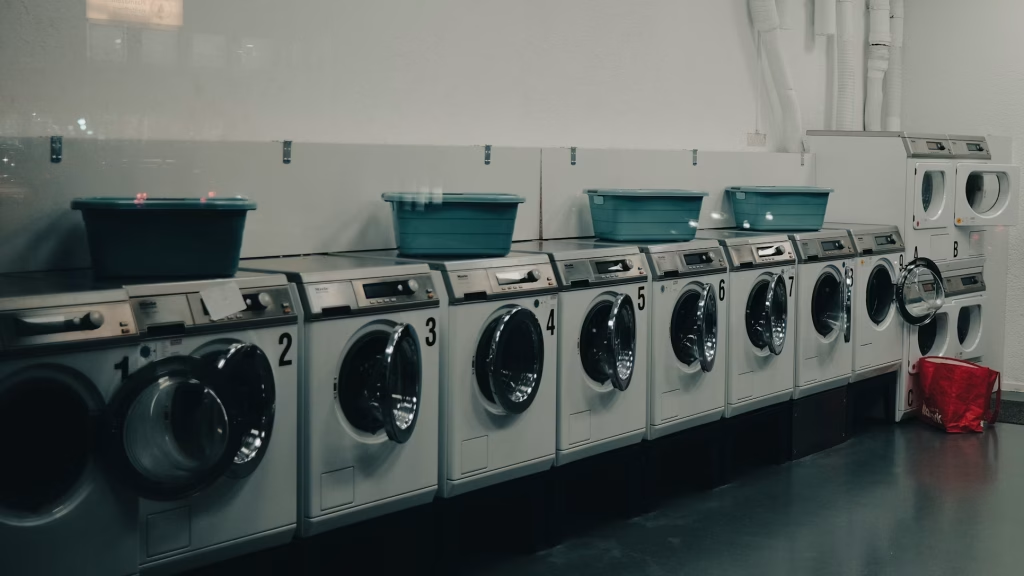
High-volume laundromats usually offer multiple sizes:
- 20–30 lbs (small loads)
- 40–60 lbs (family loads)
- 80–100 lbs (bulk items)
Machines between 40–80 lbs tend to generate the highest daily turnover in busy locations.
Offering multiple capacities helps serve:
- Apartment renters
- Families
- Commercial walk-in customers
Why Extraction Speed Matters More Than You Think
Extraction speed determines how much water remains in clothes after washing.
The higher the G-force, the less moisture remains.
What Happens With Better Extraction?
If residual moisture drops from 60% to 45%:
- Drying time can reduce by 10–20%
- Dryer queues shorten
- Customers finish faster
- Electricity use decreases
In a laundromat processing 150 loads daily, saving 10 minutes per load means:
1,500 minutes saved
= 25 extra dryer hours available
That can eliminate the need for additional dryers.
Recommended Extraction Speed
For high-volume laundromats:
300–400G extraction is ideal.
Lower-speed machines may increase drying time and reduce overall throughput.
How Long Do Industrial Laundromat Machines Last?
Machine lifespan is measured in cycles, not years.
Typical numbers:
- Light commercial washer: 8,000–12,000 cycles
- Industrial heavy-duty washer: 20,000–30,000+ cycles
In a busy laundromat running 40 cycles daily:
40 × 300 days = 12,000 cycles per year
This means a lower-grade machine may reach its limit in just one year of heavy use.
Durability depends on:
- Stainless steel drum construction
- Reinforced bearings
- Welded steel frame
- Balanced suspension systems
How Much Water and Electricity Do High-Volume Machines Use?
Utility costs are one of the biggest long-term expenses.
Let’s break it down.
Water Usage Example
40 cycles per day
110 liters per cycle
320 operating days per year
Annual water use per machine:
40 × 110 × 320 = 1,408,000 liters
If a less efficient machine uses 15% more water:
That’s an extra 211,000+ liters annually.
Multiply that by multiple machines over 10 years, and costs increase significantly.
Energy Efficiency Tips
Look for machines with:
- Load sensing technology
- Efficient heating systems
- Optimized rinse cycles
- High-speed extraction
Better extraction also reduces dryer energy consumption.
Installation Requirements for High-Capacity Washers
Large industrial machines can weigh between 800–1,200 kg.
During high-speed spin cycles, dynamic force increases significantly.
Before installing:
- Ensure reinforced concrete flooring
- Confirm proper drainage capacity
- Verify electrical load availability
- Use correct anchoring systems
Improper installation may cause:
- Excessive vibration
- Structural stress
- Increased maintenance
- Noise complaints
What Causes Downtime in Busy Laundromats?
Machine downtime reduces revenue immediately.
If one machine generates $200 per day:
4 days offline = $800 lost
Common causes of failure include:
- Bearing wear
- Imbalance stress
- Drain blockages
- Electrical overload
- Poor maintenance
Choosing durable equipment and following preventative maintenance schedules reduces risk.
Soft-Mount vs Hard-Mount Washers: Which Is Better?
Hard-mount washers:
- Require concrete foundation
- Typically higher extraction speeds
- Extremely durable
Soft-mount washers:
- Easier installation
- Lower vibration transfer
- More flexible placement
For very high-volume operations, hard-mount machines often provide better long-term stability.
How Much Do Industrial Laundromat Machines Cost?
Pricing depends on capacity and features.
Typical price range:
- Small capacity (20–30 lbs): $6,000–$10,000
- Mid capacity (40–60 lbs): $10,000–$18,000
- Large capacity (80–100 lbs): $18,000–$25,000+
Additional costs may include:
- Installation
- Electrical upgrades
- Plumbing modifications
- Freight
Always evaluate total cost of ownership, not just purchase price.
Step 1 – Determine Required Daily Load Capacity
Capacity planning is not just about total daily weight. It involves three variables:
- Total daily volume
- Peak hour compression
- Cycle duration
Let’s expand the previous example:
Daily volume: 1,440 kg
Operating hours: 10
Cycle duration: 45 minutes
One machine can complete:
10 hours ÷ 0.75 hour per cycle = ~13 cycles per day
If using 40 kg machines:
13 × 40 kg = 520 kg per machine per day
To process 1,440 kg:
1,440 ÷ 520 ≈ 2.8
You would need at least 3 large-capacity industrial laundromat machines to avoid bottlenecks — and realistically 4 to handle peak compression.
Strategic Consideration
Many laundromat investors underestimate:
- Idle time during off-peak hours
- Customer waiting tolerance
- Seasonal demand spikes
Oversizing slightly can actually increase ROI by reducing queue abandonment..
For a deeper explanation of sizing formulas and real calculation examples, visit our full Industrial Washing Machine Capacity Guide.
Step 2 – Duty Cycle & Machine Durability
In high-volume laundromats, machine lifespan is measured in cycles, not years.
A low-grade commercial washer may last:
8,000–12,000 cycles
A properly engineered industrial laundromat machine for heavy use should reach:
20,000–30,000 cycles or more.
Key structural factors include:
1. Drum Material
Full stainless steel inner and outer drum prevents corrosion from:
- Detergent chemical exposure
- High humidity
- Continuous thermal expansion
2. Bearing Protection
High-speed extraction creates intense radial force. Premium machines use:
- Double-sealed bearings
- Reinforced shaft support
- Shock-absorbing suspension
3. Frame Construction
Welded steel frames distribute vibration loads and prevent long-term structural fatigue.
You can explore detailed component functions in our guide to Industrial Washing Machine Parts and Functions.
Step 3 – Extraction Performance as a Revenue Multiplier
In high-volume laundromat operations, extraction performance should be evaluated as a revenue multiplier rather than a simple mechanical parameter.
High-speed extraction reduces residual moisture content (RMC), which directly influences drying time, customer turnover, and total daily throughput.
Moisture Reduction & Dryer Dependency
Residual moisture content determines how long garments must remain in dryers. Even a 10–15% improvement in extraction efficiency can significantly alter operational flow.
For example:
If a standard washer extracts at 200G, residual moisture may remain around 60%.
At 350G extraction, residual moisture may drop to approximately 45–50%.
This difference can reduce average drying time by 15–25%.
In a laundromat processing 120–180 loads daily, this translates into:
• Shorter dryer queues
• Higher daily load rotation
• Reduced electricity consumption
• Lower peak-hour congestion
Over time, stronger extraction capability may eliminate the need for additional dryer investment, improving capital efficiency.
Engineering Considerations for High-G Systems
Machines operating at ≥300G must incorporate:
• Advanced dynamic balancing systems
• Reinforced shaft assemblies
• Industrial-grade suspension structures
• Precision vibration control algorithms
Without these features, structural fatigue and bearing failure become likely in continuous-duty environments.
For high-volume laundromats, recommended extraction range: 300–400G.
Step 4 – Utility Efficiency & Lifecycle Cost Modeling
Utility efficiency in high-volume laundromats should be analyzed through lifecycle financial modeling rather than per-cycle savings.
Minor differences in water or electricity consumption become magnified over thousands of annual cycles.
Annual Water Impact Example
Assume:
• 45 cycles per day
• 115 liters per cycle
• 330 operating days annually
Annual water usage per machine:
45 × 115 × 330 = 1,708,500 liters
If a lower-efficiency model consumes 12% more water:
Additional 205,020 liters per year per machine.
Over a 10-year lifecycle with four machines, the financial impact becomes substantial.
Energy & Thermal Load Efficiency
Heating water accounts for a significant percentage of total laundromat utility costs. High-efficiency machines should include:
• Load sensing technology
• Optimized rinse programming
• Variable-speed inverter motors
• Reduced water refill requirements
Improved extraction performance further reduces dryer thermal demand, creating a compounding efficiency effect.
When evaluating equipment, calculate total 7–10 year operating cost rather than focusing solely on purchase price.
Step 5 – Structural Engineering & Installation Risk Control
High-capacity industrial laundromat machines impose significant static and dynamic loads on facility infrastructure.
Static weight may range from 800–1,200 kg per unit. During high-speed extraction, centrifugal force can multiply the effective dynamic load several times over.
Improper installation can lead to:
• Structural floor fatigue
• Excessive vibration transmission
• Accelerated bearing wear
• Increased noise complaints
• Premature component failure
Installation Best Practices
For heavy-duty laundromat environments:
• Reinforced concrete foundations are strongly recommended
• Machines should be anchored according to manufacturer torque specifications
• Drainage systems must handle peak simultaneous discharge
• Electrical circuits must support concurrent startup loads
Installation quality directly affects equipment lifespan and maintenance frequency.
Step 6 – Downtime Risk, Maintenance Strategy & Revenue Protection
In a high-volume laundromat, downtime is not proportional — it is exponential in impact.
If one machine out of four becomes non-operational:
- Capacity drops 25% instantly
- Peak-hour wait times increase
- Customer abandonment rises
- Daily revenue declines
Revenue Sensitivity Example
Assume:
- One machine generates $220 per day
- Downtime lasts 4 days
Revenue loss:
$880 per incident
If similar failures occur 4 times per year:
$3,520 annual loss per machine
Mitigating Downtime Risk
When evaluating industrial laundromat machines for high volume operations, prioritize:
- Modular design for easier servicing
- Readily available replacement parts
- Accessible internal components
- Clear diagnostic control panels
Preventative maintenance scheduling is essential in heavy-use environments. Choosing lower-cost machines without considering long-term serviceability often results in higher total ownership costs.
High Volume Industrial Laundromat Machines Selection Checklist

When selecting industrial laundromat machines for high-volume operations, use this checklist to ensure your investment supports long-term profitability and operational stability.
| Category | What to Evaluate | Recommended Standard for High Volume | Why It Matters |
|---|---|---|---|
| Daily Load Capacity | Total kg processed per day | 1,000–3,000 kg per location | Prevents peak-hour congestion |
| Drum Capacity | Single-load weight limit | 40–100 kg (90–220 lbs) | Supports large customer loads |
| Extraction Speed | G-Force rating | ≥ 300G (ideal 300–400G) | Reduces drying time & energy cost |
| Cycle Time | Wash duration per load | 30–45 minutes | Improves machine turnover |
| Structural Build | Frame & drum material | Full stainless steel + reinforced frame | Prevents corrosion & vibration fatigue |
| Duty Cycle Rating | Continuous operation tolerance | Heavy-duty / 15,000+ cycles lifespan | Critical for high traffic locations |
| Water Consumption | Liters per cycle | Optimized smart sensing systems | Reduces annual utility expenses |
| Energy Efficiency | Motor & heating system | High-efficiency motor + programmable control | Impacts long-term ROI |
| Maintenance Access | Service panel accessibility | Modular design | Minimizes downtime |
| Installation Requirements | Floor & drainage load | Reinforced flooring recommended | Prevents structural issues |
| Smart Features | Connectivity & payment integration | Optional IoT support | Improves workflow management |
After reviewing this checklist, laundromat owners should compare machines based on engineering specifications rather than brand popularity alone.
Industrial laundromat machines for high volume use must be evaluated as long-term infrastructure investments — not short-term equipment purchases.
Prioritizing durability, extraction efficiency, and lifecycle cost ensures stable revenue growth and competitive advantage in high-traffic markets.
Frequently Asked Questions (FAQs)
How much does an industrial laundromat machine cost?
Prices typically range from $8,000 to $25,000 depending on capacity, extraction speed, and brand. Installation and utility upgrades may add additional costs.
What size washer is best for a busy laundromat?
For high-traffic locations, machines between 40–80 lbs are commonly used. Offering multiple sizes helps accommodate different customer needs.
How long do industrial laundromat machines last?
High-quality machines can last 10–15 years if properly maintained. Cycle rating is a better durability indicator than age alone.
What is the difference between commercial and industrial washers?
Industrial washers are built for continuous heavy-duty operation with reinforced frames, stronger bearings, and higher extraction speeds.
Are high-speed extract washers worth the investment?
Yes. Higher extraction reduces drying time, improves customer turnover, and lowers energy costs.
How many washers should a laundromat have?
It depends on daily volume and peak demand. A small urban laundromat may operate with 6–12 washers, while large facilities may require 20 or more.
How can I reduce utility costs in my laundromat?
Using high-efficiency washers, optimizing water temperature settings, and maintaining clean drain systems can significantly lower costs.
What maintenance is required for industrial laundromat machines?
Regular bearing inspections, drain cleaning, belt checks, and software updates help extend machine lifespan.
Final Thoughts
Industrial laundromat machines are the core investment in any high-volume laundry business.
Choosing the right size, extraction speed, and efficiency level affects:
- Daily throughput
- Utility costs
- Maintenance frequency
- Customer satisfaction
- Long-term profitability
Careful planning ensures your laundromat can handle peak demand while keeping operating costs under control.
Here are some other articles that we think might interest you:
Why Your Laundromat Needs a Commercial Wash Extractor?
Industrial Laundry Washers: Features, Benefits, and Best Models
Find the Best Industrial Clothes Washing Machines for Heavy-Duty Cleaning
 Spanish
  English