
Table of Contents
In the sophisticated landscape of modern textile management, the industrial washer-extractor stands as the indispensable workhorse of the facility. While tunnel washers dominate the high-volume, continuous-flow sector, the washer-extractor remains the go-to solution for facilities requiring versatility, precision, and the ability to handle diverse load types. As we move into 2026, the technology behind these machines has shifted from simple mechanical agitation to a complex interplay of high-speed centrifugal physics, automated chemical engineering, and digital telemetry. Understanding this evolution is critical for any business owner looking to optimize their laundry infrastructure for long-term profitability.
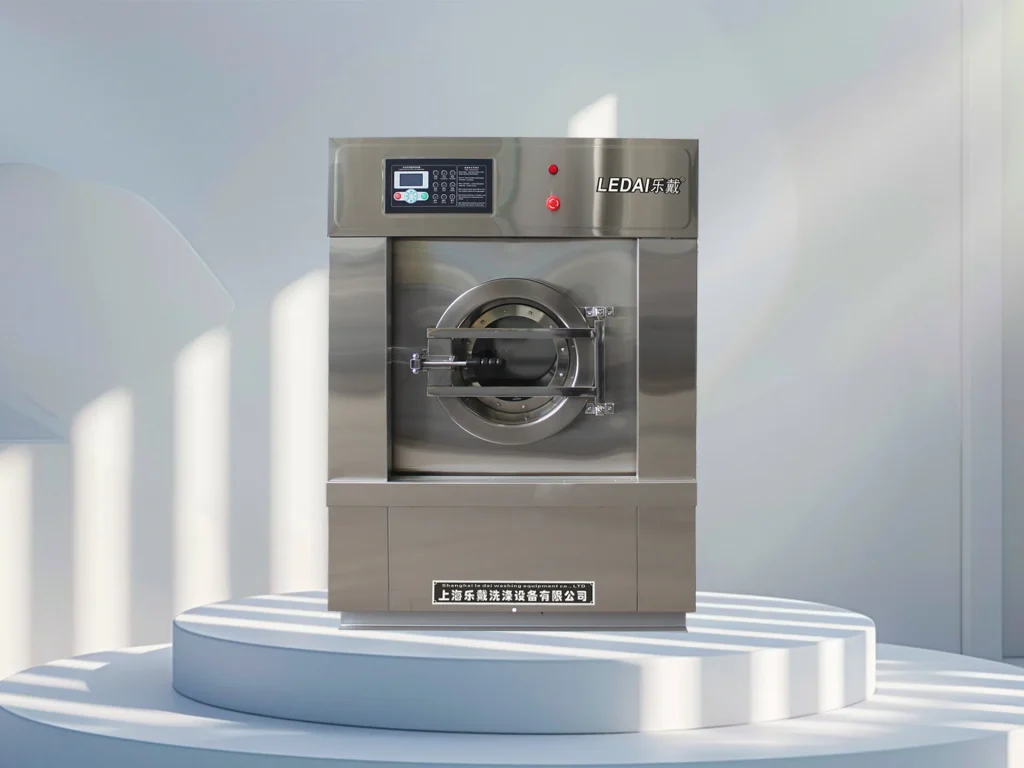
At its core, an industrial washer-extractor is designed to perform two distinct but equally vital functions: the chemical cleaning of the fabric (the wash) and the mechanical removal of water (the extraction). Unlike domestic machines that prioritize ease of use and small footprints, industrial units are built for high-duty cycles, often running eighteen hours a day or more. This guide will dismantle the technical complexities of these machines, providing a roadmap for facility managers to evaluate G-force ratings, suspension types, and operational efficiencies. By the end of this analysis, you will understand exactly how a well-chosen washer-extractor acts as the primary engine of your laundry’s return on investment.
The Engineering of Extraction: Understanding G-Force
The “extractor” part of the machine’s name is arguably its most important feature from a financial perspective. The goal of the final spin cycle is to remove as much water as possible through centrifugal force. In the industry, this is measured in “G-force”—the multiplier of Earth’s gravity applied to the water in the fabric. A standard residential washer might reach 100G, whereas a high-performance industrial washer-extractor in 2026 can exceed 350G or even 450G.
The physics here is simple but the economic impact is profound. Every percentage point of residual moisture removed in the spin cycle is a percentage point that doesn’t need to be evaporated in the dryer. Since natural gas or electric heating is exponentially more expensive than mechanical spinning, a high-G machine significantly slashes the drying time and overall energy consumption of the plant. However, high-speed extraction requires precision engineering. The machine’s drum, bearings, and drive system must be perfectly balanced to prevent the structural fatigue that can occur when spinning several hundred pounds of wet linen at over 1,000 RPM. This delicate balance is a central theme in our [comprehensive industrial laundry guide 2026], which explores the intersection of machine speed and textile longevity.
Structural Anatomy: Soft-Mount vs. Hard-Mount Systems
When selecting an industrial washer-extractor, the most fundamental structural decision is between “Soft-Mount” and “Hard-Mount” designs. This choice is usually dictated by the physical constraints of the building and the desired extraction speed. A hard-mount machine has no internal suspension; the drum is fixed directly to the frame, which must then be bolted to a heavy, reinforced concrete foundation. These machines are robust and typically less expensive to purchase, but they are limited in their spin speeds because the building itself must absorb the vibration.
In contrast, a soft-mount industrial washer-extractor features an internal suspension system—usually a combination of heavy-duty springs and shock absorbers. This allows the internal drum assembly to vibrate independently of the outer cabinet. Because the machine absorbs its own energy, it can reach much higher G-forces (often 350G+) and can be installed on upper floors or over wood-joist flooring without causing structural damage. While the initial investment in a soft-mount unit is higher, the savings in installation costs (no massive concrete pads required) and the lower downstream drying costs often make it the superior choice for modern urban facilities. Understanding these structural nuances is vital when calculating the [total industrial laundry costs] of a new facility installation.
Operational Cycles: The Science of the “Wash Formula”
A modern industrial washer-extractor is essentially a programmable chemical reactor. The “Wash Formula” is the sequence of water levels, temperatures, and chemical injections tailored to a specific load. In 2026, these formulas are managed by sophisticated PLCs (Programmable Logic Controllers) that can store over 100 unique programs. The process begins with the “Break” or “Pre-wash,” where water and high-alkaline chemicals are used to loosen heavy soils. This is followed by the “Suds” or main wash, where the bulk of the cleaning occurs.
The precision of these cycles is what separates a professional operation from an amateur one. If the water level is too high, the mechanical action is dampened, and the linens simply “float” without being scrubbed. If the temperature is too low, the chemicals cannot reach their full efficacy. Advanced machines now integrate “Smart Dosing” systems that communicate directly with the washer’s computer. This ensures that the exact milliliter of detergent is injected at the exact second the water reaches the target temperature. This level of synchronization is explored further in our [guide to industrial services and systems], emphasizing that the washer-extractor is the first line of defense in maintaining high hygiene standards.
Capacity Planning: Choosing the Right Drum Volume
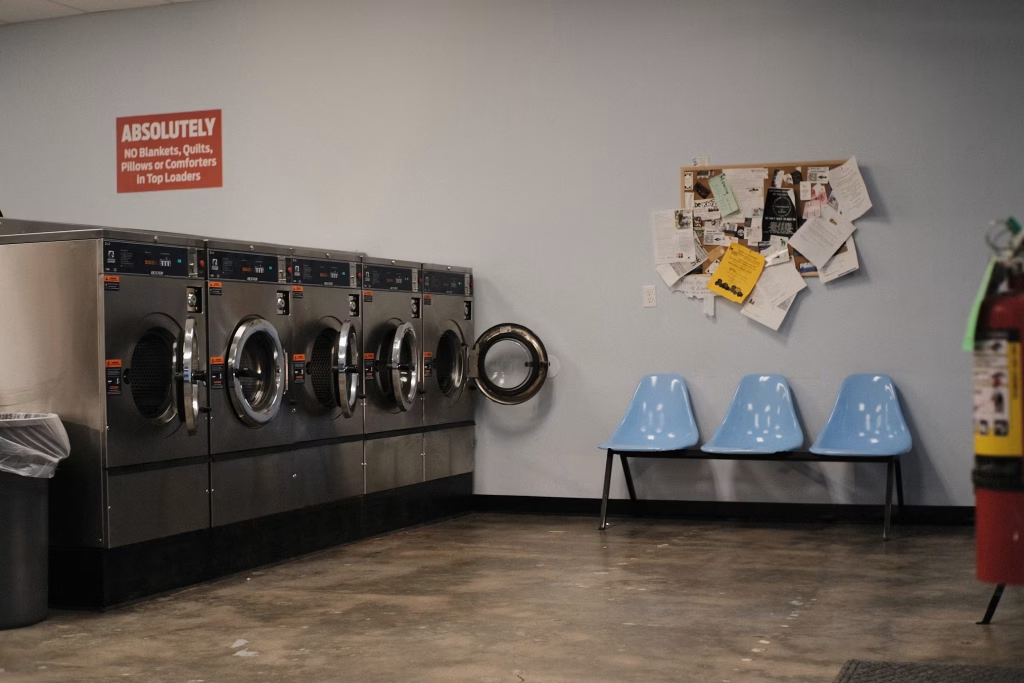
Selecting the appropriate size for an industrial washer-extractor is a balancing act between current throughput requirements and future scalability. In the commercial laundry sector, capacity is measured by the dry weight of the linen the drum can effectively process in a single cycle. Most industrial facilities utilize a range of machines, from 60 lb units for small specialty items to massive 450 lb workhorses for bulk flatwork. The key to operational efficiency is ensuring that the machine is operated at its “Sweet Spot”—typically 80% to 90% of its rated capacity.
Underloading an industrial washer-extractor is a common but expensive mistake. When a machine is too empty, the linens do not achieve the necessary “Mechanical Action.” Instead of being lifted to the top of the drum and dropped back into the wash liquor (a process known as “lofted agitation”), the items simply slide around the bottom. This leads to poor soil removal and a waste of water and chemicals. Conversely, overloading causes the linens to pack too tightly, preventing the wash chemistry from penetrating the center of the load. For a deeper look at how capacity affects your bottom line, the [Industrial Laundry Costs: Complete Breakdown, Cost per Pound & ROI Calculation Guide 2026] provides a detailed matrix on labor-to-load ratios.
The Engineering of Drum Design and Perforation
The internal architecture of the drum is where the “cleaning” actually happens. In 2026, premium industrial washer-extractor models feature “Computer-Aided Perforation” patterns. These drums are not just smooth cylinders with holes; they are engineered with specific “Lifter Ribs” that are designed to gently but firmly toss the linen. The height and angle of these ribs determine the “Drop Zone,” which is the point at which the fabric falls back into the water.
Furthermore, the size and frequency of the perforations (the holes in the drum) impact the extraction efficiency. If the holes are too large, delicate fabrics can be forced into them during high-spin cycles, causing “dimpling” or tearing. If they are too small, water cannot exit quickly enough during the extraction phase, leading to longer cycle times. Modern high-speed machines utilize “Tapered Perforations” that allow for maximum water flow while protecting the integrity of high-thread-count linens. This mechanical precision is a hallmark of the [Industrial Laundry Guide: Comprehensive Encyclopedia for Commercial & Large-Scale Laundries 2026], which serves as the technical benchmark for the industry.
Energy and Resource Efficiency in 2026
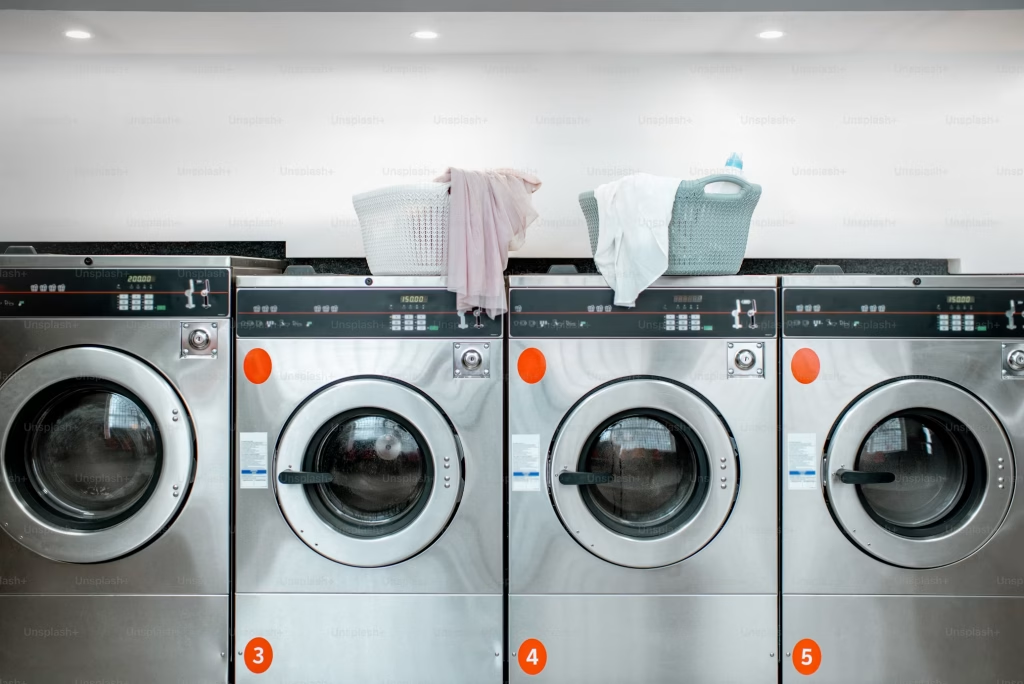
As utility costs and environmental regulations tighten, the energy efficiency of an industrial washer-extractor has become a primary purchasing driver. The most significant advancement in recent years is the widespread adoption of “Variable Frequency Drives” (VFDs). Unlike older machines that used multi-speed motors with complex transmissions, a VFD allows the computer to precisely control the motor’s RPM at every stage of the wash. This means the machine only draws the exact amount of electricity needed for a specific task, reducing “Inrush Current” and lowering the facility’s peak power demand charges.
Water reclamation is another critical efficiency frontier. Many 2026 industrial washer-extractor models are now equipped with “Dual Drain” systems. These systems allow the machine to divert the relatively clean rinse water into a holding tank to be reused as the “break” water for the next load. When combined with ozone injection—which allows for high-level disinfection in cold water—a modern facility can reduce its hot water consumption by up to 70%. This integration of resource-saving technology is discussed extensively in the [2026 Guide to Services, Systems & Costs], highlighting how the right equipment can turn a “utility expense” into a “competitive advantage.”
Maintenance and Longevity: Protecting the Investment
An industrial washer-extractor is a major capital asset designed to last 15 to 20 years, but its lifespan is entirely dependent on a rigorous preventative maintenance schedule. The most critical component to monitor is the main bearing and seal assembly. This is the “Heart” of the machine that supports the rotating drum. If the water seal fails, moisture can enter the bearings, leading to a catastrophic mechanical failure that can cost thousands of dollars to repair.
In 2026, the industry has moved toward “Predictive Maintenance” using IoT-enabled vibration sensors. These sensors can detect minute changes in the machine’s harmonic signature—often weeks before a bearing actually fails. This allows the maintenance team to schedule a repair during a planned downtime window rather than dealing with an emergency breakdown in the middle of a high-volume shift. Regular checks of the “V-belts,” chemical injection tubes, and drain valves are also essential. A leaky drain valve might seem like a minor issue, but it can waste hundreds of gallons of heated, chemically-treated water every day, silently eroding the facility’s profit margins.
Purchasing Strategy: New vs. Remanufactured Units
When a facility manager decides to invest in an industrial washer-extractor, the primary financial crossroads involves choosing between brand-new technology and remanufactured legacy equipment. In 2026, the secondary market for industrial laundry machinery is highly sophisticated. A professionally remanufactured unit—one that has been stripped to the frame, sandblasted, and outfitted with modern PLCs and VFDs—can often be acquired for 50% to 60% of the cost of a new machine.
However, the “Total Cost of Ownership” (TCO) often favors new equipment when energy efficiency is factored into a five-year horizon. New industrial washer-extractor models are engineered with lighter, stronger alloys and advanced “Inverter” motors that consume significantly less electricity during the ramp-up to extraction speeds. Furthermore, new machines come with comprehensive manufacturer warranties and “Cloud-Link” capabilities that allow for remote diagnostics. If your facility operates in a region with high utility rates, the extra capital spent on a 2026 model will likely be recovered through lower monthly gas and power bills within the first 36 months of operation.
Integration into the Modern Laundry Ecosystem
An industrial washer-extractor does not operate in a vacuum; it is the first link in a critical production chain. In a high-performance plant, the washer must be perfectly synchronized with the chemical delivery system and the downstream drying or ironing lines. This integration is managed through “Centralized Management Software” (CMS). This software monitors the status of every machine in the facility, ensuring that when a wash cycle is five minutes from completion, the automated shuttle or the manual operator is alerted to prepare for the transfer.
This ecosystem approach is essential for maintaining “Continuous Throughput.” If the industrial washer-extractor finishes its cycle but the linen sits in the drum for twenty minutes because the dryers are full, the facility loses money. The “dwell time” of wet linen also increases the risk of mildew and fabric wrinkling, which adds to the labor cost of ironing. Modern facilities utilize “Buffering” strategies, where the capacity of the wash alley is matched perfectly to the evaporation rate of the drying tumblers. This synchronization is a core principle of the [Industrial Laundry Services: The 2026 Strategy Guide for On-Premise vs. Outsourcing], which highlights how equipment balance dictates the overall efficiency of any commercial laundry venture.
Conclusion: The Anchor of Your Production Floor
The industrial washer-extractor remains the most versatile and essential piece of equipment in the textile care industry. While technology continues to advance toward total automation, the fundamental physics of the “Wash and Extract” process remains unchanged. By prioritizing high G-force capabilities, robust suspension systems, and programmable logic, business owners can ensure that their wash floor is built for both performance and longevity.
As we look toward the future, the integration of AI-driven sensors and water-reclamation technologies will only further solidify the washer-extractor’s role as the heart of the facility. Investing in the right machine today is not just about cleaning linens; it is about building a scalable, energy-efficient infrastructure that can withstand the operational demands of the next two decades. Whether you are running a boutique hotel OPL or a high-volume commercial plant, the quality of your extraction is the quality of your success.
FAQs: Industrial Washer-Extractor Technical Guide
What is the difference between a “Commercial” and “Industrial” washer?
While the terms are often used interchangeably, an industrial washer-extractor is built with much heavier components, such as cast-iron bearing housings and 304-grade stainless steel cylinders. Industrial machines are designed for “Continuous Duty” (16–24 hours a day), whereas commercial machines are typically rated for 8–10 hours of daily use.
How much G-force is “enough” for my facility?
For most hospitality and healthcare facilities, a machine capable of 350G to 400G is the gold standard. This level of extraction reduces drying times to approximately 20–30 minutes, which is the ideal “balanced cycle” for most production lines. Low-spin machines (under 150G) should only be used if the building’s floor cannot support a high-speed unit.
Can I use liquid and powder chemicals in the same machine?
Yes. Most modern industrial washer-extractor units feature “Automatic Chemical Injection” ports on the rear of the machine. These ports can be connected to a central pump system that delivers liquid detergents, while a manual “Flush Hopper” on the top of the machine allows for the occasional use of powders or specialty boosters.
How often should I grease the main bearings?
This depends on the manufacturer’s specifications, but a general rule is every 500 to 1,000 hours of operation. Over-greasing can be just as damaging as under-greasing, as it can blow out the water seals. Many 2026 models now feature “Auto-Lube” systems that deliver a precise milligram of grease every 24 hours of run-time.
What is a “Tilting” washer-extractor?
Large-capacity machines (over 250 lbs) often feature a hydraulic tilt mechanism. The machine tilts forward at the end of the cycle, allowing gravity to help the heavy, wet “cake” of linen slide out of the drum and onto a conveyor or into a cart. This significantly reduces operator strain and speeds up the unloading process.
 Spanish
  English