
Table of Contents
Industrial washing machines are the foundation of large-scale laundry operations. They are used in environments where laundry is not an occasional task, but a continuous production process that must deliver stable output, hygiene consistency, and predictable cost control.
For hotels, hospitals, uniform rental services, commercial laundromats, and industrial textile facilities, choosing the right industrial washer is not only a matter of capacity. It affects the entire workflow: sorting speed, washing efficiency, extraction performance, dryer workload, labor hours, and even textile lifespan.
This guide is designed as a complete reference for anyone who wants to understand industrial washing machines deeply—from how they work to how to choose the right type for a real business operation.
What Is an Industrial Washing Machine?
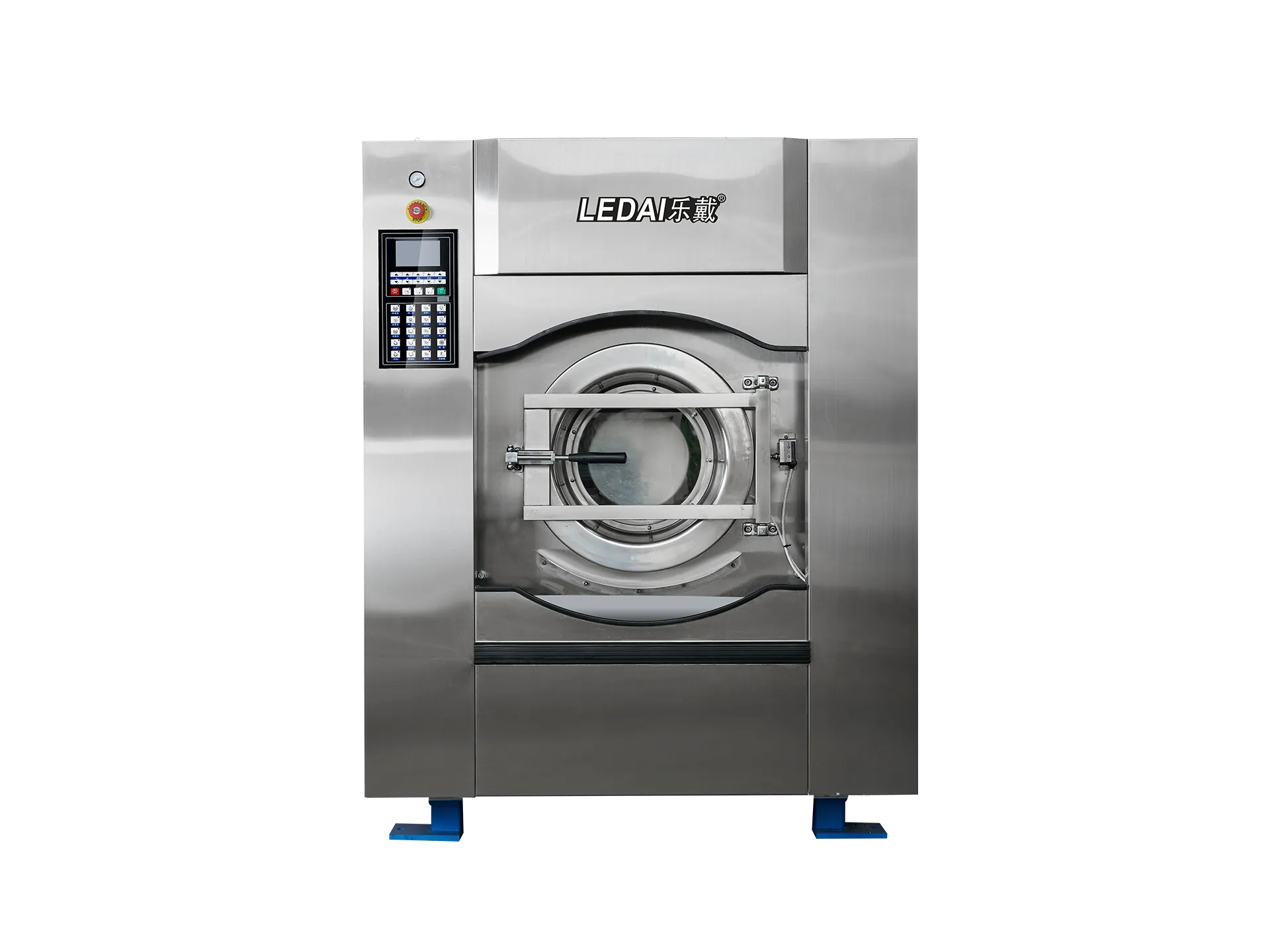
An industrial washing machine is a heavy-duty washer engineered for high-volume laundry processing, designed to run repeatedly every day under demanding operating conditions.
Unlike home washing machines, industrial washers are expected to handle heavy loads, thick fabrics, high chemical concentration detergents, repeated high-temperature cycles, and continuous use across long working shifts. Their construction focuses on durability, mechanical stability, and consistent washing results.
Industrial washing machines are often found in professional laundries that process:
- hotel linens (bedsheets, towels, bathrobes)
- hospital textiles (patient bedding, surgical fabrics)
- uniforms and workwear (factory clothing, safety garments)
- restaurant and hospitality laundry (tablecloths, napkins)
- industrial cleaning textiles (rags, mats, heavy cotton materials)
In practice, industrial washers are often described using different terms depending on region and market positioning. Many business owners search using multiple names, even though they refer to similar equipment categories.
Industrial Washing Machine vs Commercial Washing Machine: What’s the Difference?
Many people assume “industrial” and “commercial” mean the same thing. In everyday usage, they often do. However, in equipment classification, the difference usually comes down to the machine’s workload expectations and engineering level.
A commercial washing machine is typically designed for shared laundry environments such as laundromats, apartment buildings, and small hospitality businesses. These machines are built for high usage compared to residential washers, but they are still limited in maximum load size, extraction strength, and advanced automation.
An industrial washing machine, by contrast, is designed for professional laundry plants where laundry becomes a production line. Industrial machines are built with stronger frames, more powerful motors, heavier bearings, and better long-term stability under extreme workloads.
The easiest way to understand the difference is to think about “daily duty cycle.” Commercial machines are built for frequent customer use, while industrial machines are built for continuous production use.
The Role of Industrial Washing Machines in a Real Laundry Workflow
Industrial laundry operations are not simply about washing textiles. They are about processing large volumes of fabric through a structured workflow that minimizes time waste and maximizes output.
In most professional laundry operations, washing is only one part of the full production cycle. A typical industrial laundry workflow includes sorting, washing, extraction, drying, finishing, and packaging. Each stage must match the speed of the others, otherwise the operation becomes inefficient.
For example, even if your washer can handle 50 kg loads, your entire operation can still slow down if your dryer capacity is too small, or if your extraction force is too weak and textiles remain too wet.
Industrial washing machines therefore act as the “core engine” of the laundry line, setting the pace for the entire facility. This is why businesses often evaluate washers based not only on capacity, but also on extraction speed, cycle time, water consumption, and program flexibility.
Why Industrial Washing Machines Are Built Differently Than Home Washers
A home washer is designed for convenience. An industrial washer is designed for survival.
Residential machines are built for occasional use. Even in a large family home, a washer might run a few cycles per week. Industrial washers, on the other hand, may run 10 to 30 cycles per day. Over a year, that can mean thousands of wash cycles.
This difference in operating intensity changes everything about machine design. Industrial washers require stronger motors, more durable transmission systems, reinforced frames, and long-lasting drum bearing assemblies. They must also handle repeated exposure to harsh detergents and commercial chemical dosing systems without corrosion or mechanical degradation.
A residential washer may seem cost-effective at first, but it quickly becomes a liability in professional settings. Frequent breakdowns, inconsistent washing performance, and increased downtime often result in higher long-term costs than purchasing the correct industrial equipment from the beginning.
In industrial laundry, reliability is not just a technical advantage—it is a business requirement.
Key Engineering Features That Make a Washer “Industrial”
Industrial washing machines are defined by engineering decisions that support heavy usage and long-term stability. The differences are not just about size, but about how the machine is designed internally.
Heavy-Duty Motor and Drive System
Industrial washers require a high-torque motor capable of accelerating heavy wet loads into high-speed extraction cycles. This requires a stronger motor design and often a more advanced inverter system for smooth speed control.
In modern industrial machines, inverter-controlled motors are common because they improve energy efficiency, reduce vibration stress, and allow precise program adjustments.
Stronger Bearings and Drum Support
One of the most expensive failures in washing machines is bearing damage. Industrial washers use larger, stronger bearings and reinforced drum supports to withstand continuous spinning at high speed.
This is especially important because industrial loads are often uneven. Thick textiles such as towels, mats, or uniforms can create imbalance, which increases bearing stress. Industrial-grade designs are built to tolerate these conditions far better than home machines.
Higher Extraction Force (G-Force)
Extraction is the process of spinning laundry at high speed to remove water before drying. Industrial machines are designed to produce much higher extraction force than residential washers.
This matters because extraction directly reduces drying time. The dryer stage is often the highest energy cost in laundry operations, so a washer that removes more water can dramatically reduce total operating costs.
Industrial Control Systems and Program Customization
Industrial washers often use programmable logic controllers (PLC) or advanced digital control panels. These allow operators to create multiple programs based on fabric type, contamination level, and hygiene requirements.
Unlike residential machines, which have fixed programs, industrial washers allow fine control over temperature, wash time, rinse cycles, extraction speed, and chemical injection timing.
For businesses, this programmability is essential because it ensures consistent results across different operators and different shifts.
Compatibility With Chemical Dosing Systems
Most industrial laundries use automatic chemical dosing pumps. These systems inject detergent, bleach, disinfectants, neutralizers, and softeners at precise stages of the wash cycle.
Industrial washers are built to support these systems. They have dedicated dosing ports, chemical-resistant internal piping, and control integration that ensures chemicals are delivered correctly and safely.
This is particularly important in healthcare laundry, where hygiene compliance requires strict disinfection standards.
Industrial Washer Terminology You Must Understand
Industrial washing machine equipment is full of terms that can confuse buyers. Understanding these terms is essential because manufacturers often describe similar machines using different names.
Wash Extractor
A wash extractor is an industrial washer designed to wash and then extract water through high-speed spinning. In many markets, wash extractors are the most common form of industrial washer.
Hard-Mount vs Soft-Mount
Hard-mount machines are bolted directly to a concrete foundation. They are structurally simpler but require strong flooring and may create more vibration.
Soft-mount machines use suspension systems to reduce vibration. They are easier to install in many buildings and often provide better extraction performance with less structural stress.
Barrier Washer (Pass-Through Washer)
Barrier washers are installed through a wall, with one side facing the “dirty zone” and the other side facing the “clean zone.” This prevents cross-contamination and is widely used in hospitals and hygienic laundry facilities.
Tunnel Washer System
Tunnel washers are continuous washing systems designed for extremely high-volume laundries. Instead of washing one batch at a time, tunnel washers process laundry continuously through multiple chambers.
These systems are expensive but extremely efficient for industrial-scale laundry plants.
Comparison of Industrial vs Commercial vs Residential Washing Machines
Below is a clear comparison table that helps identify which type of machine matches different business needs.
| Category | Residential Washer | Commercial Washer | Industrial Washer |
|---|---|---|---|
| Typical Use | Homes, small households | Laundromats, apartments, small hotels | Laundry plants, hospitals, linen rental, large hotels |
| Daily Duty Cycle | Low (few cycles/week) | Medium (multiple cycles/day) | High (continuous cycles/day) |
| Capacity Range | 5–12 kg | 8–30 kg | 20–300+ kg |
| Build Strength | Light | Medium | Heavy-duty steel frame |
| Extraction Performance | Basic | Medium | High G-force extraction |
| Chemical Dosing Support | Rare | Limited | Full support |
| Temperature Control | Limited | Medium | Advanced, high-temp compatible |
| Expected Lifespan in Business Use | Very short | Medium | Long-term (industrial-grade) |
| Best For | Personal laundry | Small business laundry | Professional laundry production |
Where Industrial Washing Machines Are Used (Real Business Scenarios)
Industrial washing machines are used across industries, but the “correct” type of washer depends heavily on fabric type, hygiene requirements, and processing volume.
Hotels and Hospitality Laundry
Hotels require high daily output and predictable cycle times. Their laundry is usually high-volume but relatively “clean” compared to industrial environments. The key priorities are efficiency, energy savings, and consistent linen quality.
Many hotel laundries choose soft-mount wash extractors because they provide strong extraction, reducing dryer time and lowering electricity consumption.
Hospitals and Healthcare Laundry
Healthcare laundry requires strict hygiene compliance. Many facilities use barrier washers to prevent contamination between dirty and clean zones. The priority is not only cleaning performance but also disinfection reliability.
Healthcare laundries typically need accurate temperature control, chemical dosing integration, and validated wash programs.
Commercial Laundromats
Laundromats require machines that can survive public use. Their priority is durability, simple operation, and fast cycle time. Machines must handle mixed fabrics and unpredictable user behavior.
Coin-operated or card-operated systems are also common in this segment.
Uniform Rental and Workwear Services
Uniform rental laundries often deal with grease, heavy dirt, industrial oil, and thick fabrics. Their washers must support stronger chemical programs, longer wash cycles, and stable extraction for heavy loads.
This segment often benefits from high-capacity industrial machines that minimize batch processing time.
Food Processing and Hygiene-Critical Industries
Food processing laundries often require stainless steel machines because the environment is humid, chemical-heavy, and hygiene-sensitive. Corrosion resistance and wash consistency are crucial.
This is one reason why stainless steel construction is considered a premium feature in industrial washers.
Best Industrial Washing Machine Type by Industry
To make this guide more actionable, here is a quick “industry-to-machine” reference table.
| Industry | Typical Laundry Type | Recommended Washer Type | Key Reason |
|---|---|---|---|
| Hotels | sheets, towels, robes | Soft-mount wash extractor | faster extraction + lower dryer cost |
| Hospitals | contaminated linens | Barrier washer | hygiene separation + compliance |
| Laundromats | mixed customer loads | Commercial hard-mount washer | cost efficiency + durability |
| Uniform rental | heavy workwear | Heavy-duty industrial washer | strong cleaning + chemical support |
| Food processing | hygiene textiles | Stainless steel washer | corrosion resistance + hygiene |
| Large laundry plant | massive daily volume | Tunnel washer system | continuous processing efficiency |
Why Industrial Washing Machines Matter for Business Profitability
Industrial washers are not simply a cost. They are a long-term profit driver.
A well-chosen industrial washing machine can reduce business costs in several ways. It can shorten cycle time, reduce labor workload, lower water and electricity consumption, and reduce linen replacement frequency by washing textiles more gently and consistently.
On the other hand, a poorly chosen washer can create hidden costs: frequent downtime, inconsistent washing results, excessive dryer energy use, and increased fabric damage. In high-volume operations, these costs can easily exceed the machine’s purchase price over time.
For this reason, experienced laundry operators evaluate industrial washers based on total cost of ownership (TCO), not only purchase cost.
How Industrial Washing Machines Work?
Understanding how an industrial washing machine works is essential if you want to choose the right model, control operating costs, and avoid expensive mistakes.
Many buyers focus only on capacity (kg) and price, but industrial washing machine performance depends on a complete system: mechanical structure, washing action, heating method, extraction force, and the washer’s integration with chemical dosing.
In a real laundry plant, the washing machine is not just “a washer.” It is a production machine that must deliver consistent output with predictable cost.
The Core Principle Behind Industrial Washing Machines
At its core, an industrial washing machine performs four key functions:
- Mechanical agitation (moving textiles through water)
- Thermal control (heating water to activate detergent and disinfection)
- Chemical action (detergent, alkali, bleach, neutralizer)
- Water extraction (high-speed spin to remove moisture)
These four actions work together to remove soil, bacteria, grease, and odors, while protecting fabric quality.
If any of these elements is weak, washing results become inconsistent, cycle time increases, and drying costs rise sharply.
The Industrial Laundry Washing Cycle (Step-by-Step)
Most industrial washing machines follow a structured cycle. While different models use different programs, the logic remains the same.
Step 1: Loading and Weight Distribution
Before washing begins, laundry is loaded into the drum. In industrial environments, the loading stage affects the entire cycle more than most operators realize.
If the load is uneven (for example, heavy towels on one side and light linens on the other), the washer may vibrate heavily during extraction. This reduces extraction speed, increases wear, and may even trigger safety stops.
In professional laundries, operators often sort loads not only by fabric type, but also by moisture absorption and weight consistency.
Step 2: Pre-Wash (Optional but Very Important)
A pre-wash stage is used when laundry contains heavy contamination such as:
- grease and oil (workwear)
- blood and medical contamination (hospitals)
- food stains (restaurants)
- mud and industrial dust (factory uniforms)
Pre-wash uses lower detergent concentration and shorter time. Its goal is not “perfect cleaning” but removing surface contamination so the main wash can work more effectively.
Skipping pre-wash in heavily soiled loads often forces the main wash to become longer, hotter, and more chemical-intensive, which increases cost and damages fabric over time.
Step 3: Main Wash (The Real Cleaning Stage)
The main wash is where the industrial washer performs the majority of cleaning.
In this stage, the machine controls:
- water level
- detergent dosing
- wash time
- drum rotation pattern
- water temperature
- chemical injection sequence
The washing action depends on the machine type, but most industrial washers use a “tumbling and lifting” process where textiles are repeatedly lifted and dropped through water. This creates friction and mechanical soil removal.
Industrial washers clean better than home machines because they can maintain stable high temperature and consistent chemical dosing at industrial scale.
Step 4: Rinsing (More Than Just Removing Soap)
Many people underestimate the importance of rinsing. In industrial laundry, rinsing is not simply removing detergent. It is critical for:
- removing chemical residue that damages fabric
- preventing skin irritation (hotels, hospitals)
- improving linen softness and whiteness
- meeting hygiene standards
Rinse cycles may include multiple stages, including neutralization. Neutralization is important after alkaline detergents or bleach use, especially for healthcare and hospitality linens.
Poor rinsing is one of the most common hidden causes of textile damage and premature linen replacement.
Step 5: Extraction (High-Speed Water Removal)
Extraction is the phase where the washer spins the drum at high speed to remove water.
This stage is where industrial machines truly separate themselves from home washers.
Extraction efficiency is measured using G-force, which represents the centrifugal force applied to laundry. Higher G-force means more water removed, which directly reduces dryer workload.
Even a small increase in extraction efficiency can significantly reduce operating costs because dryers consume more energy than washers in most laundry plants.
The Key Parts Inside an Industrial Washing Machine (And What They Do)
To truly understand performance differences between brands, you need to understand the machine’s internal structure.
The Drum (Inner Cylinder)
The drum is the stainless steel chamber where laundry is washed.
Industrial drums are built thicker than residential ones. They often include:
- perforated holes for water drainage
- reinforced ribs to improve tumbling action
- stronger welding and balancing for high-speed extraction
The drum design directly affects washing quality. A drum with better rib design creates stronger mechanical washing action, improving soil removal without increasing chemical concentration.
The Outer Tub (Water Containment System)
The outer tub surrounds the drum and holds water.
In industrial machines, the outer tub is usually reinforced steel or stainless steel depending on model grade. It must withstand high vibration and chemical exposure.
The tub design also affects water efficiency. Some advanced machines use optimized tub volume to reduce water consumption per cycle.
The Motor and Drive System
Industrial washers typically use either belt-driven systems or direct drive systems.
Modern high-end models increasingly use inverter-controlled motors because they provide:
- smoother speed changes
- lower vibration stress
- more precise extraction control
- better energy efficiency
A stronger motor also means the machine can handle heavier loads without slowing down, which is crucial for consistent output in large laundries.
Suspension System (Soft-Mount Machines)
Soft-mount machines use suspension systems to absorb vibration during extraction.
This allows them to operate at higher extraction speed without requiring a heavy concrete foundation.
Suspension systems often include:
- shock absorbers
- springs
- stabilizing frames
Soft-mount machines are popular in hotels, laundromats, and commercial buildings because installation is easier and less expensive.
However, suspension systems also add complexity. Over time, shock absorbers may need replacement, and improper maintenance can reduce extraction performance.
Bearings and Shaft Assembly
Bearings are among the most expensive components in industrial washers. They support the rotating drum shaft.
If bearings fail, repair cost can be extremely high and downtime can last days.
Common causes of bearing failure include:
- overload cycles
- poor load distribution
- water leakage into bearing housing
- long-term vibration stress
This is why industrial washer design quality is often judged by bearing system durability.
Heating System (Steam, Electric, or Gas)
Industrial washers may heat water using different systems:
- Steam heating (most common in large industrial laundries)
- Electric heating elements
- Gas heating (less common but exists in some regions)
- External hot water supply (from boiler systems)
Steam heating is popular because it provides fast heating and lower operating cost at scale.
Electric heating is easier to install but can be expensive in high electricity-cost regions.
If your washing process depends on high-temperature disinfection, heating system choice becomes critical. In hospitals, temperature stability is often a compliance requirement, not just a performance feature.
Drain Valve and Water Recycling Systems
Drain valves release water after wash and rinse cycles. Industrial machines often use heavy-duty drain systems because they must handle:
- high water volume
- lint and debris
- chemical residues
Some industrial laundries install water recycling systems to reduce consumption. These systems filter and reuse rinse water, especially in high-volume operations.
Water recycling is a major trend in modern industrial laundry because water costs and environmental regulations are increasing globally.
The Washing Action: How Industrial Machines Actually Clean Better
Industrial washing machines do not clean better simply because they are bigger. They clean better because they can produce stronger and more controlled washing action.
Mechanical Action (Tumbling + Drop Effect)
Most industrial washers rotate the drum in alternating directions.
The laundry is lifted by drum ribs and then dropped through water. This creates:
- friction between fabrics
- impact force against water
- soil loosening from fibers
This mechanical action is a key factor in cleaning performance.
If the drum rotates too slowly, textiles slide instead of tumbling. If it rotates too fast, textiles stick to the drum wall and washing action becomes weaker.
Industrial control systems optimize drum speed to maintain the ideal tumbling pattern.
Water Level Control (Not Always “More Water = Better”)
Many buyers assume that more water means better washing.
In industrial laundry, too much water can actually reduce cleaning performance because textiles float instead of rubbing against each other. It also increases water cost and heating cost.
High-efficiency industrial washers often use optimized low water levels combined with strong mechanical action and chemical dosing precision.
Temperature and Chemical Synergy
Detergents work differently at different temperatures.
For example:
- oils and grease break down faster at higher temperature
- disinfectants require stable high temperature for hygiene effectiveness
- certain fabrics can shrink or degrade if temperature is too high
Industrial washers allow precise temperature control because many professional laundries require consistent results across thousands of cycles.
In hospitality operations, temperature consistency is one of the key factors behind “white linen brightness.”
Extraction Force (G-Force) and Why It Matters More Than You Think
Extraction is often overlooked, but it is one of the most profitable performance factors.
What Is G-Force in Industrial Washers?
G-force is the centrifugal force applied to laundry during extraction.
Higher G-force means:
- less water remaining in textiles
- faster drying
- lower dryer energy consumption
- shorter overall cycle time
- increased daily output capacity
In many laundries, dryers are the bottleneck. A washer with higher extraction performance effectively “upgrades” your dryer capacity without buying new dryers.
This is one reason why soft-mount washers are preferred in many modern laundries—they often achieve higher extraction speeds.
The Dryer Cost Connection
If your washer extracts poorly, textiles remain wet and dryers must run longer. This increases:
- electricity or gas consumption
- machine wear
- lint buildup
- labor cost due to longer turnaround time
A washer that removes just 5–10% more water can reduce dryer cycle time significantly over thousands of cycles.
That is why industrial washing machine managers often measure washer efficiency not only by wash quality, but by extraction moisture percentage.
Hard-Mount vs Soft-Mount Industrial Washers (The Real Difference)
This is one of the most important decisions in industrial washing machine equipment selection.
What Is a Hard-Mount Washer?
A hard-mount washer is bolted directly to the floor, usually on a reinforced concrete foundation.
Hard-mount machines are mechanically simpler and often cheaper. They are popular in laundromats and facilities where strong flooring is already available.
However, hard-mount machines usually have lower extraction speed because vibration must be controlled through the building structure.
What Is a Soft-Mount Washer?
A soft-mount washer includes a suspension system that absorbs vibration internally.
This allows higher extraction speeds without requiring heavy concrete foundations.
Soft-mount machines are widely used in:
- hotels
- commercial laundries
- rental linen laundries
- many healthcare laundry plants
Soft-mount machines can reduce building installation cost while improving extraction performance.
Which One Is Better?
There is no universal answer.
Hard-mount washers can be extremely reliable, especially in laundromat environments where operators prefer simple construction.
Soft-mount washers offer higher efficiency, better extraction, and easier installation, but they require proper maintenance of suspension components.
The best choice depends on your building structure, daily laundry volume, and energy cost priorities.
Barrier Washers: Why Hospitals and Cleanroom Laundries Need Them
Barrier washers are specialized industrial washing machines designed for hygiene-critical environments.
What Makes a Barrier Washer Different?
Barrier washers are installed through a wall.
- The “dirty side” receives contaminated laundry.
- The “clean side” unloads sanitized laundry.
This design prevents cross-contamination.
Barrier washers are common in:
- hospitals
- pharmaceutical facilities
- food processing textile laundries
- cleanroom garment services
They often include validated wash programs that meet strict disinfection standards.
Barrier washers are expensive, but for healthcare facilities they are often the only acceptable solution.
Tunnel Washers: The Industrial Laundry Production Line
Tunnel washers are continuous washing systems used in very large laundry plants.
Instead of washing one batch at a time, tunnel washers move laundry through multiple chambers, each chamber performing a specific function:
- pre-wash
- main wash
- rinse stages
- extraction press stage
Tunnel washers require large investment, but they offer unmatched efficiency for high-volume operations such as national linen rental companies.
Tunnel washers are also the most water-efficient industrial washing systems when paired with recycling and heat recovery technology.
Types of Industrial Washing Machines (Comparison Guide)
This table is designed to help readers quickly understand the practical differences.
| Machine Type | Typical Capacity | Best For | Main Advantage | Main Limitation |
|---|---|---|---|---|
| Hard-Mount Washer | 15–80 kg | Laundromats, small commercial laundry | simple design, lower purchase cost | requires strong foundation, lower extraction |
| Soft-Mount Washer | 20–120 kg | hotels, commercial laundries | high extraction speed, easier installation | suspension maintenance required |
| Barrier Washer | 30–100 kg | hospitals, cleanroom laundry | prevents contamination, hygiene compliance | high cost, specialized installation |
| Tunnel Washer System | 30–60 kg per chamber (continuous) | large laundry plants | massive efficiency and output | extremely expensive, requires full system planning |
This table is extremely valuable for SEO because it answers multiple search intents in one section.
How Modern Industrial Washing Machines Improve Efficiency
Industrial washers today are not only about cleaning. They are increasingly about cost reduction and automation.
Smart Control Systems and Program Management
Modern industrial washers store dozens of wash programs and allow customization based on fabric type and contamination level.
Some machines allow remote monitoring, error reporting, and cycle optimization.
This improves management efficiency in multi-shift operations where different operators may have different skill levels.
Water-Saving and Energy-Saving Technologies
Many industrial washers now use:
- low water ratio designs
- optimized rinse systems
- heat recovery systems
- water reuse systems
These technologies reduce operating cost significantly, especially in regions with high water price or strict environmental regulations.
Stainless Steel Construction and Corrosion Resistance
In chemical-heavy laundry environments, corrosion resistance becomes a long-term profitability factor.
Stainless steel washers offer better durability, especially in:
- healthcare laundries
- humid tropical regions
- food industry laundries
This is also why stainless steel construction is a strong selling point for premium industrial washing machine brands.
Common Misunderstandings About How Industrial Washers Work
Even experienced operators sometimes misunderstand what affects washing performance.
“Bigger Capacity Always Means Better”
Capacity must match workflow.
A washer that is too large may lead to underloading, which reduces washing action efficiency and increases cost per kg.
A washer that is too small increases batch cycles and creates bottlenecks.
The best capacity is the one that matches your sorting and drying workflow.
“More Chemicals Means Better Cleaning”
Overuse of chemicals increases cost and fabric damage.
Professional laundries rely on correct chemical dosing sequence and temperature control, not excessive detergent.
Modern washers integrate chemical dosing systems precisely to avoid waste.
“Dryers Are the Main Machine”
In reality, the washer often controls the entire workflow speed.
If the washer cycle time is too long, dryers sit idle. If extraction is weak, dryers become overloaded.
A well-optimized washer-dryer system must be designed together, not separately.
How Industrial Washing Machines Work (A Real-World Step-by-Step Explanation)
To most people, an industrial washing machine looks like a bigger version of a household washer. But in reality, industrial machines are built around a completely different philosophy: they are not designed for convenience — they are designed for predictable, repeatable performance at scale.
In a hotel or hospital laundry room, the goal isn’t simply to “make clothes clean.” The goal is to run hundreds of loads per day with consistent results, without damaging textiles, without wasting energy, and without creating bottlenecks in the workflow.
That’s why industrial washers are engineered as part of a larger system: water supply, chemical dosing, drainage, drying capacity, operator routines, and maintenance cycles all interact. Understanding this process is the fastest way to understand what makes one machine superior to another.
Stage 1 — Loading Isn’t Just Loading (It’s Operational Engineering)
The washing cycle starts before the machine even turns on.
In industrial laundry, the way a load is sorted and loaded directly affects washing quality, mechanical wear, and energy efficiency. If a machine is overloaded, the textiles cannot tumble freely. This reduces mechanical action, meaning stains remain even if the wash program is technically correct. If the load is underfilled, the machine wastes water and energy, while the drum movement can become too aggressive for delicate fabrics.
This is why professional laundries treat loading as a controlled variable, not an afterthought.
In real-world operations, an experienced operator often recognizes problems immediately by the “feel” of the load — towels behave differently than sheets, and uniforms behave differently than microfiber cloth. These small differences matter because industrial washers are optimized for consistent kilogram-based processing, not random household batches.
If you want to choose the right machine size, you must start by understanding realistic loading patterns, not the manufacturer’s maximum advertised number.
Stage 2 — Water Control and Temperature Stability Decide Cleaning Quality
Once the door locks, industrial washing machines begin filling with water. But unlike household machines, industrial washers are designed to precisely control water levels and temperature stability — because both factors directly determine cleaning efficiency and textile lifespan.
Many buyers assume “hotter water equals better cleaning,” but professional laundries know this is not always true. Certain stains, especially protein-based stains like blood, sweat, or food residue, can actually become harder to remove if exposed to high temperature too early. This is why advanced industrial machines allow multi-stage programs where the wash begins at lower temperatures and gradually increases.
Temperature stability is equally important. In a small home washer, temperature drops during the cycle don’t matter much. In industrial operations, however, a temperature drop can ruin consistency across hundreds of loads, especially in hospitality and healthcare environments where hygiene expectations are strict.
A truly professional industrial washing machine is not just “capable of reaching 60°C.” It must be able to maintain that temperature reliably, cycle after cycle, while handling varying load sizes.
Stage 3 — Chemical Dosing Is the Hidden Power Behind Industrial Laundry
This is the point where industrial washing machines become fundamentally different from domestic washers.
Industrial washers are designed to integrate with automatic chemical dosing systems. In modern laundries, detergents are not poured manually; they are injected in measured quantities, often controlled by dosing pumps connected to the machine’s program.
The reason is simple: large-scale laundry is a business process, and business processes require repeatability.
Inconsistent dosing creates inconsistent results. Too little detergent leads to poor stain removal. Too much detergent creates residue, increases rinse requirements, and accelerates fabric wear. In hotels, detergent residue makes towels feel stiff. In hospitals, residue can become a hygiene risk. In factories, improper dosing means grease remains embedded.
Industrial washers solve this by treating chemical injection like engineering: measured per kilogram, controlled by program stages, and adjusted based on soil level.
This is also why “cheap machines with large capacity” often fail in real operations. They may physically wash a large load, but without stable dosing compatibility and programmable flexibility, the laundry outcome becomes unpredictable.
Stage 4 — Mechanical Action: The Most Underrated Cleaning Factor
Most people believe detergent does most of the work. In reality, industrial washing relies heavily on mechanical action — the movement pattern inside the drum.
A high-quality industrial washer is designed with internal baffles that lift textiles and drop them in a controlled tumbling motion. This tumbling creates friction, and friction is what physically separates dirt from fibers. Without enough mechanical action, stains remain “embedded,” even if the chemical formula is correct.
This is also where capacity becomes misleading. A machine might claim it can hold 50 kg, but if you actually load 50 kg of heavy towels, the textiles have no space to tumble. The washer becomes a rotating barrel of compressed fabric, resulting in poor cleaning performance.
The best industrial machines balance drum geometry, baffle design, and rotation programming so that heavy loads still move efficiently.
This is why professional laundries often choose machines based on drum design quality, not just digital features.
Stage 5 — Rinsing Is Where “Professional Quality” Shows
A common misconception is that rinsing is just “washing again with water.” But in industrial laundry, rinsing is often the difference between average results and premium results.
Rinsing removes chemical residue. And chemical residue is more damaging than most buyers realize.
Detergent residue leads to fabric stiffening, color fading, and long-term fiber degradation. In hospitality, it causes towels to lose softness and absorbency. In healthcare, residue can irritate sensitive skin and reduce perceived hygiene. In industrial uniform cleaning, residue can trap odors and oils inside the fabric.
That’s why professional industrial washing machines are built with advanced rinse programming, including options like multiple rinse stages, controlled water level rinses, and anti-foam rinsing cycles. Some systems even optimize rinsing based on water hardness and detergent type.
For operations aiming at premium textile quality, rinse performance is not a minor detail — it is one of the most important evaluation criteria.
Stage 6 — Extraction: The Real Energy-Saving Engine
After washing and rinsing, industrial washers enter the extraction stage, which is essentially high-speed spinning designed to remove water from textiles.
This stage is the primary reason industrial washing machines can dramatically reduce drying costs.
Drying is expensive. Dryers consume large amounts of energy, especially in high-volume laundries. If the washer removes more water during extraction, the dryer runs less time. Over hundreds of loads per week, this difference becomes enormous.
The extraction capability of an industrial washer is measured not by RPM, but by G-force. A higher G-force means stronger water removal, which means shorter drying cycles and lower operational costs.
However, high extraction requires strong suspension systems and high-quality bearings. A cheap washer may advertise high spin speed but fail mechanically after long-term use due to vibration stress.
This is why high-G extraction machines often cost more upfront — they are built to survive industrial-scale stress.
Key Specifications That Actually Matter (And What They Mean in Real Business Operations)
Industrial washing machine specs are often presented in a way that confuses buyers. Capacity numbers look impressive, RPM sounds technical, and digital displays make everything feel “advanced.”
But in industrial washing machine laundry, what matters is not the marketing sheet — it’s what the specs translate into when your machine runs ten hours a day, six days a week, for years.
Below are the specifications that truly impact cost, cleaning performance, and long-term reliability.
Capacity Isn’t a Number — It’s a Workflow Decision
Manufacturers usually list capacity in kilograms or pounds, but the reality is that “rated capacity” is not the same as “effective working capacity.”
A machine rated for 50 kg can technically hold 50 kg of textiles, but that doesn’t mean it can wash 50 kg effectively. Cleaning requires movement space. When the drum is packed too tightly, the textiles cannot tumble, mechanical action collapses, and washing quality drops.
This is why professional laundries often run at 80–90% of rated capacity to maintain consistent performance.
Capacity selection is not only about how much you wash per load, but also about how you design your workflow. A laundry facility might achieve better productivity using two medium machines instead of one oversized machine, because smaller machines reduce downtime risk and improve load flexibility.
Drum Volume and Loading Ratio Are More Honest Than “Kg Capacity”
A more professional way to evaluate industrial washers is to look at drum volume and loading ratio.
This ratio essentially measures how much space each kilogram of laundry has inside the drum. A higher ratio means more tumbling space, which usually improves cleaning quality and reduces fabric stress.
For example, bulky towels need more space to move compared to lightweight sheets. Heavy industrial uniforms often require more aggressive mechanical action, meaning they also benefit from proper space allocation.
This is why two machines with the same “kg rating” can perform very differently: one may have a more optimized drum volume and baffle design.
G-Force Is the Spec That Predicts Your Drying Costs
Many buyers compare washers using RPM, but RPM is misleading because drum diameter changes everything.
G-force is the more meaningful measurement because it directly reflects extraction performance. A machine with higher G-force removes more water, which reduces dryer time, reduces energy bills, and speeds up total workflow.
For laundromats and hotels, high extraction is often one of the fastest ways to improve profit margins. For hospitals, it can also reduce handling weight and improve logistics efficiency.
If you are building a facility designed for high throughput, G-force should be one of your top selection criteria.
Heating Options (Electric vs Steam) Change Your Long-Term Operating Cost
Heating systems matter because industrial washing is not just a cleaning process — it is a thermal process.
Electric heating is common in smaller laundries because it is easy to install. Steam heating is common in large industrial laundries because it offers better efficiency when paired with a boiler system.
If your facility already uses steam for other operations, steam-heated washers often become the smarter long-term investment. But if you are building a small hotel laundry room without infrastructure, electric heating may be more practical.
The best choice is not universal. It depends on your energy price, infrastructure, and daily workload.
Types of Industrial Washing Machines (And Why Each Exists)
Industrial washing machines exist in different designs because laundry operations have different constraints. A hotel laundry room cares about noise and space. A hospital cares about hygiene separation. A factory cares about heavy-duty soil removal.
Choosing the wrong type of machine often leads to one of two failures: either the laundry quality never meets expectations, or the machine becomes too expensive to maintain.
Let’s break down the most important categories.
Front-Load Industrial Washers (The Industry Standard)
Front-load washers dominate industrial washing machine laundry for one reason: they deliver the best balance of cleaning performance, extraction power, and program flexibility.
They are widely used in laundromats, hotels, uniform services, and industrial laundries because they support programmable cycles, high-G extraction, and integration with automatic chemical dosing.
Front-load design also supports better workflow integration. In professional laundries, the washer is rarely a standalone machine. It is part of a process line: sorting → washing → extraction → drying → folding.
Front-load systems fit naturally into this workflow.
Hard-Mount vs Soft-Mount (The Difference Most Beginners Miss)
This distinction is not just technical — it affects installation cost, machine lifespan, and long-term stability.
Hard-mount machines are fixed directly to the foundation. They are often chosen for large industrial laundries because they are extremely durable and can handle continuous high-load cycles for years. The tradeoff is that they require reinforced concrete flooring and professional installation planning.
Soft-mount machines use suspension systems to absorb vibration. They are easier to install and are often preferred by hotels, laundromats, and mid-sized laundries. They reduce foundation requirements, but the suspension system becomes a maintenance factor over time.
In short: hard-mount is a long-term industrial solution, soft-mount is a flexible commercial solution.
Barrier Washers (The Hygiene-Critical Machine for Hospitals)
Barrier washers are designed for environments where cross-contamination is a serious risk.
They are installed through a wall, with a “dirty side” for loading contaminated laundry and a “clean side” for unloading sanitized textiles. This design prevents pathogens from moving back into clean areas.
Barrier washers are common in hospitals, laboratories, and food processing facilities. They are expensive and require facility planning, but they are often necessary to meet regulatory hygiene standards.
If your operation is in healthcare or high-risk sanitation environments, barrier washers are not an upgrade — they are often a compliance requirement.
Quick Comparison Table (Industrial Washing Machine Types at a Glance)
| Type of Industrial Washer | Best For | Why It Works | Main Tradeoff |
|---|---|---|---|
| Front-Load Washer | Hotels, laundromats, uniform services | Strong cleaning + high extraction + programmable cycles | Requires trained operation for best results |
| Hard-Mount Washer | Industrial laundry plants | Maximum durability, stable under heavy loads | Higher installation cost, needs reinforced foundation |
| Soft-Mount Washer | Hotels, laundromats, small facilities | Easier installation, reduced vibration | Suspension system adds maintenance complexity |
| High-G Washer Extractor | High-volume operations | Saves drying energy, increases throughput | Higher upfront cost, stronger vibration requirements |
| Barrier Washer | Hospitals, hygiene-critical laundry | Prevents cross-contamination | Facility planning required, high equipment cost |
Industrial Washing Machines by Industry (What Real Buyers Actually Need)
One of the biggest mistakes in industrial washing machine purchasing is treating all industries as the same.
The best industrial washing machine for a hotel is rarely the best choice for a hospital. The best washer for a laundromat may fail in a factory environment because grease stains require different chemical dosing and drum action.
Below are the most common industry scenarios and what they really demand.
Hotels and Hospitality (Speed + Fabric Care + Consistency)
Hotels wash textiles that represent brand experience. Towels must feel soft, sheets must look bright, and everything must smell clean without chemical residue.
Hospitality laundries typically prioritize extraction performance because drying is the biggest bottleneck. A machine with strong extraction reduces drying time, improves turnaround speed, and lowers energy costs.
Hotels also benefit from programmable wash cycles because towels, sheets, and table linens require different treatment. Overwashing wastes fabric life. Underwashing creates guest complaints. A good industrial washing machine gives hotels control over this balance.
Hospitals and Healthcare (Disinfection + Compliance + Hygiene Separation)
Healthcare laundry is not only about cleaning — it is about infection prevention.
Hospitals must ensure that contaminated linens are sanitized without creating cross-contamination risk. This is why barrier washers and strict cycle programming are common in healthcare operations.
Healthcare laundries also rely heavily on chemical dosing automation, because human error is unacceptable. A slightly wrong dosage might not matter in a hotel, but in a hospital environment it can create compliance issues.
If you are building a healthcare laundry operation, you are not buying a washing machine — you are building a controlled sanitation system.
Laundromats (Durability + User Abuse Resistance + Profit Per Hour)
Laundromats operate under a unique challenge: customers are not trained operators.
Machines must be durable, simple, and resistant to misuse. Downtime is extremely expensive because every broken machine is a lost revenue generator.
For laundromats, cycle speed matters because profit is not per machine — it is per hour of machine usage. Extraction performance is also critical because customers want shorter drying time.
This is why laundromats often choose robust front-load industrial washing machines with strong extraction and easy maintenance access.
Best industrial laundromat machines for high volume operations
Industrial Uniform and Factory Laundry (Heavy Soil Removal + Stainless Steel Durability)
Factories wash textiles that are often heavily contaminated with grease, dust, oil, and chemical residue.
In these environments, cleaning power is more important than “gentle fabric care.” Machines must support stronger chemical programs, longer wash cycles, and durable drum construction.
This is also where stainless steel matters most. A cheap painted steel machine may corrode quickly when exposed to industrial detergents and harsh water conditions. Stainless steel machines last longer, maintain hygiene standards, and reduce long-term replacement costs.
For heavy-duty applications, the machine is not judged by how it looks — it is judged by whether it survives.
Stainless Steel in Industrial Washing Machines (304 vs 316 and Why It Matters)
In industrial washing machine laundry, stainless steel is not a “premium feature” — it is often the foundation of long-term reliability.
Many first-time buyers assume stainless steel is mainly about appearance or hygiene. But the real reason stainless steel matters is chemical resistance and corrosion control. Industrial laundries expose machines to harsh detergents, chlorine-based sanitizers, acidic neutralizers, and mineral-heavy water. Over time, these conditions slowly destroy low-quality materials.
A machine that looks fine in the first six months can become a maintenance nightmare after two years if the drum, housing, or critical parts are not corrosion-resistant.
This is why stainless steel grade becomes one of the most practical “hidden specs” you can evaluate.
Why Stainless Steel Is the Default Standard in Professional Laundry
Industrial washing machines are constantly exposed to:
- hot water and steam cycles
- detergent residue buildup
- bleach-based sanitizing chemicals
- wet environments that encourage rust formation
- constant vibration and friction from heavy loads
If the drum material is weak, it will corrode, crack, or develop rough surfaces. And once the drum surface becomes rough, textiles begin to snag, tear, and wear down faster.
That creates a chain reaction: damaged linens → higher replacement cost → customer complaints → increased operational expenses.
For hotels and hospitals, fabric damage is not just a quality issue — it is a recurring cost problem.
304 Stainless Steel (The Industry Workhorse)
304 stainless steel is the most common choice in commercial and industrial washing machines. It offers strong corrosion resistance under normal washing conditions and is generally considered a reliable long-term solution for most laundries.
In practical terms, 304 stainless steel is suitable for:
- hotel laundry operations
- laundromats
- restaurants and hospitality linens
- uniform cleaning (moderate soil level)
If your detergent programs are standard and you don’t rely heavily on chlorine-based disinfection, 304 is usually enough.
That’s why many reputable manufacturers build drums and internal parts around 304 stainless steel as their baseline configuration.
316 Stainless Steel (The Upgrade That Makes Sense in High-Risk Environments)
316 stainless steel is often called “marine-grade” stainless steel because it contains molybdenum, which improves resistance to chloride corrosion. In laundry terms, this matters because chlorides are present in many disinfecting chemicals and harsh cleaning agents.
If your operation uses aggressive chemical dosing programs, 316 stainless steel can dramatically improve machine lifespan.
316 is particularly valuable in:
- hospital laundry (high chemical disinfection)
- pharmaceutical and laboratory laundry
- coastal regions with high humidity and salt exposure
- industrial plants using heavy-duty detergents
In these cases, 316 stainless steel is not just a “premium upgrade.” It can be a strategic decision to reduce downtime and replacement cycles.
Stainless Steel Doesn’t Automatically Mean “High Quality”
Here’s a key warning: some manufacturers advertise “stainless steel drum,” but the machine frame or internal structural components may still be lower-grade steel.
Over time, rust often begins in hidden areas:
- under panels
- around drain zones
- inside the base frame
- near chemical injection ports
That’s why professional buyers evaluate not only the drum, but also the overall construction design, sealing quality, and maintenance accessibility.
If you want a washer that lasts 8–15 years, the machine must be engineered like industrial equipment, not consumer appliances scaled up.
How to Choose the Right Industrial Washing Machine (A Practical Decision Framework)
Choosing an industrial washing machine is not about finding the “best model.” It is about finding the best match between your workflow, your textiles, your volume, and your operating constraints.
A buyer who focuses only on capacity often ends up with a machine that looks impressive but performs poorly in real daily operations.
A buyer who focuses only on price often ends up paying more through maintenance, downtime, and energy waste.
So instead of a generic checklist, here is a decision framework that reflects how professional laundries actually choose machines.
Step 1 — Define Your Laundry Type (Because Not All Laundry Is Equal)
Before you compare brands, you must identify what kind of laundry you process most often.
For example:
- Hotels process high volumes of towels and sheets.
- Hospitals process hygiene-critical linens with strict sanitation cycles.
- Laundromats process unpredictable customer loads.
- Industrial uniform laundries process grease, oil, and heavy soil.
Each scenario requires different drum design, extraction force, and chemical dosing flexibility.
This is why “one washer fits all” is rarely true in industrial operations.
Step 2 — Choose Capacity Based on Workflow, Not Maximum Load
Capacity should be decided based on your actual daily volume and how quickly you need turnaround.
A laundry that processes 500 kg per day may think a single 50 kg machine is enough. But if the machine breaks, the entire operation stops. On the other hand, multiple 25 kg machines provide redundancy and flexibility.
Capacity selection is also connected to drying capacity. If your washer is too large compared to your dryer, your workflow bottleneck shifts to drying.
That means your “best washer” might actually reduce productivity if your facility cannot support it.
This is why experienced laundries design systems, not single machines.
Step 3 — Evaluate Extraction Performance (It Determines Energy Cost)
Many buyers underestimate the importance of extraction. But extraction is the main factor that controls drying time.
A washer with stronger extraction reduces moisture content significantly. This can shorten drying cycles by 20–40% depending on textile type.
In a high-volume operation, that translates into:
- lower gas or electricity bills
- higher dryer availability
- faster total load turnaround
- improved overall throughput
If your laundry business is large enough, extraction performance can become a bigger profit driver than machine purchase price.
Step 4 — Decide Hard-Mount vs Soft-Mount Based on Your Building
Hard-mount machines require solid foundations and are often chosen for industrial-scale plants. Soft-mount machines are easier to install and more flexible for smaller operations.
The wrong choice can create major long-term problems.
If you install a hard-mount washer without proper foundation planning, vibration issues can damage floors and increase mechanical wear. If you install a soft-mount washer in an environment where extreme durability is required, suspension systems may wear out faster.
This is not just a machine decision — it is a facility engineering decision.
Step 5 — Consider Maintenance Access and Spare Parts Availability
Industrial washing machines are long-term equipment. Even the best machines will require maintenance:
- bearings wear down
- belts loosen
- valves and sensors fail
- seals degrade under heat and chemical exposure
The difference between a good and bad machine is often not whether it breaks — but whether it can be repaired quickly.
If spare parts take weeks to arrive, downtime becomes a serious business risk.
That’s why professional buyers evaluate:
- whether the manufacturer has local support
- how easy it is to access key components
- how expensive replacement parts are
- whether the machine design allows fast repair
In many cases, a slightly more expensive machine is actually cheaper in total cost of ownership.
Recommended Capacity by Business Type (Realistic Starting Points)
| Business Type | Typical Daily Laundry Volume | Recommended Washer Capacity Range | Recommended Setup (Practical) | Key Priority |
|---|---|---|---|---|
| Small Laundromat | 100–300 kg/day | 10–25 kg machines | 3–6 units + 1 backup | Durability + simple operation |
| Medium Laundromat | 300–800 kg/day | 20–35 kg machines | 6–12 units | Extraction efficiency + uptime |
| Small Hotel (50–100 rooms) | 150–400 kg/day | 15–30 kg machines | 2–4 units | Fabric care + fast turnaround |
| Large Hotel / Resort | 500–2,000 kg/day | 30–60 kg machines | 4–8 units + high-capacity dryers | Throughput + energy savings |
| Hospital Laundry | 300–1,500 kg/day | 25–70 kg machines | Barrier washers + strict zoning | Hygiene + compliance |
| Industrial Uniform Laundry | 500–3,000 kg/day | 35–100 kg machines | Hard-mount high-G washers | Heavy soil removal + durability |
| Restaurant Linen Service | 200–700 kg/day | 20–50 kg machines | Medium machines with strong rinse cycles | Stain control + rinse quality |
Important note for readers: These are general starting ranges. Final sizing depends on textile weight, shift schedules, and dryer capacity.
Industrial washing machine laundry costs key factors for calculation
Common Problems in Industrial Washing Machines (And How to Prevent Them)
Industrial washing machines are engineered for heavy-duty work, but they are not immune to failure. Most breakdowns do not happen because of “bad luck.” They happen because operators ignore early warning signs.
Understanding these issues helps you reduce downtime, extend equipment life, and maintain stable cleaning quality.
Problem 1 — Excessive Vibration and Drum Imbalance
Vibration is one of the most common operational issues, especially in high-G extraction cycles.
Most vibration problems come from:
- unbalanced loads (heavy towels on one side)
- incorrect installation leveling
- worn shock absorbers (soft-mount machines)
- damaged bearings or drum supports
In real operations, vibration doesn’t just “shake the machine.” It accelerates wear across the entire system.
A washer that vibrates heavily will often develop:
- seal leaks
- loose wiring connections
- damaged suspension parts
- premature motor failure
The best prevention method is simple: consistent loading procedures and regular inspection.
Problem 2 — Poor Cleaning Results Even When the Machine Runs Fine
A washer can operate normally and still fail to clean properly.
This usually happens due to:
- incorrect chemical dosing
- water temperature instability
- insufficient mechanical action (overloading)
- short wash programs that don’t match soil level
- poor rinsing causing residue buildup
Professional laundries solve this by standardizing programs and monitoring wash results like quality control.
If you see repeated complaints such as “linens smell clean but feel stiff,” the issue is often rinsing and chemical residue, not detergent strength.
Problem 3 — Drainage and Filter Clogging
Industrial washing machines handle large volumes of lint, debris, and textile fibers. Over time, drainage systems become clogged, leading to slow draining and extended cycle times.
This is especially common in laundromats and hospitality operations where towels shed lint heavily.
Drainage issues often appear gradually:
- longer rinse times
- water remaining in the drum
- repeated error codes
- unusual odors
Routine filter cleaning is not optional. It is part of basic operational discipline.
Problem 4 — Door Seal Leaks and Water Loss
Door seal failure is a classic issue in industrial washing machines, especially when machines are used continuously.
Heat cycles, chemical exposure, and repeated door pressure cause seals to harden over time. Once a seal begins leaking, it can create slip hazards in laundry rooms and increase humidity-related corrosion.
Replacing seals early is much cheaper than repairing floor damage or internal corrosion.
Maintenance Best Practices (The Difference Between a 5-Year Machine and a 15-Year Machine)
Industrial washing machines are not disposable appliances. With proper maintenance, high-quality machines can run for a decade or more.
But maintenance is not only about repairing failures. It is about preventing failures before they become expensive downtime.
Daily Maintenance (Simple Habits That Prevent Big Damage)
Daily routines are often overlooked because they seem too small to matter. But in high-volume laundries, daily routines protect machines from cumulative stress.
A professional laundry typically checks:
- drum interior for sharp debris
- detergent residue buildup
- door seal cleanliness
- unusual vibration or noise
- drainage flow speed
These checks take minutes but can prevent thousands of dollars in repairs.
Weekly Maintenance (Where Most Laundries Fail)
Weekly maintenance is where most operations become inconsistent, especially when staff turnover is high.
At minimum, a weekly routine should include:
- cleaning lint filters
- checking hoses for leaks
- inspecting chemical injection ports
- verifying water inlet flow and pressure
Small issues like partial blockage in dosing tubes can slowly reduce cleaning quality without triggering an obvious machine error.
Long-Term Maintenance (Bearings, Suspension, and Preventive Replacement)
Over years of operation, industrial washing machines face wear in predictable areas:
- bearings and seals
- shock absorbers (soft-mount)
- belts and pulleys
- drain pumps
- temperature sensors
A professional operation treats these components like consumables. Preventive replacement is often cheaper than emergency repairs.
If your business depends on laundry throughput, preventive maintenance is not a cost — it is insurance.
FAQ About Industrial Washing Machines
What is considered an industrial washing machine?
An industrial washing machine is a heavy-duty washer designed for high-volume operations, typically found in laundromats, hotels, hospitals, and industrial washing machine laundry plants. These machines offer higher capacity, stronger extraction force, programmable wash cycles, and long-term durability compared to household washers.
How long do industrial washing machines last?
A well-maintained industrial washing machine can last 8–15 years, depending on usage intensity, load balance, chemical exposure, and maintenance quality. Hard-mount machines in industrial plants often last longer, while soft-mount machines may require suspension-related repairs sooner.
Are industrial washing machiness more energy efficient?
Industrial washing machines can be more energy efficient because they use optimized water levels, controlled heating systems, and high extraction force. Strong extraction reduces drying time, which often produces the biggest energy savings in laundry operations.
What is the difference between a commercial washer and an industrial washing machine?
Commercial washers are typically designed for laundromats and hospitality environments with moderate volume, while industrial washing machines are built for heavy-duty continuous operation. Industrial machines usually offer stronger construction, higher capacity, and better chemical integration.
Commercial vs Industrial washing machine
How do I choose the right washer size for my business?
The best washer size depends on daily laundry volume, textile type, desired turnaround time, and dryer capacity. Most professional laundries select machines based on effective working load (usually 80–90% of rated capacity), not the maximum advertised number.
How to calculate industrial washing machine capacity
Final Thoughts (And the Best Next Articles to Read)
Industrial washing machines are not just larger washers — they are core productivity equipment that affects cleaning quality, textile lifespan, and operational cost.
If you choose the right machine type and build a well-balanced workflow system, you can reduce energy consumption, improve throughput, and extend linen life significantly. But if you select equipment based only on capacity or price, the result is often higher long-term costs and unstable performance.
 Spanish
  English