
Table of Contents
In the modern commercial landscape, the concept of “clean” has undergone a profound transformation. It is no longer sufficient for a facility to merely look tidy; it must be microscopically sanitized and operationally resilient. At the heart of this requirement lies the sophisticated world of industrial laundry applications. While often categorized as a back-of-house utility, high-capacity textile care is actually the invisible pillar that supports the entire commercial cleaning infrastructure. From the sterile sheets in a trauma center to the crisp tablecloths in a Michelin-starred restaurant, the quality of laundry processing directly dictates the safety, comfort, and professional image of the enterprise.
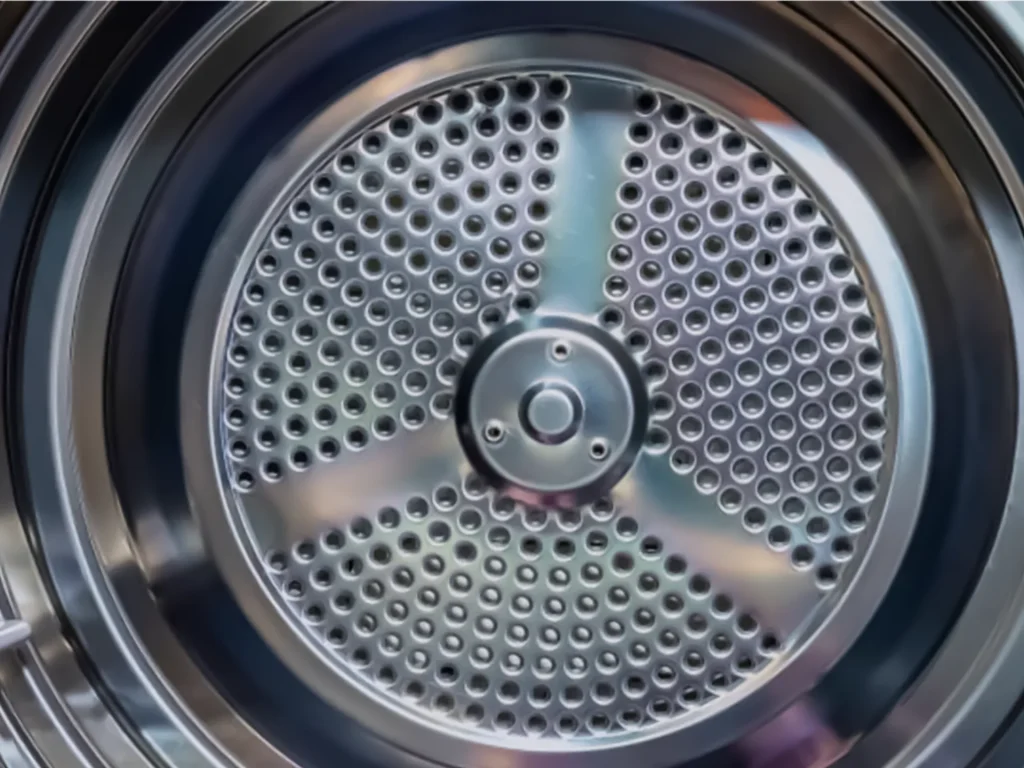
To understand the breadth of these services, one must first be clear on what industrial laundry is in the context of 2026 standards. It is a highly engineered process that integrates thermodynamics, advanced chemistry, and mechanical precision to manage textiles at a scale that residential or small-scale commercial machines simply cannot reach.
In an era where hygiene transparency is a consumer demand, businesses are realizing that their textile management strategy is a core component of their overall cleaning protocol. Improperly laundered linens are not just an aesthetic failure; they are a potential vector for cross-contamination and a significant risk to brand equity.
Industrial Laundry Applications in Healthcare
Perhaps the most critical and demanding segment for industrial laundry applications is the healthcare industry. In hospitals, long-term care facilities, and surgical centers, laundry is a matter of life and death. Medical textiles—ranging from patient gowns and bed linens to specialized surgical drapes—are constantly exposed to bio-hazards, including blood-borne pathogens and antibiotic-resistant bacteria. The role of the industrial laundry here is to function as a decontamination plant.
Unlike standard cleaning, healthcare laundry requires strict adherence to thermal and chemical disinfection protocols. This involves maintaining water temperatures above 71°C (160°F) for prolonged periods and utilizing oxygen-based bleaches that destroy microbial life without compromising the integrity of the barrier fabrics.
The implementation of a “Barrier Layout,” where soiled goods are never physically in the same space as clean goods, is a non-negotiable requirement. This level of specialization is a primary driver behind the calculated ROI of industrial laundry systems, as the cost of a single Hospital-Acquired Infection (HAI) can far exceed the annual budget of a high-end laundry operation. By centralizing these complex processes, healthcare providers can ensure a “Chain of Custody” for their linens that domestic-scale operations can never guarantee.
Industrial Laundry Applications in the Hospitality Sector
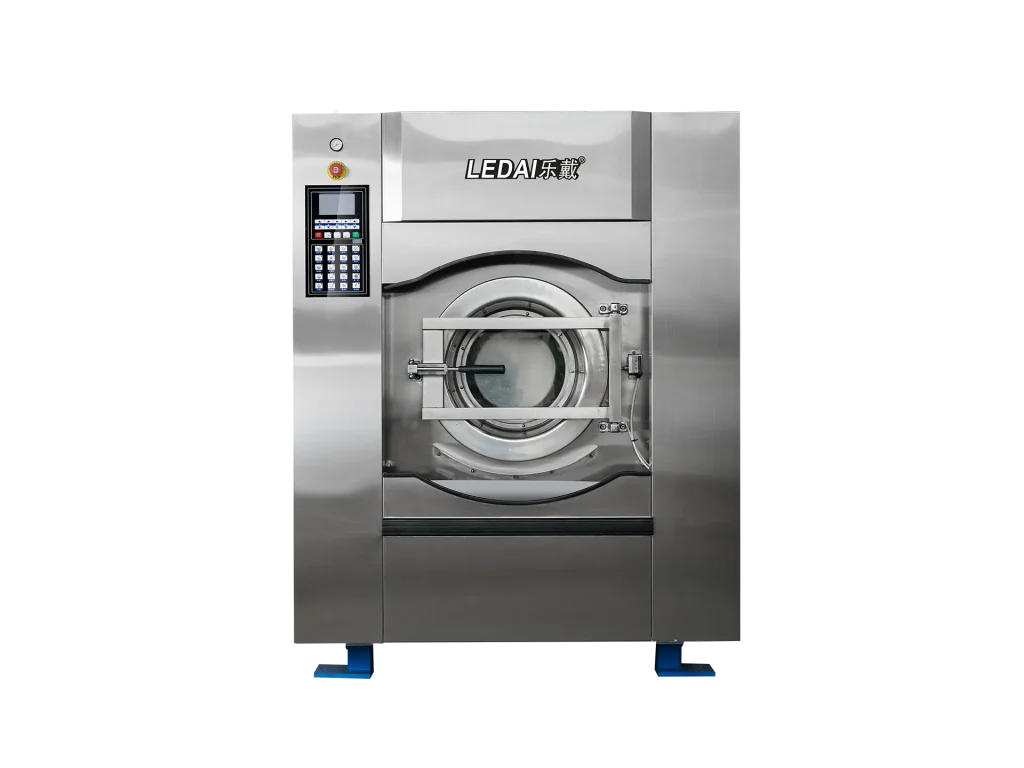
In the hospitality world, industrial laundry applications are focused on the intersection of volume and luxury. A large-scale resort may process tens of thousands of pounds of towels and bed linens every single day.
For these businesses, the “Product” is the guest experience, and nothing defines that experience more than the touch and smell of the linens. The challenge for hospitality managers is maintaining the “New-Linen Feel” across hundreds of wash cycles while keeping operational costs in check.
Industrial finishing is what sets professional hospitality care apart. High-speed flatwork ironers do more than just remove wrinkles; they use intense heat and pressure to “seal” the cotton fibers, giving sheets that distinctive crispness found only in luxury hotels.
This finishing process also serves as a final stage of sanitization. When a resort evaluates its strategy for on-premise vs. outsourcing, the decision often hinges on whether they can maintain the specialized finishing equipment necessary to meet their brand standards. In a competitive market, the ability to deliver consistently high-quality textiles is a key differentiator that justifies premium room rates.
The Manufacturing and Industrial Workwear Niche
Beyond healthcare and hotels, industrial laundry applications extend into the rugged environments of manufacturing, automotive, and heavy industry. Here, the focus shifts to the maintenance of Personal Protective Equipment (PPE) and heavy-duty workwear. These garments are often saturated with oils, heavy metals, and industrial solvents that would destroy a standard commercial washer.
Professional industrial laundry facilities use specialized “Break” cycles—highly alkaline chemical baths—to emulsify oils and lift heavy particulates from the fabric. Furthermore, many industrial uniforms are treated with flame-retardant or moisture-wicking coatings that require precise pH balancing to remain effective.
If these garments are washed incorrectly, they lose their protective properties, potentially exposing workers to life-threatening risks. This technical complexity is why specialized industrial washing is considered a mandatory safety service rather than a luxury.
For a deeper look at the mechanical requirements for these heavy-duty loads, our comprehensive industrial laundry guide 2026 offers a detailed breakdown of the machine specifications required for industrial-grade soil removal.
Food Service and Catering: Ensuring Sanitary Dining
One of the most visible industrial laundry applications is found in the food and beverage (F&B) sector. High-end restaurants, catering halls, and industrial kitchens rely on a constant rotation of table linens, napkins, chef whites, and microfiber cleaning cloths.
In this environment, the laundry process must adhere to Hazard Analysis and Critical Control Points (HACCP) principles. Food proteins, fats, and tannins (from wine and coffee) require specific enzymatic “break” cycles to prevent permanent staining and bacterial growth.
When a restaurant manages its own “Small-Piece” laundry, such as napkins and bar towels, they often struggle with “Yellowing” or “Graying” over time. This is caused by the incomplete removal of organic oils. Professional industrial processing utilizes high-temperature emulsification that ensures every fiber is stripped of organic residue.
Furthermore, the final stage of industrial starching and high-heat pressing provides a level of crispness that defines the “Fine Dining” aesthetic. For a business owner, the comprehensive breakdown of industrial laundry costs often reveals that the labor saved by outsourcing these items—avoiding the manual ironing of hundreds of napkins—is the single greatest driver of profitability in the F&B sector.
Technical Requirements for High-Standard Applications
The effectiveness of industrial laundry applications in commercial cleaning is not accidental; it is a result of rigorous technical standards. To meet the hygiene demands of 2026, a facility must manage four critical variables: Temperature, Chemistry, Mechanical Action, and Time (known as Sinner’s Circle).
The Role of Water Quality and pH Precision
In high-standard cleaning, the water is as important as the detergent. Most industrial plants utilize water softening systems to remove calcium and magnesium, which would otherwise interfere with the chemical “break.”
Furthermore, the pH levels must be precisely managed. For healthcare linens, a high-alkaline wash is used to kill bacteria, but this must be followed by a “sour” or neutralizing rinse to bring the fabric back to a skin-safe pH of 5.5 to 6.5. If this step is missed, the residual alkalinity can cause skin irritation for hospital patients or hotel guests, a failure that undermines the entire cleaning mission.
Barrier Systems and Cross-Contamination Control
A cornerstone of specialized industrial laundry applications is the “Barrier Washer” system. This is a physical and mechanical partition within the laundry facility. Soiled linens are loaded into the machine from a “Dirty Room” (the Soiled Side).
Once the wash and disinfection cycle is complete, the machine is unloaded from the opposite side into a “Clean Room.” This architectural separation ensures that airborne pathogens or lint from the soiled sorting area never reach the sanitized linens. For any facility providing services to the medical or pharmaceutical sectors, this barrier design is a mandatory component of their comprehensive strategy guide for industrial services.
The Economic Integration: Laundry as a Cleaning Service Component
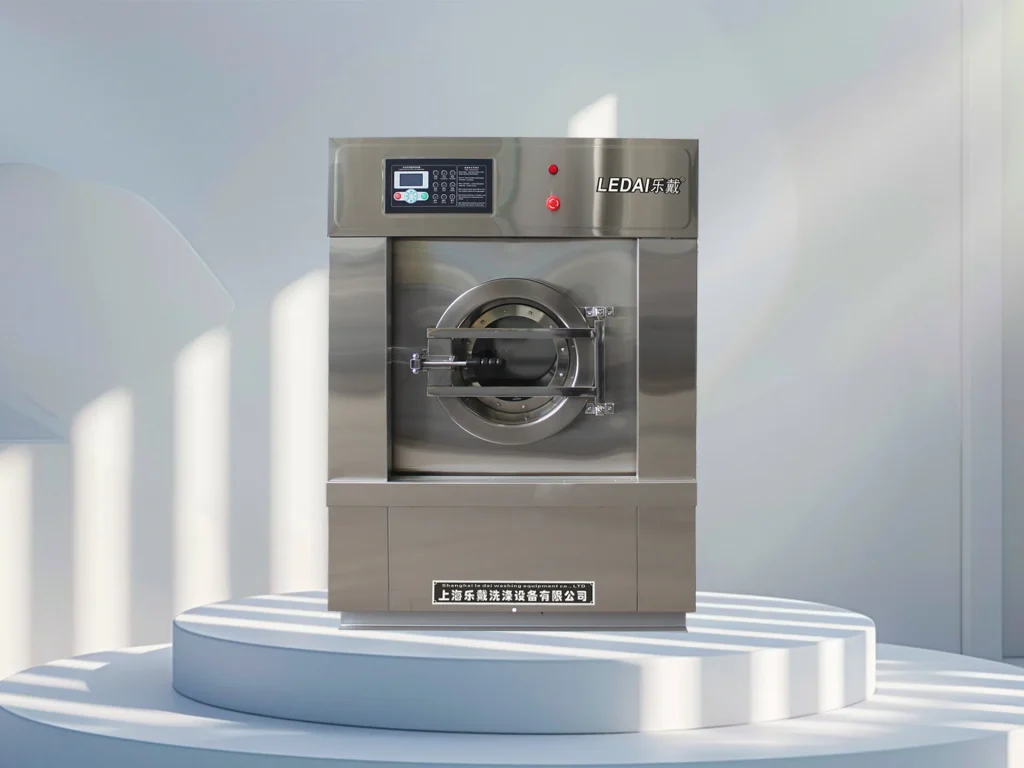
In 2026, forward-thinking facility managers are no longer viewing laundry as a standalone cost center. Instead, they are integrating it into their broader “Total Facility Management” (TFM) strategy. When industrial laundry applications are synchronized with janitorial services, the results are a leaner, more efficient operation.
For example, a commercial cleaning company that utilizes industrial-grade microfiber mops can significantly reduce their chemical usage on-site. However, these microfiber tools only remain effective if they are laundered in an industrial plant that can “re-open” the fibers using specialized surfactants.
A domestic wash would simply trap the dirt inside the microfiber, rendering the tool useless for high-level floor disinfection. By investing in professional laundry, the cleaning company extends the life of their equipment and ensures a higher level of “ATP-verified” cleanliness for their clients. This synergy is a major factor in the 2026 strategy for on-premise vs. outsourcing, as it allows companies to decide whether to build their own “Micro-Laundry” or leverage a centralized industrial partner.
Future Trends: Automation and IoT in Specialized Applications
As we look toward the next decade, the role of industrial laundry applications is becoming increasingly digital. The integration of Radio Frequency Identification (RFID) tags into every sheet, towel, and uniform is changing the way commercial cleaning is managed.
- Inventory Transparency: Facility managers can now track the “Wash Count” of every item. For a hospital, this means knowing exactly when a surgical gown has reached its 50th wash and must be retired to maintain its fluid-resistant properties.
- Loss Prevention: In the hospitality sector, RFID tracking helps hotels identify where their linens are going, reducing the 15-20% annual loss rate typical of the industry.
- Real-Time Hygiene Auditing: Modern industrial machines can upload “Wash Certificates” directly to a cloud-based dashboard, providing a digital audit trail that proves every load reached the required thermal disinfection temperature. This data is becoming a standard requirement for “Green” and “Safe” building certifications in 2026.
Manufacturing and Industrial Workwear: Beyond Basic Cleaning
While healthcare and hospitality are the most visible industrial laundry applications, the manufacturing and heavy industrial sectors present the most significant technical challenges.
In these environments, the goal of “commercial cleaning” is not just aesthetic; it is a critical component of worker safety and machinery maintenance. Industrial workwear—ranging from flame-resistant (FR) coveralls to specialized anti-static (ESD) laboratory coats—requires a level of chemical precision that far exceeds standard laundry protocols.
One of the most specialized industrial laundry applications in this niche is the removal of non-polar soils, such as motor oils, hydraulic fluids, and heavy greases. These contaminants cannot be removed with water and standard detergent alone. Instead, industrial facilities utilize “Emulsification Phases” where the water temperature is precisely calibrated to the melting point of the specific grease.
Furthermore, for electronic manufacturing, the laundry process must ensure that “lint-free” garments actually remain lint-free. This requires high-efficiency particulate air (HEPA) filtration within the drying tunnels to prevent atmospheric dust from re-contaminating the cleanroom apparel. For a deeper dive into the mechanical specifications of these specialized machines, the Industrial Laundry Guide: Comprehensive Encyclopedia for Commercial & Large-Scale Laundries 2026 provides a full technical breakdown of filtration and anti-static drum requirements.
The Decision Matrix: Specialized OPL vs. Industrial Outsourcing
For most commercial enterprises, the fundamental question is not whether they need professional laundry, but how they should access it. The choice between building an On-Premise Laundry (OPL) or partnering with a centralized industrial provider depends on three primary variables: Volume, Technical Complexity, and Floor Space.
Scenario A: The High-Volume Boutique (OPL)
If your business processes between 500 and 1,500 lbs of laundry per day and requires a “Quick-Turnaround” (e.g., a high-end spa or a boutique surgical center), an On-Premise Laundry is often the most efficient choice. This allows for total control over the “Chain of Custody” and ensures that specialized items are never mixed with other clients’ goods.
However, the Industrial Laundry Costs: Complete Breakdown, Cost per Pound & ROI Calculation Guide 2026 cautions that the labor and utility overhead of a small OPL can be 20% higher than outsourcing if the machines are not run at 80%+ capacity.
Scenario B: The Large-Scale Enterprise (Outsourcing)
For resorts, major hospitals, and industrial plants processing over 5,000 lbs daily, the economies of scale provided by a centralized industrial partner are undeniable. These partners utilize tunnel washers and automated sorting systems that can process a pound of laundry for a fraction of the cost of a smaller OPL.
The trade-off is a longer lead time (typically 24–48 hours) and a higher requirement for “Par Levels” (inventory in circulation). Navigating this choice is a central theme in the Industrial Laundry Services: The 2026 Strategy Guide for On-Premise vs. Outsourcing, which provides a weighted scoring system for business owners to determine their best path forward.
Conclusion: Elevating Commercial Cleaning through Textile Excellence
In 2026, industrial laundry applications have officially transitioned from a “utility service” to a “strategic asset.” Whether you are ensuring the sterile integrity of a surgical suite or the pristine luxury of a hotel guestroom, the science of industrial washing is the foundation upon which commercial hygiene is built
By understanding the technical requirements of barrier systems, pH balancing, and automated finishing, facility managers can protect their brand reputation while optimizing their operational budgets. As the industry moves toward greater automation and RFID integration, the businesses that prioritize professional textile care will be the ones that set the standard for commercial excellence in the decade to come.
FAQs: Industrial Laundry Applications & Commercial Hygiene
Why can’t I use a standard commercial washer for healthcare linens?
Standard commercial washers often lack the precise temperature controls and dwell-time programming required for thermal disinfection. Furthermore, they do not offer the “Barrier” architecture necessary to physically separate soiled and clean airspaces, which is a mandatory requirement for infection control in most 2026 healthcare regulations.
How does industrial laundry help with “Green” building certifications?
Professional industrial laundry applications utilize water-recovery systems and heat exchangers that can reduce water usage by up to 70% compared to traditional methods. These verifiable savings can be used to earn points toward LEED or other international sustainability certifications for your commercial facility.
What is “Re-deposition” and why is it a cleaning failure?
Re-deposition occurs when the soil lifted from the fabric settles back onto it during the rinse cycle. This happens when the laundry chemistry is poorly calibrated. In an industrial setting, specialized “suspending agents” are used to ensure that every molecule of dirt is flushed away, resulting in brighter whites and a truly sanitary finish.
Does industrial ironing actually sanitize the fabric?
Yes. Most industrial flatwork ironers operate at surface temperatures exceeding 160°C (320°F). As the damp fabric passes through the rollers, the combination of intense heat and mechanical pressure acts as a final stage of thermal disinfection, killing any residual microorganisms.
How many “Pars” of linen do I need for a professional service?
For most industrial laundry applications, a “Par 4” system is the gold standard: one set in the room, one set dirty in the bin, one set at the laundry facility being processed, and one set clean in your storage closet. This ensures you never run out of inventory during peak delivery windows or unexpected delays.
 English
  Spanish