
Executive Summary
Selecting a commercial dryer is not a simple equipment purchase — it is a long-term infrastructure investment that directly influences operational efficiency, energy expenditure, and revenue scalability.
While many buyers focus on upfront pricing or brand familiarity, the true financial impact of a commercial dryer unfolds over its entire lifecycle. Energy structure, throughput efficiency, infrastructure compatibility, maintenance exposure, and service network stability collectively determine total cost of ownership.
In high-volume environments such as laundromats, hospitality facilities, healthcare institutions, and industrial operations, even minor differences in drying speed or energy efficiency can compound into substantial revenue variance over time. Likewise, underestimating installation constraints or maintenance complexity can erode projected returns.
This guide provides a structured, data-driven framework for evaluating commercial dryers from three critical perspectives:
• Performance & throughput potential
• Infrastructure feasibility & capital risk
• Long-term lifecycle cost stability
By integrating financial modeling, operational analysis, and real-world application scenarios, this resource enables decision-makers to move beyond surface-level comparisons and select equipment aligned with sustainable profitability.
Table of Contents
1. Introduction – Why Choosing the Right Commercial Dryer Matters
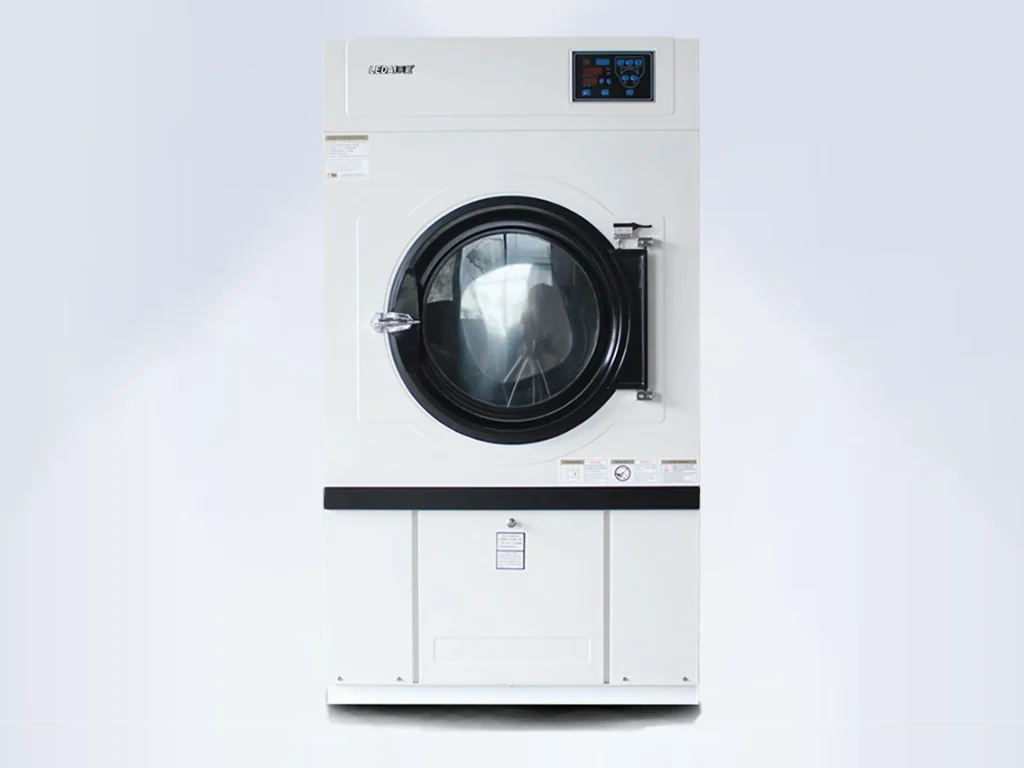
The commercial laundry industry has experienced steady expansion driven by urbanization, hospitality growth, healthcare facility scaling, and rising consumer expectations for hygiene standards. As operational volume increases, equipment performance is no longer judged solely by capacity, but by efficiency, reliability, and long-term cost stability.
Modern operators are shifting from price-driven purchasing to data-driven investment decisions. Energy efficiency regulations, labor cost pressures, and infrastructure constraints have reshaped how commercial dryers are evaluated. Rather than comparing brands superficially, decision-makers must analyze throughput potential, lifecycle cost modeling, installation feasibility, and service network resilience.
This guide provides a structured framework for evaluating commercial dryers from a financial, operational, and infrastructure perspective, enabling buyers to make informed decisions aligned with long-term profitability.
For a complete overview of commercial dryer and industrial washing machines types, capacity planning, and system selection, refer to our detailed guide:
👉Commercial Dryer Guide
👉Industrial Washing Machine Guide
2. What Makes a High-Performance Commercial Dryer?
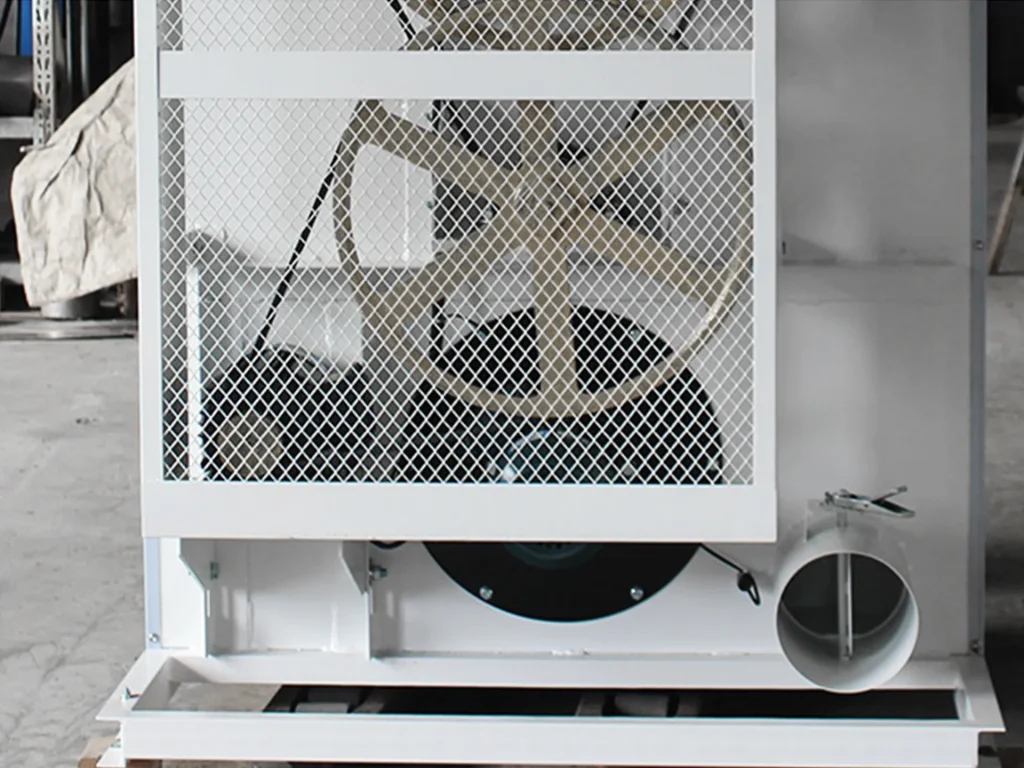
Selecting a commercial dryer is not about brand popularity or marketing claims. It is about aligning machine capability with operational demand and long-term financial performance.
A high-performance commercial dryer must balance capacity, energy structure, extraction efficiency, structural durability, and automation capability. Each of these dimensions influences throughput potential, operating cost stability, and overall lifecycle profitability. Rather than evaluating these factors independently, they should be considered as an integrated performance system.
2.1 Capacity vs Throughput Efficiency
Capacity defines how much laundry a dryer can process in a single cycle, but throughput determines how much revenue it can generate over an entire day.
Commercial dryers typically range from 30–50 lbs for smaller operations, around 75 lbs for mid-sized laundromats, and 100+ lbs for high-volume facilities. While larger capacity units reduce the number of cycles required to process daily loads, oversizing equipment can lead to energy inefficiency when machines operate below optimal load levels.
The real performance metric is daily throughput. For example, a 75 lb dryer running 12 cycles per day can process approximately 900 lbs of textiles. If extraction performance or airflow optimization shortens each cycle by 10 minutes, the machine gains additional operational availability. Over time, these incremental efficiency gains translate directly into higher revenue capacity.
Ultimately, revenue potential is driven by cycle turnover speed rather than nominal drum capacity alone.
2.2 Energy Efficiency & Operating Cost Impact
Energy expenditure represents one of the most significant long-term costs in commercial laundry operations. The difference between two dryer models may appear marginal at purchase stage, yet compound dramatically over years of daily use.
Modern commercial dryers reduce energy waste through integrated moisture sensing, automatic cycle adjustment, controlled heat modulation, and insulated drum construction. Instead of running for fixed durations, intelligent systems stop cycles once optimal dryness is achieved, preventing unnecessary energy consumption.
Heating type also plays a major role in cost structure. Gas dryers typically provide faster heating and lower per-cycle cost where gas supply is stable and affordable. Electric dryers offer easier installation and simpler infrastructure requirements but may carry higher operating expense depending on local utility pricing. Heat pump dryers operate at lower temperatures and significantly reduce energy consumption, although initial investment is often higher and airflow planning becomes more critical.
The optimal choice depends on utility pricing, infrastructure readiness, and long-term usage intensity rather than theoretical efficiency alone.
2.3 Extraction Performance & Drying Technology
Drying speed is determined primarily by airflow engineering, heat distribution consistency, and moisture detection accuracy. While capacity influences load size, extraction performance dictates how quickly that load reaches target dryness.
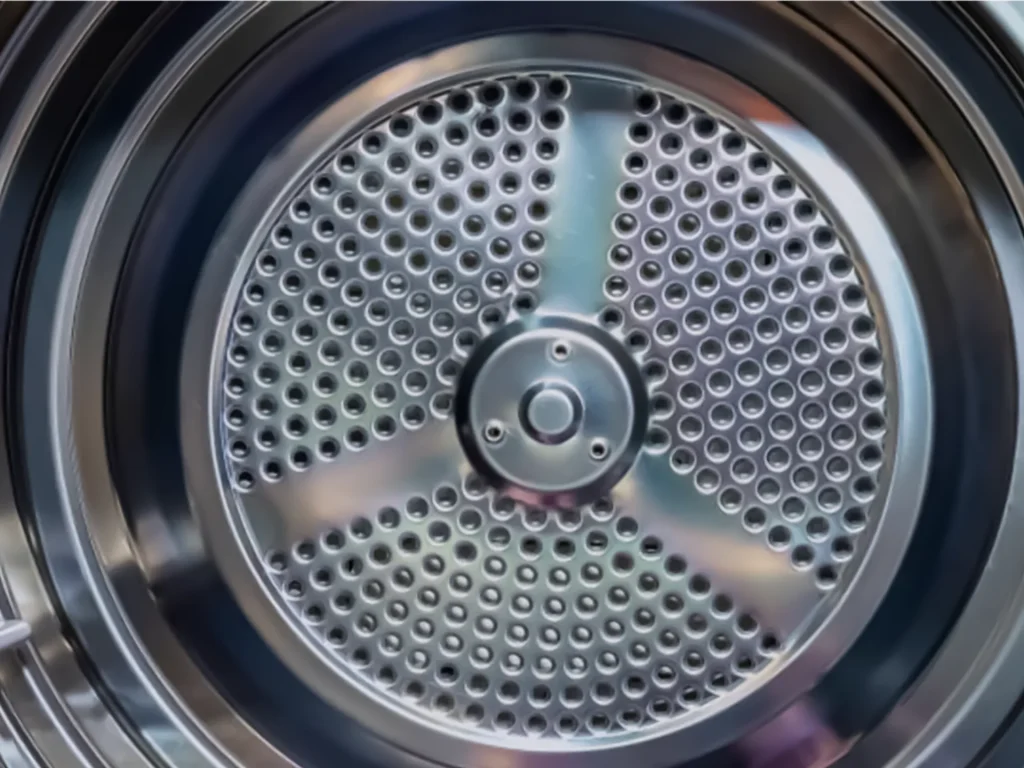
High-efficiency dryers typically incorporate optimized airflow circulation, advanced drum perforation patterns, balanced heat distribution, and responsive moisture sensor feedback systems. These elements work together to shorten cycle duration without compromising fabric care.
The operational impact becomes significant at scale. If improved airflow reduces drying time by eight minutes per load in a facility processing 120 loads per day, nearly 16 hours of cumulative machine time are recovered daily across the system. This reclaimed time increases throughput potential and reduces queue congestion during peak demand periods.
In commercial environments, extraction efficiency often has a greater impact on revenue potential than marginal differences in drum capacity.
2.4 Structural Durability & Build Quality
In commercial environments, durability is not a secondary consideration — it directly determines long-term profitability. Machines operating 8–14 hours per day experience significantly higher mechanical stress than residential appliances, making structural integrity a critical evaluation factor.
Commercial-grade dryers are typically constructed with reinforced steel panels, heavy-duty drum bearings, industrial belt systems, and high-cycle-rated motors. The purpose of these components is not merely longevity, but operational stability under continuous load. When structural rigidity is compromised, vibration increases, parts wear accelerates, and maintenance frequency rises.
Over a multi-year horizon, downtime often costs more than replacement parts. A machine that requires frequent servicing disrupts workflow, reduces daily throughput, and increases labor coordination complexity. Even short interruptions during peak operating hours can impact revenue consistency.
Durability should therefore be viewed as a risk mitigation factor rather than a mechanical specification. Evaluating build quality helps operators estimate long-term maintenance exposure and avoid hidden lifecycle cost inflation.
2.5 Automation & Smart Control Integration
Modern commercial dryers are increasingly defined by their control systems rather than purely mechanical capability. Automation influences labor efficiency, energy optimization, and performance consistency across shifts.
Advanced control platforms typically include programmable cycle customization, real-time moisture sensing, automatic temperature modulation, and digital diagnostics. These features reduce human error, minimize overdrying, and help standardize output quality regardless of operator experience level.
In high-volume environments, automation reduces supervision demand. Instead of manually adjusting cycles, operators can rely on sensor-based logic to optimize drying duration and energy usage. Over time, this consistency improves textile longevity and lowers operational variability.
Connectivity features such as remote monitoring and usage analytics are also becoming more relevant. While not essential for every facility, these tools allow multi-location operators to track equipment utilization, identify inefficiencies, and plan maintenance proactively.
Automation should not be viewed as a luxury upgrade. In data-driven operations, it functions as a control layer that stabilizes performance, reduces energy waste, and enhances overall operational scalability.
3. Top Commercial Dryer Models – Operational Overview
Instead of listing products blindly, this section evaluates each model based on performance, efficiency, durability, and real-world application.
Each machine is analyzed from an operational perspective — not just marketing claims.
3.1 Electrolux Professional Line 6000 Dryer
Electrolux Line 6000 is widely used in medium to high-volume laundromat operations because of its balance between automation and reliability.
Key Strengths:
- Advanced moisture sensing
- Adaptive airflow system
- Intelligent energy management
Operational Impact:
- Reduces unnecessary heating
- Lowers electricity consumption
- Improves cycle predictability
Best For:
High-volume professional laundries requiring smart automation and efficiency control.
3.2 Maytag Multi-Load Commercial Dryer
Maytag’s multi-load design emphasizes durability and operational simplicity.
Key Strengths:
- Strong structural durability
- Reinforced mechanical components
- Stable airflow design
Operational Positioning:
Designed for reliability over advanced digital features.
Best For:
- Budget-conscious operators
- Facilities prioritizing mechanical stability
3.3 Dexter Express Commercial Dryer
Dexter focuses heavily on high-speed efficiency and serviceability.
Key Strengths:
- Modular service design
- Fast heat recovery
- Compatible with digital payment systems
Operational Advantage:
Reduced downtime due to easier maintenance access.
Best For:
Self-service laundromats & high turnover operations.
3.4 Speed Queen Industrial Dryer
Speed Queen is known for heavy-duty engineering.
Key Strengths:
- Heavy-duty engineering
- Strong bearing protection
- Robust drum construction
Positioning:
Built for continuous heavy usage.
Best For:
Facilities running equipment 12+ hours per day.
3.5 Girbau High-Efficiency Dryer
Girbau integrates energy-saving engineering into its dryer systems.
Key Strengths:
- Heat recovery optimization
- Intelligent moisture adjustment
- Reduced gas consumption
Focus:
Energy cost reduction + sustainable operation.
Best For:
Operations where utility cost control is critical.
Comparison Overview Table
Instead of listing specs randomly, here is a structured comparison:
| Model | Capacity | Energy Efficiency | Automation Level | Durability | Best For |
|---|---|---|---|---|---|
| Electrolux Line 6000 | High | Very High | Advanced | Excellent | High-volume operators |
| Maytag Multi-Load | Medium-High | High | Moderate | Strong | Budget durability |
| Dexter Express | High | High | Moderate-High | Excellent | Self-service laundromats |
| Speed Queen | High | Medium-High | Basic | Outstanding | Heavy-duty use |
| Girbau | Medium | Very High | Advanced | Good | Energy-focused operations |
4. Top Commercial Dryer Selection Framework – How to Choose the Right Model
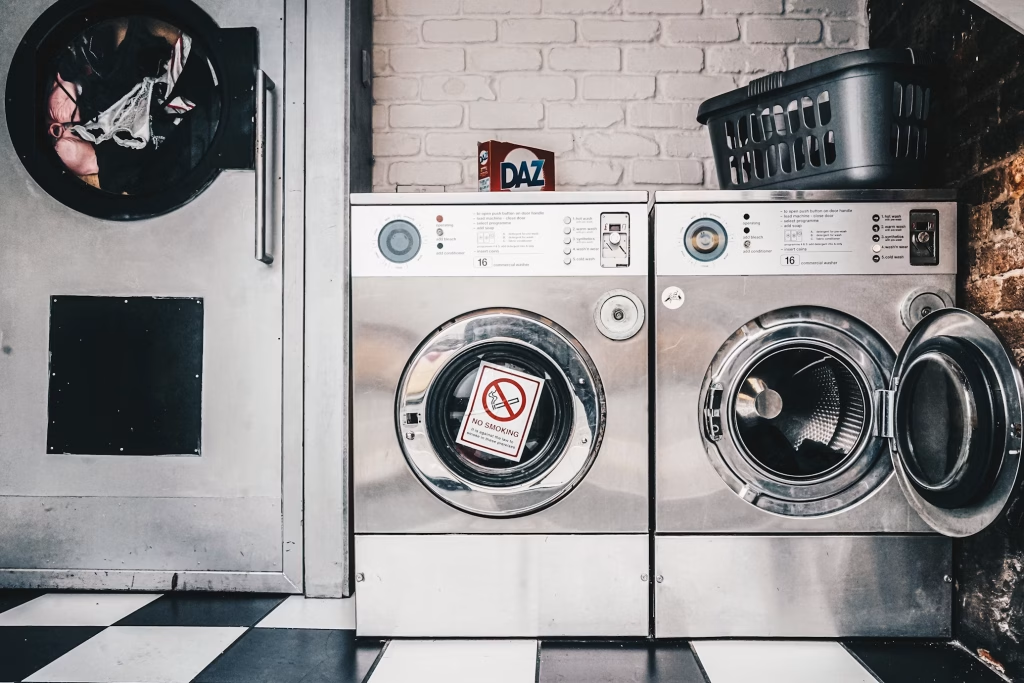
Selecting the right commercial dryer requires evaluating operational scale, cost efficiency, installation conditions, and long-term maintenance impact. The goal is not to choose the most powerful machine — but to select equipment that matches workload demand and infrastructure capacity.
A poor selection can lead to:
- Excess energy consumption
- Underutilized capacity
- Frequent breakdowns
- Bottlenecks in workflow
This framework breaks down the most important factors step by step.
4.1 Budget Planning & ROI Analysis
Before comparing models, define your financial boundaries.
Top commercial dryers typically fall into different price tiers depending on:
- Capacity
- Heating type (gas / electric / heat pump)
- Automation level
- Structural durability
Estimated Price Ranges
| Category | Price Range |
|---|---|
| Entry-Level Commercial | $2,000 – $4,000 |
| Mid-Range Industrial | $4,000 – $8,000 |
| High-Capacity Industrial | $8,000 – $20,000+ |
However, purchase price alone does not determine profitability.
ROI Evaluation Formula
A practical ROI calculation:
Annual Revenue Increase – Annual Operating Cost = Net ROI Contribution
Example:
If a dryer increases throughput by 20 loads per day:
- Revenue per load = $5
- Daily additional revenue = $100
- Annual revenue increase = $36,500
If additional energy cost = $8 per day:
- Annual cost = $2,920
Net impact:
$36,500 – $2,920 = $33,580 annual benefit
→ In this case, even high-end equipment pays back quickly.
Long-term operating cost matters more than initial price.
4.2 Technical Performance Evaluation
Performance determines throughput and workflow efficiency.
When comparing dryers, evaluate these key metrics:
Load Capacity
Choose capacity based on daily volume:
- 30–50 lbs → Small operations
- 75 lbs → Medium laundromats
- 100+ lbs → High-volume facilities
Oversizing increases idle energy waste. Undersizing creates queue bottlenecks.
Drying Speed & Extraction Efficiency
Drying performance depends on:
- Airflow rate
- Heat output
- Drum design
- Moisture sensing technology
Machines with smart moisture sensors automatically stop when fabrics reach optimal dryness.
This reduces:
- Overheating
- Energy waste
- Fabric damage
Higher extraction efficiency = Faster turnover = Higher daily revenue.
Heating Type: Gas vs Electric vs Heat Pump
| Feature | Gas | Electric | Heat Pump |
|---|---|---|---|
| Heating Speed | Fast | Moderate | Slower but efficient |
| Operating Cost | Lower (if gas available) | Higher | Very efficient |
| Installation | Requires gas line | Easier | Requires ventilation planning |
| Best For | High-volume laundromats | Small–medium facilities | Energy-conscious operators |
Choose based on local utility pricing and infrastructure availability.
4.3 Installation Feasibility & Cost Risk Assessment
Before selecting a top commercial dryer, operators must evaluate whether their existing facility can realistically support the chosen configuration. Installation should be treated as a capital risk assessment — not merely a technical formality.
Equipment performance may look impressive on paper, but infrastructure limitations often determine whether a purchase is financially viable.
Electrical Capacity Risk Evaluation
If a facility lacks sufficient electrical capacity, the total project cost can increase significantly.
For example, when panel capacity or power configuration does not align with equipment requirements, upgrading electrical systems may require structural modification, regulatory approval, and temporary operational disruption. These adjustments can materially increase capital expenditure beyond the listed equipment price.
In older buildings, electrical compatibility should be verified before finalizing model selection. Choosing equipment that exceeds available infrastructure can create unexpected financial pressure.
Fuel Supply & Utility Compatibility
For gas-powered commercial dryers, the key consideration is not pipe configuration details, but whether the building’s fuel infrastructure can consistently support the required output.
If gas availability is limited or pressure stability is uncertain, adapting infrastructure may introduce additional cost and compliance complexity. In such cases, selecting an electric configuration — even with slightly higher operating cost — may present lower upfront financial risk.
The decision should weigh operating efficiency against infrastructure readiness.
Ventilation Feasibility & Structural Constraints
Dryer exhaust systems must comply with building safety standards and airflow requirements. Rather than analyzing duct specifications at the selection stage, operators should determine whether the facility layout allows compliant exhaust routing without major reconstruction.
If structural alterations are required — such as ceiling modification, exterior vent installation, or rerouting airflow pathways — installation complexity can escalate rapidly. These factors should be evaluated early to prevent underestimating project scope.
Renovation Exposure & Hidden Capital Impact
In many commercial environments, infrastructure adaptation accounts for 10–30% of total project cost. In scenarios involving significant utility upgrades, installation-related expenditure may rival or exceed the equipment price differential between competing models.
A practical feasibility review should estimate:
- Probability of electrical upgrade
- Likelihood of fuel system modification
- Structural adaptation requirements
- Permit and inspection implications
Separating equipment acquisition cost from infrastructure exposure provides a clearer investment picture.
By reframing installation as a financial feasibility assessment rather than a technical checklist, operators can prevent budget overruns and align equipment selection with long-term capital planning.
4.4 Lifecycle Cost Modeling & Long-Term Stability
Initial purchase price represents only a fraction of a top commercial dryer’s financial footprint. Long-term ownership cost — including maintenance, energy consumption, and operational stability — determines real profitability over a 5–10 year horizon.
Evaluating lifecycle economics shifts decision-making from short-term budgeting to capital efficiency.
Average Maintenance Cost Ratio
Top commercial dryers operating under heavy duty cycles experience predictable wear. Belts, bearings, heating assemblies, and control components require periodic replacement.
In most commercial environments, annual maintenance expenses range between 8–15% of the equipment’s purchase price, depending on usage intensity and service accessibility.
Machines designed with modular components and widely available parts typically reduce service labor time and overall repair cost.
Parts Availability & Financial Impact
Parts accessibility directly influences downtime duration. A lower-cost machine with limited distribution channels may appear attractive upfront, but extended repair delays can disrupt revenue flow.
Financial modeling should consider:
- Average time-to-repair in your region
- Availability of certified technicians
- Replacement part lead time
- Post-warranty service cost
Predictable maintenance cycles reduce revenue volatility and improve long-term planning.
Depreciation & Replacement Cycle
Most top commercial dryers are engineered for a service life of 8–12 years under normal operating conditions. However, real-world lifespan depends heavily on maintenance consistency and operational intensity.
From an accounting perspective, understanding depreciation timelines helps align capital expenditure with expected usage cycles. Replacing equipment prematurely due to instability significantly reduces return on investment.
10-Year Total Cost of Ownership Example
To illustrate lifecycle economics, consider a simplified model:
- Purchase price: $6,000
- Annual maintenance: $800
- Annual energy cost: $2,500
Over a 10-year period:
- Maintenance = $8,000
- Energy = $25,000
- Initial purchase = $6,000
Total 10-year ownership cost = $39,000
In this scenario, the initial purchase accounts for less than 16% of total lifecycle cost.
This perspective clarifies why durability, energy efficiency, and service stability often outweigh small differences in upfront price.
When evaluating commercial dryers, shifting focus from acquisition cost to lifecycle modeling enables more rational and financially sustainable decisions.
4.5 Commercial Dryer Purchase Decision Checklist
Before final purchase, confirm these key factors:
| Factor | Question to Ask | Priority |
|---|---|---|
| Capacity | Does it match daily load volume? | High |
| Energy Type | Gas or electric — which is more cost-effective locally? | High |
| Extraction Efficiency | Does it reduce drying time? | High |
| Build Quality | Stainless steel drum? Reinforced frame? | Medium |
| Smart Features | Payment integration? Remote monitoring? | Medium |
| Installation Cost | Is ventilation infrastructure ready? | High |
| Maintenance Access | Easy access to internal components? | Medium |
5. Installation & Infrastructure Planning
Top commercial dryer installation is not just about placing equipment.
It directly affects:
- Operational safety
- Energy efficiency
- Equipment lifespan
- Legal compliance
Improper installation can reduce performance by 10–25% even with high-end equipment.
5.1 Electrical & Gas Requirements
Each dryer type has distinct infrastructure demands.
| Dryer Type | Power Requirement | Gas Line | Ventilation | Best Scenario |
|---|---|---|---|---|
| Electric | 208–240V / 3-phase | Not required | Standard exhaust | Small–mid facilities |
| Gas | 120V + Gas supply | Required | High airflow vent | High-volume ops |
| Heat Pump | 208–240V | Not required | Condenser airflow planning | Energy-optimized sites |
Before purchase, confirm:
- Panel capacity
- Circuit availability
- Gas line pressure rating
- Exhaust duct diameter
Infrastructure mismatch increases installation cost dramatically.
5.2 Ventilation & Airflow Engineering
Dryer performance depends heavily on airflow efficiency.
Poor ventilation results in:
- Longer drying times
- Overheating
- Higher utility bills
- Premature component failure
Recommended considerations:
- Keep duct length as short as possible
- Avoid excessive bends
- Maintain adequate duct diameter
- Ensure regular lint removal access
Even a 15% airflow restriction can extend drying cycles by several minutes per load.
5.3 Space Planning & Layout Optimization
Equipment layout influences workflow speed.
Factors to consider:
- Washer-to-dryer walking distance
- Folding station proximity
- Peak-hour traffic flow
- Service access clearance
Operationally efficient layouts reduce:
- Customer waiting time
- Labor movement inefficiency
- Congestion during peak hours
A poorly designed layout often costs more over time than equipment selection errors.
6. Comparison of the Top Commercial Dryers
When selecting a top commercial dryer, comparison based on specifications is more reliable than brand reputation alone.
Below is a structured performance comparison to help operators evaluate machines objectively.
Commercial Dryer Performance Comparison
| Brand | Heating Options | Control Technology | Energy Efficiency Tier | Typical Lifespan Range | Service Network Strength |
|---|---|---|---|---|---|
| Speed Queen | Gas / Electric | Advanced Digital | High | 12–15 years | Extensive (North America & Global Distributors) |
| Maytag Commercial | Gas / Electric | Standard Digital | Moderate–High | 8–12 years | Extensive (North America Focused) |
| Electrolux Professional | Gas / Electric / Heat Pump | Smart Integrated Systems | High–Premium | 10–15 years | Global Enterprise-Level |
| LG Commercial | Electric / Heat Pump | AI Sensor Control | High | 8–10 years | Regional (Varies by Market) |
| Huebsch | Gas / Electric | Programmable Digital | High | 10–15 years | Strong Regional Distribution |
Lifespan ranges reflect average commercial operating conditions of 8–12 hours per day. Actual durability depends on load management, maintenance discipline, and environmental factors. Service network strength significantly impacts downtime risk, spare part availability, and long-term support stability. In multi-location operations, service coverage can be as critical as energy efficiency when calculating total cost of ownership.
📌 Key Technical Details Explained
📍 Load Capacity Range
Defines how many textiles a dryer can process per cycle — choose machines sized to your typical laundry volume.
- Large-capacity models (e.g., Electrolux Line 6000, Dexters) suit busy laundromats or hotel laundry back-of-house.
- Medium capacity dryers (e.g., Speed Queen, Girbau) balance throughput and space efficiency.
📍 Heating Type
Different operation needs may call for different heating sources:
- Gas dryers typically heat faster and cost less per cycle where gas is affordable.
- Electric dryers are easier to install but may run at higher energy cost.
- Heat pump dryers (e.g., Electrolux Line 6000 H-Pump) cut energy use by up to ~65% compared with traditional vented models.
📍 Energy & Tech Features
These determine running cost and operational sustainability:
- Moisture sensing stops cycles early to avoid over-drying.
- Adaptive airflow improves drying uniformity.
- Ergonomic design reduces operator fatigue (Electrolux).
📍 Smart / Control Features
Advanced control systems improve workflow:
- Quantum™ controls (Speed Queen) allow precise cycle programming.
- Programmable controls enable automation and integration with payment systems for self-service use.
📍 Best Use Case
Recommends where each machine category performs best:
7. Operational Risks & Common Investment Mistakes
Equipment selection errors rarely show immediate consequences. Most financial impact emerges gradually through increased operating cost, downtime, and performance inconsistency.
Mistake 1 – Prioritizing Purchase Price Over Lifecycle Cost
Selecting a top commercial dryer based solely on upfront price often results in underestimated long-term expense.
Over a 10-year lifecycle, a machine that is 15% cheaper at purchase stage can generate 30–40% higher total operational expenditure if energy inefficiency, longer cycle times, or higher failure rates are present. When multiplied across multiple units, the financial gap becomes substantial.
Short-term savings frequently translate into long-term cost escalation.
Mistake 2 – Oversizing or Undersizing Capacity
Improper capacity planning disrupts operational balance.
Oversized machines operating below optimal load reduce energy efficiency per cycle, while undersized machines create bottlenecks during peak demand periods. Both scenarios limit revenue optimization.
Financial implication: throughput imbalance can reduce daily revenue potential by 10–20%, especially in high-traffic laundromats or hospitality facilities with predictable demand spikes.
Mistake 3 – Ignoring Infrastructure Compatibility
Failure to evaluate facility readiness before purchase may trigger unexpected capital expenditure.
If electrical upgrades, gas modifications, or ventilation adaptation become necessary post-purchase, installation cost may increase total investment by 15–30%. In extreme cases, regulatory compliance delays can postpone operational launch, affecting projected ROI timelines.
Infrastructure assessment should precede brand comparison to prevent budget distortion.
8. Maintenance & Operational Management
Top commercial dryers operate under thermal and mechanical stress daily.
Maintenance strategy determines whether equipment lasts 6 years or 15 years.
While lifecycle cost modeling defines the long-term financial structure of equipment ownership, operational discipline determines whether the projected lifespan is realistically achieved. Even the most durable commercial dryer will underperform if routine maintenance is neglected. Preventive care transforms theoretical durability into measurable longevity.
8.1 Preventive Maintenance Strategy
Recommended schedule:
| Task | Frequency | Operational Impact |
|---|---|---|
| Lint filter cleaning | Daily | Maintains airflow |
| Vent inspection | Monthly | Prevents overheating |
| Belt & bearing check | Quarterly | Reduces breakdown risk |
| Full system inspection | Annually | Extends lifecycle |
Preventive maintenance reduces emergency repair costs by up to 30–40% over time.
8.2 Downtime Cost Awareness
Downtime has hidden costs:
- Lost cycle revenue
- Customer dissatisfaction
- Labor idle time
Example:
If a 75 lb dryer generates $80/day
And remains offline for 10 days
Lost revenue = $800
Rapid parts availability and service accessibility matter more than marginal price differences at purchase stage.
8.3 Smart Monitoring & Remote Diagnostics
Modern top commercial dryers increasingly support:
- Error code tracking
- Usage data logging
- Remote system monitoring
Benefits:
- Early fault detection
- Reduced technician visit time
- Data-driven capacity planning
Data visibility improves operational control in multi-unit facilities.
👉 Industrial Washing Machine Parts & Functions
9. Application-Based Dryer Selection Strategy
Dryer selection should reflect operational environment rather than general specifications.
Different industries prioritize different performance metrics.
The optimal top commercial dryer configuration varies significantly depending on operational environment, load characteristics, and revenue model structure.
9.1 Laundromats
Priority:
- High turnover speed
- Payment integration
- Durable drum construction
Recommended focus:
- Gas dryers for speed
- Strong moisture sensors
- Heavy-duty bearings
9.2 Hotels & Hospitality
Priority:
- Linen quality preservation
- Noise control
- Predictable cycle timing
Recommended focus:
- Balanced heat control
- Medium–high capacity
- Smart cycle customization
9.3 Hospitals & Healthcare
Priority:
- Sanitation compliance
- High-temperature reliability
- Continuous operation
Recommended focus:
- Industrial-grade durability
- Precise temperature control
- Redundant safety systems
9.4 Industrial Facilities
Priority:
- Heavy textile loads
- Extended operating hours
- High-capacity throughput
Recommended focus:
- 100+ lb capacity
- Reinforced drum assembly
- High airflow systems
Summary Comparison Table
| Industry | Key Priority | Capacity Range | Energy Preference |
|---|---|---|---|
| Laundromat | Turnover speed | 50–75 lb | Gas |
| Hotel | Fabric care | 50–75 lb | Gas / Electric |
| Hospital | High-temp reliability | 75–100 lb | Gas |
| Industrial | Maximum throughput | 100+ lb | Gas |
10. Conclusion of Top Commercial Dryers
Selecting a top commercial dryer is a long-term infrastructure decision.
Performance, energy structure, installation planning, and maintenance strategy must align with operational goals.
When integrated correctly, commercial dryers become revenue accelerators rather than utility expenses.
Choosing the right top commercial dryer starts with understanding system requirements and technical infrastructure. Explore our full guide for deeper insights.
 English
  Spanish