
Table of Contents
1. Introduction – Why Commercial Dryer Washer Combos Matter
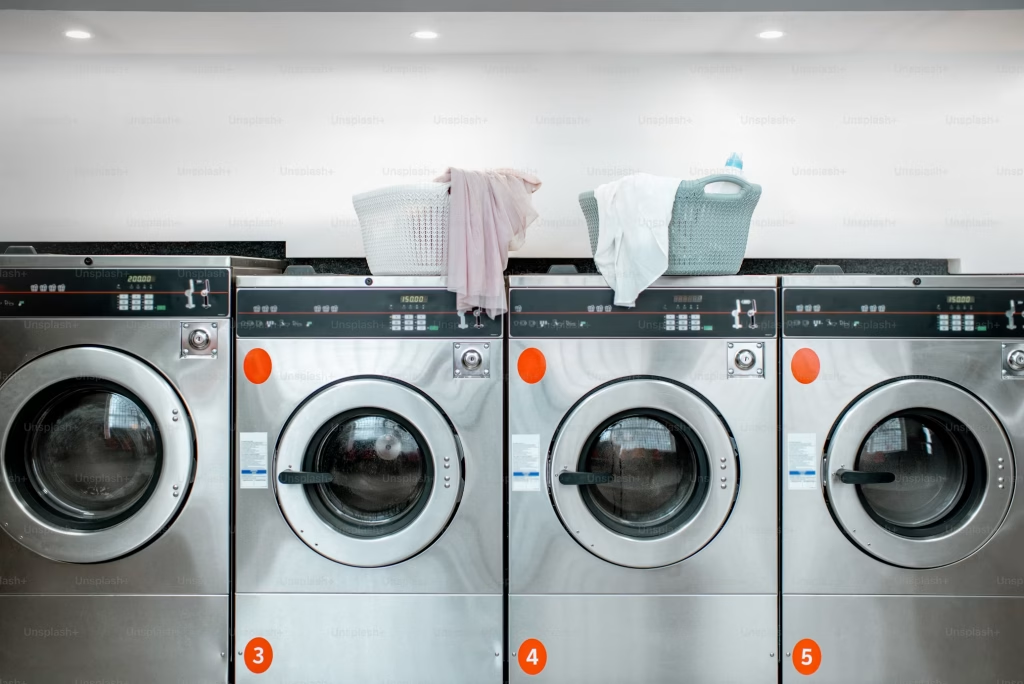
The commercial laundry sector has been steadily evolving in recent years, driven by urbanization, hospitality growth, healthcare expansion, and rising hygiene standards. Small to medium-scale operations, such as boutique laundromats, hotels, and small hospitals, are increasingly prioritizing equipment that balances space, energy efficiency, and throughput. For many operators, commercial washer dryer combos have emerged as a cost-effective and space-saving solution.
Unlike standalone washers and dryers, combo machines integrate both functions, allowing operators to optimize workflow without requiring additional floor space. The right choice affects daily operational efficiency, labor costs, and long-term profitability. Operators must evaluate factors including machine capacity, energy consumption, installation requirements, and maintenance logistics before making a purchase decision.
Moreover, modern operators are shifting from purely price-driven purchasing to data-driven decision-making. Lifecycle costs, service network strength, and operational reliability now weigh heavily in machine selection. By considering both upfront cost and long-term operational performance, businesses can ensure that a commercial washer dryer truly meets their specific workflow demands.
For a complete overview of commercial dryer options, see Commercial Dryers: The Ultimate Guide to Types, Costs, Capacity & Energy Efficiency.
2. Understanding Commercial Washer Dryer Combos
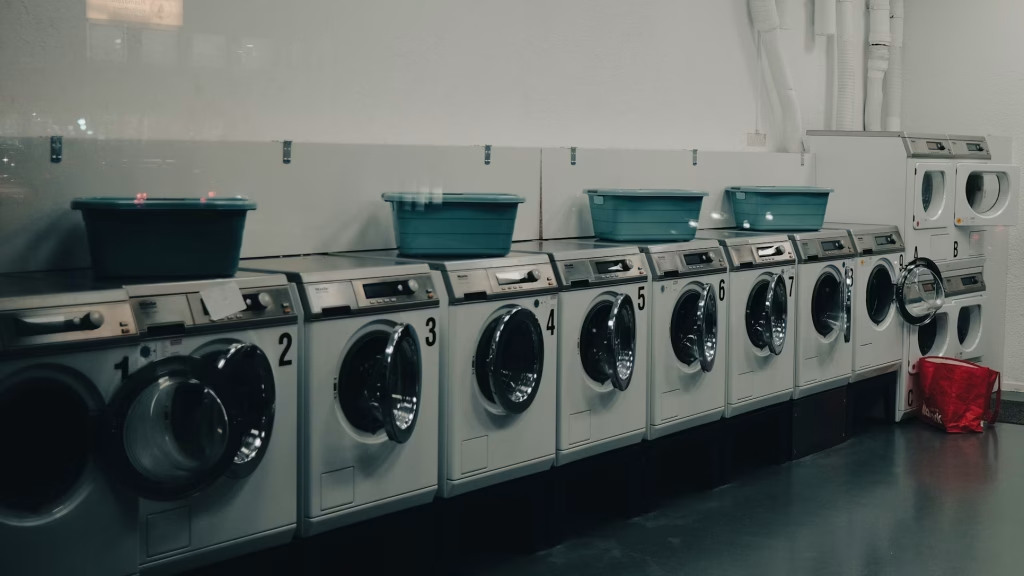
A high-performance commercial washer dryer is defined not only by the volume of laundry it can handle but also by its operational efficiency and reliability under heavy use. Small to medium-scale businesses must consider several integrated factors when evaluating these machines.
2.1 Washer Capacity vs Drying Efficiency
Capacity is a primary factor in evaluating a combo unit. Machines typically range from 20–50 lbs for small-scale operations, allowing multiple cycles per day without overloading. However, capacity alone does not determine efficiency. Drying performance, influenced by airflow design, drum rotation, and moisture sensors, often has a more direct effect on revenue potential.
Oversized machines may sit partially filled, wasting energy and extending cycle times. Conversely, undersized units may create bottlenecks during peak hours, leading to delays and increased labor costs. Understanding the balance between washer size and drying efficiency is critical for small-scale operators aiming to maximize throughput without over-investing in infrastructure.
2.2 Energy Consumption & Operating Costs
Energy costs are among the largest recurring expenses in commercial laundry operations. A commercial washer dryer with advanced energy-saving features can dramatically reduce daily operating costs. Efficient water heating, automatic cycle adjustment, and load-sensing technology prevent overuse of electricity while maintaining performance consistency.
Heating methods also influence operational expenses. Electric units offer simpler installation and predictable maintenance, while gas-powered combos often deliver faster drying and lower per-cycle energy costs, assuming reliable gas supply. Some advanced models incorporate heat pump technology, which reduces energy use further but may require more complex installation planning.
Operators seeking standalone dryer comparisons may refer to Commercial Electric Clothes Dryer: Small-Scale Laundry Solutions & Expert Buying Guide to understand the efficiency trade-offs between electric and gas systems.
2.3 Build Quality & Durability
Durability in a commercial washer dryer directly impacts total cost of ownership. Machines designed for continuous 6–10 hour daily operation must withstand mechanical stress while maintaining cycle consistency. Key design features include reinforced drums, heavy-duty bearings, and corrosion-resistant panels.
Machines with modular components simplify maintenance and reduce downtime, which is particularly valuable in high-demand settings. Even minor failures can disrupt workflow and affect revenue. Therefore, assessing build quality and expected service life is as important as evaluating upfront price.
2.4 Automation & Smart Control Features
Automation features help small-scale operators optimize labor and energy usage. Modern commercial washer dryer combos often include programmable cycles, real-time moisture sensing, automatic temperature adjustment, and digital diagnostics.
Advanced connectivity allows remote monitoring, error alerts, and performance tracking, enabling proactive maintenance. For operators managing multiple locations or high turnover laundromats, automation stabilizes operations, improves energy efficiency, and maintains consistent fabric care standards.
For more insights into automation benefits and operational efficiency, see Best Commercial Clothes Dryers for Small Laundromats (2026 Budget Guide).
3. Top Commercial Washer Dryer Models 2026 – Operational Overview
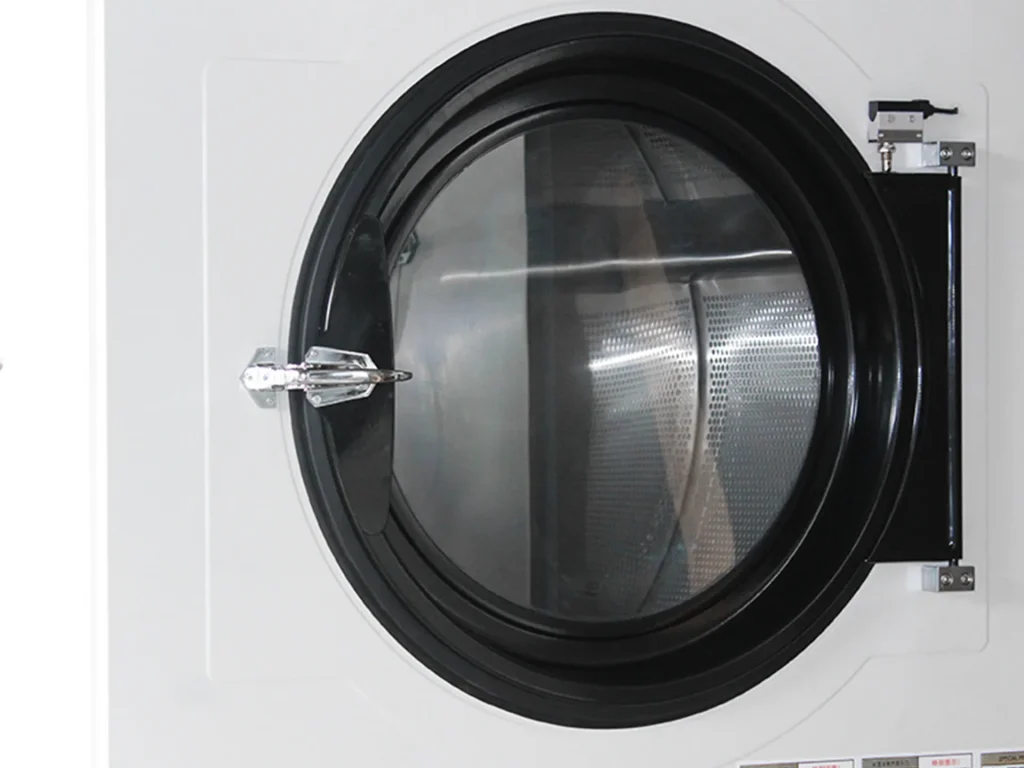
Selecting the right commercial washer dryer requires a nuanced understanding of performance, reliability, and efficiency, rather than relying solely on brand reputation. For small to medium-scale operations, certain models stand out due to their ability to balance compact footprint, energy efficiency, and durable construction.
3.1 Electrolux Professional Combo
The Electrolux Professional Combo has earned recognition for combining automation and compact design. Its strength lies in adaptive cycle management and precise moisture sensing, allowing operators to achieve consistent drying results without overspending on energy. Unlike larger industrial models, this combo is designed to fit in tighter spaces while still handling moderate daily loads efficiently. The reinforced drum construction and high-quality bearings ensure long-term durability, making it a practical investment for small laundromats or boutique hotel back-of-house operations. Operators benefit from reduced labor intervention, as cycles are largely automated, freeing staff to focus on other tasks.
3.2 Speed Queen Industrial Combo
Speed Queen’s combo model emphasizes structural durability and simple, reliable operation. Built with heavy-duty drums and robust frame support, it is designed to withstand continuous usage, which is common in hotels and healthcare facilities with small laundry wings. While it lacks some of the advanced automation features found in Electrolux units, it compensates with reliability and ease of maintenance. The digital interface allows operators to customize cycles, but the real advantage is in minimizing unexpected downtime and maintenance complexity. For facilities prioritizing uptime and straightforward operations, Speed Queen remains a top contender.
3.3 Maytag Multi-Load Combo
Maytag’s Multi-Load Combo offers a balance between mechanical robustness and moderate digital control. It is particularly suited for operators who prioritize long-term reliability and low operational learning curves. While it does not include advanced adaptive airflow or heat recovery, it performs well with small to medium loads, providing predictable drying and washing cycles. The simple design reduces the likelihood of operational errors, making it ideal for businesses that do not have dedicated maintenance personnel or prefer machines that are intuitive to operate.
3.4 Girbau High-Efficiency Combo
Girbau focuses on energy efficiency and sustainability within a small footprint. Its combo units integrate heat recovery systems and airflow optimization, which reduces electricity consumption while maintaining consistent drying performance. This makes Girbau especially appealing for energy-conscious operators and small facilities with tight operational budgets. While the automation is less extensive than Electrolux, the efficiency gains can significantly reduce utility expenses over time. The design also emphasizes fabric care, maintaining the quality of delicate textiles even under frequent daily cycles.
Comparison Overview Table
| Model | Capacity Range | Energy Efficiency | Automation Level | Durability | Best Use Case |
|---|---|---|---|---|---|
| Electrolux Professional | 20–50 lbs | High | Advanced | Excellent | Small laundromats, boutique hotels |
| Speed Queen Industrial | 20–45 lbs | Medium | Moderate | Outstanding | Hotels, healthcare wings |
| Maytag Multi-Load | 20–40 lbs | Moderate | Basic | Strong | Budget-conscious small operations |
| Girbau High-Efficiency | 25–45 lbs | Very High | Moderate | Good | Energy-focused small facilities |
This table highlights the balance between throughput, energy use, and durability, which are critical considerations for small-scale operators. When choosing a commercial washer dryer, capacity alone is insufficient. Operators must consider daily throughput, energy expenses, maintenance needs, and space constraints.
Operators seeking broader commercial dryer comparisons can reference Top Commercial Dryer Comparison & Buying Guide for Laundromats for larger-scale options, and 5 Best Commercial Dryers for Large-Scale Laundry for high-capacity systems.
4. Commercial Washer Dryer Selection Framework – How to Choose the Right Model
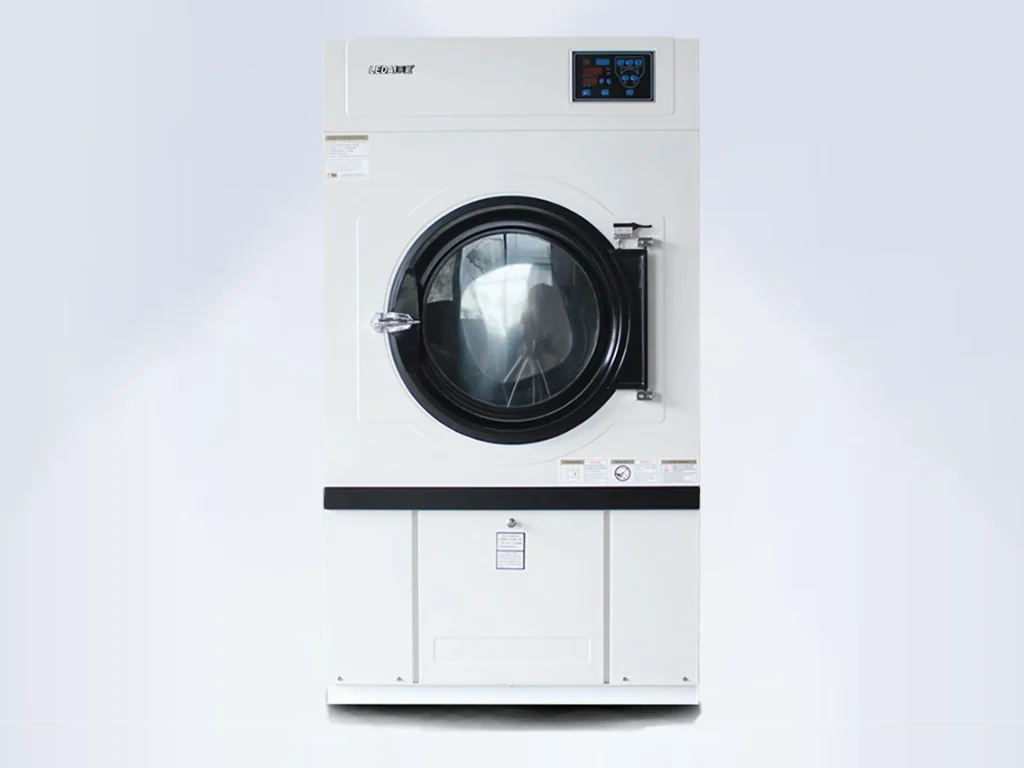
Selecting a commercial washer dryer is a strategic decision that impacts operational efficiency, utility costs, and long-term maintenance. The selection process should prioritize financial feasibility, workflow integration, and lifecycle considerations rather than superficial brand appeal.
4.1 Budget Planning & ROI Considerations
Before evaluating specific models, operators must define their financial boundaries. While purchase price is an important factor, total cost of ownership (TCO) provides a more accurate picture of long-term expenses. Key considerations include:
- Energy consumption over the expected service life
- Average maintenance and repair costs
- Installation and potential infrastructure upgrades
For example, a unit priced $5,000 may initially seem more expensive than a $3,500 alternative, but if it reduces energy usage and maintenance downtime, the effective ROI can be higher over a 5–10 year horizon.
For detailed TCO comparisons, see Commercial Dryers: The Ultimate Guide to Types, Costs, Capacity & Energy Efficiency and Best Commercial Clothes Dryers for Small Laundromats.
4.2 Operational Performance Evaluation
Performance is critical to achieving daily throughput targets. Evaluating a commercial washer dryer should focus on:
- Load Capacity vs Daily Throughput: Machines must match typical laundry volumes. Oversizing leads to energy inefficiency, while undersizing causes bottlenecks.
- Cycle Time Efficiency: Faster wash and dry cycles enhance operational throughput. Optimized airflow and drum design contribute to cycle reduction.
- Energy and Utility Considerations: Electric models typically simplify installation but may have higher energy costs in areas with expensive electricity. Gas units can reduce per-cycle costs but require stable fuel supply and ventilation infrastructure.
4.3 Installation Feasibility & Facility Requirements
Installation challenges often determine whether a chosen unit is practical in a small facility. Operators should evaluate:
- Electrical load capacity and panel availability
- Ventilation compliance and duct routing feasibility
- Floor and ceiling space constraints
- Gas line or heat pump compatibility
Even minor infrastructure modifications can increase upfront costs and affect ROI. Therefore, installation feasibility should be assessed alongside the unit’s operational performance.
For guidance on electrical and gas requirements, see Commercial Electric Clothes Dryer: Small-Scale Laundry Solutions & Expert Buying Guide 2026.
4.4 Lifecycle Cost Modeling & Long-Term Stability
Long-term costs include energy usage, maintenance, parts replacement, and potential downtime. A reliable model estimates annual costs for the expected 8–12 year lifespan.
For example:
| Model | Purchase Price | Annual Energy Cost | Annual Maintenance | 10-Year TCO |
|---|---|---|---|---|
| Electrolux Professional | $5,500 | $1,800 | $600 | $27,500 |
| Speed Queen Industrial | $4,800 | $2,200 | $500 | $27,000 |
| Maytag Multi-Load | $4,200 | $2,000 | $700 | $26,000 |
| Girbau High-Efficiency | $5,000 | $1,500 | $650 | $26,500 |
This table illustrates that upfront savings may not translate to overall cost efficiency. Operators must weigh immediate capital expense against predictable operational and maintenance costs.
For deeper lifecycle insights, see Top Commercial Dryer Comparison & Buying Guide for Laundromats.
5. Installation & Infrastructure Planning
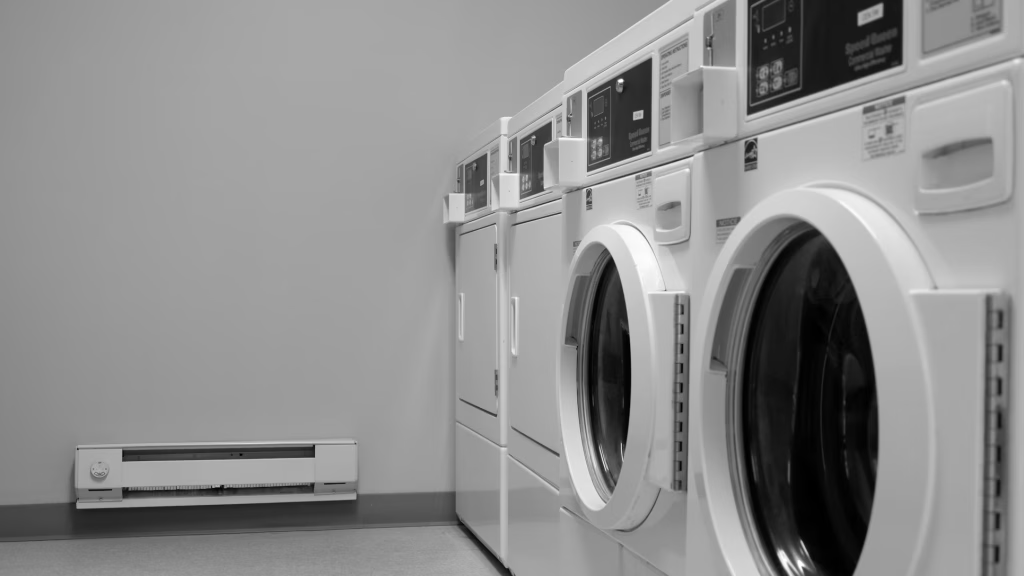
Correct installation maximizes machine efficiency, minimizes downtime, and protects investment value. Small-scale operators must consider spatial, electrical, and ventilation requirements carefully.
5.1 Electrical & Gas Requirements
Commercial electric washer dryers require stable 208–240V connections with adequate amperage to handle simultaneous wash and dry cycles. Gas units necessitate verified fuel lines with stable pressure, while heat pump models may require additional airflow planning. Improper infrastructure leads to frequent tripping, energy inefficiency, or even safety hazards.
5.2 Ventilation & Airflow Engineering
Even compact units need proper airflow to maintain drying efficiency and prevent heat accumulation. Operators should check duct length, bends, and exhaust placement to minimize airflow resistance. Poor ventilation increases cycle duration, energy usage, and wear on components, affecting long-term profitability.
5.3 Space Planning & Workflow Optimization
Placement of washer dryer units influences labor efficiency and workflow smoothness. Key considerations include:
- Proximity to folding or sorting stations
- Operator access to controls and maintenance points
- Customer or staff traffic flow in small laundromat areas
An optimized layout reduces unnecessary handling, prevents bottlenecks, and ensures that space constraints do not compromise daily throughput.
For layout and space planning examples, see 5 Best Commercial Dryers for Large-Scale Laundry(2026 Guide).
6. Comparison of Top Small-Scale Commercial Washer Dryers 2026
When evaluating commercial electric clothes dryer options for small laundromats or boutique facilities, it is essential to balance performance, energy efficiency, and service support. Below is a detailed comparison of the most popular units suitable for compact operations:
| Brand & Model | Load Capacity | Energy Efficiency | Automation | Typical Lifespan | Service Network | Best Use Case |
|---|---|---|---|---|---|---|
| Electrolux Professional Combo | 30–50 lbs | High | Smart Integrated | 10–12 yrs | Global | Small laundromats with space constraints |
| Speed Queen Industrial Mini | 35–55 lbs | Moderate | Basic Digital | 8–10 yrs | North America | Budget-focused small operations |
| Maytag Multi-Load Compact | 30–45 lbs | Moderate | Standard Digital | 8–10 yrs | Regional | Self-service laundries and hotels |
| Girbau High-Efficiency Compact | 40–50 lbs | Very High | Advanced Automation | 10–12 yrs | Strong Regional | Energy-conscious boutique laundries |
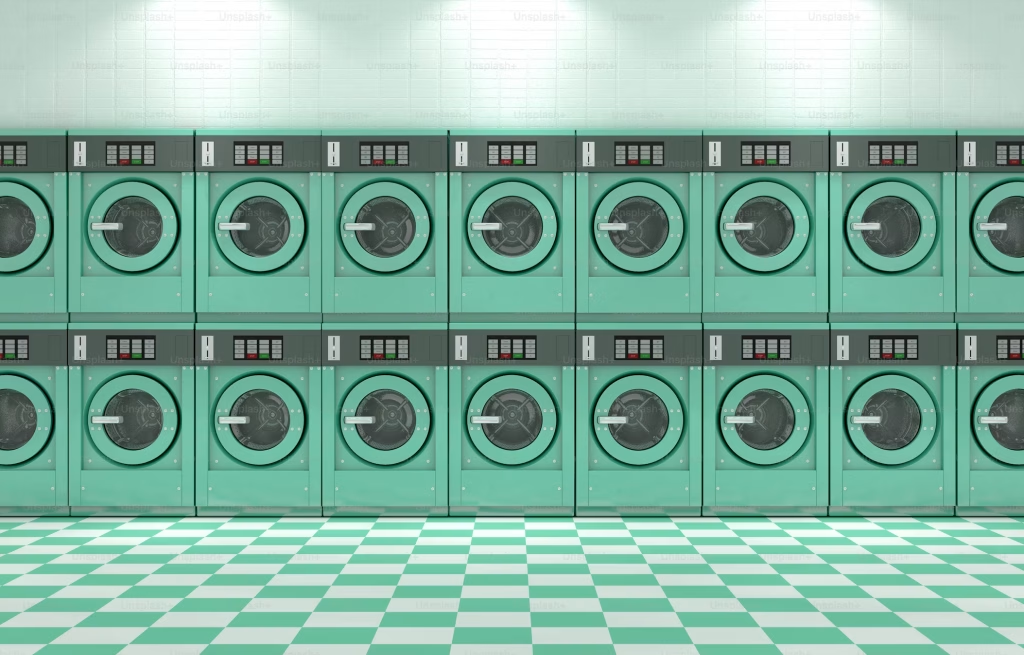
Key Takeaways:
- Electrolux offers a balance between automation and efficiency, making it ideal for operators who prioritize cycle optimization and remote monitoring.
- Speed Queen Mini is cost-effective for budget-constrained operations, though energy costs may be higher.
- Maytag Multi-Load Compact emphasizes reliability and mechanical durability, suitable for smaller but busy locations.
- Girbau combines energy-saving technologies with moderate capacity, suitable for operators focused on long-term operational cost reduction.
For additional comparisons, see Top Commercial Dryer Comparison & Buying Guide for Laundromats.
6.1 Evaluating Automation vs Manual Control
Automation in small-scale washer dryers improves consistency, reduces operator intervention, and optimizes energy consumption. Machines with smart sensors adjust cycle length and heat output according to load size and moisture level.
However, for small laundromats, the premium on advanced automation must be weighed against upfront cost. Budget-conscious operators may prefer simpler digital controls that still provide basic cycle monitoring and reliability.
6.2 Energy & Utility Considerations
Electric models simplify installation and reduce compliance requirements, but gas units can significantly lower per-cycle energy expenses where infrastructure allows. Heat pump technology is less common in small commercial units but provides substantial energy savings over time.
Operators should calculate total energy usage based on expected daily loads. Even a 10% efficiency gain can translate to significant annual savings when scaled over multiple machines.
7. Maintenance & Operational Management
Proper maintenance is key to extending the lifespan of commercial electric clothes dryer units and maximizing ROI. Neglecting routine care can reduce efficiency, increase downtime, and accelerate component wear.
7.1 Preventive Maintenance Strategy
A structured maintenance plan ensures reliable performance and reduces unplanned repairs. Key practices include:
- Daily lint removal and drum inspection to maintain airflow and prevent overheating.
- Weekly water inlet and filter checks to prevent clogs and reduce wear on pumps and valves.
- Quarterly belt and bearing inspections to identify early wear before failure occurs.
- Annual full-system checks including electrical connections, motor condition, and sensor calibration.
Even in small-scale operations, preventive care can cut emergency repair costs by 30–40% over the machine’s life.
For detailed maintenance schedules and lifecycle analysis, see Best Commercial Clothes Dryers for Small Laundromats.
7.2 Troubleshooting Common Issues
Operators should be aware of common operational pitfalls:
- Extended cycle duration due to clogged filters or poor airflow
- Inconsistent drying performance from misaligned sensors
- Unexpected downtime caused by electrical overload or improper installation
Documenting daily operations and anomalies helps in diagnosing trends and planning preventive actions before they escalate.
7.3 Smart Monitoring & Remote Diagnostics
Modern commercial electric washer dryers increasingly support:
- Usage tracking to optimize load scheduling
- Error code reporting for rapid technician response
- Remote monitoring for multi-location operators
These features enhance operational visibility, reduce labor supervision, and provide data to inform future equipment investment decisions.
For insights on electric vs gas dryers, see Commercial Electric Clothes Dryer: Small-Scale Laundry Solutions & Expert Buying Guide 2026.
FAQ
What is the typical lifespan of a commercial electric clothes dryer?
Most compact commercial electric dryer units last 8–12 years with proper maintenance. Actual lifespan depends on load volume, cycle frequency, and preventive care.
Are electric dryer units more expensive to operate than gas dryers?
Electricity costs are typically higher per cycle than gas, but electric units simplify installation and reduce ventilation requirements. Long-term efficiency depends on local utility rates and usage patterns.
Can small laundromats use heat pump technology?
Yes, some compact units incorporate heat pump systems to reduce energy consumption, though initial investment is higher. These are ideal for operators prioritizing sustainability and operational cost savings.
How often should preventive maintenance be performed?
Daily lint removal and weekly filter checks are recommended, with quarterly mechanical inspections and annual full-system evaluations to ensure peak performance.
Is automation necessary in small-scale operations?
While not mandatory, automated moisture sensing and digital controls improve consistency, reduce energy waste, and reduce operator workload. Budget-conscious facilities may opt for simpler controls with regular manual monitoring.
 English
  Spanish