
Table of Contents
In the high-stakes world of commercial operations, the management of textiles—whether they are bed linens, surgical gowns, or restaurant napkins—is often a silent engine of success. As we navigate the economic landscape of 2026, the demand for high-efficiency industrial laundry services has reached an all-time high. Business owners are no longer just looking for “clean” clothes; they are seeking strategic partners or internal systems that maximize fabric longevity, minimize environmental impact, and provide a clear return on investment. The decision between building an internal laundry infrastructure or partnering with an external provider is one of the most significant operational choices a facility manager will face.
Understanding the nuances of these services requires more than a superficial glance at washing machines. It involves a deep dive into logistics, chemical engineering, and labor management. For those new to the terminology, it is helpful to first understand What is Industrial Laundry? 2026 Guide to Services, Systems & Costs to grasp the scale of machinery and the rigorous standards required for large-scale operations. Once the foundation is laid, the focus shifts to the service model itself: do you keep it in-house, or do you send it out?
Defining the Two Pillars: On-Premise Laundry (OPL) vs. Outsourcing
The commercial world generally splits into two camps regarding textile care. The first is On-Premise Laundry, commonly referred to as OPL. In this model, the business owns or leases the equipment, employs the staff, and manages the entire process within its own facility. This is common in luxury hotels and large hospitals where the “turnaround time” needs to be instantaneous. The second pillar is the outsourced service model, where a third-party industrial plant collects soiled goods, processes them at a centralized location, and returns them on a scheduled basis.
Both models have evolved significantly. Modern OPL setups are now heavily automated, reducing the need for large manual labor forces. Conversely, outsourced providers have moved toward “Linen Management” programs, where the provider owns the linen and the business simply pays a subscription or a per-piece fee. This shift allows businesses to move laundry costs from a capital expenditure (CapEx) to an operating expense (OpEx), which can be highly attractive for startups or facilities undergoing rapid expansion.
Deep Dive: On-Premise Laundry (OPL) Systems
For many business owners, the primary draw of OPL is absolute control. When you manage your own industrial laundry services, you dictate the wash formulas, the chemical concentrations, and the priority of loads. If a VIP guest arrives at a resort and needs a specific suite prepared, an OPL team can have linens ready in under two hours. This level of agility is impossible with an outsourced partner who operates on a fixed delivery route.
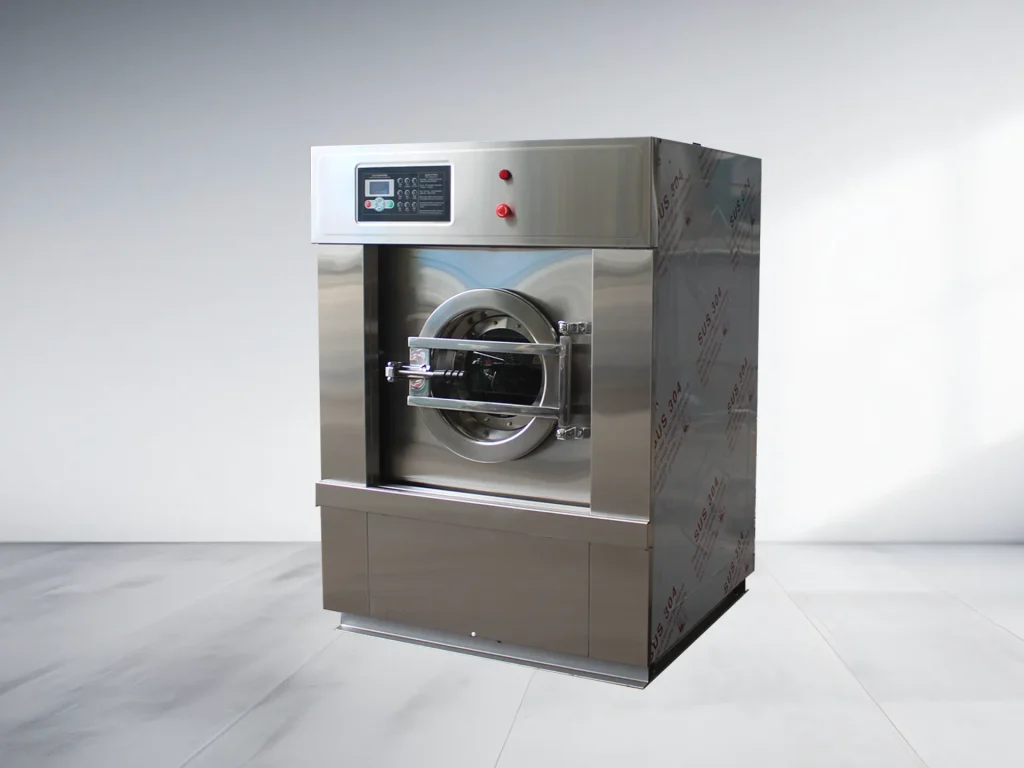
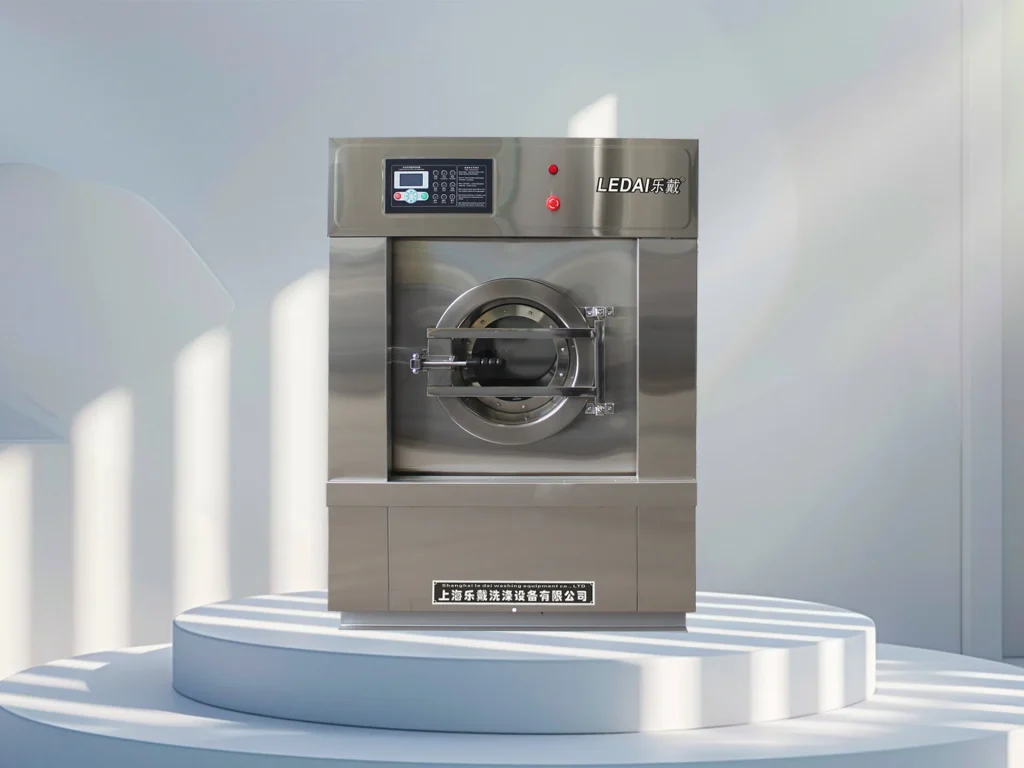
However, OPL is not without its challenges. It requires a significant footprint within the building, which could otherwise be used for revenue-generating activities like guest rooms or dining space. Furthermore, the management of OPL involves overseeing a micro-factory. You are responsible for the maintenance of high-capacity washer-extractors, the monitoring of water softening systems, and the training of staff on specialized finishing equipment. For a comprehensive look at the machinery involved in these setups, the Industrial Laundry Guide: Comprehensive Encyclopedia for Commercial & Large-Scale Laundries 2026 provides an exhaustive breakdown of the hardware necessary to run a successful in-house program.
The Staffing and Utility Component
Staffing an OPL is often the highest recurring cost. In 2026, labor markets remain competitive, making the retention of skilled laundry technicians a priority. Facilities are increasingly turning to “smart” machines that require less human intervention. These machines use IoT sensors to alert managers when a cycle is complete or if a mechanical issue is detected, allowing a smaller team to manage a larger volume of textiles.
Utilities also play a massive role in the OPL equation. An on-site laundry consumes significant amounts of water, gas, and electricity. Savvy owners are now investing in heat reclamation systems that capture the heat from dryer exhaust to pre-heat the water for the next wash cycle. This integration of sustainability is not just about being “green”; it is about protecting the bottom line from rising energy prices.
Deep Dive: Outsourced Industrial Laundry Services
Outsourcing is the preferred route for businesses that want to focus entirely on their core competencies without the “headache” of laundry management. In this scenario, the industrial laundry provider acts as a specialized logistics partner. They bring economies of scale that a single facility could never achieve. Because these centralized plants process millions of pounds of linen annually, they can negotiate lower prices for chemicals and utilities, often passing those savings on to the client.
The primary benefit here is the elimination of upfront capital investment. Instead of spending hundreds of thousands of dollars on heavy machinery, the business owner pays for the service they use. This model is particularly effective for businesses with seasonal fluctuations. A seaside resort may have 100% occupancy in the summer but only 20% in the winter. With an outsourced service, their laundry costs automatically scale down during the off-season, whereas an OPL would still have fixed costs related to space and equipment maintenance.
Inventory Management and the Rental Model
A subset of outsourcing that has gained massive popularity in 2026 is the “Full Service Rental” model. Under this agreement, the laundry service provider supplies the linens, towels, and uniforms. The business doesn’t even have to buy its own textiles. The provider is responsible for replacing worn-out items and ensuring that the inventory levels are always sufficient. This removes the risk of “linen loss” and the need for periodic large-scale purchases of new stock.
However, outsourcing requires a high degree of trust. You are essentially handing over a portion of your customer experience to an outside party. If the provider has a mechanical failure or a strike, your business could be left without clean linens within 24 hours. Therefore, when choosing an outsourced partner, it is vital to review their redundancy plans and their historical reliability. For many, the decision comes down to the numbers, which can be explored in detail within the Industrial Laundry Costs: Complete Breakdown, Cost per Pound & ROI Calculation Guide 2026.
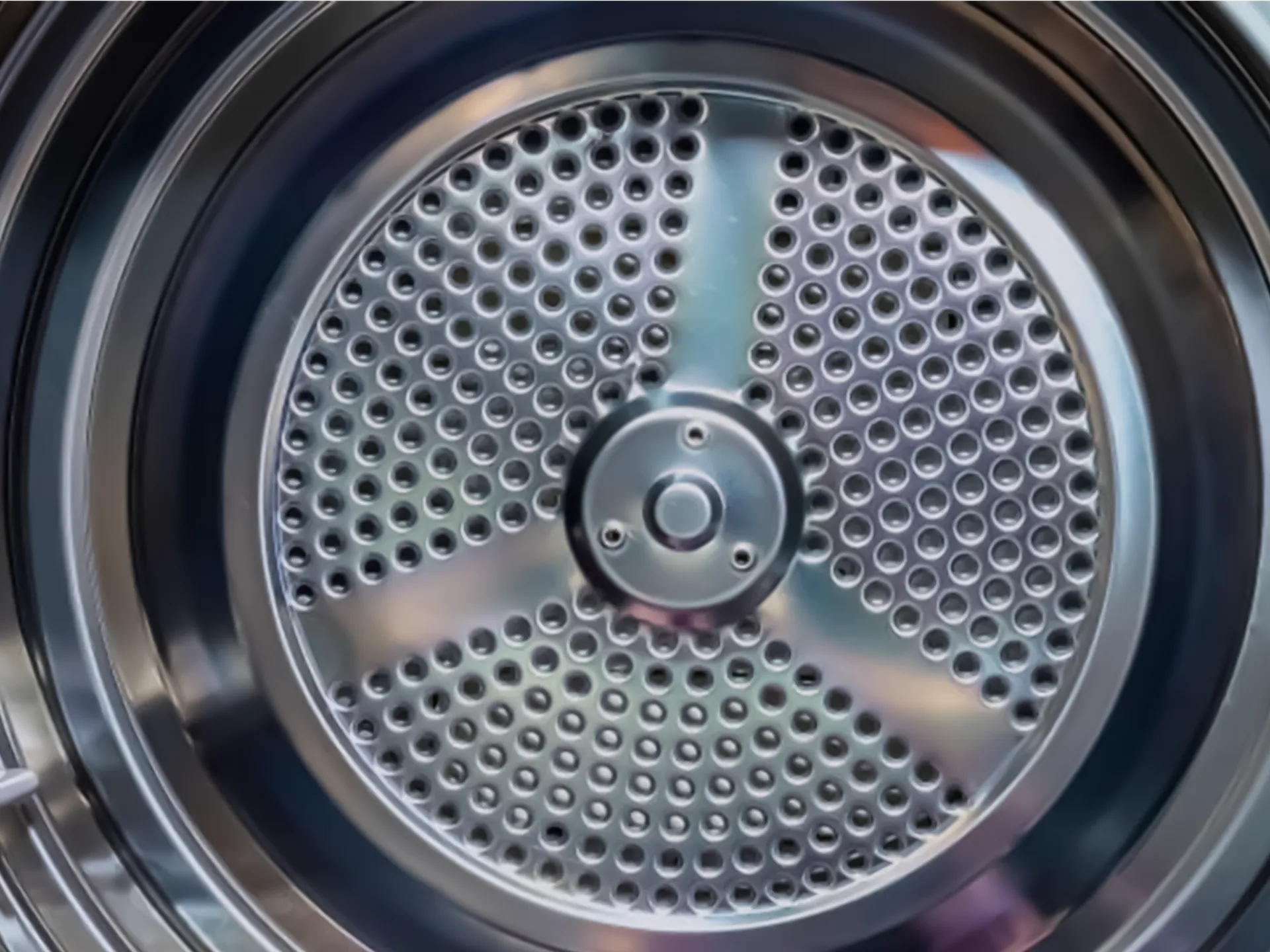
Comparative Analysis: OPL vs. Outsourcing
Deciding between in-house operations and external industrial laundry services requires a granular look at performance metrics. While both aim for the same result—clean textiles—the path to getting there involves different cost structures and quality control mechanisms. To help business owners visualize these differences, the following table breaks down the primary operational pillars.
Service Model Comparison Table
| Feature | On-Premise Laundry (OPL) | Outsourced Laundry Services |
| Control Level | Absolute (Custom wash cycles) | Variable (Standardized cycles) |
| Capital Investment | High (Equipment & Construction) | Zero to Low (Service fees) |
| Space Requirement | Significant (Dedicated square footage) | Minimal (Soiled/Clean storage only) |
| Labor Management | Direct (Hiring/Training staff) | Indirect (Managed by provider) |
| Scalability | Fixed by machine capacity | Highly Elastic (Based on demand) |
| Typical Cost Basis | Utilities + Labor + Maintenance | Price per Piece or per Pound |
For many, the most significant factor is the “Cost per Pound.” In an OPL setting, this cost is a moving target influenced by water rates, employee turnover, and the efficiency of your equipment. For those looking for a deep dive into these numbers, the Industrial Laundry Costs: Complete Breakdown, Cost per Pound & ROI Calculation Guide 2026 is the definitive resource for benchmarking your internal expenses against market rates for outsourced services.
Sector-Specific Service Models: Tailoring the Approach
Not all industries view industrial laundry services through the same lens. A hotel’s priority is “guest touch,” while a hospital’s priority is “clinical safety.” Understanding these nuances helps business owners choose the model that aligns with their core mission.
Hospitality: Managing the Guest Experience
In the luxury hotel sector, the “hand” or feel of the linen is a brand standard. Many high-end resorts prefer OPL because it allows them to use premium detergents and fabric softeners that outsourced plants might find too expensive or difficult to manage in bulk. Additionally, OPL reduces “linen stress”—the wear and tear caused by aggressive industrial chemicals and high-speed transportation. By keeping the process in-house, hotels can extend the life of their expensive 600-thread-count sheets by up to 25%.
Healthcare: Compliance and Barrier Systems
Healthcare facilities operate under the strictest regulatory environments. Here, the choice of industrial laundry services is often dictated by the ability to maintain a “Barrier System.” This involves a physical wall separating the soiled side of the laundry from the clean side, with specialized machines that load on one side and unload on the other. While large hospitals often maintain OPL for immediate surgical needs, many clinics outsource to specialized medical laundry providers who can guarantee compliance with international hygiene standards like the Industrial Laundry Guide: Comprehensive Encyclopedia for Commercial & Large-Scale Laundries 2026.
Fitness, Spas, and Salons
For smaller-scale businesses like gyms or high-traffic spas, the volume might not justify a full-scale industrial OPL, but the frequency of use is high. These businesses often benefit from a hybrid model: using small-footprint commercial washer-extractors for quick-turnaround items like towels, while outsourcing larger items like staff uniforms or heavy robes to an external provider.
Food Service: From Table Excellence to Kitchen Hygiene
In the restaurant industry, textiles are divided into two battlefronts: the dining room and the kitchen. For Front-of-House (FOH), the priority is aesthetic perfection—crisp, white tablecloths and starch-pressed napkins that define a brand’s luxury status. However, for Back-of-House (BOH), the challenge is purely chemical. Aprons and kitchen towels are often saturated with animal fats, proteins, and vegetable oils that require high-alkaline “break” cycles.
Many restaurant owners struggle with “Graying” linens, which occurs when organic greases are not fully emulsified and redeposit onto the fabric. A professional Restaurant Laundry Guide approach within an OPL or an outsourced service ensures that BOH grease-laden items are never cross-contaminated with FOH guest linens, preserving the bright white finish required for fine dining.
Financial Architecture: ROI and Long-term Planning
The financial decision to move from outsourcing to an OPL model is usually driven by a “Break-Even Analysis.” Business owners must determine at what volume the savings on “price per pound” will offset the massive initial investment in machinery and space.
Calculating the Break-Even Point
Typically, if a facility processes more than 500,000 pounds of laundry annually, the move toward an OPL becomes financially viable. The ROI is calculated by comparing the monthly service invoice from an outsourced provider against the combined cost of OPL labor, utilities, chemical supplies, and equipment depreciation. In 2026, with the rise of energy-efficient tunnel washers, many mid-sized hotels are finding that their ROI is achieved in as little as 3.5 years.
However, one must account for the “Hidden Costs” of outsourcing. These include:
- Linen Loss: Textiles that go missing during transportation or are accidentally discarded by the service provider.
- Damaged Goods: Items that are returned but are unusable due to chemical burns or mechanical tearing.
- Inventory Surcharge: The cost of carrying extra “par levels” of linen to cover the days when the delivery truck is delayed.
By internalizing these industrial laundry services, a business can often reduce its total linen inventory by one full “par,” freeing up capital that would otherwise be tied up in stored sheets and towels. For a broader understanding of the total ecosystem, refer to What is Industrial Laundry? 2026 Guide to Services, Systems & Costs to see how these financial components fit into the larger global laundry market.
The Role of Preventative Maintenance in OPL
For those who choose the OPL route, the longevity of the equipment is the key to maintaining a low cost per pound. Modern industrial washers are built to last 15–20 years, but only if they are maintained with military precision. This includes daily checks of chemical pump calibrations, weekly inspections of drive belts, and monthly descaling of heating elements. In 2026, many equipment manufacturers now offer “Maintenance-as-a-Service,” where sensors automatically order replacement parts before a failure occurs, ensuring the laundry room never experiences a “dark day” of zero productivity.
Decision Matrix: Which Service Model Fits Your Business?
Choosing between On-Premise Laundry and outsourced industrial laundry services is rarely a black-and-white decision. It requires a balanced evaluation of your facility’s physical constraints, financial appetite, and long-term scaling goals. To simplify this process for business owners in 2026, we have developed a decision matrix based on three primary operational tiers.
Tier 1: Small to Mid-Sized Boutique Operations
If your business processes fewer than 300 lbs of laundry per day, outsourcing is almost always the more efficient route. The space required for industrial-grade washer-extractors and high-speed dryers would be better utilized as revenue-generating space. At this scale, the overhead of hiring a dedicated laundry manager and maintaining complex machinery often outweighs the savings on a per-pound basis.
Tier 2: Mid-Sized Hotels and Large Fitness Centers
For facilities processing between 500 lbs and 2,000 lbs daily, the choice often comes down to “Control vs. Capital.” If your brand depends on a specific high-end textile feel, OPL is the winner. However, if your business model is built on lean operations and minimal staff management, partnering with a reliable external provider is the smarter move. Many businesses in this tier opt for a “Hybrid Model,” where they maintain a small OPL for emergency “quick-turn” items while outsourcing the bulk of their flatwork (sheets and towels).
Tier 3: Large Resorts, Hospitals, and Industrial Plants
At the high-volume end (over 3,000 lbs per day), the ROI for OPL becomes undeniable. The sheer volume allows for the installation of tunnel washers, which offer the lowest possible water and utility costs. In this bracket, the Industrial Laundry Costs: Complete Breakdown, Cost per Pound & ROI Calculation Guide 2026 shows that in-house operations can save a facility up to 40% annually compared to outsourced contracts, provided the equipment is maintained at peak efficiency.
Sustainability and Technology in 2026 Services
As we move deeper into the decade, “Green” industrial laundry services are no longer a luxury—they are a requirement for corporate social responsibility (CSR) compliance. Both OPL and outsourced models are adopting advanced technologies to meet these demands.
- Water Recycling Systems: Modern plants now feature multi-stage filtration that allows wash water to be reused up to three times. This is particularly vital for OPL setups in urban areas where water utility rates are skyrocketing.
- Ozone Disinfection: By using ozone ($O_3$) gas in the wash cycle, facilities can kill bacteria and viruses using cold water. This reduces natural gas consumption by up to 80% and significantly slows the degradation of delicate fibers, extending the life of your linen inventory.
- This technology is particularly revolutionary for the food service sector. Ozone ($O_3$) is a powerful oxidant that excels at breaking down carbon-based food stains and odors at lower temperatures. For restaurants, this means that even heavily soiled chef whites can be sanitized without the fiber-damaging heat of traditional heavy-duty cycles. Integrating ozone into industrial laundry services for eateries not only slashes gas bills but also extends the life of premium cotton linens by up to 30%, directly impacting the annual linen replacement budget.
- AI-Driven Logistics: For outsourced services, AI is now used to optimize delivery routes, reducing the carbon footprint of the transportation fleet. Real-time GPS tracking allows business owners to see exactly when their clean linens will arrive, allowing for better staff scheduling at the loading dock.
Conclusion: The Strategic Path Forward
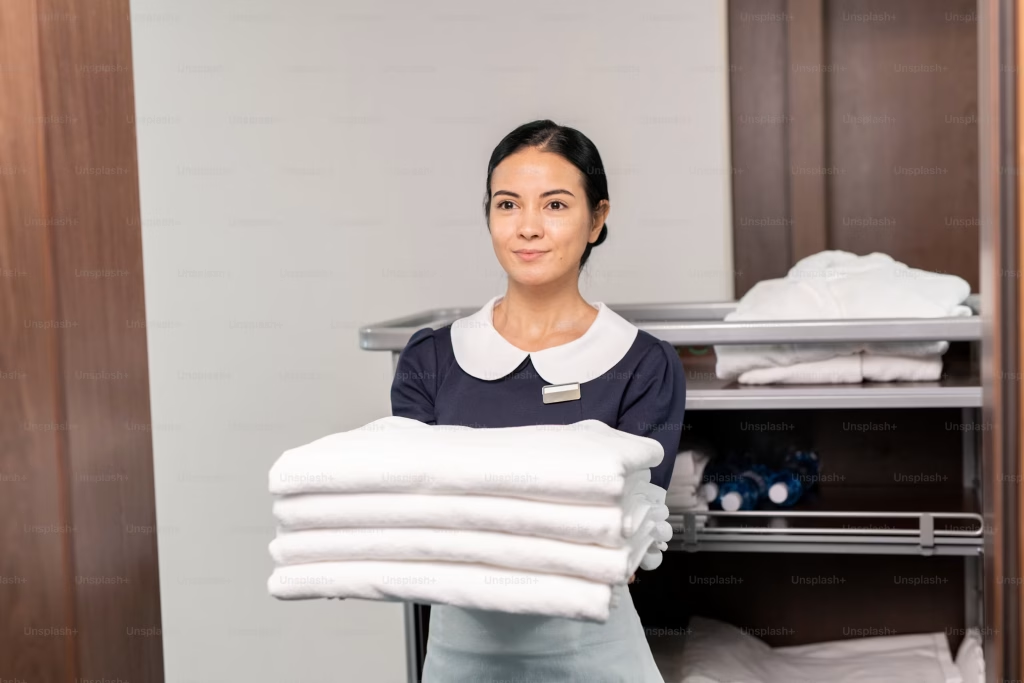
In the final analysis, industrial laundry services are a vital pillar of business infrastructure that deserves executive-level attention. Whether you choose the total control of an On-Premise Laundry or the hands-off convenience of a professional outsourcing partner, the goal remains the same: ensuring a consistent supply of clean, safe, and high-quality textiles. By understanding the technological landscape and the financial implications of each model, business owners can turn their laundry operations from a “necessary evil” into a competitive advantage. For more in-depth technical specifications on the machines that power these models, don’t forget to consult our Industrial Laundry Guide: Comprehensive Encyclopedia for Commercial & Large-Scale Laundries 2026.
FAQs: Industrial Laundry Services & Management
How do I know if my OPL is more expensive than outsourcing?
To find your true cost, you must look beyond the detergent bill. You need to calculate the “Fully Loaded Cost per Pound,” which includes labor (wages, benefits, taxes), utilities (water, gas, electricity), maintenance contracts, and the “opportunity cost” of the square footage the laundry room occupies.
What is the “Linen Rental” model?
In a linen rental model, you do not own the towels or sheets. The industrial laundry provider owns the inventory and charges you a flat fee for every clean item delivered. This is excellent for businesses that want to avoid the high upfront cost of buying thousands of dollars worth of textiles.
Can I switch from outsourcing to OPL later?
Yes, but it requires significant planning. You will need to ensure your building has the proper drainage, high-capacity gas lines, and reinforced flooring to handle the vibration of industrial washer-extractors. It is best to consult an MEP (Mechanical, Electrical, and Plumbing) engineer before making the transition.
Does industrial laundering damage linens faster than home washing?
Actually, when done correctly, industrial washing can be gentler. Professional machines use precise chemical dosing and controlled mechanical action. However, the high-heat drying and high-speed ironing found in industrial laundry services can eventually weaken fibers if moisture sensors are not calibrated correctly.
What are “Par Levels” in laundry management?
A “Par” is one full set of linens for every bed or station. In a professional setting, a “Par 4” is the gold standard: one in the room, one dirty in the bin, one at the laundry being washed, and one clean in the linen closet ready for use.
Can I wash my kitchen grease towels with guest napkins?
Absolutely not. This is a common operational failure. Kitchen towels contain high levels of fats and oils that require different chemical concentrations and temperatures. Washing them together leads to “Grease Transfer,” which ruins the absorbency and color of your guest napkins.
Is a domestic washer enough for a small bistro?
While a domestic machine might handle the volume, it cannot reach the temperatures or G-forces required to thermally disinfect textiles according to HACCP standards. For food safety and long-term fabric durability, even small bistros should utilize professional-grade washer-extractors.
 English
  Spanish