
Table of Contents
In the competitive landscape of large-scale textile care, the difference between a high-margin operation and a struggling facility often comes down to a single factor: the floor plan. Industrial laundry layout and design is far more than just deciding where to plug in a washing machine; it is a complex discipline of industrial engineering that balances thermodynamics, logistics, and hygiene. In 2026, as labor costs rise and energy efficiency becomes a regulatory requirement, a well-optimized workflow is the most effective tool a facility manager has to protect their bottom line. Every extra meter a worker has to walk with a linen cart represents wasted time and physical strain that eventually manifests as higher operational costs.
To truly understand the stakes of facility planning, one must first be familiar with what industrial laundry is in the context of global supply chains. It is not a domestic chore scaled up; it is a high-speed manufacturing process where the “product” is a sanitized, pressed, and folded piece of fabric. When a layout is flawed—for instance, if clean linens must pass through a soiled sorting area—the risk of cross-contamination rises, potentially violating healthcare regulations and endangering the entire business model.
Core Principles of Industrial Laundry Layout
The primary objective of any industrial laundry layout and design is to create a “Linear Flow.” This principle, often called the “No-Backtrack Rule,” dictates that textiles should move in a single direction from the moment they enter the building as soiled goods until they exit as clean, packaged inventory. In an ideal setup, a bedsheet should never move backward or cross paths with an item at a different stage of the cleaning process. This linear progression minimizes the risk of re-contamination and ensures that bottlenecks are easily identifiable.
Furthermore, modern designs leverage gravity and automated conveyors to reduce manual handling. In high-volume plants, soiled linens are often lifted to overhead rail systems that use gravity to drop sorted loads directly into tunnel washers or large-capacity extractors. By moving the workflow into the vertical space, designers can maximize the utility of the floor area, allowing for more machinery and higher throughput without expanding the building’s physical footprint. This architectural efficiency is a key component discussed in the 2026 comprehensive industrial laundry guide, which emphasizes that space optimization is synonymous with profit optimization.
The 5 Essential Zones of an Industrial Laundry Facility
A successful facility is divided into distinct zones, each with its own environmental and mechanical requirements. Effective zoning ensures that specialized equipment is grouped logically and that staff remain focused on their specific segment of the workflow.
Zone 1: Soiled Receipt and Bio-Hazard Sorting
This is the entry point of the facility. The design must accommodate large delivery trucks and provide ample space for unloading. Because this area handles soiled and potentially contaminated textiles, it must be physically separated from the rest of the plant. Ventilation is critical here; the air pressure should be negative relative to the clean zones to ensure that airborne lint and bacteria are not pulled into the finishing areas. Sorting stations should be ergonomically designed to prevent repetitive strain injuries, as workers categorize items by weight, fabric type, and soil level before they enter the wash cycle.
Zone 2: The Washing Core
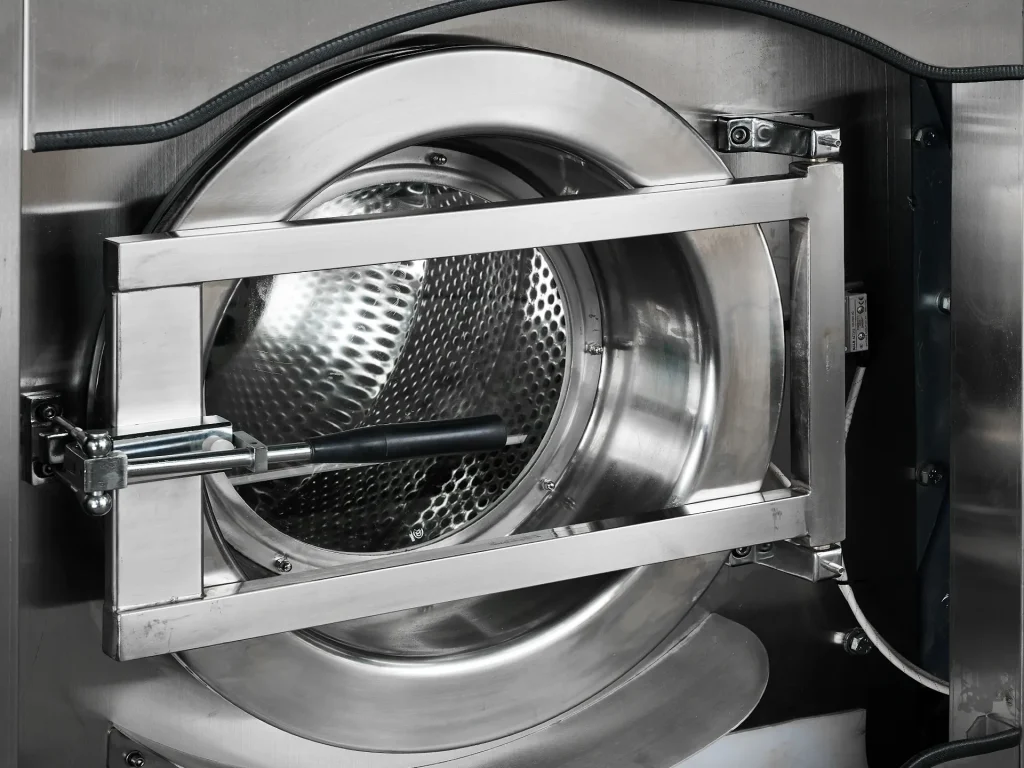
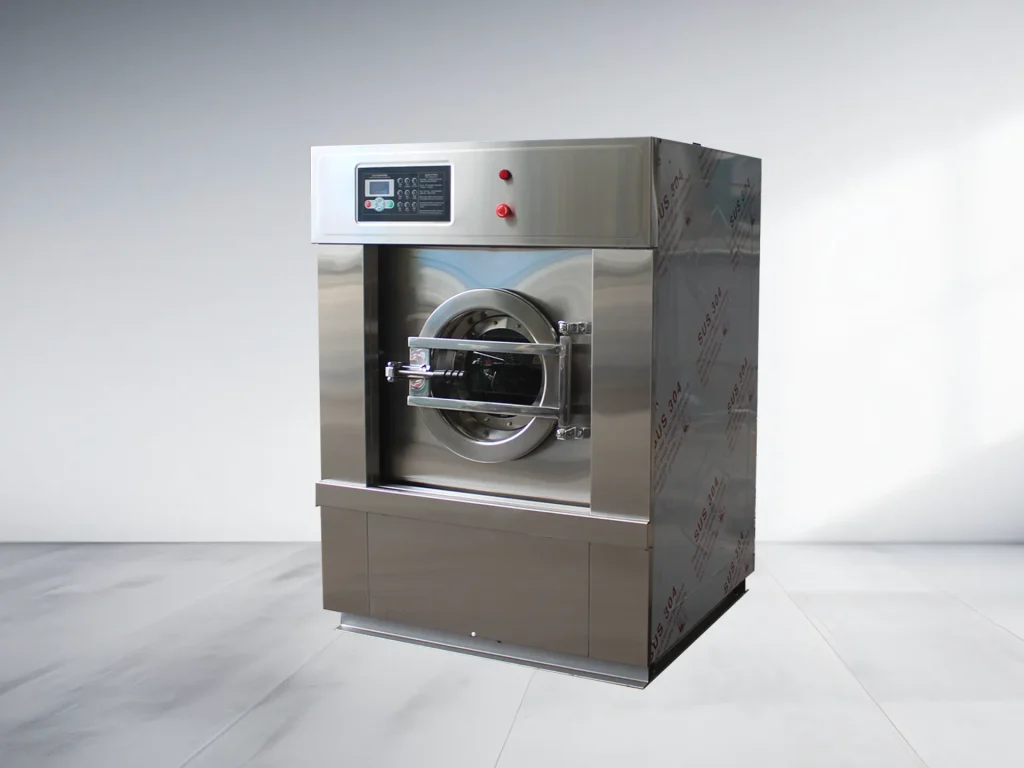
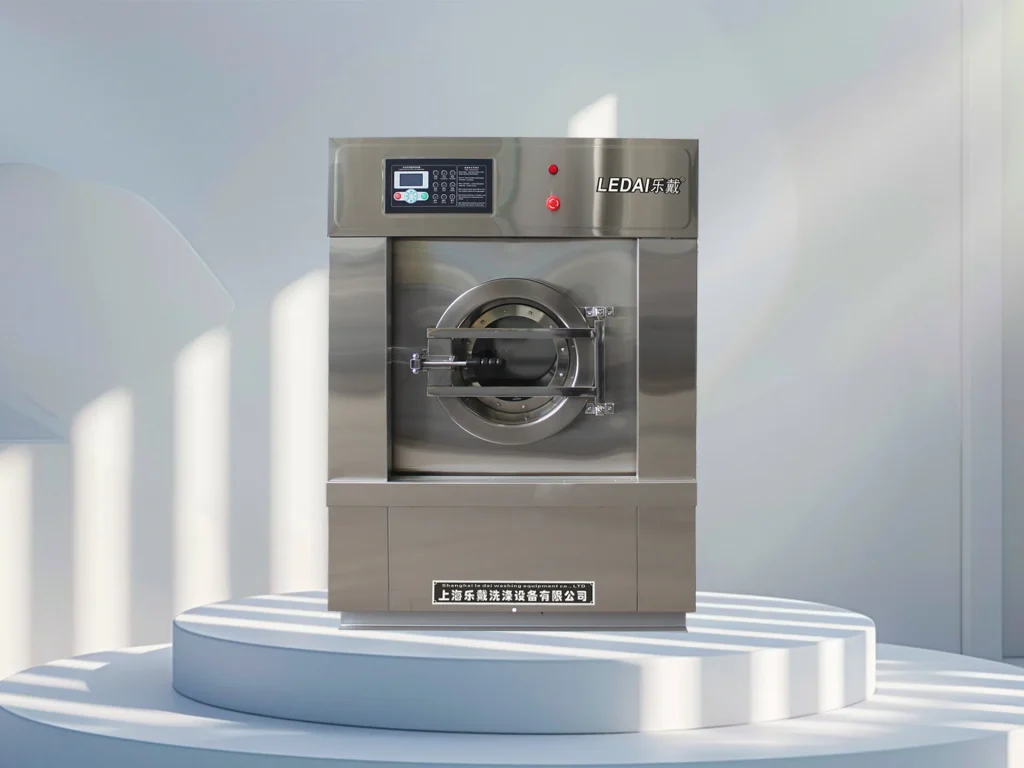
The heart of the industrial laundry layout and design is the wash floor. This area houses the tunnel washers (Continuous Batch Washers) or banks of heavy-duty washer-extractors. The floor must be reinforced to handle the extreme static and dynamic loads of these machines, which can weigh several tons when filled with water. Proper drainage is the most overlooked aspect of this zone. High-capacity trenches are required to handle the rapid discharge of hundreds of gallons of water in seconds. If the drainage is poorly designed, the wash floor becomes a safety hazard and a breeding ground for humidity-related issues.
Zone 3: Thermal Extraction and Drying Tunnels
Once washed, textiles move to the moisture extraction phase. In a modern layout, this often involves a hydraulic press that squeezes water out of the linen cakes before they are shuttled into drying tunnels. The layout must account for the massive amount of heat generated in this zone. Strategic placement of exhaust hoods and heat recovery systems can capture this thermal energy, which can then be used to pre-heat the water for Zone 2. This symbiotic relationship between zones is a hallmark of an efficient industrial laundry service model, where utility costs are kept low through integrated engineering.
Zone 4: Finishing, Ironing, and Automated Folding
Once textiles emerge from the drying tunnels with the precise amount of residual moisture, they enter the finishing zone. This is often the largest area within an industrial laundry layout and design, as it houses the massive flatwork ironer lines and automated folding machines. In a high-efficiency 2026 facility, this zone is characterized by “constant motion.” Linens are fed into spreaders that align the edges, passed through steam-heated rollers for a crisp finish, and finally folded, stacked, and cinched by robotic systems.
The layout here must be spacious enough to allow for maintenance access around the long ironer lines. Furthermore, the lighting in the finishing zone should be of the highest quality—typically 500 lux or higher—to allow staff to perform final quality control checks for any remaining stains or fabric tears. Because this area represents the last human “touch” before the product reaches the customer, any bottleneck here will delay the entire delivery schedule, directly impacting the calculated ROI of the industrial laundry facility.
Zone 5: Clean Storage, Dispatch, and Logistics
The final stage of the linear workflow is the clean storage and dispatch area. In an optimized industrial laundry layout and design, this zone is physically isolated from the soiled receipt area to prevent cross-contamination. Clean linens are stored on specialized racking systems or mobile carts, organized by client or item type.
The dispatch dock must be designed for rapid loading. Many modern plants use “rolling load” systems where entire carts are wheeled directly onto trucks in a specific sequence that matches the delivery route. This level of logistical integration ensures that the facility doesn’t just wash clothes, but functions as a sophisticated distribution center. For business owners evaluating whether to build such a complex internal zone or use an external provider, the 2026 strategy guide for on-premise vs. outsourcing offers a framework for deciding which logistical model fits their specific scale.
Zoning for Safety: The Clean/Soiled Barrier System
One of the most critical aspects of modern industrial laundry layout and design is the implementation of a “Barrier System,” particularly for healthcare and food-processing clients. This is not merely a conceptual separation; it is a physical, airtight wall that divides the facility into two distinct environments: the “Soiled Side” and the “Clean Side.”
In a barrier-protected layout, the washing machines—known as “Pass-Through” or “Barrier” washers—are built into the wall itself. Soiled laundry is loaded on one side, and once the disinfection cycle is complete, the clean laundry is unloaded on the opposite side. This architectural choice is non-negotiable for facilities aiming to comply with international hygiene standards. Beyond the physical wall, the design must account for differential air pressure. The “Clean Side” should be kept at a higher air pressure so that whenever a door or pass-through opens, air flows out toward the soiled side, preventing airborne lint, dust, and pathogens from migrating into the sanitized finishing area.
Workflow Optimization: Reducing “Touches” per Pound
The ultimate goal of a sophisticated industrial laundry layout and design is to minimize the number of times a human hand touches a piece of fabric. In the laundry industry, every “touch” is a cost. If an item is picked up, sorted, moved, loaded, unloaded, fed, and folded manually, the labor cost per pound skyrockets.
To optimize workflow, designers focus on “Touchpoint Reduction.” This is achieved through:
- Automated Rail Systems: Instead of pushing heavy carts across a floor, soiled bags are moved via overhead tracks that automatically queue and drop loads into the washers based on weight sensors.
- Continuous Flow Integration: Connecting the dryers directly to the finishing lines via conveyors ensures that linens don’t sit in bins cooling down and wrinkling, which would require more energy and time to iron.
- Real-Time Data Monitoring: Modern layouts include digital dashboards at every station. If the ironer in Zone 4 slows down, the sensors in Zone 2 can automatically adjust the wash cadence to prevent a pile-up of wet laundry.
By streamlining these movements, a facility can drastically reduce its labor requirements while increasing its total throughput. This optimization is essential for managing the comprehensive breakdown of industrial laundry costs, as labor typically accounts for over 40% of the total operating budget. When the workflow is seamless, the “price per pound” drops, allowing the business to remain competitive in a crowded 2026 market.
Utility Infrastructure Design: The Hidden Layer
The efficiency of an industrial laundry layout and design is only as good as the infrastructure hidden beneath the floor and above the ceiling. Unlike a standard commercial building, an industrial laundry requires massive “utility headers” for steam, compressed air, and high-pressure water.
Engineers must plan for “Loop Piping” systems. Instead of a single dead-end line for steam or water, a loop ensures that pressure remains constant across all machines, regardless of how many are running simultaneously. Furthermore, the placement of the boiler room and air compressors should be as central as possible to the high-demand zones (Zones 2, 3, and 4) to minimize heat loss and pressure drops in the pipes. In 2026, the inclusion of a “Heat Recovery Pit” is also standard. This is a centralized trench where all hot wastewater is collected so that a heat exchanger can pull the energy from the waste and transfer it to the incoming fresh water supply, a move that can lower gas bills by up to 25%.
V. Content Generation (Part 3/3 – Final 900+ Words)
(This final section focuses on architectural requirements, modular scalability, the financial ROI of a superior layout, and the concluding FAQs.)
Space Requirements and Architectural Considerations
A truly effective industrial laundry layout and design is built from the ground up, starting with the slab. Unlike standard commercial buildings, an industrial laundry facility must support massive static and dynamic loads. High-speed washer-extractors, during their spin cycles, generate G-forces that can crack standard concrete. Therefore, the architectural design often specifies reinforced “housekeeping pads”—separate concrete blocks isolated from the main floor to dampen vibrations. This prevents the mechanical energy of the machines from shaking the delicate electronics in the finishing equipment or compromising the structural integrity of the building.
Ceiling height is another frequently underestimated factor. Modern facilities utilize overhead rail systems to transport hundreds of pounds of linen in suspended bags. A minimum clear height of 6 to 8 meters (20 to 26 feet) is usually required to allow these rails to dip and rise without interfering with the floor-based machinery. Furthermore, the roof structure must be designed to support the weight of these loaded rails and the extensive ductwork required for the high-velocity exhaust systems of industrial dryers. Without these vertical considerations, the “No-Backtrack Rule” becomes nearly impossible to implement, as workers are forced to navigate around floor-level obstacles.
Future-Proofing: Modular Layouts for Scalability
In the fast-moving economy of 2026, a facility that cannot grow is a facility that will eventually fail. A smart industrial laundry layout and design incorporates “Modular Expansion” zones. This means the utility headers—steam, water, and compressed air—are built with capped-off T-junctions at regular intervals. If the business lands a major new hospital contract, a new washer or ironer line can be “plugged in” with minimal downtime. By designing the floor plan with extra “swing space” near the loading docks and the wash floor, the facility can double its capacity without needing to relocate, a strategic move that protects the long-term ROI and financial health of the laundry operation.
Cost vs. Efficiency: The Layout ROI
While the initial cost of a professional industrial laundry layout and design can be significant, the Return on Investment is typically realized through labor savings and utility conservation. Consider a facility processing 20,000 pounds of laundry per day. If a poor layout adds just 30 seconds of unnecessary transport time to every 100-pound load, that equates to nearly 2 hours of wasted labor every single day. Over a year, this inefficiency costs thousands of dollars in wages alone.
Furthermore, a well-planned layout reduces “Energy Bleed.” By placing the boilers and water heaters close to the machines they serve, the facility minimizes the radiant heat loss from long pipe runs. In a world where sustainability is a major component of what industrial laundry is in 2026, these design-led efficiencies are often the difference between a profitable year and a loss. When the workflow is optimized, the machinery runs at its peak duty cycle, reducing the energy cost per pound and making the business more attractive to eco-conscious clients in the hospitality and healthcare sectors.
Conclusion: Designing for the Next Decade
The evolution of industrial laundry layout and design has moved from simple equipment placement to a sophisticated orchestration of physics and logistics. As we look toward the future, the integration of robotics and AI will only increase the importance of a clean, linear floor plan. A facility designed today must be able to accommodate the automated guided vehicles (AGVs) and sensor-driven sorters of tomorrow. By prioritizing workflow, safety zoning, and utility efficiency, business owners can ensure their facility remains a high-performance asset for decades to come.
FAQs: Industrial Laundry Layout and Design
What is the most common mistake in laundry facility design?
The most frequent error is underestimating the volume of soiled laundry storage. Because soiled goods arrive in unpredictable bursts, the receiving area often becomes a bottleneck that overflows into the wash floor, disrupting the linear workflow and increasing the risk of cross-contamination.
How much space do I need for an industrial laundry?
As a general rule of thumb, you should allocate approximately 1 to 1.5 square feet of floor space for every pound of laundry processed per day. For example, a facility processing 10,000 lbs daily would ideally require a 10,000 to 15,000 square foot building. However, this can be reduced if you utilize vertical space and overhead rail systems.
Why is negative air pressure important in the soiled zone?
Negative pressure ensures that air always flows into the soiled area from the rest of the building. This prevents microscopic lint, bacteria, and odors from drifting into the clean zones where linens are being ironed and folded. It is a critical health and safety requirement for medical-grade laundries.
Can I upgrade my layout without buying new machines?
Absolutely. Often, simply re-orienting existing machines to follow a linear flow or installing gravity-fed conveyors can increase throughput by 15% to 20% without a major capital investment in new hardware.
What kind of flooring is best for an industrial laundry?
The floor should be high-strength concrete treated with a chemical-resistant sealant. It must be non-slip (even when wet) and sloped toward the trench drains (typically 1/4 inch per foot) to prevent standing water.
 English
  Spanish