
Table of Contents
Executive Summary – Commercial Electric Clothes Dryer: Small-Scale Laundry Solutions
The commercial electric clothes dryer is the backbone of small-scale laundry operations, balancing efficiency, reliability, and long-term operational cost. In 2026, as small laundries face rising energy costs, labor pressures, and increased customer expectations for hygiene and fabric care, choosing the right dryer is no longer a simple price-based decision.
This guide distills decades of operational insights into a comprehensive framework for selecting, installing, and maintaining electric dryers optimized for small facilities.
Key Insights
1. Operational Alignment:
Selecting a dryer with capacity suited to daily loads prevents energy waste and operational bottlenecks. For small laundries, units handling 200–600 lbs/day deliver optimal throughput without oversizing penalties.
2. Energy Efficiency & Cost Management:
Electric dryers provide predictable energy usage and simplified installation. Features like moisture-sensing cycles, adaptive heat modulation, and insulated drum construction reduce unnecessary energy consumption while preserving fabric integrity.
3. Advanced Features & Automation:
Even small-scale operations benefit from modern intelligent systems:
- Real-time diagnostics and remote monitoring
- Programmable cycles for varied fabric types
- Noise reduction and ergonomics for customer-facing areas
4. Maintenance & Lifecycle Considerations:
Durability is critical. Modular designs with easily replaceable belts, heating elements, and sensors reduce downtime and maintenance cost. With proper preventive care, commercial electric dryers can last 8–12 years or longer.
5. Electric vs Gas Comparison:
While gas dryers offer faster heating, electric units remain preferred for small laundries due to:
- Simplified installation
- Lower maintenance complexity
- Stable energy costs
- Greater flexibility in facilities lacking gas infrastructure
Internal link suggestions: For operational strategy and lifecycle cost analysis, see Commercial Dryers Ultimate Guide and Best Commercial Clothes Dryer.
Strategic Takeaways
- Focus on throughput efficiency, not just drum capacity. Small laundries must align dryer size with actual workload to maximize revenue per cycle.
- Prioritize long-term operating cost over upfront price. Lifecycle evaluation, including energy consumption and service access, ensures predictable ROI.
- Leverage technology for consistency and automation. Smart controls stabilize performance, reduce labor oversight, and enhance fabric care.
- Plan for preventive maintenance. Even the most durable dryers require periodic inspection and care to achieve projected lifespan and minimize downtime.
- Understand facility constraints. Electrical capacity, venting, and space layout influence feasible dryer options more than brand or model marketing.
Bottom Line
In 2026, the commercial electric clothes dryer is more than a utility — it is a strategic operational asset. Small laundries adopting data-driven purchasing, intelligent energy management, and structured maintenance practices can transform a basic electric dryer into a revenue-optimizing tool.
With the right model selection, installation planning, and ongoing management, small-scale laundries can achieve:
- Reliable throughput and minimized downtime
- Reduced energy and labor costs
- Superior fabric care and customer satisfaction
- Sustainable long-term profitability
This executive summary complements our in-depth guide and provides a high-level roadmap for operators seeking to make informed, financially sound investments.
Internal link suggestion: Explore detailed model comparisons and operational guides in Top 10 Commercial Dryers and 5 Top Commercial Dryers for Large-Scale Laundry.
Introduction
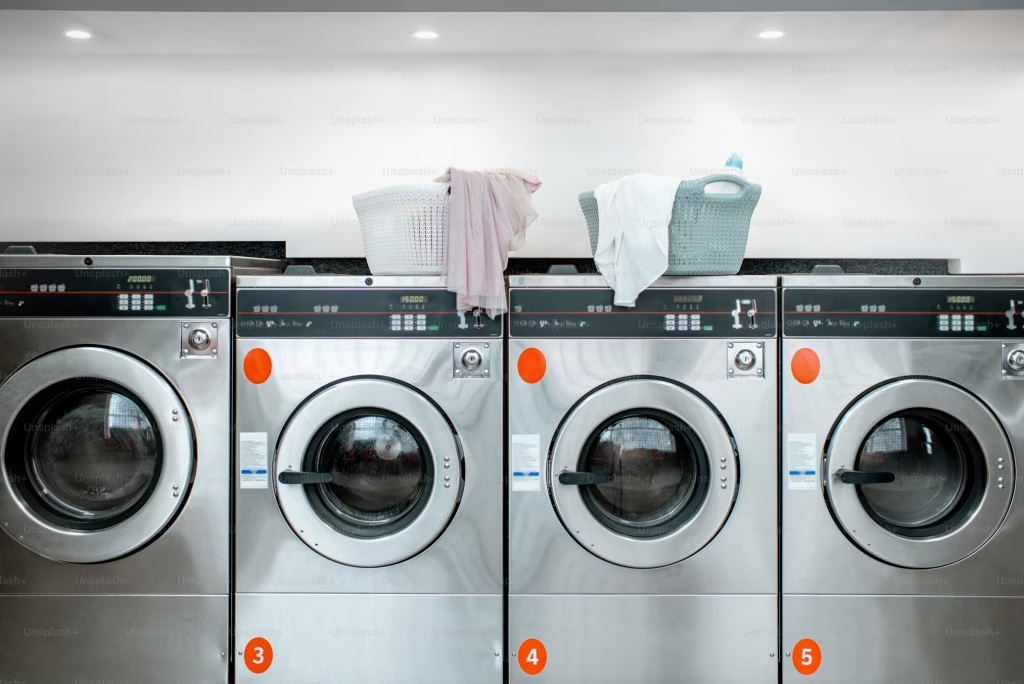
The demand for efficient, reliable, and cost-effective laundry solutions has never been higher, particularly among small-scale commercial operations such as boutique laundromats, apartment complexes, small hotels, and niche hospitality services. A well-chosen commercial electric clothes dryer is no longer a secondary consideration; it is a critical operational asset that directly influences throughput, energy costs, and customer satisfaction.
Unlike residential dryers, commercial electric units are engineered for high-frequency cycles, rigorous load demands, and prolonged operational hours. In small facilities, the balance between upfront investment, energy efficiency, and long-term operational cost becomes pivotal. While a high-capacity industrial dryer may provide impressive throughput for large facilities, small laundries require machines optimized for moderate daily loads with minimal energy waste and compact footprint.
Operators increasingly adopt a data-driven approach to equipment acquisition, evaluating lifecycle cost, maintenance complexity, and infrastructure compatibility alongside raw capacity metrics. A single misalignment in electrical configuration, ventilation, or maintenance planning can translate into unplanned downtime, increased labor hours, and elevated operating costs. For small-scale commercial facilities, these factors are often more impactful than nominal differences in purchase price.
A carefully selected commercial electric clothes dryer enables operators to achieve:
- Predictable drying cycles and consistent fabric care.
- Reduced energy consumption through intelligent moisture control.
- Lower maintenance requirements with robust construction and readily available spare parts.
- Flexibility in installation, especially in spaces with limited ventilation or electrical capacity.
For operators looking to expand or upgrade existing equipment, it is important to integrate this choice into broader operational planning. Our guide offers a structured framework covering the technical, financial, and practical dimensions of selecting the ideal commercial electric clothes dryer. It also highlights real-world considerations that go beyond marketing claims, ensuring that investment decisions align with long-term efficiency and profitability.
For a more comprehensive understanding of commercial dryer options and performance benchmarks, refer to our Commercial Dryers Ultimate Guide.
Electric vs Gas Dryers for Small Facilities
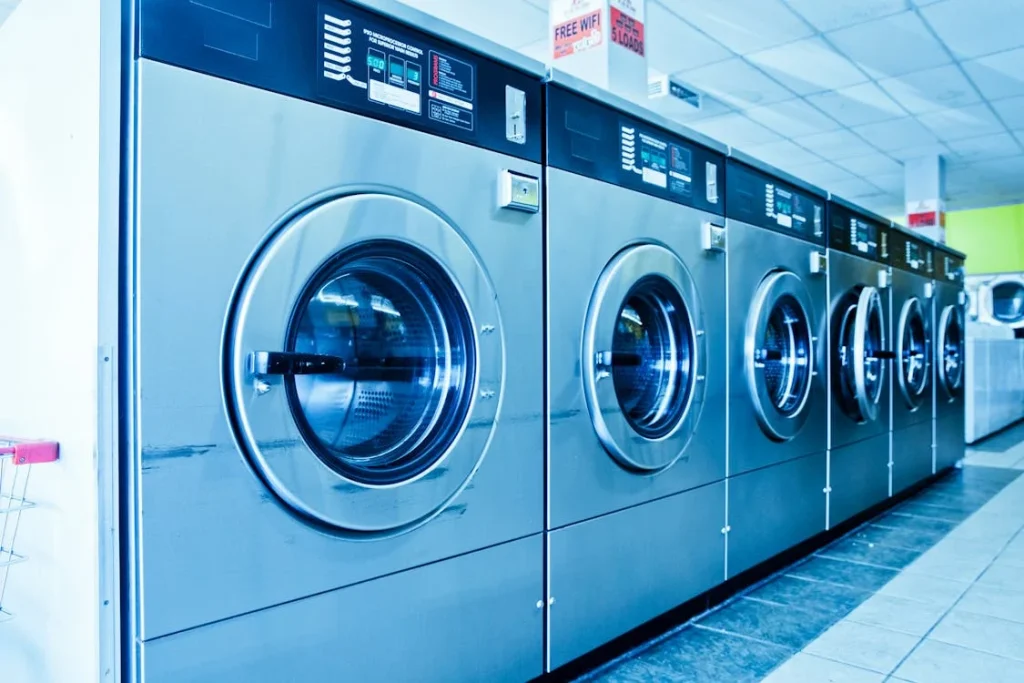
Selecting between an electric and gas-powered dryer is one of the first decisions operators face. While large industrial facilities may prioritize rapid throughput and gas availability, small-scale laundries often weigh the trade-offs between installation simplicity, utility costs, and operational flexibility.
Installation and Infrastructure Requirements
Electric dryers are widely favored in small-scale commercial setups primarily due to their simplicity in installation. Unlike gas models, they do not require specialized fuel lines or complex combustion safety systems. Standard three-phase electrical connections are generally sufficient, and many smaller units can operate on single-phase power with adequate capacity.
In contrast, gas dryers necessitate reliable gas supply, proper ventilation, and routine compliance with safety codes. While gas units may offer faster heating and lower per-cycle energy costs, the upfront infrastructure complexity can be prohibitive for small facilities. For laundries operating in older buildings or limited-space commercial units, the logistics of installing gas lines, exhaust ducts, and fire safety systems may outweigh potential operational savings.
From a financial perspective, small-scale operators should evaluate:
- Upfront installation costs (ductwork, gas line connection, electrical panel upgrades).
- Permitting and inspection fees required for gas systems.
- Potential downtime during installation or retrofitting.
In many cases, a commercial electric clothes dryer provides a lower-risk entry point with predictable energy consumption and minimal regulatory hurdles.
Operational Efficiency
Energy consumption and drying speed are central to evaluating efficiency. Modern commercial electric dryers achieve competitive performance through advanced features such as:
- Moisture sensor-driven cycle termination.
- Adaptive drum rotation and airflow optimization.
- Insulated drum walls for thermal efficiency.
Gas dryers traditionally excel in rapid heating and high-capacity throughput. However, in small facilities, energy savings from precise electric controls often offset the longer initial heating period. For instance, a small laundromat processing 50–75 lbs per day may see energy use reduced by 15–20% with an electric dryer equipped with moisture sensing, compared to a basic gas dryer without advanced automation.
Efficiency should not only be evaluated in isolation but in conjunction with turnover capacity. A dryer that completes loads consistently and reliably allows small-scale operators to maximize revenue without the need for oversized equipment.
Safety and Maintenance Considerations
Electric dryers are generally safer in confined or retrofitted spaces. They eliminate combustion risks, reduce carbon monoxide hazards, and require fewer routine inspections related to fuel leakage or exhaust venting. For facilities without dedicated service technicians, lower-maintenance operation becomes a critical factor.
Gas dryers can offer lower per-cycle operational costs but may increase the complexity of maintenance schedules. Issues such as pilot light failure, burner clogging, or improper venting require timely intervention. Small operators without in-house technical staff may find the ongoing service requirements burdensome.
For a detailed comparison of top commercial dryers and operational considerations, see our 5 Top Commercial Dryers for Large-Scale Laundry in 2025.
Cost Considerations Over Lifecycle
While upfront purchase price is often a primary decision factor, lifecycle cost analysis provides a more accurate picture of long-term efficiency. For small-scale commercial electric dryers, total ownership costs include:
- Annual energy consumption.
- Routine maintenance and parts replacement.
- Potential downtime costs associated with service interruptions.
Gas dryers may have lower nominal energy costs in regions with inexpensive gas but can incur additional expenses for safety inspections, exhaust system maintenance, and compliance checks. By contrast, electric units generally offer predictable energy bills and fewer unexpected service interventions.
Consider a small laundromat using a 30–50 lb commercial electric clothes dryer: over a 10-year period, energy costs may account for 60–70% of total ownership expenses, while maintenance and parts constitute 15–20%. The remainder covers initial purchase and installation amortization. Accurate modeling enables operators to select a unit that optimizes throughput while keeping operational costs stable.
Environmental and Regulatory Impact
Electric dryers are increasingly recognized for their environmental advantages, especially when paired with renewable energy sources. For operators in regions with carbon-reduction incentives or sustainability mandates, electric units offer compliance benefits with minimal operational adjustments.
Gas dryers, although efficient, generate emissions that may require additional filtration or compliance with stricter building codes in small commercial settings. Regulatory adherence adds indirect costs and operational complexity, which can outweigh nominal energy savings in small-scale installations.
For energy-focused comparisons and lifecycle modeling, refer to Top 10 Commercial Dryers.
Key Performance Considerations

Selecting the right commercial electric clothes dryer for small-scale operations requires more than just comparing purchase prices. Operational efficiency, fabric care, and long-term reliability are equally critical.
Load Capacity vs Throughput
For small laundromats or boutique facilities, matching dryer capacity to daily load volume ensures both efficiency and customer satisfaction. Typical electric dryer capacities range from 30–50 lbs for small operations. Oversized dryers may sit underutilized, wasting energy per cycle, while undersized units create bottlenecks during peak periods.
Throughput should be evaluated in conjunction with cycle duration. Modern electric dryers with advanced moisture sensors can automatically stop cycles once optimal dryness is achieved, shortening total load processing time. For instance, a 50 lb electric dryer completing 10–12 cycles daily can process approximately 500–600 lbs of textiles. Small time savings per cycle accumulate into measurable efficiency gains over weeks and months.
For a more detailed exploration of capacity planning and industrial models, see Commercial Dryers Ultimate Guide.
Drying Technology and Energy Efficiency
Electric dryers use various technologies to improve drying consistency and reduce energy consumption:
- Moisture Sensor Controls: Automatically terminate cycles at optimal dryness.
- Adaptive Drum Design: Promotes even heat distribution and reduces fabric wear.
- Insulation and Heat Retention: Limits energy loss and enhances thermal efficiency.
Compared with gas units, electric dryers allow more precise temperature modulation, which reduces overdrying and lowers energy use. Small-scale operators benefit from these features because they translate into predictable energy bills and reduced fabric damage.
Fabric Care and Operational Consistency
Small commercial operations often serve a diverse range of textiles, from delicate garments to heavy towels. High-quality electric dryers maintain consistent heat across cycles, minimizing shrinkage, color fading, or uneven drying.
Advanced models include drum perforation patterns optimized for airflow, balancing speed with gentle handling. This precision is particularly important in boutique laundries or hospitality-focused operations, where customer satisfaction is linked to the condition of laundered items.
Maintenance Accessibility
Electric dryers are generally easier to maintain than gas counterparts. Modular components, accessible panels, and widely available spare parts simplify service routines. Routine checks on belts, bearings, and heating elements can be performed quarterly, minimizing downtime.
For maintenance-focused insights and preventive strategies, refer to Best Commercial Clothes Dryer.
Performance Comparison Table (Electric vs Gas Small-Scale Units)
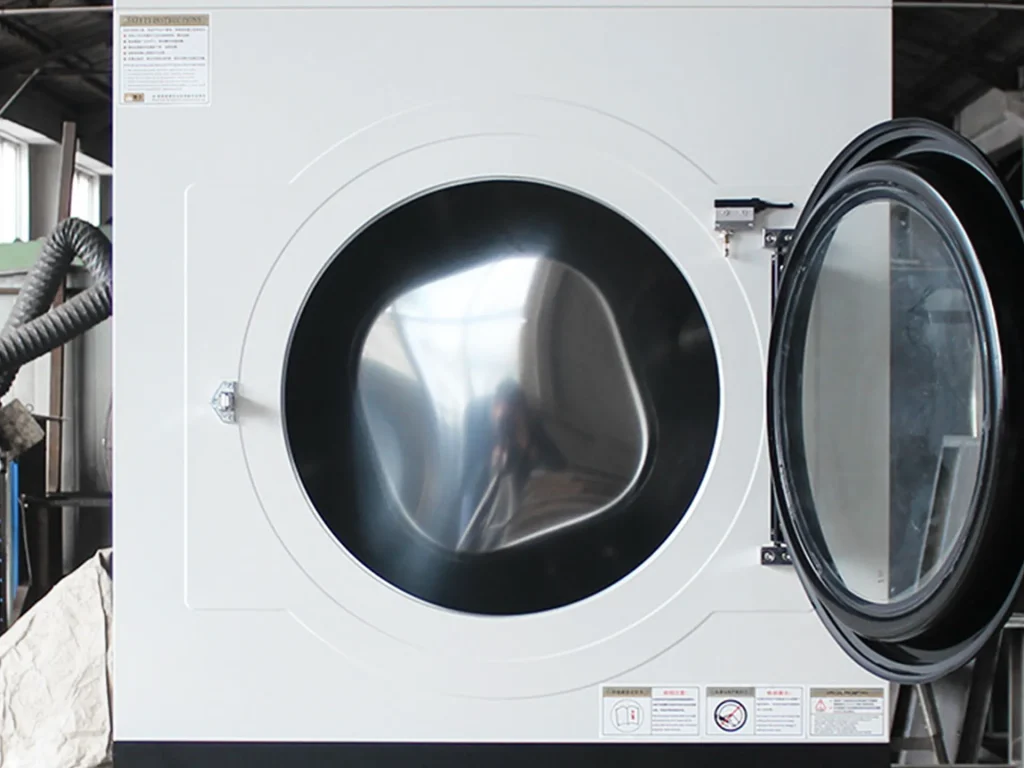
| Feature | Electric Dryer | Gas Dryer |
|---|---|---|
| Installation Complexity | Low | Moderate–High |
| Heating Speed | Moderate | Fast |
| Energy Cost Predictability | High | Variable |
| Maintenance Complexity | Low | Moderate |
| Fabric Care Consistency | High | Moderate |
| Suitable for Small Facilities | Excellent | Conditional on infrastructure |
| Environmental Impact | Low (especially with renewables) | Moderate–High |
This table highlights why electric dryers are often preferred for small-scale commercial applications despite slightly slower heating times. Predictable energy usage and simplified maintenance outweigh minor speed advantages offered by gas dryers.
Installation & Ventilation Considerations
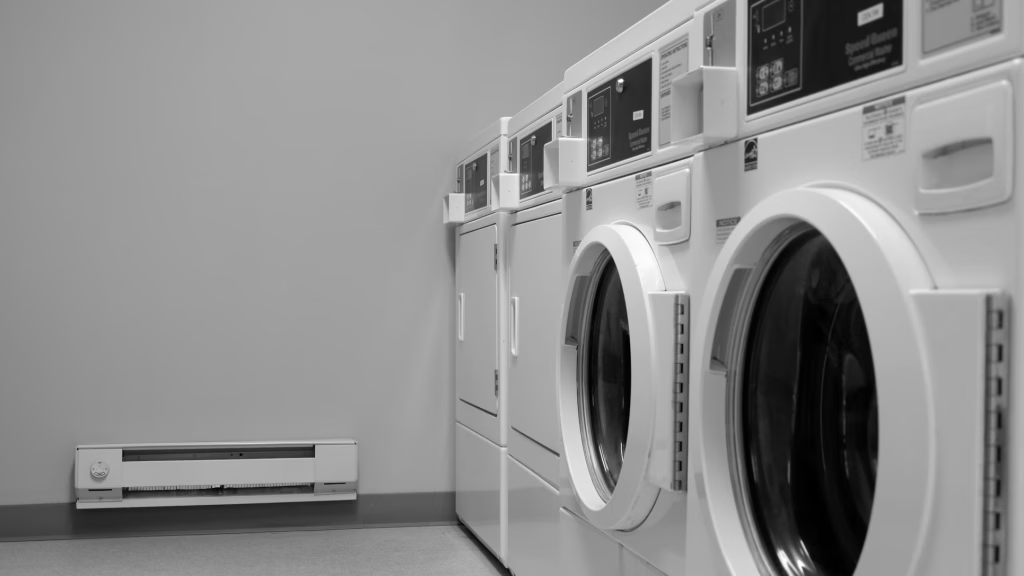
Proper installation ensures that your commercial electric clothes dryer operates at peak efficiency while maintaining safety standards. In small laundries, space constraints, ventilation, and electrical load planning are often the most significant considerations.
Electrical Requirements
Electric dryers require consistent voltage and amperage. Typical requirements include 208–240V single-phase or three-phase connections depending on unit size. Operators should verify:
- Panel capacity to support peak load demands.
- Circuit breakers rated appropriately for continuous operation.
- Dedicated circuits for each dryer to prevent overloads.
Failing to properly plan electrical supply may result in tripped breakers, inefficient heating, or equipment damage.
Ventilation and Airflow
Even electric dryers require effective airflow management. Inadequate ventilation extends cycle times and increases energy consumption. Key considerations include:
- Keeping duct runs as short and straight as possible.
- Installing ducts with adequate diameter for airflow requirements.
- Providing access for routine lint removal.
Many small-scale laundries use flexible ductwork to accommodate space constraints. However, bends and restrictive elbows should be minimized to prevent airflow loss. A minor 10–15% restriction can extend drying cycles by several minutes, directly impacting throughput.
Space Planning & Workflow Optimization
Dryer placement affects operational efficiency. Factors to consider:
- Distance between washer and dryer to minimize labor movement.
- Proximity to folding or sorting stations.
- Clearance for service access and emergency ventilation.
Optimized layouts not only improve productivity but also reduce wear on equipment by minimizing unnecessary handling of wet loads. Small facilities can gain significant operational efficiency with thoughtful placement even when dryer capacity is limited.
For broader facility layout and operational efficiency strategies, see Top 10 Commercial Dryers.
Safety Protocols
Even electric dryers must comply with electrical safety codes and fire prevention guidelines:
- Ensure proper grounding and circuit protection.
- Maintain regular lint trap cleaning schedules.
- Use fire-resistant materials in adjacent installations.
Adherence to safety protocols is critical to preventing downtime, insurance issues, and long-term liability.
Buying Guide & Advanced Features
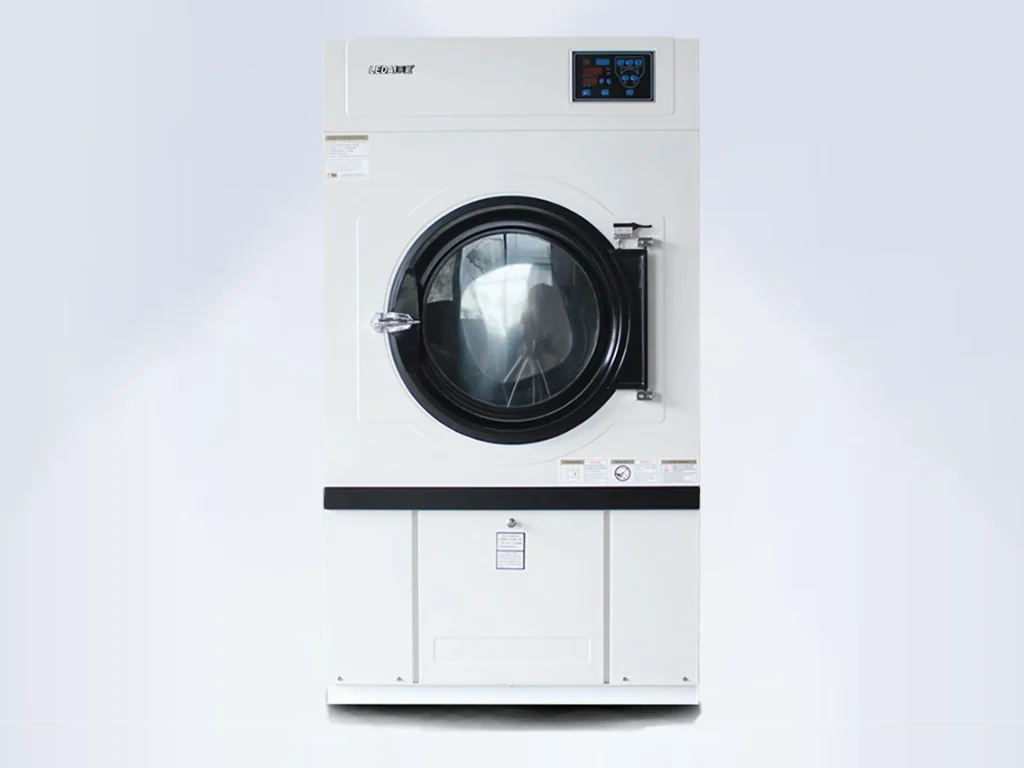
Choosing the right commercial electric clothes dryer for small-scale operations involves evaluating multiple criteria, beyond price and brand recognition. A structured buyer’s framework ensures long-term operational efficiency and profitability.
Key Buyer Considerations
Operational Volume & Load Matching
Small laundries typically handle daily loads of 200–600 lbs. Selecting a dryer whose capacity aligns with expected throughput prevents energy waste and queue bottlenecks. Avoid oversizing — while larger dryers may seem future-proof, running under-capacity cycles increases per-pound energy costs.
Energy Costs & Utility Pricing
Electric dryers provide predictable energy consumption, but local electricity rates influence operational expense. Facilities in regions with high electricity costs may benefit from models with advanced insulation, heat retention, or variable-temperature cycles. Evaluating per-cycle electricity use helps quantify long-term expenditure.
Fabric Care & Cycle Flexibility
High-end electric dryers offer programmable cycles for different textile types — delicate, cotton, synthetics, or mixed loads. This feature minimizes shrinkage and preserves fabric quality.
Maintenance Accessibility
Electric dryers with modular design and easily replaceable components reduce downtime. Small operations benefit from units where belts, heating elements, and sensors can be serviced without professional intervention.
Internal link suggestion: For lifecycle and maintenance-focused insights, see Best Commercial Clothes Dryer.
Advanced Features to Look For
Modern commercial electric dryers incorporate intelligent systems that enhance performance and efficiency:
- Moisture-Sensing Technology: Automatically stops cycles at optimal dryness, saving energy and preventing overdrying.
- Adaptive Heat Modulation: Maintains consistent temperature across drum, enhancing fabric care.
- Digital Diagnostics & Connectivity: Provides real-time alerts, remote monitoring, and predictive maintenance recommendations.
- Quiet Operation & Noise Dampening: Important for laundries near customer-facing areas.
While small-scale operations may not need full enterprise-grade features, investing in intelligent controls reduces manual oversight and improves consistency.
Comparing Electric and Gas Options
Even for small-scale facilities, evaluating electric dryers against gas alternatives clarifies operational trade-offs:
| Feature | Commercial Electric Dryer | Gas Dryer |
|---|---|---|
| Installation Complexity | Low | Moderate–High (requires gas line & venting) |
| Heating Speed | Moderate | Fast |
| Energy Cost Predictability | High | Variable (depends on gas supply) |
| Maintenance Needs | Low | Moderate |
| Environmental Impact | Low | Medium–High |
| Ideal for Small Facilities | Excellent | Conditional (needs gas infrastructure) |
This table illustrates why electric dryers remain preferred for small laundries: predictable energy usage, low maintenance, and flexible installation outweigh slightly slower heating speed.
Internal link suggestion: For deeper operational comparisons, see Commercial Dryers Ultimate Guide.
FAQ – Commercial Electric Clothes Dryer

Are commercial electric dryers more cost-effective than gas dryers for small laundries?
Yes. While gas dryers may heat faster, electric dryers offer predictable energy bills, simpler installation, and lower maintenance complexity — ideal for small-scale operations.
How long do commercial electric dryers typically last?
Most models have a lifespan of 8–12 years under regular maintenance. Proper cycle management and routine preventive care can extend this lifespan.
Can I install multiple dryers in a small facility without upgrading electrical infrastructure?
It depends on panel capacity. Always verify voltage, amperage, and dedicated circuits before purchasing multiple units.
What features help preserve delicate fabrics?
Moisture-sensing cycles, adaptive heat modulation, and drum airflow optimization prevent shrinkage, color fading, and uneven drying.
Is remote monitoring necessary for small laundries?
Not strictly required, but features like digital diagnostics and usage logging help reduce downtime and plan preventive maintenance, even for facilities with 1–3 dryers.
 English
  Spanish