
Table of Contents
Introduction – Why Commercial Dryers Define Laundry Performance
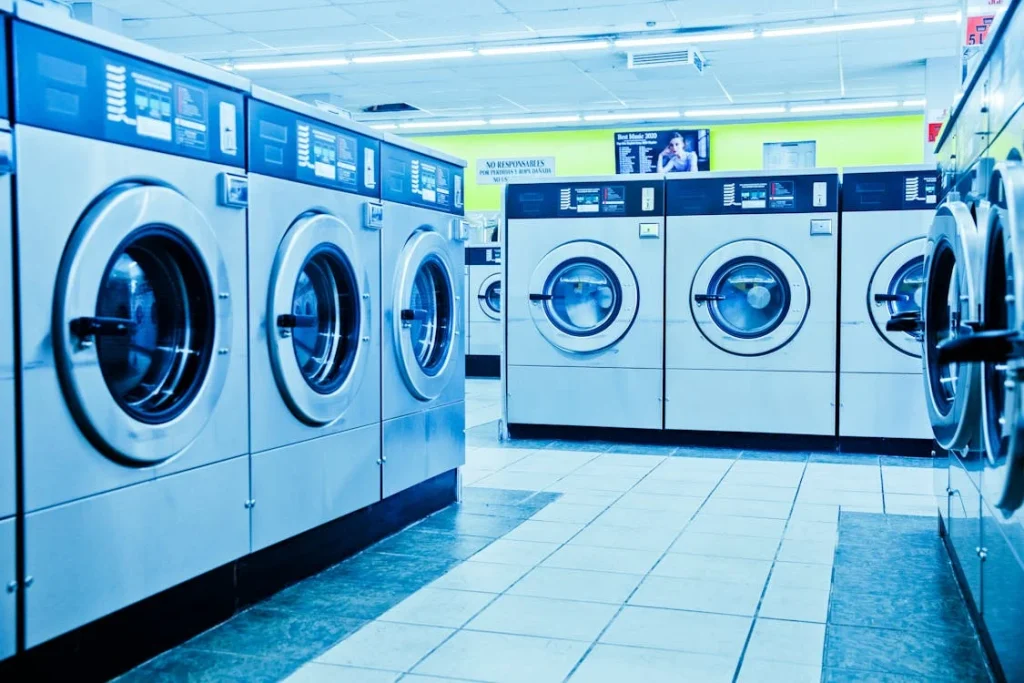
In professional laundry operations, commercial dryers are not secondary equipment — they are the operational bottleneck that ultimately determines system throughput. While washing machines remove soil and contaminants, commercial dryers dictate cycle completion time, energy cost per pound, workflow efficiency, and labor productivity.
In high-volume environments such as laundromats, hotels, hospitals, and industrial textile plants, drying often consumes more total energy than washing. The thermodynamic process of evaporating moisture requires sustained heat generation and controlled airflow. If commercial dryers are undersized, poorly ventilated, or mismatched with washer extraction speed, the entire laundry system slows down.
Unlike residential units, commercial dryers are engineered for continuous-duty performance. They operate for extended daily runtimes, frequently exceeding 8–16 hours per day in busy facilities. Their structural components, airflow systems, and heating assemblies are designed to withstand repetitive thermal cycling without significant degradation.
Understanding commercial dryers is therefore not about selecting a machine — it is about designing a drying system aligned with capacity demand, infrastructure limits, and long-term operating economics.
This guide provides a comprehensive technical overview of commercial dryers, covering classification, engineering structure, energy modeling, cost analysis, installation requirements, and lifecycle planning.
1. What Are Commercial Dryers?
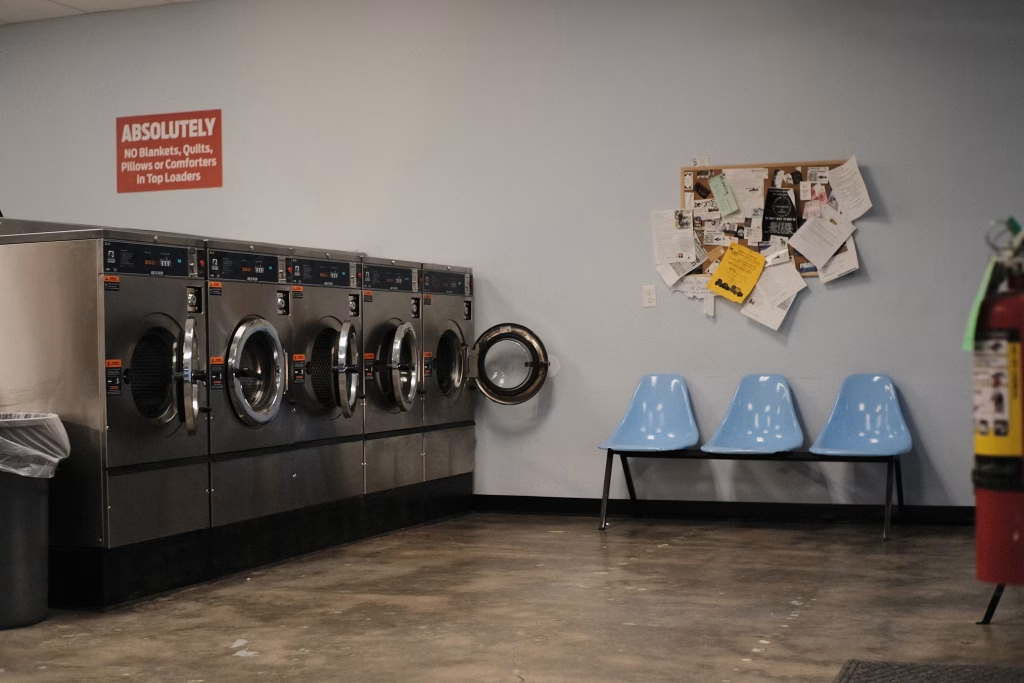
Commercial dryers are heavy-duty tumble drying machines designed specifically for professional laundry applications. The defining difference between residential and commercial dryers is not merely size — it is operational intensity.
A residential dryer may run a few cycles per week. Commercial dryers routinely process dozens of loads daily, often under time pressure and peak demand conditions. The design philosophy prioritizes durability, airflow optimization, thermal efficiency, and rapid moisture removal.
From an engineering standpoint, commercial dryers are built around three core objectives:
- Maximize moisture evaporation rate
- Maintain consistent thermal output under continuous use
- Minimize cost per pound dried
These objectives shape every component inside the machine.
1.1 Internal Architecture of Commercial Dryers
To understand performance differences, we must examine the structural system of commercial dryers.
Drum and Mechanical Assembly
The drum is the heart of all commercial dryers. Constructed typically from galvanized or stainless steel, it must endure repeated mechanical stress, high temperature exposure, and the abrasive action of heavy textiles.
Unlike residential drums, commercial dryer drums are supported by reinforced bearings and industrial-grade drive systems. The rotation speed is calibrated to ensure constant fabric turnover, allowing heated air to contact wet surfaces evenly. Uneven rotation or excessive vibration directly reduces drying uniformity and increases wear.
Drum volume determines rated capacity, but usable capacity depends on airflow distribution and fabric density. Overloading restricts internal air movement, dramatically increasing drying time.
Heating System Design
The heating system in commercial dryers generates the thermal energy necessary for moisture evaporation. Depending on the model, heat may be produced by gas combustion, electric resistance elements, steam coils, or heat pump compression systems.
Gas-powered commercial dryers use controlled burners to produce high BTU output. This enables rapid air temperature rise and shorter cycle times. Electric models rely on resistance heating elements, which are simpler to install but may incur higher operational costs depending on electricity pricing.
Steam-heated commercial dryers integrate with centralized boiler systems, common in industrial facilities. Heat pump commercial dryers recirculate warm air in a closed loop, extracting moisture without constant high-temperature exhaust, significantly reducing energy waste.
Each heating system changes the long-term cost profile and installation complexity of commercial dryers.
Airflow Engineering and Moisture Extraction
In commercial dryers, airflow matters more than raw temperature. Effective moisture removal requires continuous movement of heated air through fabric layers. Industrial blowers generate high cubic feet per minute (CFM) airflow, pushing heated air across tumbling textiles while simultaneously evacuating humid air.
If airflow is restricted — due to undersized ducts, lint accumulation, or poor ventilation layout — drying time increases and energy consumption rises sharply. In fact, inadequate exhaust design is one of the most common reasons commercial dryers underperform.
Properly engineered commercial dryers maintain a balance between heat generation and air exchange rate. The faster moisture-saturated air leaves the drum, the more efficiently new heated air can continue evaporation.
Control Systems and Automation
Modern commercial dryers incorporate advanced control systems to regulate temperature, monitor moisture levels, and optimize cycle duration.
Basic models operate on timed drying cycles. However, more advanced commercial dryers use moisture sensors that detect residual humidity in textiles. These sensors prevent over-drying, reducing energy waste and textile damage.
Programmable controls also allow facility managers to tailor drying profiles for specific fabric types, improving both efficiency and fabric longevity.
1.2 The Thermodynamic Process Behind Commercial Dryers
Drying is fundamentally a heat transfer process governed by thermodynamics.
When wet textiles enter commercial dryers, residual water content must transition from liquid to vapor. This phase change requires latent heat energy. The dryer introduces heated air, raising fabric temperature and initiating evaporation.
As water evaporates, the surrounding air becomes saturated with moisture. The exhaust system then removes this humid air and replaces it with dry heated air. The process repeats continuously until moisture content falls below the programmed threshold.
Four variables determine drying performance:
- Inlet air temperature
- Airflow velocity
- Drum rotation dynamics
- Initial extraction efficiency from the washer
If washer extraction speed is low, commercial dryers must evaporate significantly more water, increasing cycle time and energy consumption. For this reason, dryer performance cannot be evaluated in isolation — it must be considered within the full laundry system.
2. Complete Classification of Commercial Dryers
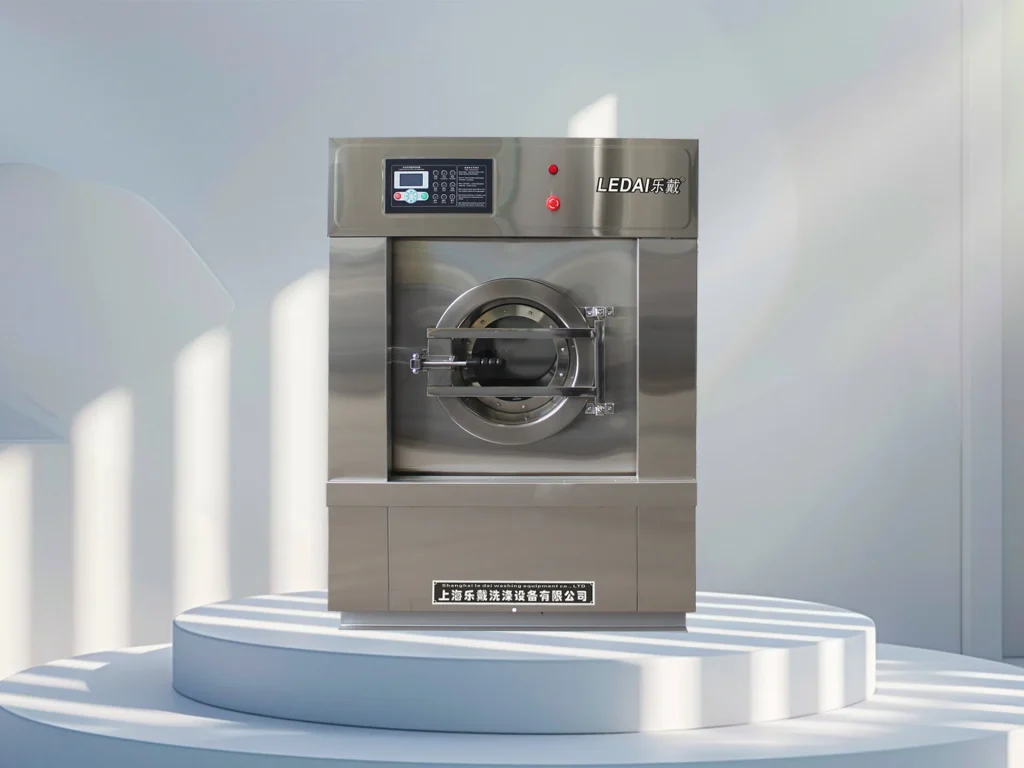
Commercial dryers are classified based on heating method, ventilation configuration, structural design, and intended application. Each classification reflects a different operational strategy.
Understanding these categories allows operators to match commercial dryers with specific environmental constraints and throughput requirements.
2.1 Classification by Heat Source
Gas Commercial Dryers
Gas-powered commercial dryers are widely used in laundromats and hospitality environments. Natural gas or LPG combustion generates high heat output, enabling rapid moisture evaporation. Because gas often costs less per energy unit than electricity, operating expenses may be lower in regions with favorable gas pricing.
However, gas models require proper venting systems and certified gas line installation. Infrastructure planning becomes critical, especially in retrofitted buildings.
Electric Commercial Dryers
Electric commercial dryers convert electrical energy directly into heat via resistance elements. They are easier to install where gas supply is unavailable. However, large-capacity electric commercial dryers demand substantial electrical load, which may require panel upgrades.
Although simpler in structure, electric models can incur higher long-term operating costs in areas with expensive electricity rates.
Steam Commercial Dryers
Steam-heated commercial dryers are typically deployed in industrial plants or hospitals that already operate centralized boilers. Instead of generating heat internally, these dryers use steam coils to transfer heat into the airflow.
This configuration reduces internal burner complexity but depends heavily on centralized steam system efficiency.
Heat Pump Commercial Dryers
Heat pump commercial dryers operate on a closed-loop principle. Instead of continuously exhausting heated air, they recapture heat from moist exhaust air, condense the water, and recycle warm air back into the drum.
This dramatically improves energy efficiency and reduces environmental heat loss. However, drying cycles may be slightly longer compared to high-BTU gas commercial dryers.
2.2 Structural Configurations
Structural design influences space utilization and operational flexibility.
Single-drum commercial dryers are the traditional configuration, offering straightforward installation and maintenance access.
Stack commercial dryers place two drying units vertically within the footprint of one. This configuration is common in urban laundromats and space-limited facilities. By doubling capacity per square meter, stack systems increase revenue density in coin-operated environments.
Large industrial facilities may deploy continuous batch drying systems, where textiles move through automated tunnel dryers. These systems are engineered for uninterrupted, high-volume processing and are fundamentally different from standard tumble commercial dryers.
3. Gas vs Electric vs Steam vs Heat Pump Commercial Dryers
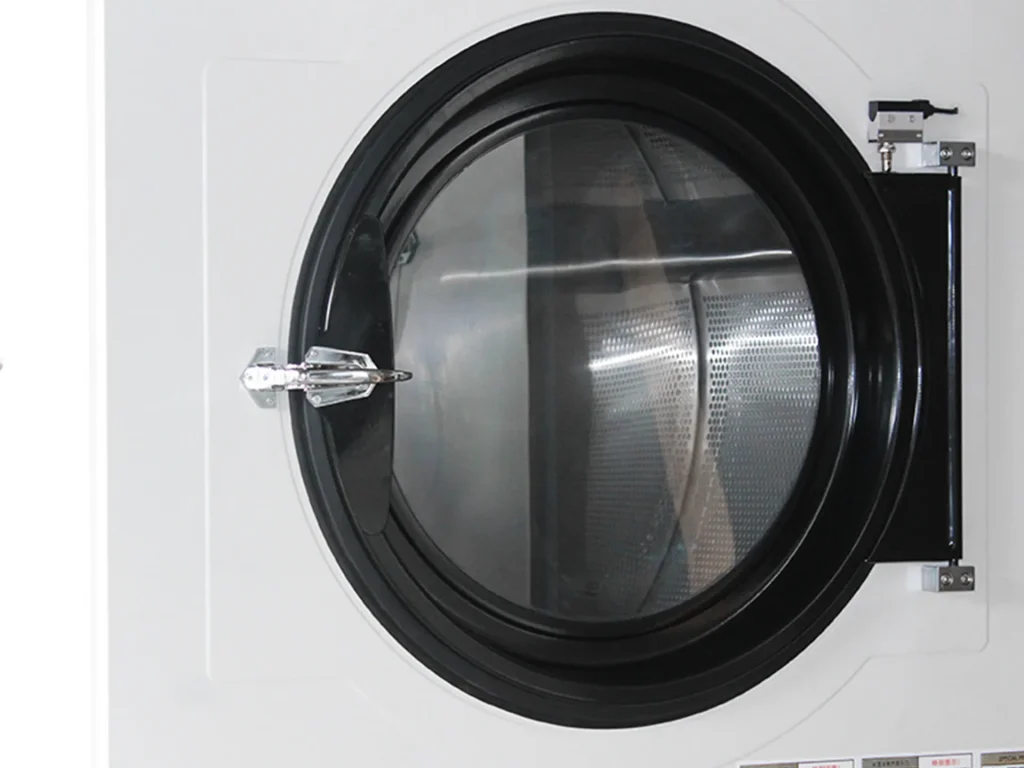
Selecting the right heating system is one of the most important decisions when investing in commercial dryers. The heat source determines installation complexity, energy consumption, drying speed, and long-term return on investment.
Rather than asking which type is “best,” operators should ask:
Which commercial dryers align with my infrastructure, utility pricing, and throughput goals?
3.1 Installation Requirements Comparison
Each heating system imposes different infrastructure demands.
Gas Commercial Dryers
Gas commercial dryers require:
- Certified gas line installation
- Proper ventilation and exhaust ducting
- Combustion air supply compliance
Gas models also require careful duct sizing to prevent back pressure and overheating. In high-capacity installations, gas pipe diameter becomes a critical engineering variable.
Electric Commercial Dryers
Electric commercial dryers eliminate gas line requirements but often demand:
- Three-phase electrical supply
- High amperage circuits
- Upgraded electrical panels
Large-capacity electric commercial dryers can exceed 20–40 kW per unit. In multi-machine laundromats, total electrical load must be calculated precisely to avoid system overload.
Steam Commercial Dryers
Steam-powered commercial dryers require:
- Central boiler system
- Steam supply piping
- Condensate return system
These dryers are rarely used in small facilities because boiler infrastructure significantly increases capital cost.
Heat Pump Commercial Dryers
Heat pump commercial dryers typically require:
- Standard electrical connection
- Condensate drainage
- Minimal external venting
Because they operate in a closed-loop system, ventilation demands are reduced compared to gas commercial dryers.
Installation Complexity Overview
| Heating Type | Gas Line Required | High Electrical Load | Boiler Needed | Ventilation Required |
|---|---|---|---|---|
| Gas | Yes | Moderate | No | Yes |
| Electric | No | High | No | Yes |
| Steam | No | Low | Yes | Yes |
| Heat Pump | No | Moderate | No | Minimal |
3.2 Operating Cost Comparison
Operating cost is where commercial dryers differ dramatically.
Drying requires latent heat energy to evaporate water. The cost per cycle depends on:
- Local gas price
- Electricity rate
- Initial moisture content
- Dryer efficiency
- Cycle duration
Energy Cost Model Example
Assume a 50 lb load with 50% residual moisture after washing.
Approximately 25 lbs of water must be evaporated.
Evaporating 1 lb of water requires roughly 970 BTU of latent heat.
Total theoretical heat required:
25 × 970 = 24,250 BTU (minimum thermodynamic requirement)
Real-world systems operate at 60–75% efficiency, meaning actual energy input is significantly higher.
Typical Cost Comparison (Illustrative Only)
| Dryer Type | Avg Cycle Energy Cost | Relative Efficiency | Cycle Speed |
|---|---|---|---|
| Gas | Low–Moderate | High | Fast |
| Electric | Moderate–High | Moderate | Moderate |
| Steam | Depends on boiler | High | Fast |
| Heat Pump | Low | Very High | Moderate |
Gas commercial dryers often deliver the fastest drying cycles. Heat pump commercial dryers consume less energy but may extend cycle duration slightly.
3.3 10-Year Total Cost of Ownership (TCO) Model
When evaluating commercial dryers, purchase price is only one component. A more accurate evaluation uses Total Cost of Ownership (TCO).
TCO Components
- Initial equipment cost
- Installation cost
- Energy consumption
- Maintenance and service
- Downtime impact
Example 10-Year Scenario
Assume:
- 6 commercial dryers
- 8 cycles per day per unit
- 300 operating days per year
- Average energy cost per cycle = $1.20 (gas) or $1.80 (electric)
Annual cycles per unit:
8 × 300 = 2,400 cycles
10-year cycles per unit:
24,000 cycles
Difference per cycle = $0.60
Over 10 years:
24,000 × $0.60 = $14,400 per machine
Across 6 machines:
$86,400 energy difference
This simplified example shows how small per-cycle differences dramatically impact long-term ROI.
3.4 Environmental & Efficiency Considerations
Energy efficiency is increasingly important in commercial laundry planning.
Carbon Footprint
Gas commercial dryers produce direct combustion emissions.
Electric commercial dryers shift emissions upstream to power generation facilities.
Heat pump commercial dryers reduce overall energy input, lowering environmental impact.
Heat Loss Through Exhaust
Traditional commercial dryers continuously expel heated air. This creates:
- Energy waste
- Increased HVAC load in warm climates
Heat recovery systems can reclaim exhaust heat and redirect it into intake airflow, improving efficiency.
3.5 When Each Type of Commercial Dryer Makes Sense
The optimal choice depends on operational context.
Gas Commercial Dryers Are Ideal When:
- Gas pricing is competitive
- Fast turnaround is critical
- High-volume throughput is required
Electric Commercial Dryers Are Practical When:
- Gas supply is unavailable
- Installation simplicity is preferred
- Facility size is moderate
Steam Commercial Dryers Are Logical When:
- Boiler systems already exist
- Industrial-scale laundry operations are present
Heat Pump Commercial Dryers Are Advantageous When:
- Energy cost is high
- Venting is restricted
- Sustainability targets are prioritized
4. Capacity Planning & Throughput Engineering for Commercial Dryers
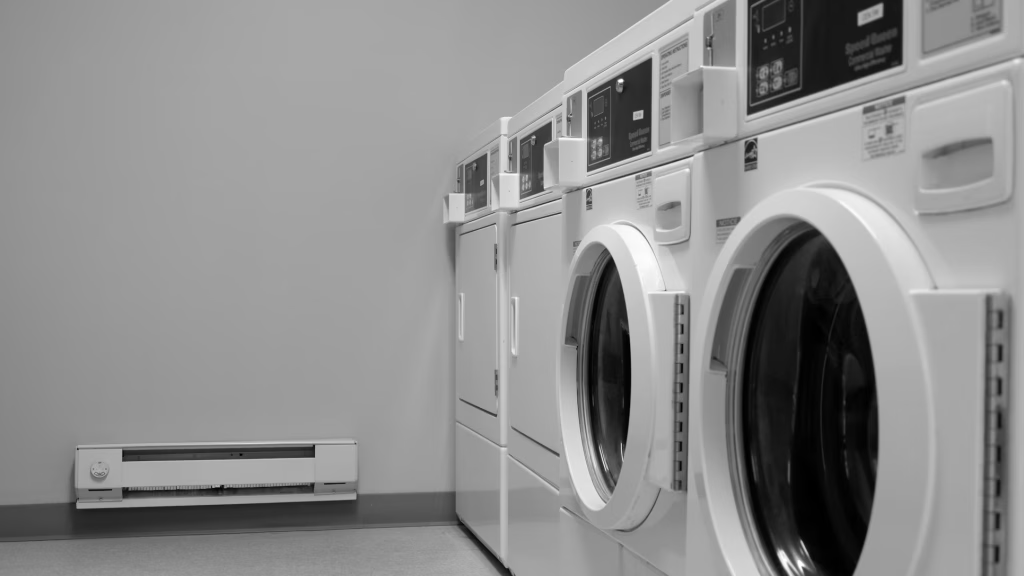
Selecting commercial dryers without capacity modeling is one of the most common strategic mistakes in laundry operations. Many facilities purchase dryers based on washer count or floor space rather than throughput demand. The result is predictable: bottlenecks during peak hours and underutilized equipment during slow periods.
Effective capacity planning requires understanding load volume, extraction rate, drying time, and operational schedule.
4.1 Understanding Dryer Capacity Ratings
Commercial dryers are rated by maximum load weight, typically in pounds or kilograms. However, rated capacity does not equal optimal operating capacity.
Rated Capacity vs Practical Capacity
Rated capacity assumes ideal airflow conditions and balanced fabric density. In practice:
- Overloading reduces airflow penetration
- Dense textiles increase drying time
- Mixed fabric loads create uneven moisture distribution
For most commercial dryers, optimal load is approximately 80–90% of rated capacity. Exceeding this threshold reduces efficiency and increases cycle time, which ultimately lowers hourly throughput.
4.2 Washer-to-Dryer Ratio Modeling
One of the most important engineering principles in commercial laundry design is washer-to-dryer ratio.
Basic Industry Guideline
A common planning ratio is:
1 dryer capacity unit for every 1–1.25 washer capacity units
However, this ratio changes depending on washer extraction speed.
High-speed washers (350–400 G-force) remove significantly more water before drying. This reduces the workload on commercial dryers and shortens drying cycles.
Example Calculation
Assume:
- 4 washers × 60 lb capacity
- Each washer completes 6 cycles per day
- Extraction leaves 50% moisture
Total daily wet load entering dryers:
4 × 60 × 6 = 1,440 lb of textiles
If drying time per 60 lb load = 40 minutes,
Each commercial dryer can process:
(60 minutes / 40 minutes) × 60 lb = 90 lb per hour
If operating 8 hours per day:
90 × 8 = 720 lb per dryer per day
To handle 1,440 lb daily volume:
1,440 / 720 = 2 dryers minimum
However, this assumes perfect scheduling. In real operations, 3 dryers may be required to handle peak compression.
4.3 Peak Hour Compression
Laundry demand is rarely evenly distributed. Peak hours create temporary volume spikes that strain commercial dryers.
Laundromat Example
If 60% of daily washing occurs within a 4-hour window:
Daily volume = 1,440 lb
Peak window volume = 864 lb
To process 864 lb in 4 hours:
Required hourly capacity = 216 lb/hour
If one dryer handles 90 lb/hour:
216 / 90 ≈ 2.4
Minimum 3 dryers required to prevent backlog.
Peak compression often dictates system size more than total daily volume.
4.4 Hotel Linen Volume Modeling
Hotels present a different drying pattern. Linen turnover correlates with occupancy rate.
Example Scenario
- 120-room hotel
- 80% occupancy
- Average 15 lb linen per occupied room
Daily linen volume:
120 × 0.8 × 15 = 1,440 lb
Unlike laundromats, hotel operations are often completed within fixed housekeeping shifts, typically 6–8 hours.
If drying must finish within 6 hours:
Required hourly throughput = 240 lb/hour
This calculation may justify high-capacity commercial dryers (75–120 lb units) instead of multiple smaller machines.
4.5 Hospital Continuous Load Modeling
Hospitals operate differently from hospitality facilities. Laundry is generated continuously, not in concentrated peaks.
Hospital textiles often include:
- Bedding
- Surgical linens
- Gowns
- Towels
Because hospitals require strict hygiene standards, drying temperatures must remain stable and predictable.
In this environment, commercial dryers must prioritize:
- Consistent cycle reliability
- Redundancy planning
- 24-hour operational durability
Hospitals often oversize dryer capacity to avoid downtime risk.
4.6 Industrial Textile Plant Modeling
Industrial laundry plants processing uniforms or rental textiles operate at significantly higher volumes.
Key differences:
- Multi-shift operation
- Conveyor-fed washer systems
- Continuous batch drying
Throughput is measured in thousands of pounds per day rather than hundreds.
For example:
If a plant processes 10,000 lb per day over two 10-hour shifts:
Hourly requirement = 500 lb/hour
This may require:
- Multiple 120–150 lb commercial dryers
- Or tunnel drying systems
At this scale, airflow engineering and exhaust system design become mission-critical.
4.7 Dryer Bottleneck Analysis
Drying is typically slower than washing. If washer cycle time is 30 minutes but dryer cycle time is 45 minutes, a mismatch occurs.
Bottleneck Formula
If:
Dryer Cycle Time > Washer Cycle Time
Then:
Dryer count must exceed washer count proportionally.
Ignoring this leads to:
- Wet linen accumulation
- Labor inefficiency
- Reduced revenue per hour
Effective system design aligns:
- Washer extraction speed
- Dryer heating capacity
- Airflow efficiency
- Staffing schedule
4.8 Capacity Planning Summary Table
| Facility Type | Volume Pattern | Dryer Priority | Common Risk |
|---|---|---|---|
| Laundromat | Peak-heavy | Turnover speed | Customer wait time |
| Hotel | Shift-based | Batch completion | Linen shortage |
| Hospital | Continuous | Reliability & redundancy | Downtime impact |
| Industrial | High volume | Throughput engineering | Airflow restriction |
Strategic Insight
Many operators underestimate the role of extraction speed. Improving washer G-force may reduce required commercial dryer capacity by 10–20%, significantly lowering energy consumption and capital expense.
For this reason, dryer planning should never be isolated from washer selection.
5. Commercial Dryer Cost Structure & ROI Analysis
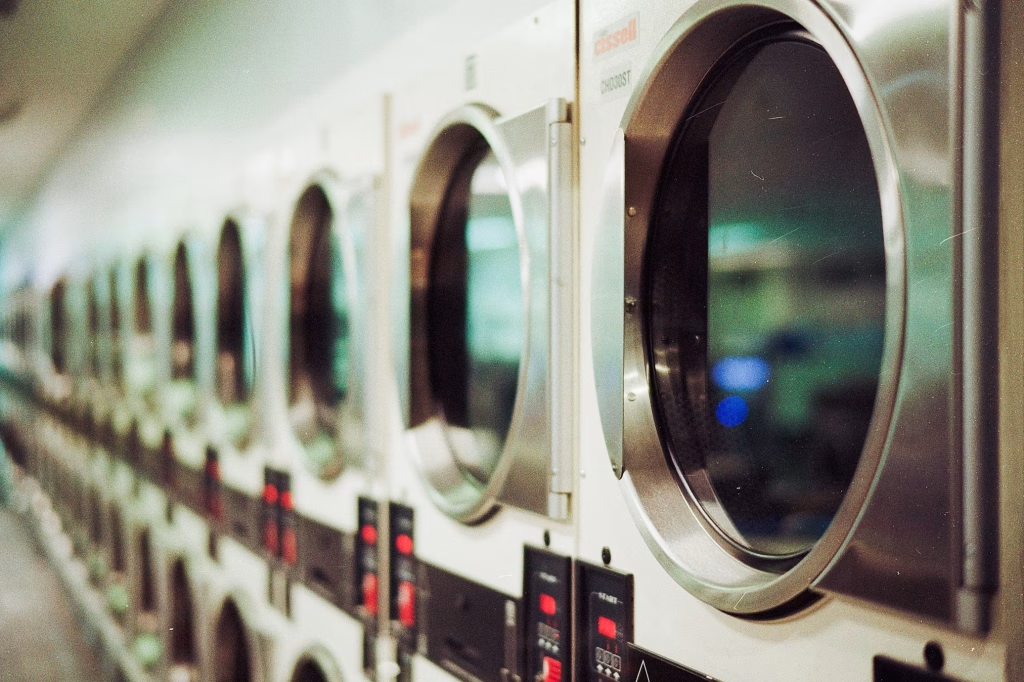
Purchasing a commercial dryer is not just a capital expense — it is a long-term infrastructure investment.
For high-volume operations, understanding total cost of ownership (TCO) is more important than upfront price.
5.1 Initial Purchase Cost Breakdown
Commercial dryer pricing varies depending on:
- Capacity (lb/kg rating)
- Heating type (Gas vs Electric vs Steam)
- Control system sophistication
- Extraction technology
- Brand engineering level
Typical Price Range
| Dryer Type | Capacity | Estimated Price |
|---|---|---|
| Small Commercial | 30–50 lb | $2,000 – $4,000 |
| Medium Commercial | 60–80 lb | $4,000 – $8,000 |
| High Capacity | 100+ lb | $8,000 – $20,000 |
| Industrial System | Tunnel / Continuous | $30,000+ |
Price differences reflect:
- Heat exchanger design
- Motor power
- Drum engineering
- Insulation quality
- Smart control integration
5.2 Installation Cost Components
Installation expenses often surprise first-time buyers.
Key cost elements include:
Electrical Setup
- Dedicated circuit
- High-amperage breaker
- Voltage calibration
Gas Line Installation (If Gas Dryer)
- Certified gas piping
- Pressure testing
- Safety valve compliance
Ventilation System
Proper airflow is critical.
Required components:
- Exhaust duct
- Roof vent
- Fire-rated duct material
Poor ventilation reduces efficiency and increases fire risk.
Installation Cost Example
| Component | Estimated Cost |
|---|---|
| Electrical Upgrade | $500 – $2,000 |
| Gas Connection | $800 – $3,000 |
| Ventilation System | $600 – $2,500 |
| Labor | $500 – $1,500 |
Total installation budget often equals 20–40% of equipment cost.
Ignoring this leads to budget miscalculation.
5.3 Operational Cost Modeling
Operating cost determines long-term profitability.
Main cost drivers:
- Electricity or Gas Consumption
- Maintenance Parts
- Labor
- Exhaust Cleaning
Energy Consumption Formula
Electric Dryer Example:
If power consumption = 15 kWh per cycle
Electricity cost = $0.15 per kWh
Cost per cycle:
15 × 0.15 = $2.25 per load
If 100 loads per day:
2.25 × 100 = $225 daily energy cost
Annual cost:
$225 × 320 operating days = $72,000
Energy efficiency improvements can significantly reduce this number.
5.4 Gas vs Electric Dryer Cost Comparison
| Factor | Gas Dryer | Electric Dryer |
|---|---|---|
| Energy Cost | Lower | Higher |
| Installation | More complex | Simpler |
| Heat Speed | Faster | Slower |
| Maintenance | Higher complexity | Lower complexity |
| Long-Term ROI | Better for high volume | Better for small scale |
For high-volume laundromats, gas dryers typically provide superior ROI.
6. Commercial Dryer Technology & Performance Optimization
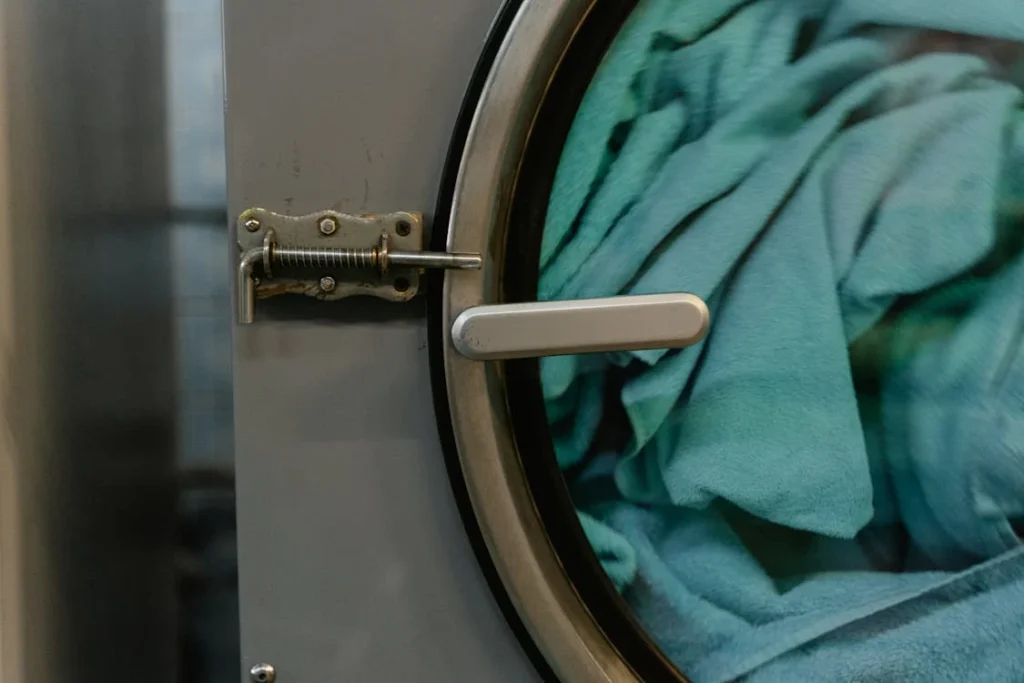
Modern commercial dryers are no longer simple heat machines.
They integrate:
- Smart airflow control
- Moisture detection sensors
- IoT monitoring
- Adaptive heating algorithms
6.1 Moisture Sensor Technology
Advanced dryers use humidity sensors to:
- Detect when fabric is dry
- Automatically terminate cycles
- Prevent over-drying
Benefits:
- Energy savings
- Fabric protection
- Reduced cycle waste
6.2 Airflow Engineering
Airflow efficiency directly impacts drying speed.
Key design features:
- Axial fan systems
- Optimized exhaust ducts
- Reduced internal resistance
- Larger lint filters
Poor airflow increases cycle time and electricity cost.
6.3 Smart Monitoring & Remote Management
Modern commercial dryers can integrate with:
- Digital payment platforms
- Remote diagnostics
- Performance monitoring dashboards
Operators can track:
- Cycle frequency
- Energy usage
- Error alerts
- Maintenance reminders
This reduces downtime and improves operational transparency.
7. Maintenance Strategy for Long-Term Reliability
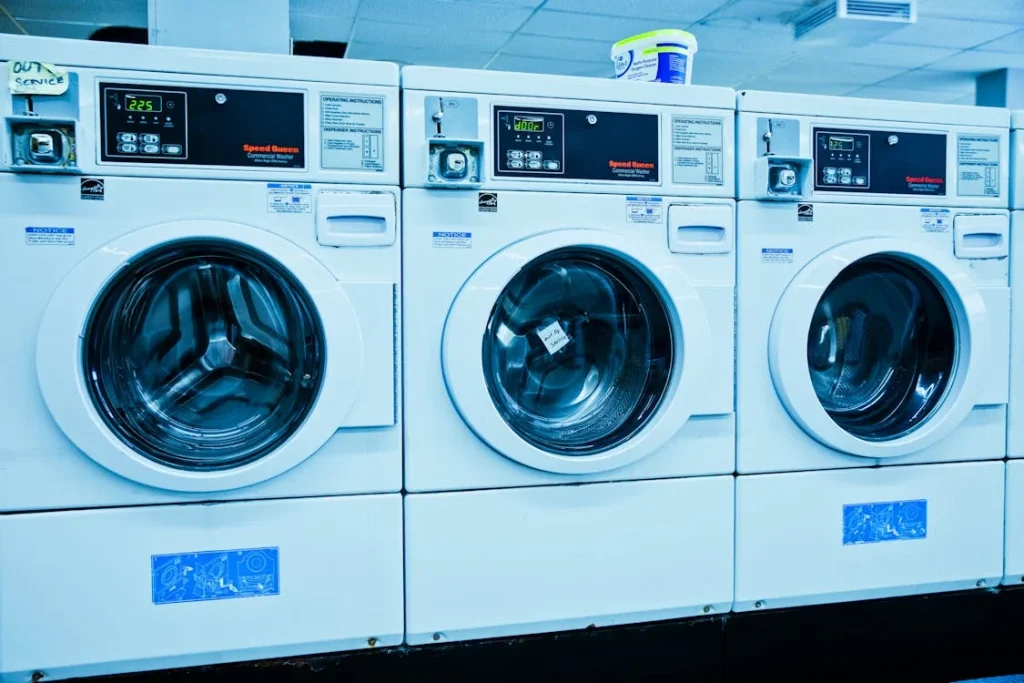
Commercial dryers operate under thermal stress daily.
Preventative maintenance reduces catastrophic failure risk.
7.1 Daily Maintenance Tasks
- Clean lint filter after every shift
- Inspect exhaust for blockage
- Check drum alignment
7.2 Monthly Maintenance
- Inspect motor belt tension
- Check heating element performance
- Test thermostat accuracy
7.3 Annual Professional Inspection
Technicians should verify:
- Gas valve safety calibration
- Electrical system stability
- Exhaust fire hazard risk
Ignoring maintenance reduces equipment lifespan significantly.
8. Future Trends in Commercial Drying Technology
The industry is evolving toward:
- Heat pump dryers
- Ultra-low emission systems
- AI-based load optimization
- Energy recovery systems
8.1 Heat Pump Commercial Dryers
Advantages:
- 40–60% energy reduction
- Lower exhaust temperature
- Improved sustainability compliance
Disadvantages:
- Higher upfront cost
- Slower cycle speed
They are increasingly popular in Europe and high-efficiency markets.
8.2 Automation Integration
Future laundromats will use:
- Smart load detection
- Automated dryer allocation
- Integrated washer-dryer scheduling
This increases throughput efficiency and reduces human error.
9. How to Choose the Right Commercial Dryer for Your Business

Selecting a commercial dryer is not about choosing the most expensive model or the biggest capacity.
It is about matching machine capability with operational demand.
A wrong choice directly impacts:
- Throughput
- Energy consumption
- Maintenance burden
- Customer experience
9.1 Step One — Define Your Operational Volume
Before looking at specifications, you must quantify:
- Average daily load volume
- Peak hour load spikes
- Average load weight
- Operating hours
Many laundromats underestimate peak pressure and only calculate based on average numbers.
However, revenue loss often happens during peak congestion.
A better approach is calculating:
Peak Hour Capacity Requirement = Total Loads During Peak ÷ Peak Operating Window
This determines how many dryers you actually need.
9.2 Step Two — Match Dryer Capacity with Washer Output
Dryer capacity should usually exceed washer capacity slightly.
Why?
Washed textiles often retain moisture and lose usable volume after extraction.
If your washer handles 80 lb loads:
An ideal dryer setup would be:
- 100 lb capacity dryer
or - Two 50 lb dryers operating in parallel
This prevents bottlenecks in the drying stage.
When dryers are slower than washers, queues form quickly.
Capacity Alignment Example
| Washer Capacity | Recommended Dryer Capacity |
|---|---|
| 40 lb | 50 lb |
| 60 lb | 80 lb |
| 80 lb | 100 lb |
| 100+ lb | Industrial high-capacity unit |
Balanced workflow increases turnover speed.
9.3 Step Three — Evaluate Energy Infrastructure
Different buildings support different power systems.
You must confirm:
- Gas supply availability
- Electrical amperage capacity
- Ventilation path feasibility
If gas infrastructure is absent, installing it may increase capital expense dramatically.
In some locations, electric dryers are easier to deploy.
Infrastructure constraints often determine technology selection.
9.4 Step Four — Consider Space Layout & Workflow
Dryers must integrate into the facility layout.
Key considerations:
- Distance from washer discharge
- Accessibility for customer loading
- Airflow routing
- Safety clearance around heat sources
Poor layout increases operator labor and slows throughput.
A good layout minimizes movement distance between washer and dryer.
10. Commercial Dryer Performance Benchmarking
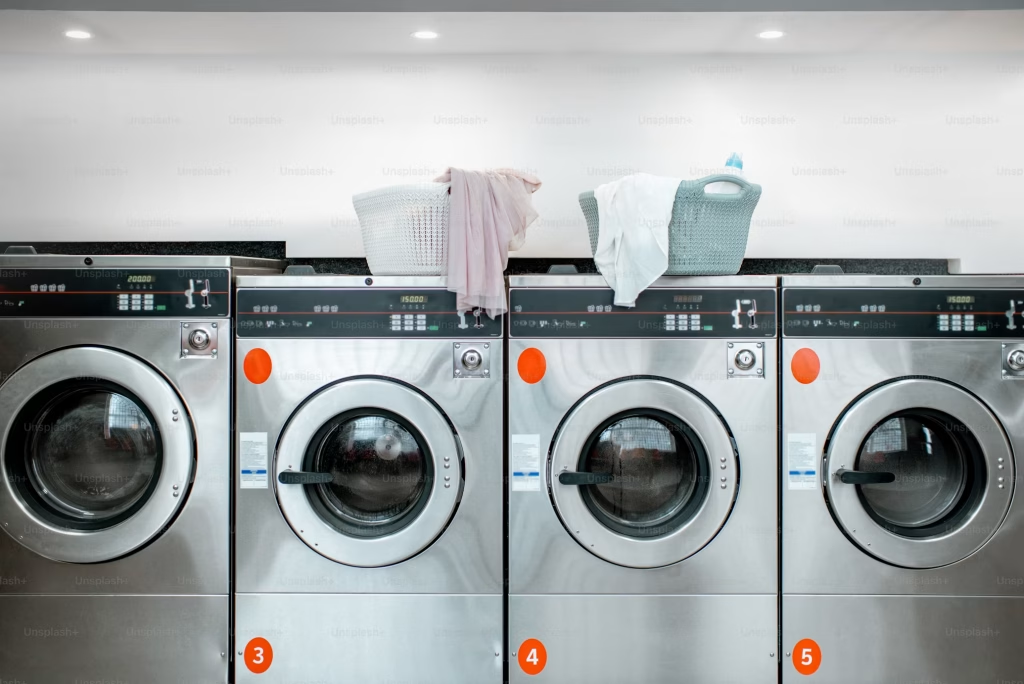
When comparing machines, focus on measurable metrics instead of brand reputation.
Important performance indicators include:
- Heat Recovery Efficiency
- Extraction Speed
- Cycle Time
- Moisture Sensor Accuracy
- Heat Stability
These indicators directly influence cost per load.
Performance Comparison Example
| Metric | High Efficiency Dryer | Standard Dryer |
|---|---|---|
| Energy Consumption | Lower | Higher |
| Cycle Time | Optimized | Fixed |
| Sensor Technology | Advanced | Basic |
| Maintenance Frequency | Lower | Higher |
Instead of asking “Which brand is best?”
Ask:
Which machine gives the lowest cost per dried load over 5 years?
That is a smarter financial evaluation.
11. Risk Management & Equipment Protection
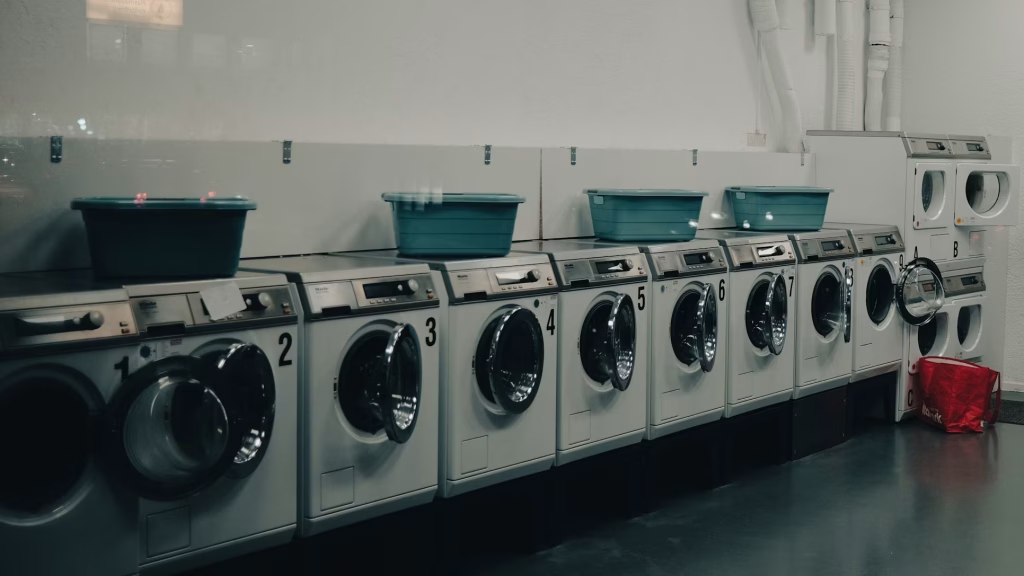
Commercial dryers operate under continuous heat exposure.
Major failure risks include:
- Overheating sensors malfunction
- Vent blockage
- Motor burnout
- Ignition system failure (Gas models)
Preventive monitoring reduces downtime.
11.1 Protection Strategies
Regular lint removal
Scheduled exhaust inspection
Temperature monitoring calibration
Blocked airflow is the most common cause of overheating.
Maintaining clean airflow dramatically extends lifespan.
11.2 Warranty & Service Considerations
Before purchasing:
- Confirm local service support
- Check spare part availability
- Review warranty coverage
Long-term service availability matters more than short-term discounts.
12. Strategic Decision Framework
Instead of choosing randomly, use this decision path:
- Define volume requirement
- Determine power infrastructure
- Select capacity alignment
- Compare energy efficiency
- Evaluate lifecycle cost
- Review service reliability
This structured approach prevents impulsive purchasing.
Quick Strategic Summary
Commercial dryers are infrastructure assets.
They should be evaluated based on:
- Throughput capability
- Energy consumption
- Operational compatibility
- Long-term reliability
Not purely based on price or appearance.
13. FAQ
What Is the Ideal Commercial Dryer Capacity for a Laundromat?
The ideal dryer capacity depends on:
· Daily laundry volume
· Peak-hour traffic
· Washer capacity pairing
· Business scale
Choosing the wrong capacity can create workflow bottlenecks or unnecessary energy waste.
Gas Dryer vs Electric Dryer – Which Is Better?
The best option depends on infrastructure and utility costs.
Gas Dryer Advantages
· Faster heating performance
· Lower long-term operating cost in gas-supported regions
· Better for high-volume operations
Electric Dryer Advantages
· Easier installation
· No gas pipeline required
· Suitable for small or medium facilities
Key decision factor:
· Local energy pricing and building infrastructure determine the optimal choice.
How Much Energy Does a Commercial Dryer Consume?
Energy consumption varies based on:
· Heating system efficiency
· Load size
· Ventilation performance
· Machine age
Modern commercial dryers often include:
· Moisture sensors
· Automatic cycle adjustment
· Energy optimization systems
· Energy-efficient models significantly reduce operational costs over time.
How Often Should Commercial Dryers Be Serviced?
Regular maintenance ensures performance stability and safety.
Recommended maintenance schedule:
· Monthly: Clean lint filters
· Quarterly: Inspect exhaust system
· Semi-annually: Check heating elements and electrical components
· Annually: Full professional inspection
Poor maintenance can lead to:
· Overheating
· Increased energy consumption
· Fire hazards
· Reduced lifespan
How Long Do Commercial Dryers Typically Last?
The lifespan depends on usage intensity and maintenance quality.
Typical lifespan:
· Standard commercial models: 7–10 years
· Heavy-duty industrial models: 10–15 years
Machine longevity depends on:
· Daily cycle frequency
· Component quality
· Installation conditions
· Maintenance discipline
 English
  Spanish