
Table of Contents
Introduction
Industrial laundry operations form the backbone of hygiene, hospitality, and commercial textile services worldwide. Unlike residential laundry, industrial facilities demand high throughput, consistent quality, and operational efficiency. The Industrial Laundry Guide serves as a comprehensive reference for managers, engineers, and entrepreneurs who seek to optimize commercial laundry processes, reduce costs, and enhance workflow efficiency.
Industrial laundries have evolved dramatically over the past century. Early operations relied heavily on manual labor with minimal mechanization. Today, advanced industrial washers, dryers, stackable units, and automation systems enable facilities to process hundreds or even thousands of pounds of laundry daily while maintaining energy efficiency and product quality.
Types of Industrial Laundry Facilities
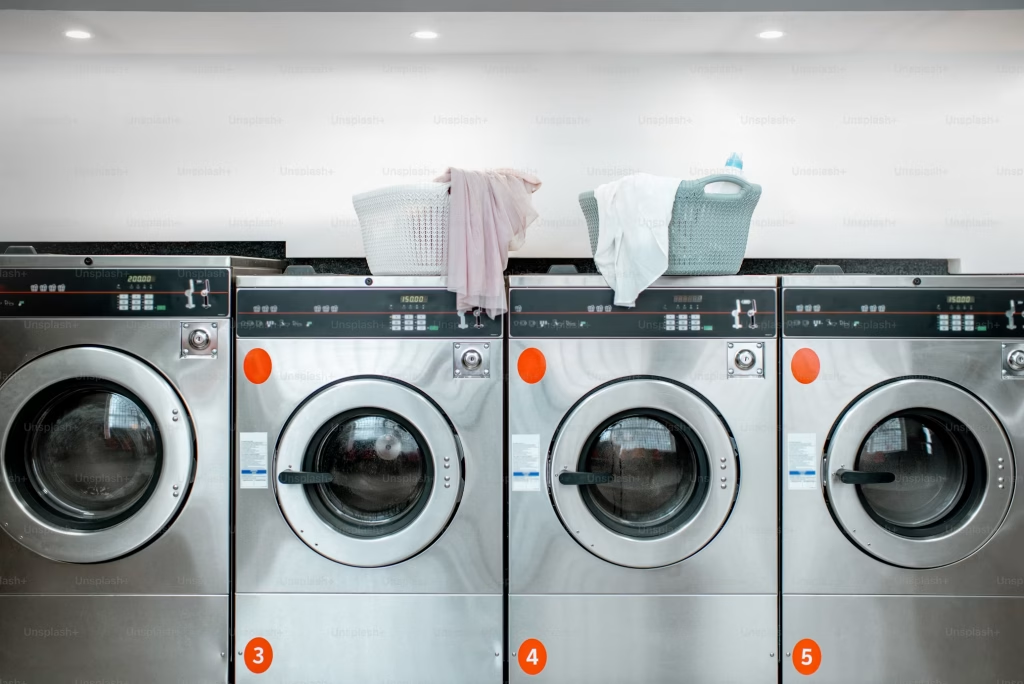
1. Laundromats
Laundromats cater primarily to community needs, offering accessible laundry services for households without in-home machines. For laundromats, reliability and uptime are crucial, as frequent usage can quickly strain underpowered or poorly maintained machines. Space optimization often drives decisions on using stackable washer-dryer combos or compact high-efficiency washers.
2. Hotels and Resorts
Hospitality facilities require machines capable of handling hundreds of pounds of linens and towels daily. Operational efficiency in these settings directly impacts guest satisfaction. Machines are often paired with programmable cycles, moisture sensors, and high-speed spin options to balance rapid turnaround with fabric care.
3. Hospitals and Senior Facilities
Healthcare and senior living facilities operate under strict hygiene protocols. Industrial laundry in these settings focuses on sanitization, throughput, and energy efficiency. Machines often feature high-temperature sanitization cycles, chemical dosing automation, and advanced water filtration to ensure compliance with regulatory standards.
4. Apartment Complexes and Mixed-Use Buildings
Space constraints in residential complexes often require compact, stackable units to serve multiple residents efficiently. While capacity per machine is smaller, layout planning is critical to prevent bottlenecks during peak usage hours.
Evolution of Industrial Laundry Technology
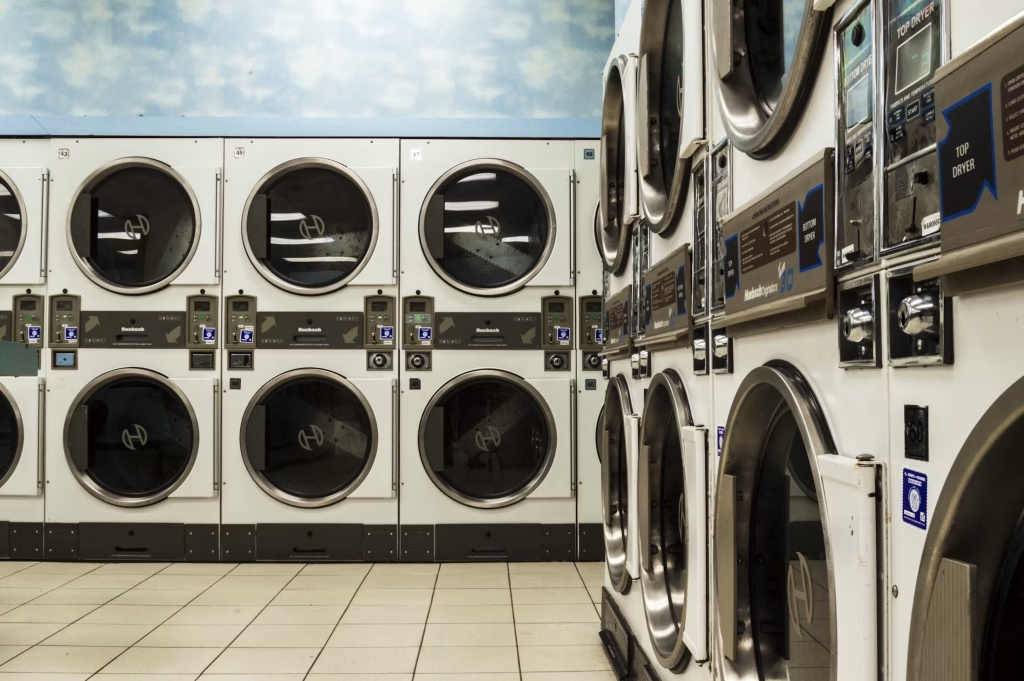
Historical Perspective
Industrial laundry has shifted from manual washing and drying to highly mechanized and energy-optimized systems. In the early 20th century, laundries relied on large wringers, boilers, and rudimentary dryers. Labor costs were high, throughput was low, and hygiene standards were limited.
Modern Innovations
- High-capacity washers and dryers ranging from 20 lbs to 150+ lbs.
- Stackable units and washer-dryer combos for space optimization.
- Automation and IoT monitoring, allowing real-time cycle tracking, maintenance alerts, and energy management.
- Energy-efficient technologies such as moisture sensors, variable-speed motors, and hybrid gas-electric dryers.
These innovations enable industrial laundries to increase throughput, reduce energy consumption, and extend machine lifespans, ultimately improving operational ROI.
Commercial Laundry Equipment Overview
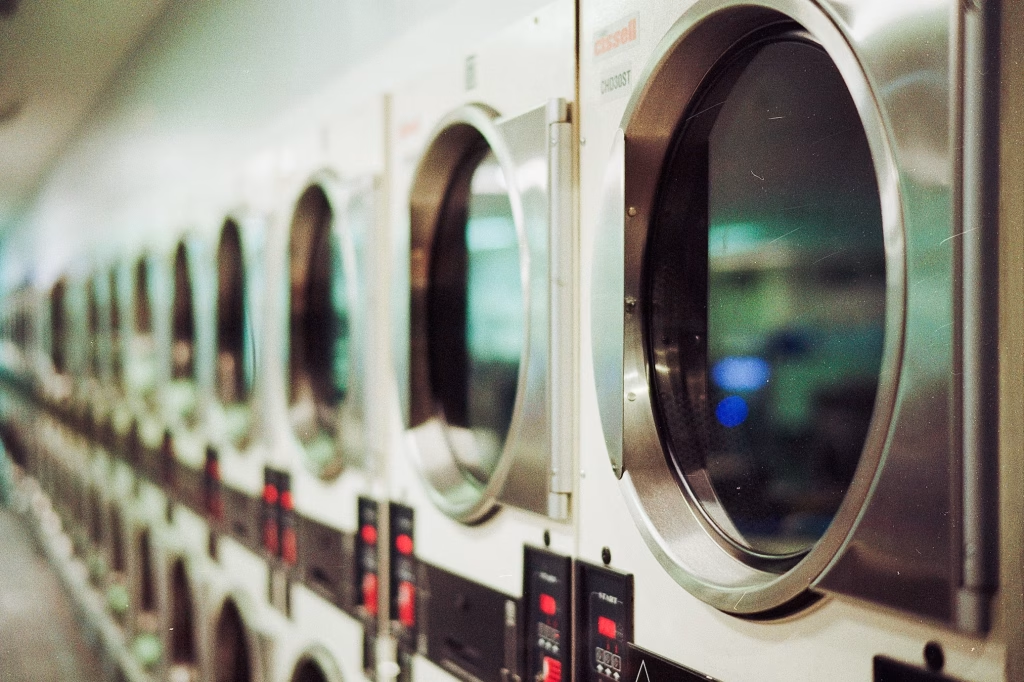
Commercial Washers
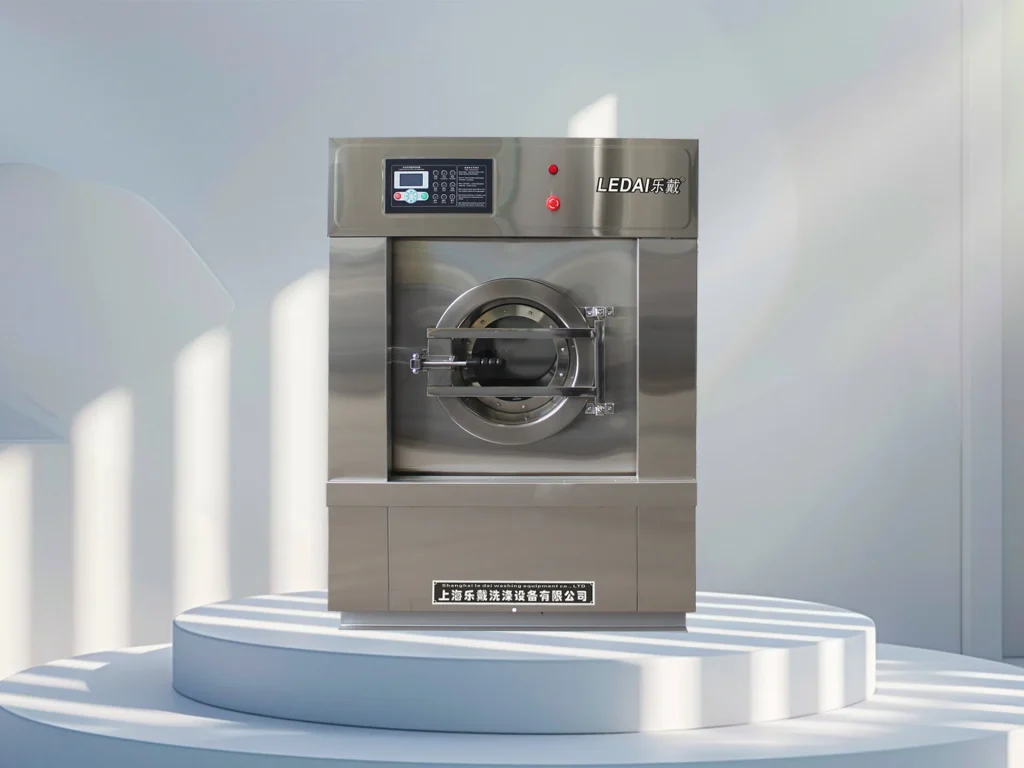
Commercial washers are the foundation of any industrial laundry. Selection depends on load capacity, durability, and operational requirements. Modern washers are categorized by size:
| Machine Type | Load Capacity (lbs) | Width (in) | Depth (in) | Height (in) | Notes |
|---|---|---|---|---|---|
| Small Washer | 20–30 | 26–30 | 28–35 | 40–70 | Ideal for small laundromats, apartments; can be stacked |
| Medium Washer | 35–60 | 30–35 | 35–42 | 45–72 | Suitable for hotels, boutique facilities |
| Large Washer | 70–150+ | 35–50 | 40–60 | 50–80 | Industrial, heavy-duty use in hospitals and large laundries |
Key Considerations:
- Load Capacity: Match machine size with daily laundry volume.
- Space Requirements: Consider installation clearance for doors, vents, and maintenance.
- Stackable vs Side-by-Side Units: Stackable units save floor space; side-by-side simplifies maintenance for high-capacity machines.
Commercial Dryers
Dryers complement washers and must be sized appropriately for load balance. Two primary types are:
- Electric Dryers
- Easy installation; precise temperature control.
- Ideal for delicate fabrics.
- Operating costs may be higher in regions with expensive electricity.
- Gas Dryers
- Faster drying times; energy-efficient for large loads.
- Installation requires gas lines and proper venting.
- Common in hospitals, hotels, and university laundries.
| Feature | Electric Dryer | Gas Dryer |
|---|---|---|
| Installation | Electrical outlet | Gas line + venting |
| Drying Time | Moderate | Fast for heavy loads |
| Footprint | Slightly smaller | Slightly larger |
| Operating Cost | Higher electricity | Lower gas usage |
| Best Use | Small-medium laundries | High-volume laundries |
Commercial Electric Clothes Dryer.
Washer-Dryer Combos
Washer-dryer combo units combine washing and drying in one machine. Benefits include:
- Space efficiency for small laundries and apartments.
- Single-cycle operations reduce handling between machines.
Limitations:
- Slower cycle times compared to separate units.
- Generally lower maximum load capacity.
Commercial Dryer Washer Guide.
How to Choose the Right Industrial Laundry Equipment
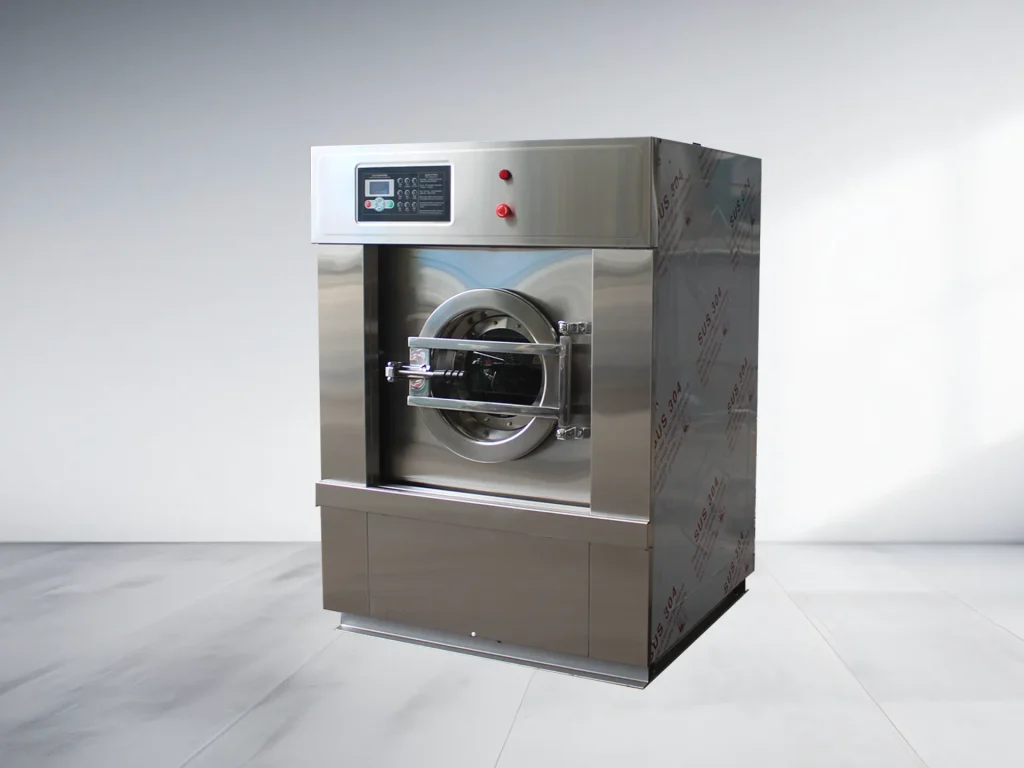
Selecting the right equipment is one of the most critical decisions in any industrial laundry operation. The wrong configuration can lead to inefficiencies, higher energy costs, and operational bottlenecks.
Matching Equipment to Laundry Volume
The first step is understanding your daily laundry volume. Facilities processing under 500 lbs per day typically benefit from small to medium-capacity machines, while operations exceeding 1,000 lbs require high-capacity industrial systems.
Choosing machines that are too small increases cycle frequency and labor costs. Oversized machines, on the other hand, waste energy and reduce efficiency when underutilized.
Balancing Washer and Dryer Capacity
A common mistake in commercial laundries is mismatching washer and dryer capacity. Ideally, drying capacity should slightly exceed washing capacity to prevent workflow delays.
For example:
- 3 washers (60 lbs each)
- Should be paired with 3–4 dryers (60–75 lbs)
This ensures smooth workflow without bottlenecks between washing and drying stages.
When to Choose Stackable Units
Stackable machines are ideal when:
- Floor space is limited
- Laundry volume is moderate
- Vertical clearance is available
They are commonly used in apartments, small laundromats, and compact commercial facilities.
Space Planning and Installation Strategies
Efficient layout design is critical in industrial laundries. Choosing the right machine dimensions, understanding load capacities, and arranging equipment effectively directly impacts workflow efficiency, staff safety, and throughput.
Dimensions and Load Capacities
Industrial washers and dryers vary widely in size and load capacity. Selecting machines that fit your facility without overcrowding is essential.
| Machine Type | Load Capacity (lbs) | Width (in) | Depth (in) | Height (in) | Recommended Use |
|---|---|---|---|---|---|
| Small Washer | 20–30 | 26–30 | 28–35 | 40–70 | Apartments, boutique laundries |
| Medium Washer | 35–60 | 30–35 | 35–42 | 45–72 | Hotels, mid-sized laundromats |
| Large Washer | 70–150+ | 35–50 | 40–60 | 50–80 | Hospitals, high-volume laundries |
| Electric Dryer | 20–60 | 28–36 | 32–40 | 40–72 | Small-medium laundries |
| Gas Dryer | 35–150+ | 32–50 | 36–60 | 50–80 | High-volume operations |
By referencing dimensions and load capacities, operators can plan for sufficient clearance, ensure staff accessibility, and optimize placement of trolleys or folding stations.
Commercial Size Washer and Dryer Guide.
Installation Configurations
Industrial machines can be installed in stacked or side-by-side arrangements. Each configuration serves specific operational needs:
Stacked Installation:
Stacking machines saves significant floor space, making it ideal for apartment buildings or boutique laundries. Careful attention to height clearance is necessary to maintain operator ergonomics and safe access for maintenance.
Side-by-Side Installation:
Side-by-side layouts suit large-scale laundries with high-throughput machines. This configuration allows easier handling of heavy loads and facilitates routine maintenance. While it occupies more floor space, it improves workflow efficiency and reduces the risk of bottlenecks.
Many modern laundries adopt a hybrid approach, using stacked units for smaller machines and side-by-side layouts for medium to large machines. This combination balances space utilization with operational flexibility.
Laundry Room Layout Design for Maximum Efficiency
Designing an effective laundry layout is not just about fitting machines into a space. It directly affects productivity, staff efficiency, and long-term scalability.
Linear vs Zoned Layouts
Most industrial laundries follow either a linear or zoned layout.
A linear layout arranges machines in a straight sequence:
Sorting → Washing → Drying → Folding → Storage
This design minimizes movement and is ideal for medium to large facilities.
A zoned layout separates each function into dedicated areas. While it requires more space, it allows multiple processes to run simultaneously without interference.
Space Allocation Guidelines
Efficient spacing between machines is essential for safety and maintenance. Operators should always allow room for:
- Machine doors to open fully
- Staff movement
- Maintenance access
Overcrowding equipment is one of the most common design mistakes and often leads to long-term inefficiencies.
Example Layout Comparison
| Layout Type | Best For | Advantages | Limitations |
|---|---|---|---|
| Linear Layout | Medium–Large laundries | Streamlined workflow | Less flexible |
| Zoned Layout | High-volume operations | Parallel processing | Requires more space |
Maintenance and Operational Efficiency
Industrial laundry machines require proactive care to maintain performance and reduce downtime. Routine inspections and energy-conscious operations are critical for cost-effective, high-volume laundry facilities.
Routine Maintenance Practices
Regular maintenance extends machine lifespan and ensures consistent laundry quality. Key focus areas include:
- Keeping vents and exhaust pathways clear to maintain proper airflow.
- Inspecting water and gas connections for leaks and corrosion.
- Monitoring mechanical components such as drums, doors, and seals for wear.
Weekly cleaning routines combined with monthly professional servicing ensure that even high-capacity machines (>100 lbs per cycle) remain reliable. Proper scheduling reduces unexpected downtime and maintains compliance with safety standards.
Commercial Electric Clothes Dryer Maintenance.
Energy Management and Efficiency
Energy consumption is one of the largest operational costs in industrial laundries. Choosing the right dryer type and workflow strategy can significantly reduce expenses:
| Feature | Electric Dryer | Gas Dryer |
|---|---|---|
| Installation | Simple electrical connection | Requires gas line & venting |
| Drying Time | Moderate | Faster for heavy loads |
| Footprint | Slightly smaller | Slightly larger |
| Operating Costs | Higher electricity | Lower gas usage |
| Ideal Use Case | Small-medium laundries | High-volume laundries |
Electric dryers are simple to install and suitable for delicate fabrics, while gas dryers handle larger loads efficiently, reducing cycle times in high-volume operations. Additional efficiency can be gained by using moisture sensors, programmable cycles, and strategic scheduling to align with off-peak energy hours.
Workflow Optimization
The physical layout of washers and dryers, combined with operational workflows, influences throughput, staff efficiency, and safety.
In small laundries, stacked units allow operators to fit more machines into limited space without sacrificing load capacity. Medium-sized facilities often benefit from a mix of stacked and side-by-side arrangements, balancing accessibility and floor utilization. Large-scale laundries, such as hospital or hotel operations, require spacious layouts to accommodate trolleys, sorting, and folding stations, ensuring a smooth linear workflow from washing → drying → folding → storage.
Advanced laundries may employ automation or IoT monitoring, which tracks machine cycles, detects maintenance issues, and streamlines staff allocation.
Cost Planning and Lifecycle Considerations
Understanding the total cost of ownership is essential. Beyond purchase price, operators must account for installation, energy consumption, maintenance, and eventual replacement.
- Small machines (20–30 lbs): Affordable upfront, ideal for boutique or apartment laundries.
- Medium machines (35–60 lbs): Balance efficiency and capacity, suitable for hotels and mid-sized laundries.
- Large machines (70–150+ lbs): High throughput justifies larger initial investment, appropriate for hospitals or industrial laundries.
Investing in energy-efficient models, hybrid gas-electric dryers, and programmable cycles reduces long-term utility costs. Selecting reliable manufacturers with accessible spare parts ensures minimal downtime and sustained operational performance.
Ultimate Commercial Dryer-Washer Guide.
Industrial Laundry Workflow: Step-by-Step Process Optimization
A well-designed workflow is the backbone of any efficient industrial laundry operation. Even with high-end equipment, poor workflow design can lead to delays, increased labor costs, and reduced throughput.
Stage 1: Sorting and Pre-Treatment
The process begins with sorting laundry by fabric type, color, and contamination level. This step is critical for maintaining fabric quality and preventing cross-contamination, especially in healthcare environments.
Pre-treatment may include stain removal, chemical soaking, or sanitization cycles depending on the application.
Stage 2: Washing and Extraction
During this stage, industrial washers handle bulk loads with programmed cycles tailored to specific fabric requirements. High-speed extraction significantly reduces moisture content, directly impacting drying time and energy usage.
Facilities that optimize extraction efficiency can reduce drying time by up to 20–30%.
Stage 3: Drying and Moisture Control
Drying is one of the most energy-intensive stages. Proper load balancing and moisture sensor technology ensure that fabrics are dried efficiently without over-processing.
Gas dryers are often preferred in high-volume environments due to faster cycle times.
Stage 4: Folding and Finishing
After drying, items move to folding stations or automated folding systems. In large-scale laundries, this stage can be semi-automated to reduce labor costs and increase consistency.
Proper workflow design ensures that folding areas are located close to dryers to minimize handling time.
Stage 5: Storage and Distribution
The final stage involves organizing, storing, and distributing cleaned items. Efficient storage systems reduce retrieval time and improve operational flow.
In hotels and hospitals, this stage is often integrated with logistics systems for real-time inventory tracking.
Common Mistakes in Industrial Laundry Setup
Even well-funded laundry operations can fail due to poor planning. Understanding common mistakes can help operators avoid costly inefficiencies.
Oversizing or Undersizing Equipment
Choosing the wrong machine capacity is one of the most frequent issues. Undersized machines increase workload and cycle frequency, while oversized machines waste energy when not fully utilized.
Ignoring Workflow Design
Many facilities invest heavily in equipment but overlook layout planning. Poor workflow design leads to unnecessary movement, staff fatigue, and reduced throughput.
Poor Ventilation Planning
Dryers require proper ventilation to operate efficiently. Inadequate airflow reduces drying performance and increases energy consumption.
Lack of Preventive Maintenance
Skipping routine maintenance often results in unexpected downtime and expensive repairs. Preventive care is always more cost-effective than reactive fixes.
Industrial Laundry Business Models and Profitability
Understanding the business model behind industrial laundry operations is essential for long-term success. Different facilities operate under different revenue structures, cost models, and scaling strategies.
Revenue Streams in Industrial Laundry
Industrial laundries typically generate revenue through:
- Per-load pricing (common in laundromats)
- Contract-based services (hotels, hospitals)
- Subscription or bulk service agreements
Each model requires a different equipment setup and operational strategy.
Cost Structure Overview
The primary cost components include equipment investment, utilities, labor, maintenance, and facility rent.
| Cost Category | Impact Level | Notes |
|---|---|---|
| Equipment | High (initial) | Long-term asset |
| Energy & Water | High (ongoing) | Major operational cost |
| Labor | Medium–High | Depends on automation level |
| Maintenance | Medium | Preventable with planning |
ROI Considerations
Return on investment in industrial laundry depends heavily on utilization rate. Machines that operate near full capacity deliver faster ROI, while underused equipment extends payback periods.
High-efficiency machines may cost more upfront but often reduce operational expenses significantly over time.
Advanced Operational Strategies
For industrial laundries, efficiency is not only a factor of machine capacity but also workflow design, staff allocation, and energy management. Large-scale operations require a holistic approach, integrating equipment, space, and operational practices.
Optimizing Workflow in Large-Scale Facilities
Hospitals, hotels, and commercial laundries process hundreds of pounds daily. To maximize efficiency, operators focus on three main areas: sorting, loading, and handling.
- Sorting: Automated sorting systems can separate linens by type and color, reducing manual labor and minimizing errors.
- Loading: Ergonomic design of machines, trolleys, and chutes helps reduce strain on staff and speeds up the process.
- Handling: Clear pathways between washers, dryers, and folding stations prevent bottlenecks and maintain throughput.
Medium-sized laundries often rely on a combination of stacked and side-by-side units, while large hospitals or industrial laundries may dedicate separate zones for washing, drying, and folding to streamline operations.
Energy and Resource Management
Energy and water are significant cost drivers in industrial laundries. Implementing resource management strategies can yield substantial savings:
| Strategy | Benefits |
|---|---|
| Timed or sensor-based cycles | Reduces unnecessary machine operation |
| High-efficiency washers | Cuts water consumption per cycle |
| Gas-electric hybrid dryers | Lowers overall energy costs |
| Off-peak operation scheduling | Takes advantage of lower electricity tariffs |
| Heat recovery systems | Reuses exhaust heat to preheat water or dry other loads |
Adopting these strategies improves sustainability, reduces operating costs, and aligns with green certifications increasingly valued in hospitality and healthcare sectors.
Industry Trends and Innovations
The industrial laundry sector continues to evolve, driven by technological innovations, sustainability requirements, and operational efficiency goals.
Automation and Smart Technology
Modern laundries increasingly adopt IoT-enabled machines, which monitor cycles, detect maintenance needs, and collect data for predictive analytics. This allows managers to optimize staffing, reduce downtime, and maintain consistent quality.
Key advancements include:
- Remote monitoring of machine performance.
- Automated chemical dosing systems for consistent cleaning results.
- Integration with laundry management software for workflow optimization.
Sustainability and Green Practices
Environmental regulations and corporate sustainability goals push laundries to adopt energy-efficient solutions:
- Low-water and low-energy washers reduce resource consumption.
- Heat recovery dryers reclaim energy from exhaust air.
- Recycling programs for detergents and water minimize environmental footprint.
These innovations not only reduce costs but also enhance brand reputation, particularly for hotels and hospitals seeking eco-friendly certifications.
Case Study: Hospital Laundry Optimization
A large hospital upgraded its laundry facility with medium-capacity washers and gas dryers combined with automated sorting and folding systems. Key outcomes included:
- 30% reduction in drying time per load.
- 25% reduction in energy consumption annually.
- Decreased staff workload and improved ergonomic safety.
The hospital also implemented a preventive maintenance schedule, which minimized unplanned downtime and extended machine lifespan. This example demonstrates the ROI of combining equipment, layout, and operational strategy.
Commercial Dryer Washer Guide.
Lifecycle and Cost Considerations
Understanding the total lifecycle cost of industrial laundry equipment ensures sustainable investment:
- Initial Investment: Machine purchase and installation costs vary by size and capacity.
- Operating Expenses: Energy, water, detergent, and staffing contribute to ongoing costs.
- Maintenance Costs: Regular inspections and preventive servicing reduce long-term repairs.
- Replacement Planning: Estimating the service life of washers and dryers helps forecast capital expenditure.
High-capacity units may have a larger upfront cost, but their throughput and durability often justify the investment for high-volume operations. Medium-sized facilities benefit from hybrid models that balance cost, space, and energy efficiency.
Ultimate Commercial Dryer-Washer Guide.
FAQ: Industrial Laundry Guide

Q1: What is the difference between stackable and side-by-side units?
Stackable units save floor space and are suitable for small-medium facilities. Side-by-side units provide better accessibility for larger loads and facilitate maintenance.
Q2: How often should industrial washers and dryers be serviced?
Routine maintenance should be weekly, with professional servicing monthly or quarterly depending on load capacity and usage frequency.
Q3: Which is more energy-efficient, electric or gas dryers?
Gas dryers are typically more energy-efficient for high-volume operations, while electric dryers are simpler to install and suitable for smaller facilities or delicate fabrics.
Q4: Can industrial laundries implement sustainability practices?
Yes. Using energy-efficient washers, gas dryers, heat recovery systems, and automated dosing reduces both energy and water consumption, supporting environmental goals.
Q5: How can workflow efficiency be improved in large laundries?
Optimizing machine layout, automating sorting, ensuring ergonomic loading, and scheduling cycles during off-peak hours enhances overall workflow and throughput.
 English
  Spanish