
Table of Contents
Introduction
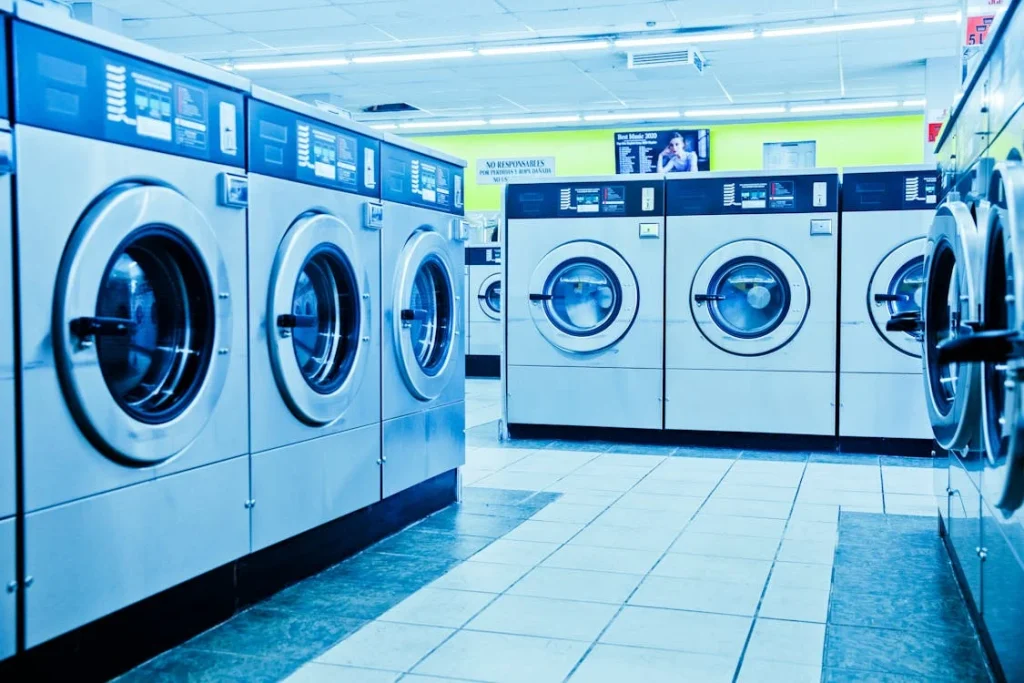
In the competitive world of commercial laundry operations, space and efficiency are often the deciding factors for profitability. Many small laundromats, hotels, gyms, and apartment complexes face challenges when fitting multiple machines into limited areas. This is where Commercial Stackable Washers and Dryers come into play. Designed to maximize floor space while maintaining high-capacity performance, stackable units offer an optimal solution for businesses that need to handle consistent laundry throughput without compromising room layout.
Stackable washer-dryer configurations combine functionality with compact design, allowing operators to place washers and dryers in vertical arrangements. This setup not only frees up valuable floor space but also simplifies workflow by keeping washing and drying stations conveniently aligned. For facilities where every square foot matters, these machines provide a smart, practical alternative to traditional side-by-side commercial units.
Benefits of Commercial Stackable Washers and Dryers
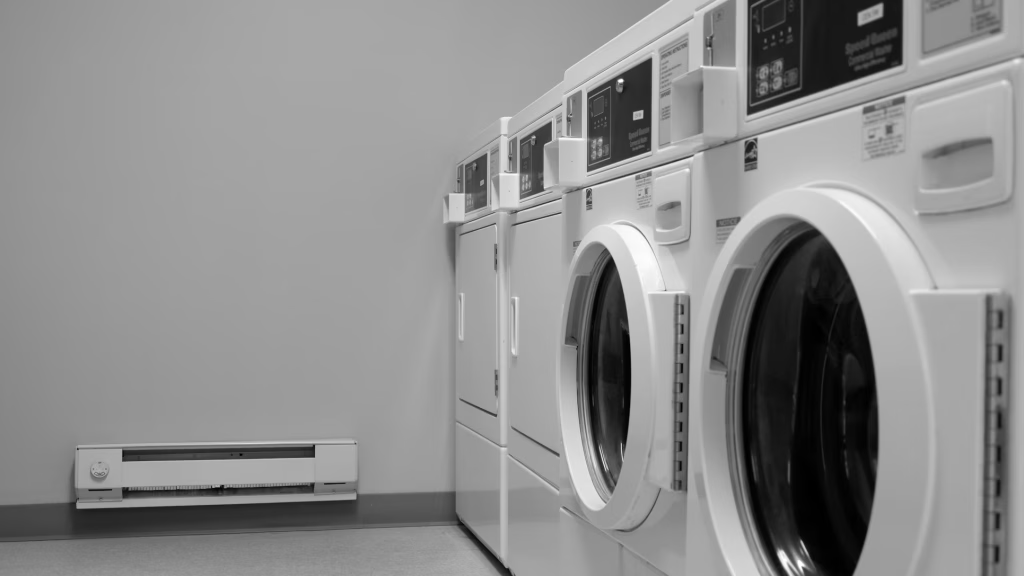
Investing in Commercial Stackable Washers and Dryers offers several advantages beyond just saving space.
Space Optimization
One of the most obvious benefits of stackable units is their compact footprint. By stacking the dryer atop the washer, facilities can fit multiple machines in the space that might normally accommodate only one or two side-by-side units. This is particularly useful for urban laundromats or shared laundry rooms in apartments, where space is at a premium.
Enhanced Workflow Efficiency
With stackable machines, operators can design laundry rooms that improve operational flow. Customers can load a washer and immediately transfer clothes to the dryer directly above without walking across the room. This reduces bottlenecks and improves overall laundry throughput, making Commercial Stackable Washers and Dryers a practical choice for high-traffic environments.
Energy and Maintenance Advantages
Modern stackable units often come equipped with energy-saving features, including programmable cycles, moisture sensors, and efficient motors. Maintenance is also simplified since both units occupy a single vertical footprint, allowing service technicians to access machines more easily in stacked configurations compared to crowded side-by-side layouts.
Standard Dimensions and Capacities
When selecting Commercial Stackable Washers and Dryers, understanding standard dimensions and capacities is critical. Unlike residential appliances, commercial machines are engineered for frequent use, requiring robust internal components that can handle heavier loads.
Small Stackable Units
Small commercial stackable units are ideal for boutique laundromats, apartments, or fitness centers. Typical washers in this category handle loads of 20–30 pounds, while dryers can accommodate similar capacities. Dimensions generally range as follows:
| Machine Type | Load Capacity (lbs) | Width (in) | Depth (in) | Height (in) |
|---|---|---|---|---|
| Washer | 20–30 | 26–30 | 28–35 | 40–45 |
| Dryer | 20–30 | 26–30 | 30–36 | 40–45 |
These machines are compact yet durable, featuring reinforced drums and commercial-grade motors capable of handling frequent daily cycles. For small spaces, stacking the dryer atop the washer can save up to 50% of floor space.
Medium Stackable Units
Medium stackable machines cater to moderate-volume laundries, such as small hotels or self-service laundromats. Washers in this category typically manage loads of 35–60 pounds. Dryers are designed to match or slightly exceed washer capacities for efficient drying. Dimensions are generally:
| Machine Type | Load Capacity (lbs) | Width (in) | Depth (in) | Height (in) |
|---|---|---|---|---|
| Washer | 35–60 | 30–35 | 35–42 | 45–72 |
| Dryer | 35–60 | 30–36 | 36–44 | 45–72 |
Medium stackable units strike a balance between high capacity and space-saving design. They allow operators to process bulk laundry items like blankets, towels, and uniforms efficiently while maintaining a compact vertical footprint.
Comparison: Stackable vs Side-by-Side Units
| Feature | Stackable Units | Side-by-Side Units |
|---|---|---|
| Floor Space Usage | Minimal | Requires more floor area |
| Accessibility | May require step stools for tall units | Easy access for all heights |
| Installation Flexibility | Limited to compatible models | Can mix brands and sizes |
| Maintenance | Compact, but limited access vertically | Easier to service each unit |
| Ideal Business Type | Small to medium laundries | Medium to large laundries |
The choice between stackable and side-by-side configurations largely depends on available space, workflow requirements, and business scale. For facilities where space efficiency is a priority, Commercial Stackable Washers and Dryers often outperform traditional layouts.
Choosing the Right Commercial Stackable Washer and Dryer
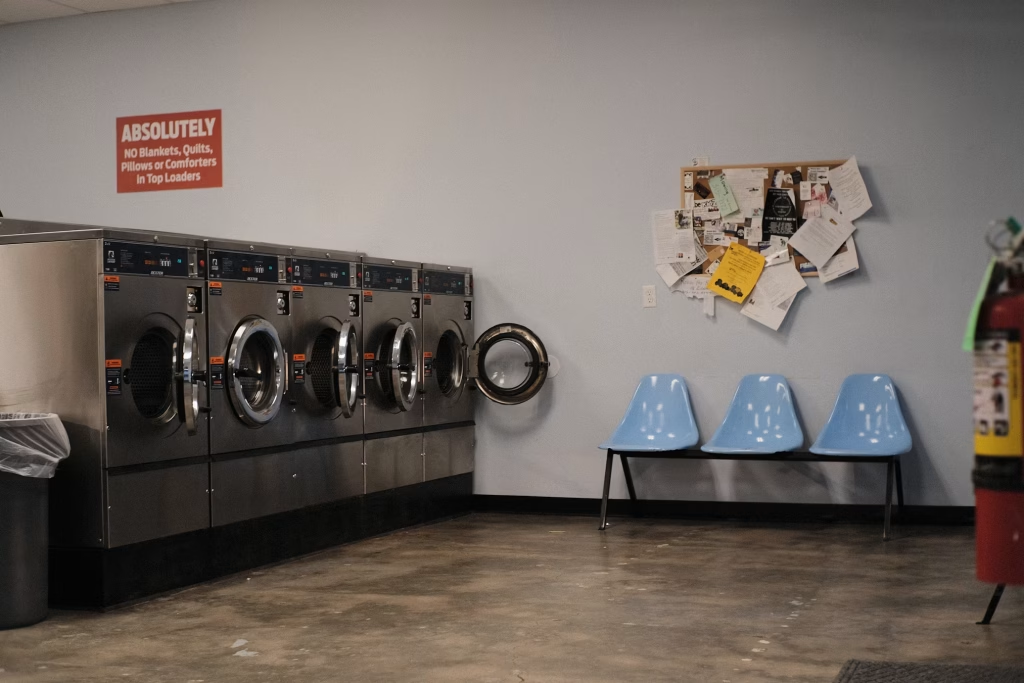
Selecting the ideal Commercial Stackable Washers and Dryers requires careful consideration of several factors, including business size, load requirements, energy source, and installation constraints. Proper selection ensures efficient workflow, lower operating costs, and long-term durability.
Business Size and Laundry Volume
The first step is to assess the daily laundry volume:
- Small laundries or apartments: Small stackable units (20–30 lbs) are sufficient. Their compact footprint allows multiple units to be installed even in constrained spaces.
- Medium-volume facilities: Hotels, gyms, or boutique laundromats benefit from medium stackable units (35–60 lbs) that balance capacity and efficiency.
- High-volume operations: Large-scale laundries may need several stacked units or side-by-side industrial machines for maximum throughput.
Estimating the correct number of units is crucial. Underestimating capacity can cause bottlenecks, while overestimating may lead to underutilized equipment and wasted floor space.
Electric vs Gas Stackable Dryers
Most commercial stackable dryers come in electric or gas models. Choosing the right energy source affects installation, operational efficiency, and utility costs.
| Feature | Electric Stackable Dryer | Gas Stackable Dryer |
|---|---|---|
| Installation | Requires 208–240V dedicated circuit | Requires natural gas line and venting |
| Heat Generation | Electric heating elements | Gas burners, faster drying cycles |
| Floor Space | Slightly smaller depth | Slightly larger to accommodate venting |
| Energy Efficiency | Moderate, depends on local electricity | Generally more efficient for high loads |
| Ideal Use | Small to medium facilities | Medium to large facilities |
Electric units are simpler to install and ideal for small laundries with limited ventilation. Gas dryers provide faster drying, which is advantageous in high-volume operations such as hotels or senior living facilities.
Key Features to Consider
When evaluating Commercial Stackable Washers and Dryers, consider the following attributes to ensure efficiency and durability:
- Load Sensing and Automatic Cycles – Machines that detect load size and adjust water, detergent, and cycle length reduce energy and water consumption.
- Moisture Sensors – Prevent overdrying and save energy by automatically stopping the dryer when clothes are dry.
- Durable Construction – Reinforced drums, commercial-grade motors, and strong door hinges are essential for frequent cycles.
- Ease of Maintenance – Lint trap accessibility, service panels, and modular components reduce downtime.
- Stacking Compatibility – Ensure that washers and dryers are designed for vertical installation without compromising stability.
Installation and Space Planning
Proper installation is critical for Commercial Stackable Washers and Dryers. Vertical stacking reduces floor footprint, but clearance, ventilation, and service access must be accounted for.
Floor and Structural Considerations
- Ensure the floor can support the combined weight of washer and dryer units.
- Verify that the ceiling height accommodates stacked units, typically 70–75 inches for small to medium machines.
- Allow at least 3–6 inches of clearance around units for ventilation and maintenance.
Ventilation Requirements
Stacked dryers require proper venting to remove heat and moisture efficiently. Options include:
- Wall venting: Directs exhaust outdoors, ideal for compact laundry rooms.
- Ceiling venting: Useful when wall access is restricted.
- Flexible ducting: Should be minimal to maintain airflow and avoid lint buildup.
Workflow Optimization
Strategic placement enhances operational efficiency:
- Position machines in vertical rows for compact spaces.
- Keep high-traffic units near entrances or folding areas to minimize walking distance.
- Combine stackable units with side-by-side machines if necessary for higher-volume loads.
Comparison Table: Small vs Medium Stackable Units
| Feature | Small Stackable Units | Medium Stackable Units |
|---|---|---|
| Load Capacity | 20–30 lbs | 35–60 lbs |
| Typical Dimensions (WxDxH) | 26–30 x 28–35 x 70–75 in | 30–35 x 35–44 x 72–75 in |
| Ideal Facility Type | Apartments, small laundries, gyms | Hotels, boutique laundromats |
| Energy Source Options | Electric, some gas | Electric, gas |
| Stackable Efficiency | Excellent in tight spaces | Good for medium spaces |
This table helps operators quickly compare options and plan installation layouts based on available space and business needs.
Maintenance & Energy Efficiency for Commercial Stackable Washers and Dryers
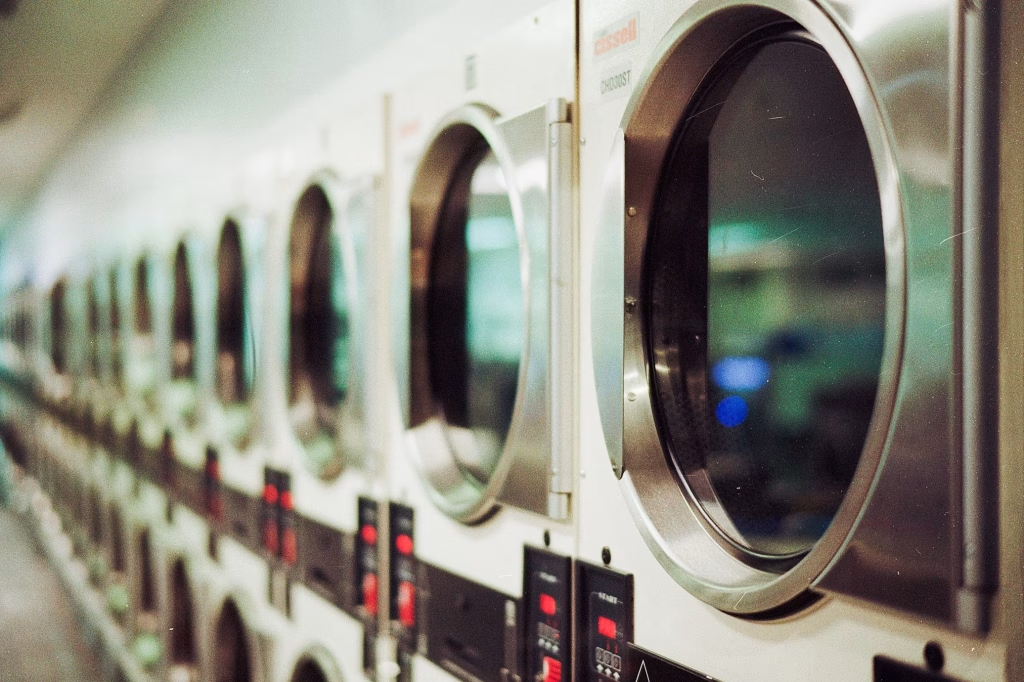
Proper maintenance is essential to maximize the lifespan of Commercial Stackable Washers and Dryers and to reduce operational costs. Consistent care also ensures energy efficiency and safety in high-volume laundry environments.
Routine Maintenance Tips
- Lint Trap and Vent Cleaning – Clean lint traps after every cycle to maintain airflow and reduce fire risk. Inspect vent ducts monthly.
- Check Water Connections – Inspect hoses, valves, and fittings regularly for leaks to prevent water damage.
- Inspect Electrical Connections – Ensure wiring, plugs, and outlets are secure to avoid electrical hazards.
- Drum and Door Maintenance – Check door seals and drum integrity to avoid leaks and premature wear.
- Professional Servicing – Schedule certified technicians to inspect motors, belts, and control panels periodically.
Energy-Saving Practices
- Load Optimization: Run full loads when possible to maximize energy and water efficiency.
- Sensor-Driven Drying: Machines with moisture sensors prevent overdrying and save electricity or gas.
- Programmable Cycles: Set cycles according to fabric type to reduce energy use.
- High-Efficiency Detergents: Minimize residue buildup, reduce extra rinsing, and improve drying efficiency.
Implementing these practices ensures that Commercial Stackable Washers and Dryers remain efficient and reliable while lowering energy bills.
Future Trends in Stackable Commercial Laundry Equipment
The commercial laundry industry is evolving rapidly, and stackable units are no exception. Anticipating future trends can help operators future-proof their investment.
- Smart Technology Integration
- Wi-Fi-enabled washers and dryers allow remote monitoring and cycle management.
- IoT analytics help predict maintenance needs, reducing downtime.
- Eco-Friendly Design
- Water and energy-efficient stackable machines are becoming standard.
- Hybrid electric-gas dryers optimize energy consumption depending on load size.
- Space-Saving Innovations
- New modular and compact stackable designs allow high-capacity machines in small footprints.
- Adjustable stacking kits provide flexibility for different ceiling heights.
- Automation & Workflow Optimization
- Integration with folding, sorting, and payment systems streamlines operations in laundromats.
- Sensor-based scheduling can optimize machine use during peak hours.
Adopting these innovations improves productivity, reduces costs, and ensures the laundry facility remains competitive in the coming years.
FAQ: Commercial Stackable Washers and Dryers
What is the ideal capacity for a stackable commercial washer and dryer?
Small units: 20–30 lbs, suitable for apartments or boutique laundries.
Medium units: 35–60 lbs, ideal for hotels and gyms.
Always consider floor space, customer volume, and stacking height when choosing capacity.
Can I stack medium or large commercial washers and dryers?
Stacking is recommended only for small to medium units (up to 60 lbs). Large industrial units are safer side-by-side due to weight and maintenance access.
Electric or gas stackable dryer—which is better?
Electric dryers are simpler to install and suitable for small laundries with limited ventilation. Gas dryers provide faster drying and lower long-term operating costs for medium-volume operations.
How do I maintain stackable machines efficiently?
Regular lint cleaning, inspection of utility connections, drum checks, and professional servicing prolong machine life. Using moisture sensors and programmable cycles improves efficiency.
Are there energy-saving features I should look for?
Yes—moisture sensors, sensor-driven cycles, programmable programs, and high-efficiency detergent compatibility can reduce electricity or gas consumption.
Summary Table: Key Stackable Washer & Dryer Considerations
| Feature | Small Stackable Units | Medium Stackable Units | Notes |
|---|---|---|---|
| Load Capacity (lbs) | 20–30 | 35–60 | Match to daily laundry volume |
| Typical Dimensions (WxDxH, in) | 26–30 x 28–35 x 70–75 | 30–35 x 35–44 x 72–75 | Ensure proper floor and ceiling space |
| Energy Source | Electric, some gas | Electric, gas | Choose based on utility availability |
| Ideal Facility Type | Apartments, small laundries, gyms | Hotels, boutique laundromats | Stackable layout improves space use |
| Maintenance & Efficiency Tips | Lint cleaning, load balance, sensor cycles | Lint cleaning, programmable cycles, professional servicing | Follow regularly for longevity |
 English
  Spanish