
Table of Contents
Commercial laundry operations depend heavily on choosing the right equipment size. While capacity and drying performance often get the most attention, the commercial size washer and dryer you select has a major impact on installation, workflow efficiency, energy consumption, and overall laundry throughput.

Many small laundromats, hotels, gyms, and shared laundry facilities make the mistake of focusing only on machine capacity while ignoring the physical dimensions of the equipment. However, the actual footprint of a commercial machine determines how many units you can install, how easily customers can access them, and whether your facility meets safety and ventilation requirements.
A properly planned commercial size washer and dryer setup ensures that laundry operations run smoothly without wasted space or bottlenecks. For example, a laundromat with limited floor space may benefit from stacked washer-dryer systems, while a hotel laundry room may prioritize larger machines that can process heavy loads quickly.
This guide explores the standard commercial size washer and dryer dimensions used in modern laundries, explains how capacity relates to machine size, and provides practical advice for choosing the right equipment for different business scenarios. Whether you are opening a new laundromat or upgrading existing equipment, understanding machine size is essential for making an informed investment.
Understanding Commercial Size Washer and Dryer Dimensions
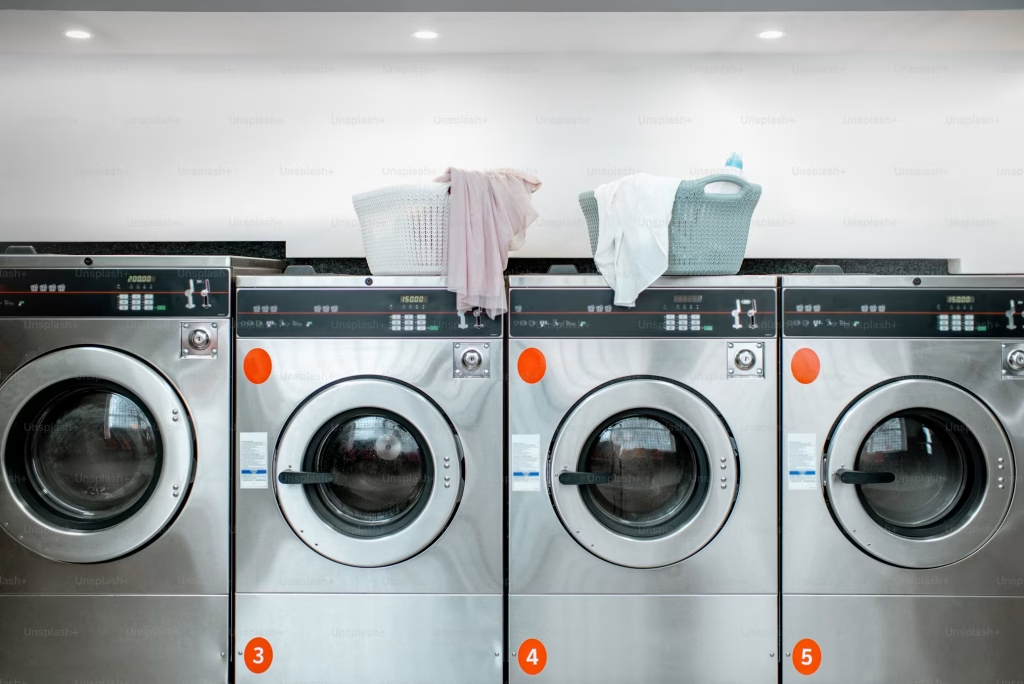
When evaluating laundry equipment, the commercial size washer and dryer specification usually includes three main physical measurements: width, depth, and height. These dimensions determine the amount of floor space required for installation and influence how efficiently a laundry room can be organized.
Commercial machines are significantly larger than residential appliances. A typical home washing machine may hold 4–5 cubic feet of laundry, while a commercial washer can handle loads ranging from 20 pounds to more than 100 pounds. This increased capacity naturally requires larger drum sizes, stronger frames, and heavier internal components.
However, the overall size of a commercial machine is not determined by drum capacity alone. Manufacturers also need to accommodate additional components such as reinforced suspension systems, high-powered motors, industrial heating elements, and advanced control panels. As a result, the physical dimensions of a commercial size washer and dryer often extend well beyond the drum itself.
Another factor that affects machine dimensions is installation clearance. Commercial laundry equipment requires space around the machine for ventilation, servicing, and safe operation. Operators must consider not only the machine footprint but also the additional clearance required for doors, ventilation ducts, and maintenance access.
Because of these requirements, the planning stage of a commercial laundry installation typically includes detailed measurements of the available room. Even a difference of a few inches in machine width can determine whether a facility can install ten machines or twelve, which directly impacts revenue potential in a self-service laundromat.
In addition, modern commercial laundry environments often aim to maximize workflow efficiency. Machines are positioned in rows or clusters so customers can easily move between washing and drying stations. The selected commercial size washer and dryer must therefore fit both the physical space and the operational flow of the laundry facility.
Standard Commercial Washer and Dryer Sizes

Although there is no universal dimension standard across all manufacturers, most equipment falls into several common size categories. These categories are typically based on load capacity and the type of business using the machines.
Understanding these general size ranges helps operators estimate how much space they need before comparing specific models from different manufacturers.
Small Commercial Washer Dryer Size
Small commercial laundry machines are commonly used in boutique laundromats, small apartment buildings, gyms, and cafes that offer customer laundry services. These machines provide higher durability than residential appliances while maintaining a relatively compact footprint.
A typical commercial size washer and dryer in the small category usually handles loads between 20 and 30 pounds. This capacity is sufficient for everyday laundry tasks while allowing businesses to install multiple units in limited spaces.
In terms of dimensions, small commercial washers often measure roughly 26 to 30 inches in width, with depths between 28 and 35 inches. Heights vary depending on whether the unit is front-loading or stacked with a dryer. When paired with a commercial dryer, the combined vertical space can reach more than 70 inches.
Despite their smaller size, these machines are built with industrial components designed for frequent use. Reinforced drums, commercial-grade motors, and durable door hinges ensure the equipment can operate continuously throughout the day.
Small machines also offer an advantage in facilities where customer turnover is frequent. Multiple compact units allow several users to wash laundry at the same time, improving throughput and reducing waiting times.
For operators planning compact installations, stacked configurations can further reduce the floor footprint. In these setups, the washer is placed below the dryer, allowing two machines to occupy roughly the same floor area as a single appliance. This approach is common in urban laundromats and apartment laundry rooms where space is limited.
Medium Commercial Laundry Machine Size
Medium-sized machines represent the most common commercial size washer and dryer category used in self-service laundromats and hotel laundry rooms. They balance capacity and physical footprint, making them suitable for facilities that process a moderate volume of laundry each day.
These machines typically support load capacities ranging from 35 to 60 pounds. This size allows users to wash larger loads such as bedding, towels, and bulk clothing without requiring oversized industrial machines.
From a dimensional perspective, medium commercial washers usually measure between 30 and 35 inches wide, with depths often exceeding 35 inches due to larger drum sizes and reinforced internal structures. Dryers designed for similar load capacities often have comparable widths but slightly deeper cabinets to accommodate heating systems and airflow channels.
The additional capacity offered by medium machines significantly improves operational efficiency in busy laundromats. Customers can complete larger loads in fewer cycles, reducing wait times and improving customer satisfaction.
Another advantage of medium-sized equipment is its versatility. A facility equipped with several medium machines can handle both standard laundry loads and larger items such as blankets or comforters. This flexibility makes the medium commercial size washer and dryer configuration one of the most popular choices in the commercial laundry industry.
Large Commercial Washer Dryer Size
Large commercial laundry machines are designed for hotels, hospitals, senior living facilities, and large-scale laundromats that handle substantial volumes of laundry daily. These commercial size washer and dryer units are engineered for maximum throughput, durability, and energy efficiency.
Typical load capacities for large machines range from 70 to over 150 pounds. Because of their industrial-grade performance, these washers and dryers require significantly more floor space than small or medium units.
Physical Dimensions
Large commercial washers generally measure 35–50 inches in width, with depths from 40–60 inches depending on drum size and internal support structures. Heights vary from 40–80 inches, depending on whether the machine is a front-loading standalone unit or part of a stacked configuration.
Dryers matching these capacities are often slightly deeper to accommodate larger heating elements, airflow channels, and advanced lint management systems. In many facilities, large dryers are installed alongside washers rather than stacked to simplify loading of heavy linen loads.
Due to their size, these machines often require reinforced flooring and sufficient clearance around the units for safe operation, maintenance, and ventilation.
Commercial Washer Dryer Capacity vs Physical Size
Understanding the relationship between load capacity and physical dimensions is critical when planning a laundry room. The table below summarizes typical commercial size washer and dryer dimensions by capacity:
| Machine Type | Load Capacity (lbs) | Width (in) | Depth (in) | Height (in) | Notes |
|---|---|---|---|---|---|
| Small Washer | 20–30 | 26–30 | 28–35 | 40–70 | Can be stacked with dryer |
| Small Dryer | 20–30 | 26–30 | 30–36 | 40–70 | Front or top load |
| Medium Washer | 35–60 | 30–35 | 35–42 | 45–72 | Suitable for laundromats, hotels |
| Medium Dryer | 35–60 | 30–36 | 36–44 | 45–72 | Fast drying cycles |
| Large Washer | 70–150+ | 35–50 | 40–60 | 50–80 | Industrial, heavy-duty use |
| Large Dryer | 70–150+ | 36–50 | 42–60 | 50–80 | Requires reinforced floor |
This table helps operators estimate floor space requirements and determine which commercial size washer and dryer category aligns with their business needs.
Space Planning for Commercial Laundry Equipment
Proper space planning is essential for maximizing operational efficiency and ensuring compliance with safety standards. Key considerations include:
- Clearance Around Machines: Commercial washers and dryers need at least 3–6 inches of clearance on the sides and back to allow ventilation, service access, and heat dissipation.
- Door Swing & Access: Ensure doors can fully open without obstructing aisles or other machines. This is especially important for front-loading washers and dryers.
- Workflow Efficiency: Arrange machines to minimize walking distances between washing, drying, folding, and storage areas. Positioning high-traffic machines near entrance/exit points can improve throughput.
- Utility Access: Electric and gas connections, water supply lines, and drainage systems should be easily accessible without compromising machine placement.
In small laundromats, stacking washers and dryers can save up to 50% of floor space, allowing for more machines in limited areas. However, stacking is generally limited to small and medium units, as large industrial machines are often too heavy or bulky for safe stacking.
Stacked vs Side-by-Side Machine Size
When choosing between stacked or side-by-side layouts, consider the following:
Stacked Configuration
- Ideal for small commercial spaces.
- Reduces floor footprint, allowing multiple machines in a compact laundry room.
- Requires careful attention to height clearance and stability.
- Mostly used for machines under 60 pounds load capacity.
Side-by-Side Configuration
- Preferred for medium and large washers and dryers.
- Provides easier access to heavy laundry loads, reducing strain on operators.
- Simplifies service and maintenance since each unit is independent.
- Requires more floor space but improves workflow for high-volume operations.
Proper layout planning is critical, as misjudging the space for large commercial size washer and dryer units can lead to costly adjustments after installation. Many operators use CAD drawings or scaled room layouts to simulate equipment placement before purchase.
Choosing Machines Based on Business Size
- Boutique Laundromats: Small to medium commercial machines (20–60 lbs) with stacked configurations can maximize customer throughput while conserving floor space.
- Hotels & Resorts: Medium to large units (35–100 lbs) positioned side-by-side to handle towels, bedding, and guest laundry efficiently.
- Hospitals & Senior Facilities: Large industrial washers and dryers (70–150+ lbs) with side-by-side configuration, often paired with advanced filtration and sanitization features.
- Apartment & Mixed-Use Buildings: Small to medium units, sometimes stacked, allow residents to do laundry conveniently without occupying excessive space.
Electric vs Gas Commercial Dryer Size
When selecting a commercial size washer and dryer, understanding the differences between electric and gas dryers is crucial, as it impacts space, installation, energy costs, and efficiency.
Electric Commercial Dryers
- Require a dedicated 208–240V electrical circuit.
- Tend to have slightly smaller depth compared to gas units due to absence of gas burners and ventilation systems.
- Heat is generated via electric heating elements, providing consistent temperatures ideal for delicate fabrics.
- Often easier to install in small laundries with limited ventilation, since they do not require a gas line or extensive venting.
- Operating costs depend on local electricity rates, which can be higher than gas in some regions.
Gas Commercial Dryers
- Require natural gas or propane connection and proper venting for combustion exhaust.
- Slightly larger in depth to accommodate burners, venting, and heat exchangers.
- Gas heat dries fabrics faster and is generally more energy-efficient in high-volume laundries.
- Installation costs are higher due to gas line setup and ventilation requirements.
- Preferred for large laundries with high throughput, such as hotels or hospitals, where faster drying cycles improve operational efficiency.
| Feature | Electric Dryer | Gas Dryer |
|---|---|---|
| Heat Source | Electric elements | Gas burners |
| Installation | Easier, only electricity | Requires gas line & venting |
| Drying Speed | Moderate | Faster |
| Floor Space | Slightly smaller | Slightly larger |
| Operating Cost | Higher electricity cost | Lower in most regions |
| Ideal Use | Small to medium laundries | Large, high-throughput laundries |
Cost Considerations for Commercial Laundry Machines
Selecting the right commercial size washer and dryer also involves understanding both upfront and long-term costs:
- Initial Purchase Price:
- Small units: $1,500–$4,000 per machine
- Medium units: $3,500–$8,000
- Large industrial units: $7,000–$15,000+
- Installation Costs:
- Electric units: Usually lower; may need dedicated circuits.
- Gas units: Higher; require proper gas piping and vent installation.
- Operating Costs:
- Consider electricity, gas, and water usage per cycle.
- Energy-efficient models (Energy Star certified) can reduce long-term costs.
- Maintenance & Repairs:
- Commercial machines require routine cleaning of lint traps, exhaust ducts, and drum interiors.
- Large units may need periodic servicing by certified technicians.
- Depreciation & Lifecycle:
- Commercial washers and dryers often have a 10–15 year lifecycle with heavy usage.
- Choosing reliable brands reduces downtime and replacement frequency.
Maintenance & Energy Efficiency Tips
To ensure longevity and reduce operational costs, commercial laundry operators should follow these guidelines:
- Regular Lint Cleaning: Lint buildup reduces efficiency and increases fire risk.
- Check Water & Gas Connections: Leaks or blockages can damage equipment and increase bills.
- Use Correct Detergents: High-efficiency detergents reduce residue buildup.
- Balance Loads: Overloading or uneven distribution stresses motors and drums.
- Energy-Saving Features: Many modern machines offer sensor-driven cycles, moisture detection, and programmable wash/dry times to optimize energy use.
Integrating these practices keeps commercial size washer and dryer units operating efficiently, lowers costs, and ensures safety in high-volume operations.
Future Trends in Commercial Laundry Equipment

The commercial laundry industry is evolving rapidly. Key trends to watch:
- Smart Technology Integration: Wi-Fi-enabled machines, remote monitoring, and IoT analytics for predictive maintenance.
- Eco-Friendly Operations: Water recycling, low-energy dryers, and gas-to-electric hybrid models.
- Space-Saving Designs: Compact, high-capacity washers and dryers with stackable or modular layouts.
- Automation & Workflow Optimization: Automated feeders, folding machines, and payment systems for self-service laundries.
Adopting these innovations can improve productivity, reduce costs, and future-proof laundries against rising energy prices.
FAQ
What is the ideal size for a commercial washer and dryer?
The ideal size depends on your laundry volume. Small units handle 20–30 lbs, medium units 35–60 lbs, and large units 70–150+ lbs. Consider floor space, stacking options, and workflow.
Should I choose an electric or gas commercial dryer?
Electric dryers are easier to install and ideal for small laundries, while gas dryers offer faster drying and lower operating costs for high-volume facilities.
Can I stack commercial washers and dryers?
Yes, but stacking is recommended only for small and medium units (up to 60 lbs). Large industrial machines are typically installed side-by-side for safety and ease of use.
How do I maintain commercial laundry machines?
Regular lint cleaning, checking utility connections, using proper detergents, balancing loads, and following manufacturer maintenance schedules ensures longevity and efficiency.
What are the energy-saving tips for commercial dryers?
Use machines with moisture sensors, avoid overloading, clean lint traps regularly, and select energy-efficient or programmable models to reduce electricity or gas usage.
 English
  Spanish