
Table of Contents
Starting a small laundromat in 2026 requires more than just picking an affordable dryer. Equipment performance, energy efficiency, lifecycle cost, and service support directly influence profitability. The global commercial laundry industry has grown steadily due to urbanization, tourism, and healthcare expansion, making efficient machines critical for small operators.
Modern laundromat owners increasingly adopt data-driven selection instead of price-driven decisions. Even budget-oriented operations benefit from understanding:
- Energy consumption per cycle
- Average lifespan and maintenance frequency
- Installation feasibility and infrastructure compatibility
- ROI and payback period
This guide provides an industry-grade evaluation of the best commercial dryers for small laundromats in 2026, combining operational data, financial modeling, and real-world case studies.
Learn more about laundromat equipment planning in our guide to industrial washing machines guide.
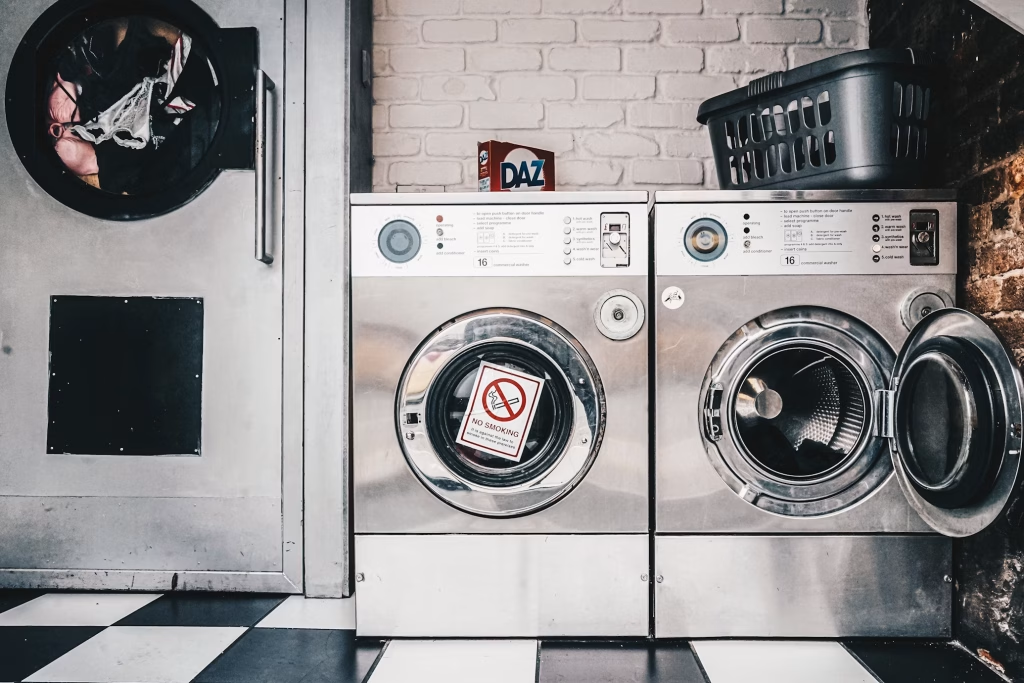
For small laundromat owners, the challenge is rarely about finding the most powerful or largest machine on the market. Instead, the goal is to identify dryers that deliver reliable performance, manageable energy consumption, and affordable purchase prices. Overspending on oversized industrial dryers can strain startup budgets, while purchasing low-quality equipment can lead to frequent breakdowns, unhappy customers, and increased maintenance costs.
Most small laundromats operate successfully with 30- to 50-pound capacity commercial dryers, which provide enough capacity for typical customer loads without requiring large ventilation systems or high electrical infrastructure. These mid-capacity dryers are also easier to install in smaller retail spaces and can often be stacked to maximize floor efficiency.
Another important factor for smaller operations is ease of maintenance. Unlike large industrial laundries that often maintain dedicated technical staff, small laundromats typically rely on third-party service technicians. Equipment that uses widely available replacement parts and has strong manufacturer support can significantly reduce downtime when repairs are needed.
In this guide, we compare several of the best commercial clothes dryers for small laundromats, focusing specifically on models that offer a practical balance between price, reliability, energy efficiency, and long-term durability. These machines are commonly used in neighborhood laundromats, apartment laundry rooms, small hotels, and other modest-scale laundry operations where consistent performance matters more than extreme industrial capacity.
Before reviewing the individual models, the table below provides a quick overview of the most popular options currently used in small and medium laundromat environments.
What is the best commercial dryer for a small laundromat?
The best commercial dryer for a small laundromat is typically a 30- to 50-pound capacity machine that balances drying performance, energy efficiency, and purchase cost. Many laundromat owners choose brands such as Speed Queen, Dexter, or Maytag because these machines are designed for continuous commercial operation and long service life. For smaller budgets, Whirlpool and LG dryers can also provide reliable performance for moderate laundry volumes.
Commercial Dryer Comparison for Small Laundromats
| Dryer Model | Capacity | Price Range | Best For | Typical Lifespan |
|---|---|---|---|---|
| Speed Queen Stack Dryer | 30–45 lb | $3,500–$5,000 | Small laundromats | 10–15 years |
| Maytag Commercial Dryer | 30 lb | $2,500–$4,000 | Budget laundromats | 8–12 years |
| Dexter Compact Dryer | 30–50 lb | $3,000–$5,500 | Coin laundries | 10–14 years |
| Whirlpool Commercial Dryer | 27–30 lb | $2,000–$3,500 | Small businesses | 8–12 years |
| LG Commercial Dryer | 25–30 lb | $1,800–$3,000 | Budget setups | 7–10 years |
Although these machines vary in price and capacity, they share several characteristics that make them suitable for smaller operations. Most of them are designed to operate reliably in moderate-volume commercial environments, and they do not require the heavy infrastructure typically associated with large industrial dryers.
The following sections examine each model in more detail, including the advantages that make them suitable for small laundromats as well as the potential limitations operators should consider before purchasing.
Recommended Dryer Models for Small Laundromats (2026 Update)
Table: Top 5 Small Laundromat Dryers
| Brand | Capacity | Heating Type | Energy Efficiency | Avg Lifespan | Service Network | Approx. Cost |
|---|---|---|---|---|---|---|
| Speed Queen TSC | 30–40 lb | Gas / Electric | High | 12–15 years | Extensive (NA) | $3,800–$5,000 |
| Maytag MLG | 35–40 lb | Gas | Moderate | 8–12 years | NA-focused | $3,500–$4,500 |
| Dexter Express | 30–50 lb | Gas / Electric | High | 10–15 years | Regional | $4,000–$5,200 |
| Whirlpool Commercial | 30–40 lb | Electric | Moderate | 8–10 years | Regional | $2,500–$3,500 |
| LG Commercial Dryer | 30–40 lb | Heat Pump | Very High | 8–10 years | Regional / Limited | $3,200–$4,200 |
1. Speed Queen Stack Dryer
Speed Queen has long been recognized as one of the most reliable manufacturers in the commercial laundry equipment industry. Their stack dryers are especially popular among laundromat owners who need to maximize drying capacity without expanding their floor space. By stacking two drying units vertically, these machines effectively double drying capacity while occupying the footprint of a single dryer.
For small laundromats located in retail storefronts or compact commercial spaces, this design offers a major operational advantage. Instead of installing additional dryers that consume valuable floor area, operators can increase total drying capacity by installing stack configurations. This approach is commonly used in urban laundromats where rent costs are high and space efficiency directly affects profitability.
Speed Queen stack dryers typically offer capacities ranging from 30 to 45 pounds per drum, which is sufficient for most customer laundry loads. The machines are built with heavy-duty steel cabinets and commercial-grade motors designed for continuous operation throughout the day. Many laundromats report that these dryers can remain in service for more than a decade with proper maintenance, which makes them a strong long-term investment despite their relatively higher initial cost.
Another advantage of Speed Queen dryers is their simple mechanical design. Compared with some newer digital-heavy models, Speed Queen machines often use durable mechanical control systems that are easier to repair. Replacement parts are widely available in many regions, and service technicians are usually familiar with the brand.
However, the primary drawback of Speed Queen stack dryers is their price. The upfront investment can be higher than other compact commercial dryers, which may be challenging for entrepreneurs launching their first laundromat with limited capital. Even so, many experienced operators consider Speed Queen machines worthwhile because their durability can significantly reduce long-term repair expenses.
Overall, Speed Queen stack dryers are often considered one of the most reliable options for small laundromats seeking high efficiency within limited floor space.
Learn more about laundromat equipment planning in our guide to commercial dryer guide.
2. Maytag Commercial Dryer
Maytag commercial dryers have built a strong reputation among small laundromat owners because they offer a practical balance between affordability and dependable performance. For entrepreneurs opening their first laundromat, Maytag machines are frequently considered an accessible entry point into commercial laundry equipment.
Most Maytag commercial dryers designed for laundromat environments provide around 30 pounds of drying capacity, which is well suited for typical residential laundry loads. While this capacity may be smaller than some industrial machines, it is often sufficient for neighborhood laundromats that primarily serve local households rather than large institutional clients.
One reason Maytag dryers remain popular in budget-conscious laundromats is their relatively moderate purchase price. Compared with high-end industrial equipment, Maytag machines generally require a smaller initial investment, allowing business owners to allocate more of their startup budget toward washers, renovation costs, or store infrastructure.
Despite their lower price point, Maytag dryers are still designed for commercial usage. They typically feature durable drum construction, efficient airflow systems, and heating elements capable of maintaining stable drying temperatures throughout extended operating hours.
Another advantage is that Maytag equipment is widely distributed in many markets. This means replacement components such as belts, heating elements, and control modules are generally easy to obtain. For laundromats that depend on external technicians for maintenance, this accessibility can reduce downtime and service costs.
Of course, Maytag dryers are not necessarily intended for extremely high-volume industrial operations. Facilities processing thousands of pounds of laundry per day may require larger machines with more powerful heating systems. However, for small laundromats serving residential neighborhoods, Maytag commercial dryers often provide a reliable and budget-friendly solution.
3. Dexter Compact Dryer
Dexter Laundry is another well-known manufacturer specializing in commercial laundry equipment. Their compact dryers are widely used in coin laundries and smaller commercial laundry rooms where reliability and durability are essential.
Dexter dryers are often praised for their robust construction and efficient drying performance. Many models feature stainless steel drums and heavy-duty cabinet structures designed to withstand constant use in public laundromat environments. These machines are built to handle frequent customer usage while maintaining stable drying performance over long periods.
Capacity options for Dexter compact dryers typically range between 30 and 50 pounds, giving laundromat operators some flexibility when designing their equipment layout. Smaller models work well in limited spaces, while larger configurations can increase throughput during peak customer hours.
Another reason Dexter dryers are frequently installed in laundromats is their compatibility with coin-operated payment systems. Many models support integrated coin mechanisms or modern payment solutions such as card or mobile payment systems. This flexibility allows laundromat owners to adapt their payment systems as customer preferences evolve.
Dexter equipment also has a reputation for longevity. In many laundromats, these dryers remain operational for more than a decade when properly maintained. Routine tasks such as lint removal, belt inspection, and airflow maintenance can significantly extend the lifespan of the machines.
The main consideration when purchasing Dexter dryers is that they may cost slightly more than basic entry-level machines. However, many operators consider the investment worthwhile because the machines are designed specifically for laundromat environments and tend to perform reliably even under constant customer usage.
For small laundromats seeking durable coin-laundry equipment with solid long-term reliability, Dexter compact dryers remain a popular option.
4. Whirlpool Commercial Dryer
Whirlpool is widely recognized as one of the most accessible brands in the commercial laundry equipment market. While the company also produces large industrial machines, many laundromat owners rely on Whirlpool’s smaller commercial dryers because they combine affordable pricing with straightforward installation requirements.
Most Whirlpool commercial dryers designed for small businesses offer capacities between 27 and 30 pounds, making them well suited for compact laundromats, apartment laundry rooms, and small hospitality environments. These machines are capable of handling typical residential laundry loads, including clothing, bedding, and towels, without requiring the larger ventilation infrastructure needed for higher-capacity industrial dryers.
One of the key advantages of Whirlpool commercial dryers is their simplicity of operation. Many models use user-friendly control panels that allow customers to start drying cycles quickly without complicated settings. For laundromats serving a broad range of customers—including occasional users—this ease of use can improve overall customer experience.
Whirlpool dryers are also relatively easy to install. Because they are designed with moderate electrical and ventilation requirements, they can often be integrated into existing laundry spaces without major infrastructure upgrades. This characteristic makes them particularly attractive for entrepreneurs opening laundromats in leased retail spaces where large construction projects may not be practical.
Maintenance requirements for Whirlpool dryers are also fairly manageable. Routine maintenance typically includes tasks such as cleaning lint filters, inspecting airflow ducts, and occasionally replacing wear components like belts or heating elements. Since Whirlpool parts are widely available in many markets, service technicians can usually perform repairs without extended delays.
However, it is important to note that Whirlpool dryers are generally designed for moderate commercial workloads rather than extreme industrial usage. Laundromats that process very high volumes of laundry every day may eventually require more heavy-duty equipment. Nevertheless, for small neighborhood laundromats and businesses with limited budgets, Whirlpool dryers often provide a practical and cost-effective solution.
5. LG Commercial Dryer
LG has become an increasingly visible player in the commercial laundry equipment market, particularly among businesses looking for modern machines with advanced technology features. While the company is best known for residential appliances, LG’s commercial dryers are gaining popularity in smaller laundromats and hospitality environments due to their combination of energy efficiency, compact design, and competitive pricing.
Most LG commercial dryers designed for small-scale operations provide capacities ranging from 25 to 30 pounds, making them suitable for laundromats with moderate customer traffic. These machines are often used in environments such as apartment complexes, boutique hotels, gyms, and small laundry shops where space and energy efficiency are important considerations.
One advantage of LG dryers is their focus on energy-efficient drying technology. Many models incorporate moisture sensors that automatically adjust drying cycles based on the remaining moisture content of the laundry. By stopping the cycle when clothes are fully dry, the machine avoids unnecessary energy consumption while also preventing over-drying that could damage fabrics.
Another appealing feature is the modern control interface. LG dryers often include digital control panels that allow operators to customize drying programs and monitor machine performance. In some commercial models, operators can also access diagnostic information that helps identify potential maintenance issues before they lead to equipment failure.
From an installation perspective, LG dryers are generally designed to fit into smaller laundry environments without requiring extensive infrastructure. Their compact dimensions and moderate power requirements make them easier to integrate into existing spaces compared with large industrial machines.
However, there are also some considerations to keep in mind. Because LG commercial dryers incorporate more electronic components than traditional mechanical machines, repairs may sometimes require specialized technicians. For laundromats located in regions where LG commercial service support is limited, this could lead to longer repair times.
Despite these considerations, LG dryers can still be a strong option for entrepreneurs seeking affordable commercial dryers with modern features and efficient energy performance.
Dryer Lifespan & Maintenance: Realistic Expectations
Small laundromat operators often underestimate maintenance costs. Here’s average lifespan vs service accessibility for budget machines:
| Brand | Typical Lifespan | Maintenance Frequency | Parts Lead Time |
|---|---|---|---|
| Speed Queen | 12–15 years | Quarterly | 2–3 days |
| Maytag | 8–12 years | Quarterly | 5–7 days |
| Dexter | 10–15 years | Quarterly | 3–5 days |
| Whirlpool | 8–10 years | Semi-annual | 5–7 days |
| LG | 8–10 years | Semi-annual | 7–10 days |
Insight: Choosing widely supported brands minimizes revenue loss due to downtime.
Energy Consumption Comparison
| Dryer Model | Cycle Time (lb/45 min) | Avg Energy Cost per Load | Heat Type | Efficiency Notes |
|---|---|---|---|---|
| Speed Queen TSC | 40 | $0.35 | Gas | Smart sensor, moisture stop |
| Maytag MLG | 40 | $0.38 | Gas | Basic airflow, no adaptive cycle |
| Dexter Express | 50 | $0.30 | Gas | Modular heat control, faster recovery |
| Whirlpool Commercial | 40 | $0.45 | Electric | Standard heating, moderate insulation |
| LG Heat Pump | 40 | $0.25 | Heat Pump | Low-temp drying, energy-saving cycle |
Takeaway: Heat pump dryers reduce per-cycle energy cost by up to 45% versus traditional electric models, though initial investment is higher.
ROI Modeling Example – Small Laundromat
Scenario: 6-dryer setup, 40 lb per load, 12 loads per day, 6 days/week, 50 weeks/year.
| Brand | Total Annual Loads | Avg Revenue per Load | Energy Cost/Year | Maintenance/Year | Total Operating Cost | Revenue – Cost | Payback Period |
|---|---|---|---|---|---|---|---|
| Speed Queen | 3,456 | $5 | $430 | $1,600 | $2,030 | $17,290 | 0.25 yr |
| Maytag | 3,456 | $5 | $470 | $1,500 | $1,970 | $17,350 | 0.27 yr |
| Dexter | 4,368 | $5 | $525 | $1,800 | $2,325 | $19,515 | 0.26 yr |
| Whirlpool | 3,456 | $5 | $780 | $1,200 | $1,980 | $17,280 | 0.30 yr |
| LG Heat Pump | 3,456 | $5 | $360 | $1,300 | $1,660 | $17,560 | 0.23 yr |
Recommended Dryer Capacity for Laundromats
| Laundromat Size | Recommended Dryer Capacity | Typical Number of Dryers |
|---|---|---|
| Small laundromat | 30–40 lb | 6–10 |
| Medium laundromat | 40–60 lb | 10–20 |
| Large laundromat | 60–80 lb | 20+ |
Choosing the correct dryer capacity helps laundromats balance equipment investment with customer demand. Smaller laundromats often achieve better efficiency with mid-capacity dryers rather than oversized industrial machines.
Layout & Installation Recommendations
Space Planning for Small Laundromats
- Dryer-to-washer ratio: 1.2–1.5 dryers per washer for steady workflow
- Ducting: Minimize bends to improve airflow and reduce drying time
- Ventilation: Gas dryers require high airflow venting; heat pumps can reduce ducting needs
- Service Access: Leave 12–18” clearance for maintenance
Tip: Poor layout increases cycle time by 10–20%, indirectly reducing revenue.
Common Investment Mistakes + Financial Implications
- Choosing solely by purchase price
Financial implication: A $500 cheaper dryer may cost $1,500 more over 5 years in energy and downtime. - Oversizing machines
Financial implication: Idle energy waste reduces daily net profit by 10–15%. - Ignoring service network
Financial implication: Delays in parts delivery can result in 3–5 lost operational days/year.
Why Small Laundromats Should Focus on Budget-Friendly Commercial Dryers
When selecting commercial laundry equipment, it can be tempting to focus on the largest or most powerful machines available. However, for small laundromat operators, choosing oversized industrial dryers often creates unnecessary financial pressure. High-capacity dryers require larger ventilation systems, stronger electrical infrastructure, and higher initial investment costs, all of which can strain the startup budget of a small business.
Instead, many successful laundromats begin with mid-capacity commercial dryers that balance performance with affordability. Machines in the 30- to 50-pound capacity range are often capable of handling the majority of customer laundry loads while remaining relatively efficient in terms of installation and energy consumption.
Another advantage of budget-friendly dryers is that they allow business owners to expand gradually. Rather than investing heavily in large equipment at the beginning, operators can start with a smaller number of reliable machines and add additional dryers as customer demand increases.
Energy efficiency is also an important consideration. Smaller commercial dryers typically consume less energy per cycle than large industrial units, especially when operating partial loads. For laundromats with unpredictable daily traffic, this flexibility can help control operating costs.
Maintenance costs represent another reason to choose practical commercial dryers instead of extremely complex machines. Equipment with simple mechanical designs and widely available replacement parts can usually be repaired more quickly and at lower cost, which helps minimize downtime.
Ultimately, the best commercial dryer for a small laundromat is not necessarily the most powerful machine on the market. Instead, it is the one that delivers consistent drying performance, manageable operating costs, and dependable long-term reliability.
Transition to the Buying Guide
While the dryers listed above represent some of the most common options used in small laundromats, selecting the right equipment still requires careful evaluation of several operational factors. Every laundromat has unique constraints related to available space, customer demand, energy costs, and installation requirements.
Before making a final purchase decision, it is important to understand how dryer capacity, energy configuration, and maintenance considerations influence the overall cost of operating a laundromat.
The following section explores these factors in more detail and explains how entrepreneurs can choose the most cost-effective commercial dryer for their specific business model.
How Much Does It Cost to Start a Small Laundromat?
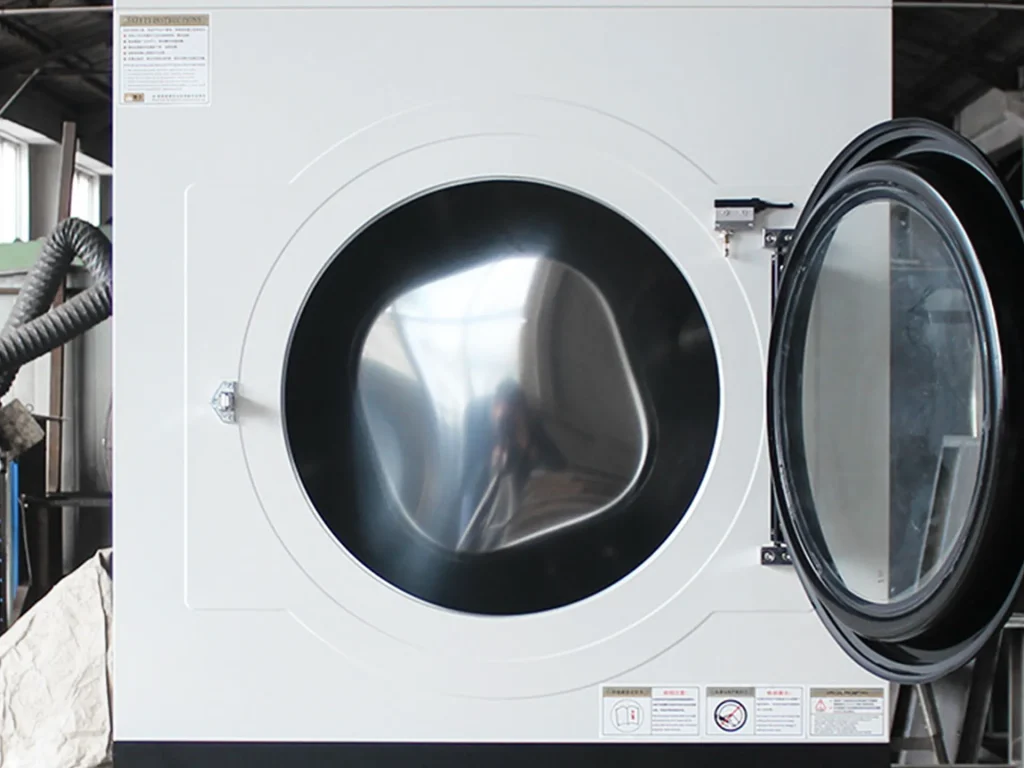
Before purchasing commercial dryers, most entrepreneurs first need to estimate the total cost of launching a laundromat. Equipment is typically the largest portion of the startup budget, but it is far from the only expense involved in opening a small laundry business.
The cost of starting a small laundromat varies widely depending on location, store size, equipment capacity, and renovation requirements. However, most small neighborhood laundromats fall within a fairly predictable investment range.
| Expense Category | Typical Cost Range |
|---|---|
| Commercial washers | $20,000 – $60,000 |
| Commercial dryers | $15,000 – $40,000 |
| Store renovation | $10,000 – $50,000 |
| Plumbing & electrical | $5,000 – $25,000 |
| Ventilation systems | $5,000 – $15,000 |
| Payment systems | $2,000 – $8,000 |
| Business licenses | $500 – $2,000 |
For a modest laundromat with 10–20 machines, the total startup cost usually falls between $70,000 and $200,000. The exact amount depends on whether the entrepreneur is renovating an existing laundromat or building a completely new facility.
Dryers typically represent 20–30% of the total equipment budget, which is why selecting cost-effective machines is so important. Choosing practical mid-capacity dryers instead of oversized industrial equipment can significantly reduce the initial investment required to open the business.
If you’re planning a full laundry setup, you may also want to review our guide on commercial dryer guide.
How to Choose the Best Commercial Dryer for a Small Laundromat
Selecting the right commercial dryer involves evaluating several operational factors. While purchase price is important, it should not be the only consideration. A dryer that costs slightly more upfront may still be the better investment if it offers lower energy consumption or longer service life.
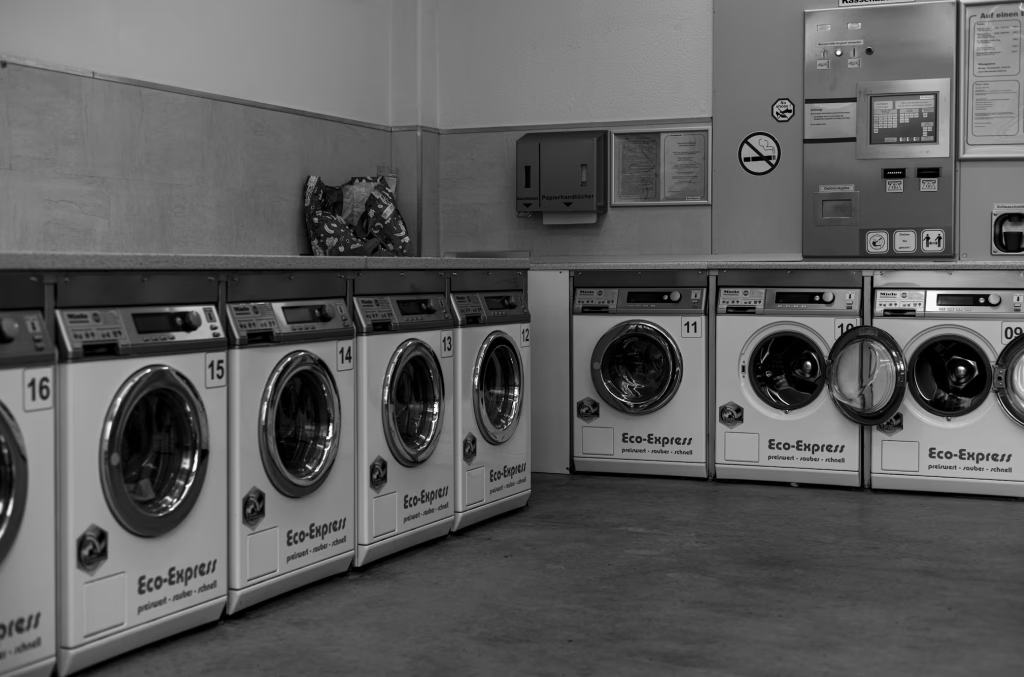
Capacity vs. Customer Demand
Dryer capacity is one of the first factors to evaluate. Small laundromats usually operate efficiently with dryers between 30 and 50 pounds of capacity. This range accommodates most residential laundry loads while still maintaining efficient drying times.
Oversized dryers can create unnecessary costs. They consume more energy per cycle and often require stronger ventilation systems. Unless the laundromat expects extremely high traffic, mid-capacity dryers usually provide the best balance between performance and cost.
Energy Source and Operating Cost
Commercial dryers typically operate using either electric heating systems or gas heating systems. Gas dryers are generally more energy-efficient for high-volume laundromats because gas heating produces faster drying times at lower energy cost.
Electric dryers, on the other hand, are often easier to install because they do not require gas infrastructure. For smaller laundromats located in retail spaces where gas installation may be complicated, electric dryers may still be the practical choice.
Operators should evaluate local energy prices before making a decision, as the long-term operating cost of dryers can significantly affect overall profitability.
Ventilation Requirements
Proper airflow is essential for efficient dryer performance. Poor ventilation can increase drying times, waste energy, and shorten equipment lifespan.
When planning laundromat equipment layout, operators should ensure that the building can support adequate ventilation ducts and airflow systems. In many cases, installing several smaller dryers with proper ventilation can be more efficient than installing fewer oversized machines.
Durability and Maintenance
Commercial dryers operate for many hours every day, which means durability is critical. Machines built with stainless steel drums and heavy-duty motors generally last longer than lightweight models designed primarily for residential use.
Another important factor is the availability of replacement parts. Equipment from widely distributed manufacturers tends to be easier to repair because technicians can obtain components more quickly.
Commercial Dryer vs Residential Dryer
| Feature | Commercial Dryer | Residential Dryer |
|---|---|---|
| Daily workload | Continuous | Occasional |
| Lifespan | 10–15 years | 3–5 years |
| Drum capacity | 30–80 lb | 7–10 lb |
| Build quality | Heavy duty | Light duty |
Common Mistakes When Buying Commercial Dryers
Many first-time laundromat owners make equipment decisions based solely on price or marketing claims. While these factors may seem important at the beginning, they often lead to long-term operational challenges.
One common mistake is purchasing residential dryers instead of true commercial equipment. Residential machines are not designed for continuous daily use and may break down quickly in a laundromat environment.
Another frequent issue is overestimating demand and buying oversized machines. Large industrial dryers are expensive and require strong infrastructure. If the laundromat does not have enough customers to use them consistently, they may operate inefficiently and increase energy costs.
Poor ventilation planning is another problem that affects many laundromats. Without proper airflow systems, even high-quality dryers can perform poorly and require frequent maintenance.
Finally, some operators overlook the importance of service availability. Purchasing equipment from manufacturers that lack regional technical support can lead to long repair delays whenever machines malfunction.
Avoiding these mistakes can significantly improve the long-term profitability of a small laundromat.
Operational Costs of Commercial Dryers
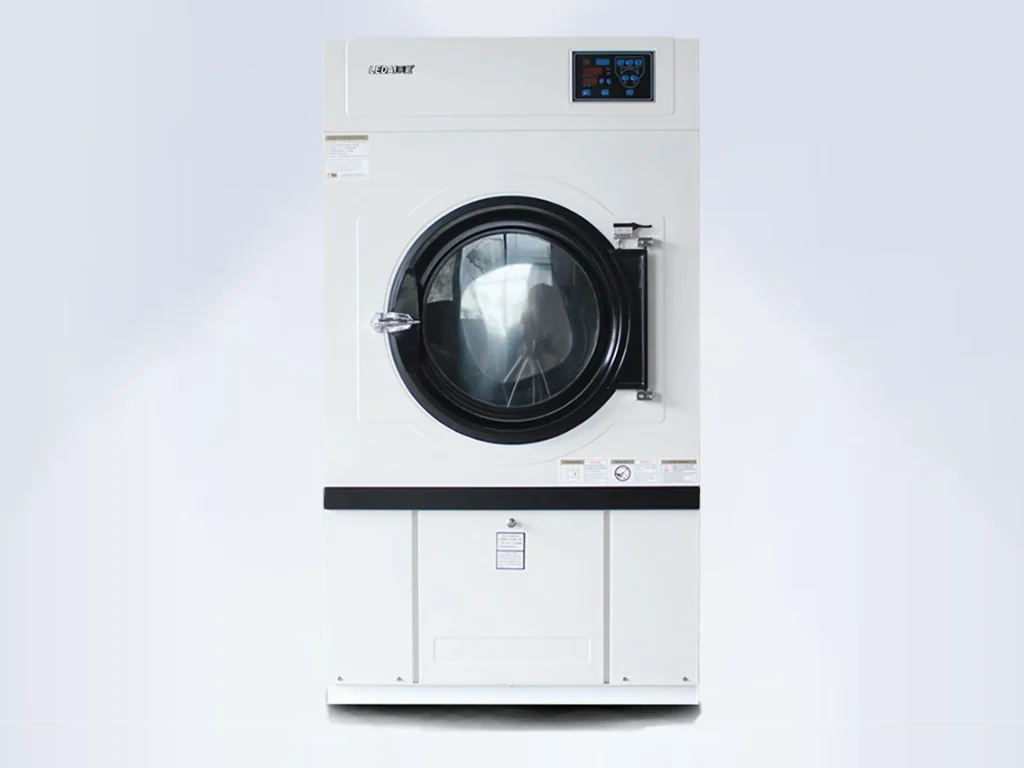
Beyond the initial purchase price, laundromat owners should consider the ongoing operating expenses associated with commercial dryers. These costs include energy consumption, maintenance, and periodic component replacement.
Energy consumption typically represents the largest operating cost. Efficient dryers with optimized airflow systems can reduce drying times and lower energy usage per cycle. Over the lifespan of the machine, these savings can offset a higher initial purchase price.
Maintenance costs are generally manageable when machines receive regular servicing. Routine tasks such as lint removal, belt inspection, and airflow cleaning can prevent more serious mechanical problems. Many laundromat operators schedule maintenance checks every few months to keep equipment running smoothly.
Another factor that influences operating cost is machine utilization. Dryers that operate at high efficiency and maintain consistent drying performance help attract repeat customers, which improves overall revenue generation for the laundromat.
FAQ: Commercial Dryers for Small Laundromats
What capacity dryer is best for a small laundromat?
Most small laundromats operate efficiently with dryers between 30 and 50 pounds of capacity. This size accommodates typical household laundry loads while maintaining efficient energy consumption.
Are gas dryers better than electric dryers for laundromats?
Gas dryers usually offer lower operating costs and faster drying times, which makes them popular in high-volume laundromats. However, electric dryers can still be practical in locations where gas infrastructure is unavailable.
How long do commercial dryers typically last?
High-quality commercial dryers often last 10 to 15 years when properly maintained. Regular cleaning and routine inspections can extend their lifespan significantly.
How many dryers should a small laundromat have?
A common industry guideline is to install one dryer for every 1.5 to 2 washers. This ratio ensures that customers can easily find available dryers during busy periods.
What is the most reliable commercial dryer brand?
Brands such as Speed Queen, Dexter, Maytag, and Whirlpool are widely recognized for producing durable commercial laundry equipment used in laundromats around the world.
What is the best dryer for a small laundromat?
30–40 lb capacity dryers like Speed Queen TSC or Dexter Express balance budget, energy efficiency, and reliability.
How much energy does a small commercial dryer use?
Average cost per load ranges from $0.25 (heat pump) to $0.45 (standard electric), depending on cycle length and dryer type.
How often should commercial dryers be maintained?
Quarterly preventive maintenance is recommended for small laundromats, including belt, bearing, and airflow inspection.
Should I choose gas or electric for a small laundromat?
Gas is cheaper per cycle but requires proper venting and infrastructure; electric is simpler to install. Heat pumps save energy but have higher upfront cost.
How long does a commercial dryer last?
Typical lifespan ranges from 8–15 years depending on brand, usage, and maintenance consistency.
 English
  Spanish